Appliances · Buying Guide
Best Lodge Cast Iron Griddle Skillet Options for Every Kitchen
Finding the right cookware for breakfast foods, searing meats, and everyday meals often leads home cooks toward durable cast iron options. A quality griddle skillet provides the thermal mass needed for steady heat retention and uniform cooking across various heat sources like stovetops, ovens, and campfires. These surfaces come ready to use right out of the box with natural seasoning.
Lodge offers a diverse lineup of seasoned cast iron griddles designed to handle everything from delicate tortillas to hearty family dinners. Selecting the ideal model depends on your cooking style, cooktop compatibility, preferred surface shape, and whether you need single-burner convenience or dual-burner capacity. Understanding the physical features of each option helps you choose a tool that matches your daily routine.
As an Amazon Associate, StacyLaughs earns from qualifying purchases.
Buying guide
Surface Shape and Cooking Area
Choosing the right griddle shape depends heavily on what foods you plan to prepare most often during daily routines. Round models fit neatly over standard single burners, offering an efficient circle for pancakes, tortillas, and single-serving eggs. Square options expand your usable perimeter, giving you extra corner room to work with spatulas without crowding your food items.
If you frequently cook large family breakfasts, a double-burner rectangular model provides massive surface coverage. This layout lets you cook bacon, eggs, and pancakes concurrently without waiting for batches to finish. Matching the shape to your typical meal size prevents overcrowding, optimizes burner coverage, and ensures even heat distribution across your kitchen workspace.
Weight and Physical Handling
Cast iron cookware is renowned for its heavy density and exceptional thermal mass, but this material property introduces important handling considerations. Lighter models weigh under five pounds, making them relatively simple to lift with one hand when transferring food or washing up. Heavier square and rectangular options range from nearly six to over nine pounds, demanding more physical effort.
Consider your upper body strength and how often you need to move the pan between storage cupboards and the stovetop. If heavy lifting poses a challenge, smaller single-burner designs reduce strain while still delivering the heat retention benefits of cast iron. Evaluating weight ensures your cookware remains practical for everyday use rather than sitting unused in a cabinet.
Heat Source Compatibility
Modern cast iron griddles work across a wide variety of heat sources, making them exceptionally flexible kitchen tools. Most models perform reliably on traditional gas stovetops, electric coils, and smooth glass or induction surfaces. Furthermore, their sturdy metallic construction allows them to transition directly into ovens or onto outdoor grills and campfires without sustaining damage.
Before selecting a specific griddle, verify which cooktops you use most frequently to ensure proper fit and performance. Induction users should look for flat-bottomed cast iron that maintains solid contact with the glass surface. Outdoor cooking enthusiasts can benefit from rugged pans that withstand open flames and high ambient temperatures during camping trips or backyard barbecues.
Seasoning and Surface Care
Cast iron requires specific maintenance habits to preserve its naturally nonstick cooking performance over years of use. Most quality griddles arrive pre-seasoned with vegetable oil, allowing you to start cooking immediately after a quick rinse. Maintaining this finish involves hand washing the pan with warm water, drying it thoroughly on a warm burner, and rubbing a thin layer of oil across the surface.
Avoid soaking cast iron in water or running it through an automatic dishwasher, as moisture triggers rust formation and strips the protective seasoning layer. Following manufacturer care instructions protects the iron and enhances the cooking surface over time. Embracing these simple upkeep routines ensures your griddle remains a dependable, chemical-free cooking companion for decades.
Handle Design and Storage
Handle configurations greatly influence how comfortably you maneuver and store your cast iron griddle. Traditional single stick handles offer familiar leverage, though silicone holders can be added for a cooler grip during stovetop cooking. Alternatively, dual loop handles reduce the overall length of the pan, making it much easier to slide into tight cabinet spaces or compact ovens.
When evaluating handle options, assess your storage constraints and how you typically transport hot pans. Loop handles distribute heavy loads more evenly between both hands, which helps when carrying heavier models filled with food. Choosing the correct handle style prevents awkward kitchen maneuvers and keeps your cooking setup streamlined.
Dual-Sided Versatility Options
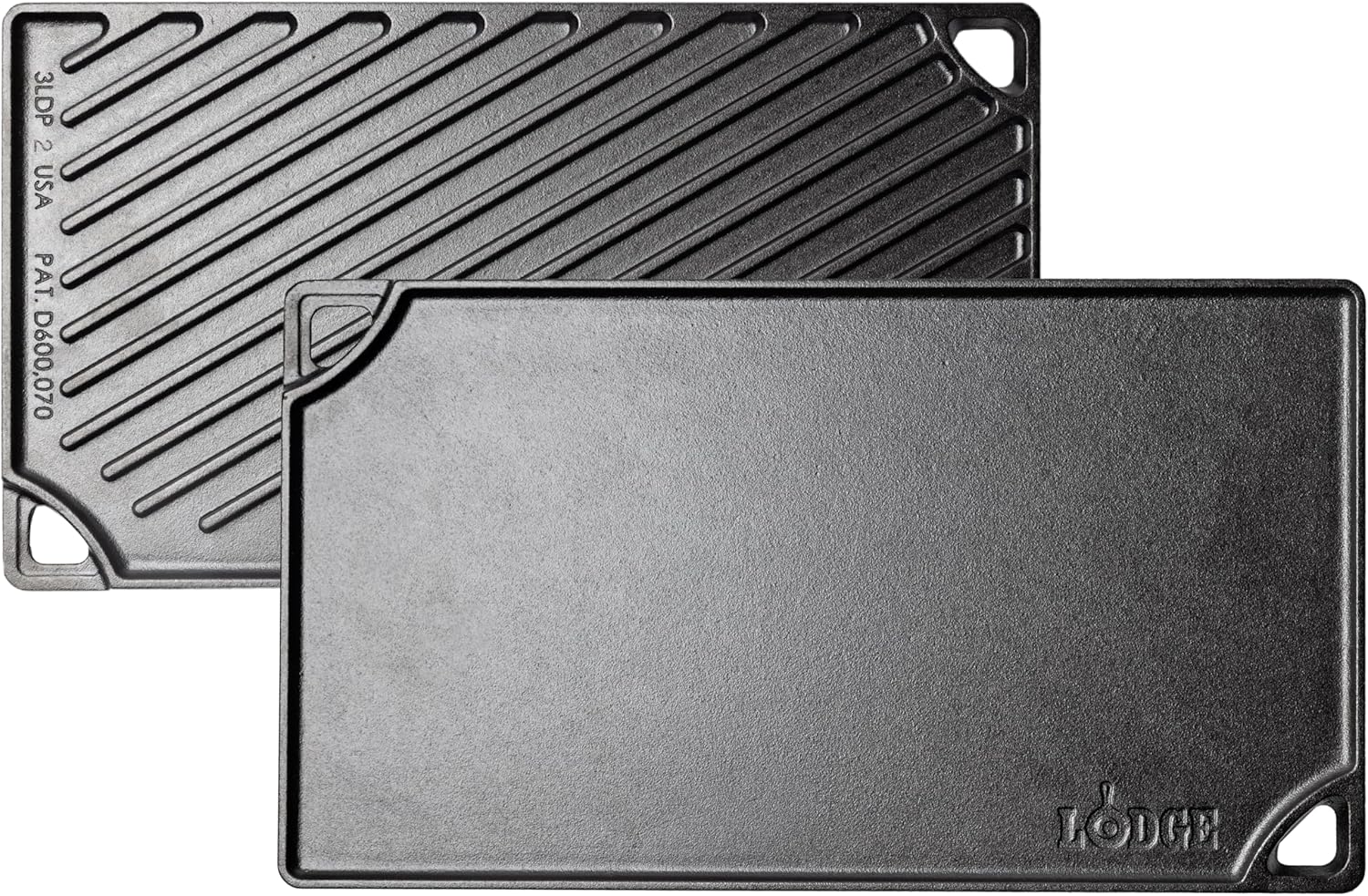
Reversible cast iron pans provide dual functionality by combining a flat griddle surface with a ribbed grill side in one tool. The flat side excels at cooking pancakes, eggs, and crepes, while flipping the pan reveals raised ridges for searing steaks and burgers. This dual-purpose design saves storage space by replacing two separate pans with a single piece of heavy-duty cookware.
Utilizing a reversible griddle requires careful management since the exposed bottom side rests directly against your burner or cooktop. Ensure your stove can accommodate the wider rectangular footprint before committing to a double-burner plate. Selecting this style maximizes your culinary capabilities if you enjoy both griddle breakfasts and grilled meats.
Frequently asked questions
Can I use a cast iron griddle on a glass-top stove?
Yes, you can use cast iron griddles on glass-top and smooth-surface induction cooktops, provided you handle them with care. Because cast iron is heavy and has a rigid metallic base, sliding the pan across glass can cause scratches or cracks. To protect your cooktop, always lift the griddle completely when moving it rather than dragging it across the surface. Additionally, ensure the bottom of the pan is clean and free of baked-on debris before placing it on glass burners.
How do I clean my cast iron griddle after cooking?
Cleaning a seasoned cast iron griddle requires hand washing with warm water and a stiff brush, avoiding harsh dish soaps that can degrade the seasoning. After washing, dry the pan completely with a towel to prevent moisture from causing rust spots. To maintain the protective finish, place the dry griddle on a warm burner for a few minutes and rub a tiny amount of vegetable oil across all surfaces before storing it away. Never soak cast iron or place it in a dishwasher.
Are cast iron griddles safe for use in ovens and campfires?
Cast iron griddles are exceptionally rugged and designed to withstand high temperatures across diverse environments, including conventional ovens, outdoor grills, and open campfires. Their durable metallic build resists warping and damage from direct flames. However, if your specific griddle model includes attached accessories like a silicone handle holder, you must check the maximum temperature limit of that accessory before placing the pan inside a hot oven or over an open fire pit.
What makes pre-seasoned cast iron better than unseasoned pans?
Pre-seasoned cast iron comes ready to use right out of the box, saving you the time and effort required to bake layers of oil onto raw metal yourself. The factory seasoning creates a natural, chemical-free release surface that prevents food from sticking during your first few cooking sessions. As you continue to cook with oils and fats over time, this seasoned layer naturally thickens and improves, making cleanup progressively easier and enhancing the overall cooking performance of your griddle.
Why do some griddles feature loop handles instead of a long stick handle?
Griddles featuring dual loop handles instead of a traditional stick handle offer distinct advantages in storage and stability. Loop handles shorten the overall footprint of the pan, allowing it to fit more easily into standard kitchen cabinets, pantry shelves, or compact ovens. Furthermore, dual handles provide balanced two-handed control when lifting heavier iron cookware filled with food, reducing strain on your wrists and improving safety during transport from the stovetop to the dining table.