Appliances · Buying Guide

Best Machined Cast Iron Skillet For Smooth Cooking

Upgrading your kitchen gear often starts with finding cookware that balances traditional heat retention with modern convenience. Traditional rough iron surfaces require extensive scrubbing or seasoning to achieve easy food release. Precision machining solves this by polishing the cooking surface to a smooth finish right out of the box, offering a nonstick-like experience without synthetic coatings.

These modern iterations combine the durability of classic cast iron with refined, polished cooking areas. Whether you are searing thick steaks, baking golden cornbread, or cooking delicate eggs, these skillets offer an alternative to traditional rough pans. Exploring these options helps you find the right weight, handle style, and capacity for your daily cooking routine across various heat sources.

As an Amazon Associate, StacyLaughs earns from qualifying purchases.

Greater Goods 12 Inch Cast Iron Skillet with Smooth Milled Surface
#1 Best Overall

Greater Goods 12 Inch Cast Iron Skillet with Smooth Milled Surface

This twelve-inch skillet provides a generous three-point-two quart capacity designed to handle family-sized meals in a single batch. Pre-seasoned with organic flaxseed oil from Canada, it features a precision-milled smooth surface for easy food release from day one. It includes a primary handle, helper handle, and dual pour spouts for fluid management on gas, electric, induction, and open flames.

Best for Large family meal preparation

Pre-seasoned with flaxseed oilPrecision milled surfaceDual pour spoutsHelper handle includedOven and induction safe
View on Amazon →

What stands out

  • Precision-milled smooth surface provides a nonstick-like cooking experience without relying on synthetic coatings that can peel or flake over time.
  • Generous twelve-inch diameter accommodates family-sized meals like four-to-six eggs or complete one-pan dinners in a single batch.
  • Includes both a large primary handle and a dedicated helper handle to provide secure leverage and balance when moving the heavy pan.

What to consider

  • Weighing in at seven point eight pounds, this heavy pan requires two hands or extra care when moving between the stove and table.
  • Hand wash only maintenance routine requires immediate drying and oiling after cleaning to protect the exposed cast iron from developing rust.
Key specifications
Capacity
3.2 quarts
Material Type
Cast Iron
Product Care Instructions
Hand Wash Only
Compatible Devices
Gas, Electric Coil, Smooth Surface Induction
Additional Features
Oven Safe
Item Weight
7.8 pounds

The practical verdict

This skillet is best for home cooks who regularly prepare large family meals and want a pre-seasoned, smooth cooking surface right out of the box. Avoid it if you prefer lightweight cookware that is easy to lift with one hand. The main trade-off is heavy-duty capacity and sturdy dual handles against an overall hefty weight that demands careful handling.

#2
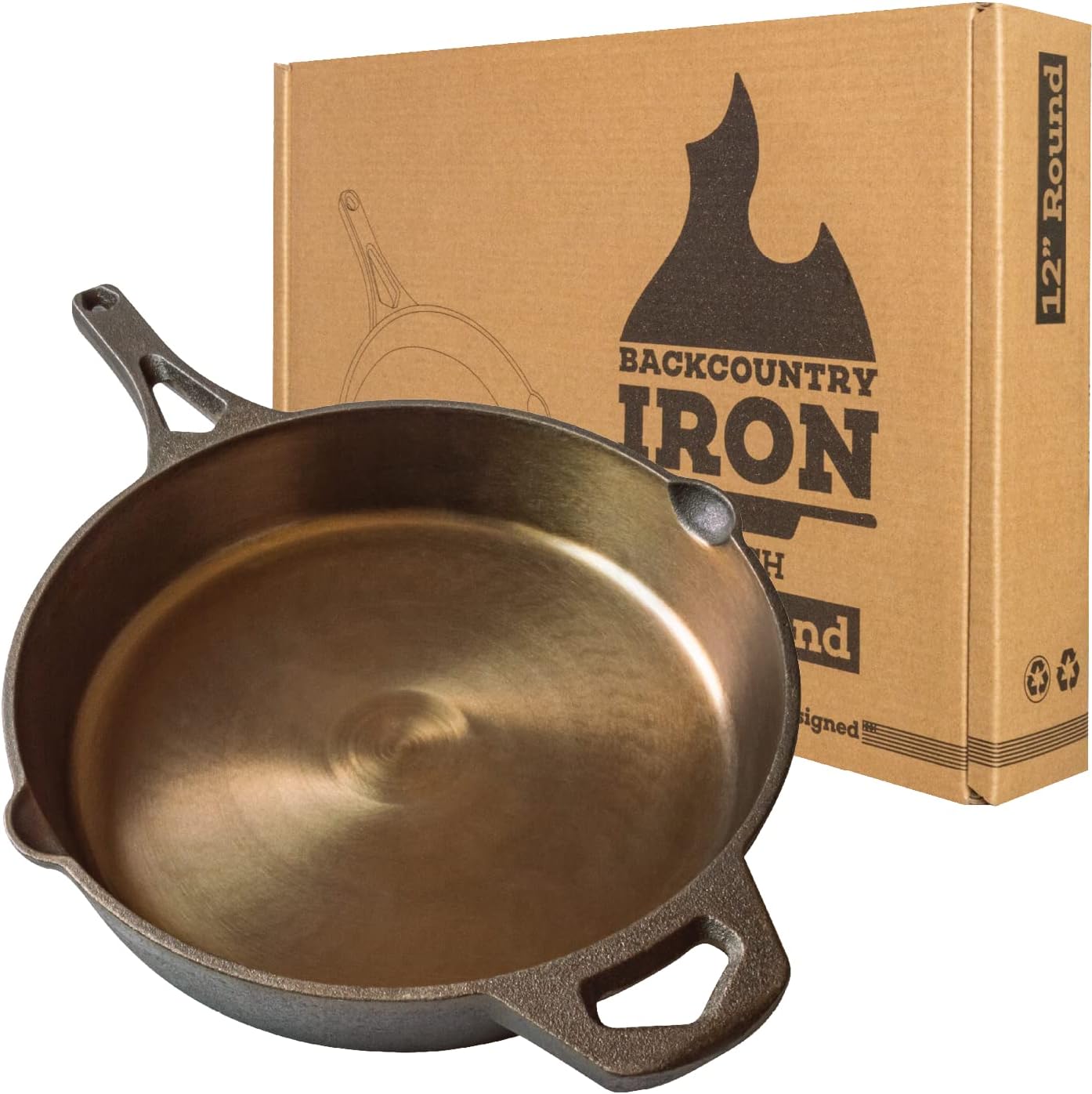
Backcountry Iron 12 Inch Smooth Wasatch Pre-Seasoned Cast Iron Skillet
Vintage Heirloom Design

Backcountry Iron 12 Inch Smooth Wasatch Pre-Seasoned Cast Iron Skillet

Best for Traditional vintage style cooking

Inspired by classic vintage pans, this twelve-inch round skillet features a glass-smooth machined cooking surface and sides. Quadruple seasoned with vegetable and grapeseed oil, it develops a signature bronze coloring and delivers exceptional browning properties. It handles electric, induction, gas stovetops, ovens, and campfires while offering reliable heat retention for everyday searing and baking tasks.

What stands out

  • Glass-smooth machined cooking surface and sides replicate the performance of classic vintage cast iron pans for uniform cooking.
  • Quadruple seasoned with vegetable and grapeseed oils to build a bronze-colored protective layer that supports easy food release and browning.
  • Versatile design is safe for electric, induction, gas stovetops, ovens, and outdoor campfires with long heat retention capabilities.

What to consider

  • Heavyweight construction means this skillet demands deliberate physical effort during transport, storage, and cleaning compared to thinner kitchen pans.
  • Manufacturer care instructions explicitly forbid soaking overnight, air drying, or dishwasher use to protect the seasoning and prevent rust.
Key specifications
Capacity
3 quarts
Material Type
Cast Iron
Product Care Instructions
Dry Immediately, Hand Wash Only
Compatible Devices
Electric Coil, Fire, BBQ, Gas, Smooth Surface Induction, Smooth Surface Non Induction
Maximum Temperature
500 °F
Additional Features
Flat Bottom, Glass Smooth Cooking Surface, Great Heat Retention, Heavyweight, Vintage Style

The practical verdict

This skillet is best for enthusiasts seeking classic vintage aesthetics paired with a smooth machined surface for daily searing and baking. Avoid it if you require dishwasher-safe convenience or lightweight cookware. The main trade-off is exceptional heat retention and a smooth cooking surface against heavy iron construction that requires strict hand-washing protocols.

#3
Stargazer 12 Inch Cast Iron Skillet with Smooth Cooking Surface
Premium American Craftsmanship

Stargazer 12 Inch Cast Iron Skillet with Smooth Cooking Surface

Best for Modern flare-rim cooking

Individually crafted in the USA, this twelve-inch skillet features a flawlessly machined smooth cooking surface designed to minimize food sticking. It incorporates a modern stay-cool extended handle for safer handling and a drip-free flared rim instead of traditional pour spouts. Backed by a lifetime warranty against manufacturer defects, it offers reliable performance across induction and standard stovetops.

What stands out

  • Flawlessly machined smooth cooking surface minimizes sticking and ensures effortless cleanup when preparing breakfast or baked goods.
  • Modern extended handle features stay-cool properties to enhance comfort and safety during high-heat stovetop or oven cooking sessions.
  • Drip-free flared rim design allows seamless pouring from any angle without relying on traditional pour spouts.

What to consider

  • The flared rim design lacks traditional pour spouts, which might require an adjustment period for pouring thin liquids or pan sauces.
  • Hand wash only requirements mean users must dedicate time to routine maintenance rather than tossing the pan into a kitchen dishwasher.
Key specifications
Capacity
3.4 quarts
Material Type
Cast Iron
Product Care Instructions
Hand Wash Only
Compatible Devices
Smooth Surface Induction
Additional Features
Electric Stovetop Compatible, Gas Stovetop Compatible, Heavy Duty, Oven Safe
Item Weight
6.5 pounds

The practical verdict

This skillet is best for cooks looking for American-made craftsmanship, a stay-cool handle, and a rim designed for pouring from any angle. Avoid it if you specifically prefer traditional pour spouts for handling heavy gravies. The main trade-off is an innovative flared rim and ergonomic handle against the lack of traditional spouts and strict hand-wash maintenance.

#4
Lancaster Cast Iron Lightweight 10.5 Inch Pre-Seasoned Frying Pan
Lightweight Everyday Pan

Lancaster Cast Iron Lightweight 10.5 Inch Pre-Seasoned Frying Pan

Best for Lightweight everyday handling

Cast, machined, and seasoned in Pennsylvania, this ten-point-five inch skillet is designed as a lightweight iron option weighing around four pounds. It features a smooth machined surface inspired by antique cookware, traditional pour spouts, and an ergonomic handle. Compatible with gas, induction, electric, and campfires, it offers rapid heat response alongside standard iron retention.

What stands out

  • Weighing right around four pounds, this model offers a significantly lighter alternative to traditional heavy cast iron cookware.
  • Machined smooth surface provides an enjoyable cooking experience similar to classic antique pans while responding quickly to heat changes.
  • Traditional ergonomic handle and classic pour spouts make transferring pan juices and serving sauces simple and efficient.

What to consider

  • The ten-point-five inch size and smaller two-quart capacity offer limited cooking space when preparing large batches for big groups.
  • Hand wash only maintenance is mandatory to preserve the seasoned finish and protect the exposed metal from moisture damage.
Key specifications
Capacity
2 quarts
Material Type
Cast Iron
Product Care Instructions
Hand Wash Only
Compatible Devices
Electric Coil, Gas, Smooth Surface Induction
Additional Features
Electric Stovetop Compatible, Oven Safe
Item Weight
4 pounds

The practical verdict

This skillet is best for cooks who want the smooth surface of cast iron without the heavy weight of traditional pans. Avoid it if you need maximum capacity for large family dinners. The main trade-off is lightweight maneuverability and quick heating against a smaller cooking footprint and required manual cleaning.

#5
Sxmprail 12 Inch Polished Cast Iron Skillet with Grapeseed Oil
High-Heat Precision Skillet

Sxmprail 12 Inch Polished Cast Iron Skillet with Grapeseed Oil

Best for High-heat precision searing

Crafted from high-density pure iron using precision CNC machining, this twelve-inch skillet provides a flat, smooth non-stick cooking surface. It is pre-seasoned with four layers of natural grapeseed oil baked at high temperatures. Featuring an extended hollow V-groove handle designed to block heat transfer, it withstands temperatures up to one thousand degrees Fahrenheit on induction, gas, or campfires.

What stands out

  • Precision CNC machining creates an exceptionally flat, smooth cooking surface that helps natural non-stick seasoning adhere evenly.
  • Four layers of natural grapeseed oil polymerization resist flaking and provide a durable non-stick coating from the start.
  • Extended hollow V-groove handle design effectively blocks heat transfer to keep the grip cooler during high-heat cooking sessions.

What to consider

  • The specialized high-density iron construction and multi-layer seasoning require careful hand washing and regular oiling to prevent rust.
  • Withstanding extreme temperatures up to one thousand degrees requires caution to avoid burning seasoning layers during improper preheating.
Key specifications
Capacity
2.3 quarts
Material Type
Cast Iron
Product Care Instructions
Gentle Pan Care: Clean with warm water and a stiff brush—no soap or dishwasher, Season With Oil: Use oil to build a natural nonstick surface and protect your skillet
Compatible Devices
Gas, Electric Coil, Smooth Surface Induction
Maximum Temperature
1000 °F
Additional Features
Even Heat Distribution, Long Ergonomic Handle, Non Stick, Oven Safe

The practical verdict

This skillet is best for users who require extreme heat resistance and a precision CNC-machined flat surface for searing. Avoid it if you prefer low-maintenance cookware that can withstand automated dishwashing. The main trade-off is a high-density warp-resistant build and heat-blocking handle against the need for diligent manual upkeep and oiling.

Buying guide

Surface Machining and Texture

Traditional cast iron cookware often features a rough, pebble-textured surface straight from the sand mold. While functional, this manufacturing texture can trap food particles and make routine cleaning significantly more challenging. Machined cast iron skillets undergo precision milling or CNC polishing to create an ultra-flat, glass-smooth cooking area. This modern smoothing process helps protective seasoning bond evenly across the dense iron base.

A polished cooking surface delivers a reliable nonstick-like food release experience right out of the box without requiring years of manual seasoning buildup. Buyers looking for effortless egg sliding or easy pancake flipping will appreciate how a machined interior improves daily performance. However, maintaining this smooth finish still requires proper hand washing, prompt drying, and regular thin coats of oil after every cooking session.

Weight and Maneuverability

Cast iron is naturally dense and heavy, which provides unmatched heat retention but can strain wrists during transport. Heavyweight skillets excel at maintaining steady cooking temperatures for searing steaks or baking heavy cornbread. However, lifting a fully loaded pan weighing nearly eight pounds requires significant physical strength and careful two-handed maneuvering around a busy kitchen workspace.

For cooks who want the cooking performance of iron without the extreme arm fatigue, lightweight machined options offer a practical alternative. These lighter pans reduce total mass while retaining essential heat properties. Consider your physical comfort, wrist strength, and how often you need to transfer pans between stovetops, ovens, and dining tables before selecting a specific model weight.

Handle Design and Ergonomics

The handle of a cast iron skillet plays a critical role in safety and leverage during cooking. Standard short handles can make lifting heavy pans awkward, especially when moving them between hot stovetops and deep ovens. Look for extended primary handles that provide adequate leverage, along with dedicated helper handles that distribute weight evenly across both hands.

Advanced designs incorporate hollow structures, V-shaped grooves, or stay-cool properties to help block heat transfer from the pan body. These engineering choices keep grips noticeably cooler during extended cooking sessions, enhancing safety and control. Evaluating handle length, grip shape, and secondary support features ensures you can confidently transport heavy meals without losing stability or grip security.

Pour Spouts and Rim Styles

Managing liquids, pan juices, and excess oils requires careful attention to the rim design of your skillet. Traditional dual pour spouts allow you to guide sauces, gravies, and rendered fats neatly from either side of the pan. These spouts are essential when serving homemade sauces or clearing out leftover liquids after browning meats on the stovetop.

Alternatively, some modern machined skillets feature a drip-free flared rim that eliminates traditional spouts entirely. A flared rim lets you pour liquids or slide out baked goods smoothly from any angle around the circumference. Consider your typical recipes and whether you frequently pour thin gravies or prefer an unobstructed edge for flipping and serving.

Seasoning and Factory Preparation

Factory seasoning protects raw iron from rust during shipping and provides an initial nonstick barrier for your first meal. Manufacturers use various natural oils, including flaxseed, vegetable, and grapeseed oils, often baking multiple layers at high temperatures to polymerize the finish. Pre-seasoned skillets save you the time and effort of seasoning raw metal from scratch at home.

While factory treatments give you a head start, building a durable, slick cooking surface is an ongoing process that improves with every meal. Proper maintenance requires avoiding harsh dish soaps, skipping dishwashers, and applying a thin layer of oil after drying. Understanding how factory seasoning is applied helps you choose a pan that matches your preferred maintenance routine.

Heat Source Compatibility

Cast iron skillets are celebrated for their versatility across an extensive range of modern and traditional heat sources. Most quality pans work seamlessly on gas burners, electric coil stovetops, and smooth glass induction cooktops. Their thick metal construction distributes heat evenly across burners, reducing hot spots that can burn delicate foods during long searing or browning sessions.

Beyond standard indoor kitchen appliances, many machined skillets are rated for high-temperature oven baking, outdoor barbecue grills, and open-fire camp cooking. Checking maximum temperature limits and base flatness ensures the pan maintains optimal contact with your specific cooking surface. Choosing a versatile skillet allows you to transition seamlessly from stovetop searing to oven baking without changing cookware.

Frequently asked questions

Do machined cast iron skillets require seasoning before first use?

Most machined cast iron skillets arrive pre-seasoned from the factory with natural oils like flaxseed, vegetable, or grapeseed oil, meaning they are ready for cooking right out of the box. However, unlike synthetic nonstick pans, cast iron seasoning is an ongoing lifecycle. Every time you cook with oils or fats, the seasoning layer continues to build naturally. While factory seasoning provides a solid starting barrier for eggs and pancakes, you will still need to apply thin coats of oil after cleaning to protect the exposed iron from rust over time.

Why is the cooking surface machined on these specific cast iron skillets?

Traditional cast iron pans feature a rough, pebbled texture left behind by sand molds during manufacturing. Machining uses precision milling or CNC polishing to grind and smooth that interior cooking area down to a flat finish. This smooth texture reduces surface friction, making it significantly easier for delicate foods like eggs, fish, and pancakes to release without sticking. It also allows initial seasoning layers to bond more uniformly across the metal, creating a more consistent nonstick-like cooking experience compared to standard rough cast iron pans.

Can I use metal utensils on a machined cast iron skillet?

Yes, you can use metal utensils on machined cast iron skillets because they lack the delicate chemical coatings found on standard nonstick cookware. Pure iron is exceptionally durable and will not peel or flake when scraped with metal spatulas or spoons. While heavy metal scraping might leave temporary marks on the seasoning layer, it will not harm the underlying metal. As you continue cooking, the natural seasoning will self-heal and fill in over those minor marks, making metal turners safe for everyday flipping and stirring tasks.

How should I clean and maintain my machined cast iron skillet?

Cleaning a machined cast iron skillet requires hand washing with warm water and a stiff brush or scraper to remove stuck food particles. You should avoid harsh detergents, soaking the pan overnight, and running it through an automatic dishwasher, as moisture quickly causes rust. After washing, dry the skillet completely using a towel or gentle heat on the stove. Once dry, apply a very thin layer of cooking oil across all surfaces while the pan is still warm to seal the metal and preserve your natural seasoning.

Are machined cast iron skillets compatible with induction cooktops?

Yes, machined cast iron skillets are fully compatible with induction cooktops, along with gas burners, electric coils, ceramic surfaces, and outdoor campfires. Cast iron is naturally magnetic, which allows it to interact efficiently with the electromagnetic fields of induction ranges. To ensure optimal performance on glass-top induction ranges, look for skillets with flat, warp-resistant bases that maintain solid contact with the burner glass. This secure contact prevents wobbling, ensures even heat transfer, and protects your cooktop surface from scratching during heavy cooking sessions.

Final thoughts

Choosing the right machined cast iron skillet involves balancing surface smoothness, overall pan weight, and handle ergonomics to fit your cooking style. Whether you prefer a lightweight pan for easy lifting or a heavy-duty model for maximum heat retention, precision milling provides a smooth cooking surface that improves food release.

By understanding factory seasoning methods, maintenance requirements, and heat source compatibility, you can find a durable iron skillet that lasts for generations. Proper hand care ensures your cookware develops a resilient natural patina over years of reliable service.