Appliances · Buying Guide
Best Made In Carbon Steel Wok Options for Home Kitchens
Choosing a made in carbon steel wok involves understanding how material thickness, handle design, and bottom shape interact with your specific stove type. Carbon steel heats quickly and responds rapidly to temperature adjustments, making it a favorite for high-heat cooking tasks like stir-frying and searing.
Manufacturers offer various diameters, pre-seasoned surfaces, and handle materials to match different cooking environments, from traditional gas burners to smooth induction cooktops. Reviewing these physical specifications helps match the right pan to your kitchen setup without relying on guesswork.
As an Amazon Associate, StacyLaughs earns from qualifying purchases.
Buying guide
Choosing Between Flat and Round Bottoms
The bottom shape of your carbon steel wok determines which stovetops you can use safely. Flat bottom models sit securely on electric, induction, and gas burners, making them versatile for modern kitchens. They provide direct contact with heating elements.
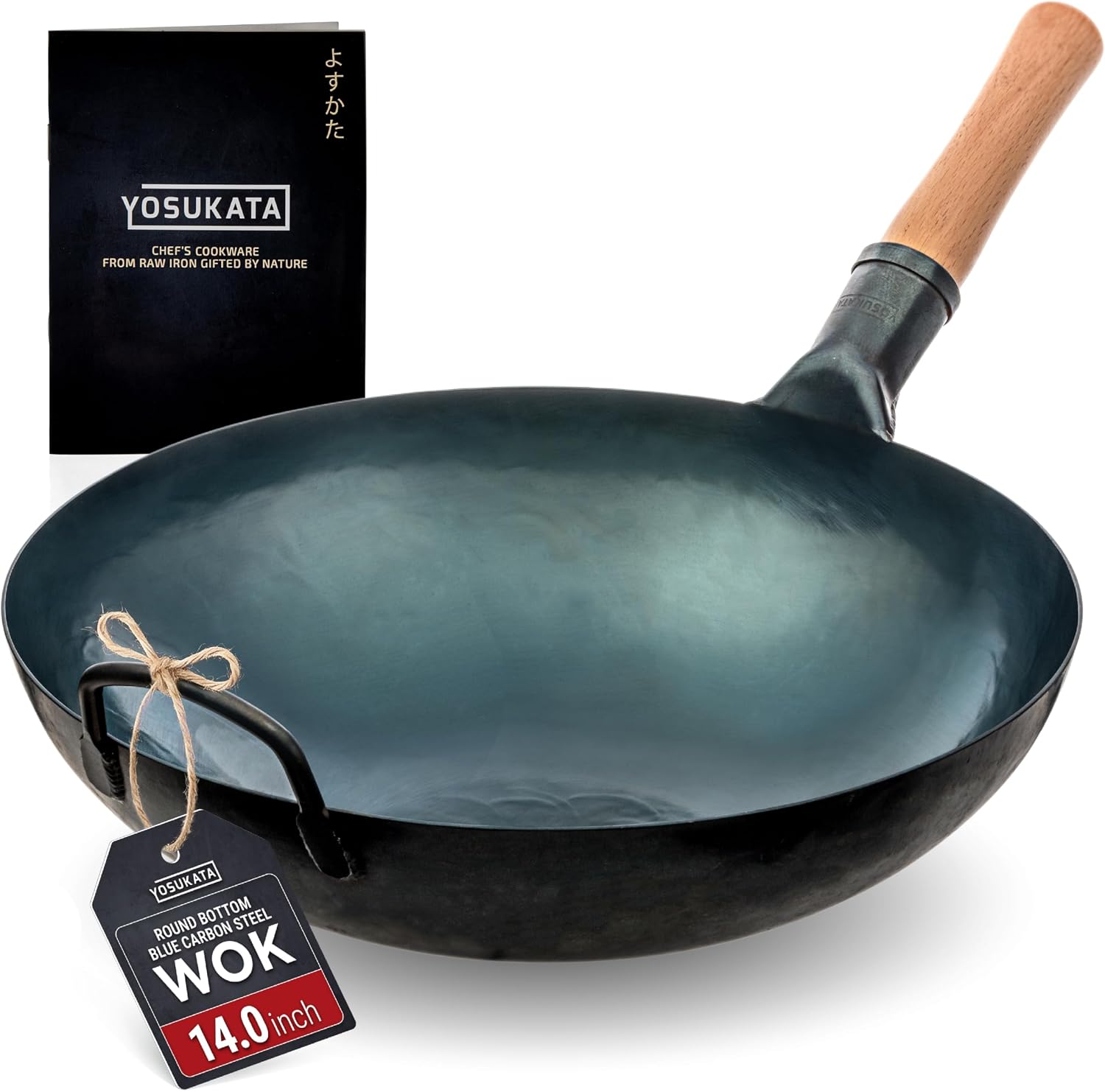
Round bottom options require a gas burner ring or open fire setup because their curved profile cannot rest flat on smooth surfaces. Consider your kitchen stove before selecting a shape.
Evaluating Material Gauge and Weight
Material thickness directly impacts how a pan holds heat and how heavy it feels to lift. Thicker 15-gauge steel retains heat efficiently and resists warping under intense temperatures, but adds noticeable weight to the cookware.
Lighter carbon steel options reduce arm fatigue during long stir-frying sessions. Balancing heft with maneuverability depends on your personal physical comfort and cooking style.
Understanding Seasoning and Maintenance Needs
Carbon steel cookware relies on oil seasoning to build a natural non-stick surface over time. Many models arrive pre-seasoned to give you a head start, but ongoing maintenance is required after every use.
Hand washing with warm water is standard across these pans. Following manufacturer cleaning guidelines prevents rust and preserves the seasoning layer for future cooking sessions.
Matching Stovetop Compatibility Requirements
Stove compatibility varies widely based on the wok's base design and material composition. Some pans work universally across gas, electric, and induction surfaces, while others restrict use to gas flames.
Checking the listed compatible devices ensures the pan functions correctly on your specific heat source. Selecting the wrong compatibility can result in poor heat transfer or instability.
Handle Materials and Ergonomic Design
Handles made from wood provide a comfortable, non-slip grip while remaining cool to the touch during high-heat cooking. Ergonomic shapes help you stabilize the pan when tossing ingredients.
Consider handle length and weight distribution relative to the pan body. A well-balanced handle reduces strain on your wrist during repetitive stirring tasks.
Diameter and Depth Dimensions
Pan dimensions dictate how much food you can prepare at one time. Diameters ranging from 12.6 inches to 14 inches accommodate family-sized stir-fries and deep-frying tasks.
Depth measurements and cooking surface diameters also influence how easily you can toss ingredients without spilling. Match the physical dimensions to your typical portion sizes.
Frequently asked questions
Can carbon steel woks be used on induction stovetops?
Many flat-bottom carbon steel woks are compatible with induction cooktops, provided the base makes full contact with the glass surface. However, traditional round-bottom models cannot be used on induction because their curved shape prevents them from resting flat on the burner element. Always check the manufacturer compatibility specifications before purchasing a pan for an induction stove.
How do I clean and maintain a pre-seasoned carbon steel wok?
Carbon steel cookware typically requires hand washing with warm water and mild soap if necessary, followed by thorough drying to prevent rust. After cleaning, apply a thin layer of cooking oil across the surface before storing the pan. Regular oil conditioning maintains the natural non-stick properties and protects the metal from moisture damage over time.
What is the difference between flat bottom and round bottom woks?
Flat bottom woks feature a stabilized base designed to sit directly on electric coil, smooth glass, induction, and gas stovetops. Round bottom woks feature a curved exterior that mimics traditional restaurant pans, making them ideal for gas burners and open fire setups when paired with a support ring. Your choice depends entirely on the type of stove in your kitchen.
Why does carbon steel require seasoning with oil?
Seasoning involves bonding thin layers of oil to the heated metal surface, creating a natural, chemical-free non-stick coating. This protective layer prevents food from sticking during high-heat cooking and guards the raw steel against oxidation and rust. While pre-seasoned options offer a head start, ongoing oil application improves the cooking surface over years of use.
Are wooden handles safe for high-heat cooking?
Wooden handles provide an ergonomic, cool-touch grip that remains comfortable during long cooking sessions on stovetops. Because wood can char or degrade under extreme heat, these handles are generally designed for stovetop use rather than placement inside high-temperature conventional ovens. Always verify the manufacturer temperature limits if you plan to use cookware near open flames or ovens.