Appliances · Buying Guide
Best Made In Copper Cookware Sets for Precision Kitchen Cooking
Choosing the right cookware set for your kitchen requires a careful look at materials, heat distribution, and daily maintenance needs. Whether you are searing meats, simmering delicate sauces, or boiling large batches of pasta, having the proper pots and pans makes all the difference. Premium cookware collections often combine high-performance metals like copper and aluminum with durable stainless steel surfaces to achieve rapid, even heating across the entire cooking base.
Navigating the options can feel overwhelming when comparing multi-ply construction, handle designs, and stovetop compatibility. Some sets focus on pure copper responsiveness, while others emphasize stainless steel durability or specialized handle finishes. Reviewing the specific features of each collection helps you select a reliable set that fits your everyday cooking habits without unnecessary guesswork.
As an Amazon Associate, StacyLaughs earns from qualifying purchases.
Buying guide
Material Construction and Core Layers
Understanding the underlying metal layers in cookware helps determine how well pots and pans handle heat. Many premium sets feature multi-ply construction, bonding outer layers of stainless steel or copper around an aluminum or pure copper core. This combination allows heat to travel rapidly from the base up the sidewalls, preventing hot spots that can scorch delicate sauces.
Pure copper offers unmatched thermal responsiveness, reacting instantly to flame adjustments on your stovetop. However, pairing copper with a stainless steel interior ensures that acidic foods do not react with the cooking surface. Evaluating how these metals are layered gives you a clear picture of long-term durability and daily cooking performance.
Stovetop Compatibility and Induction Needs
Before purchasing any cookware collection, verify that the materials match your kitchen cooktop. Traditional copper and aluminum pans often lack magnetic properties required by induction burners unless they feature a bonded stainless steel base or wrap-around exterior plate. Gas and electric ceramic cooktops generally accept all metal types, giving you broader flexibility when selecting pots and pans.
If you use an induction cooktop, look specifically for sets engineered with magnetic stainless steel exteriors or induction-ready bases. Some traditional copper collections require purchasing separate interface discs to function on induction surfaces. Checking compatibility details ahead of time prevents unexpected heating issues and ensures your new cookware performs seamlessly across your specific kitchen appliances.
Handle Design and Ergonomic Comfort
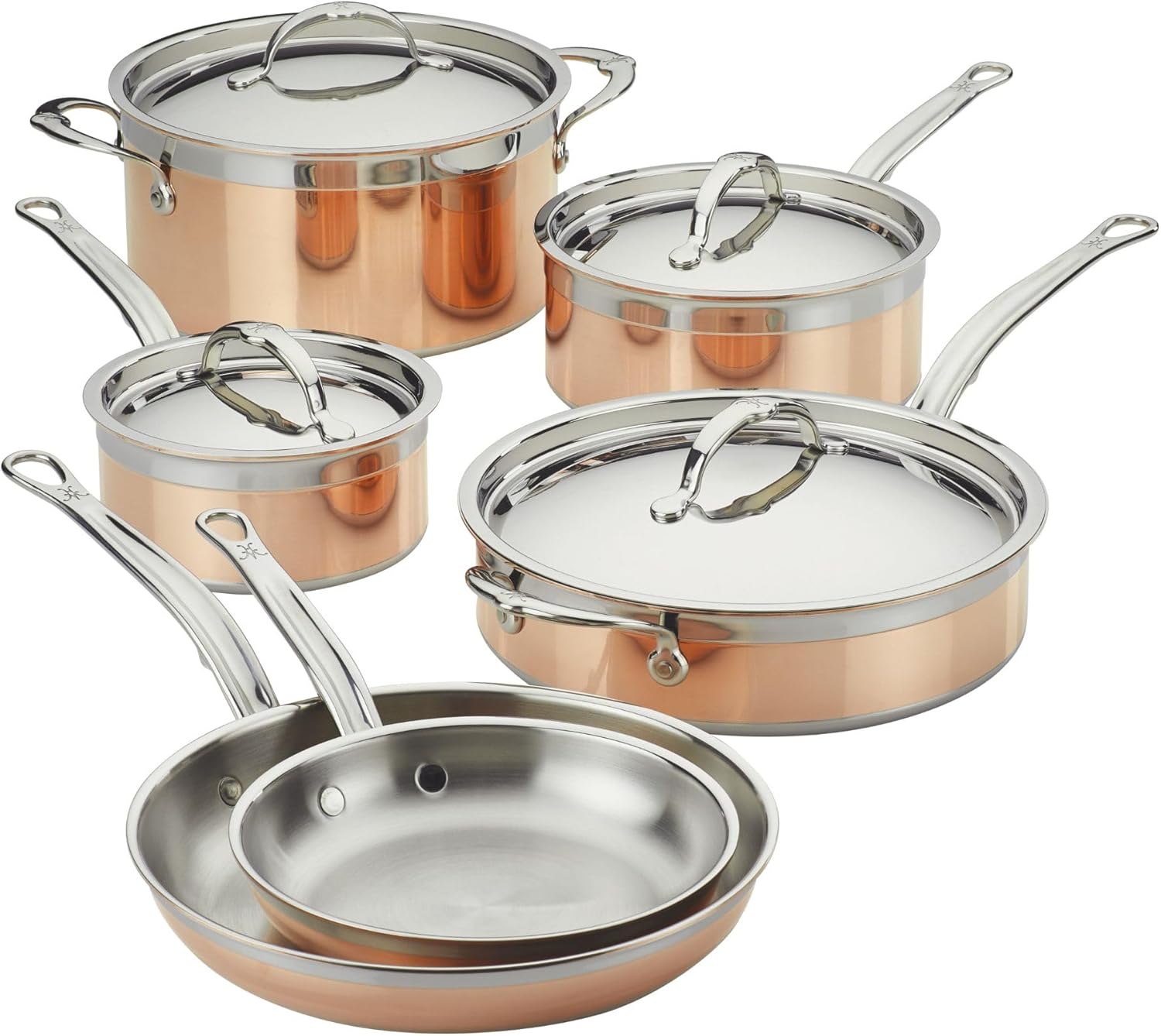
The way handles are attached and shaped directly impacts your daily cooking comfort and safety. Riveted handles provide permanent strength, holding pots and pans securely through years of heavy family meal preparation. Many professional collections feature hollow-core designs or thermal cutouts that slow the transfer of heat from the stovetop, helping handles stay more comfortable to the touch.
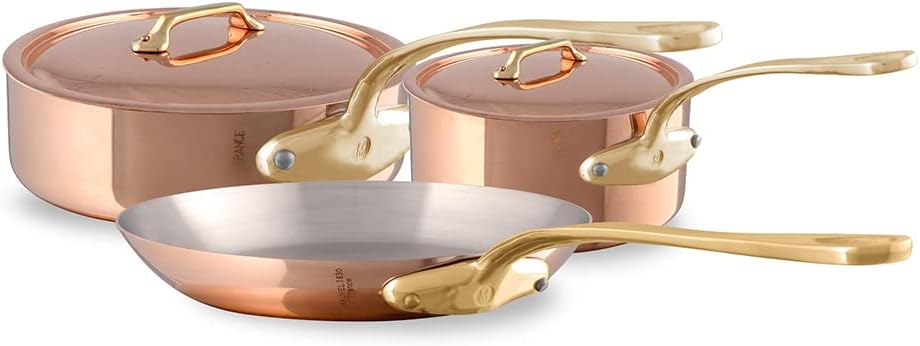
Material choices also matter when considering grip and aesthetics. Stainless steel handles offer sleek durability, while traditional brass handles provide a balanced, substantial feel in the hand. Evaluating the length, angle, and finish of each handle ensures you can lift heavy stockpots and tilt sauté pans with confidence and control during active kitchen tasks.
Maintenance Guidelines and Cleaning Care
Proper cleaning routines protect your investment and keep your cookware looking pristine over years of use. Most high-end copper and multi-ply stainless steel sets recommend hand washing rather than running items through an automated dishwasher. Harsh detergents and abrasive scouring pads can scratch polished metal finishes, dulling exterior copper or damaging specialized brass handles.
Following manufacturer care guidelines also involves managing thermal shock. Allowing hot pans to cool gradually before washing prevents warping and extends the lifespan of bonded metal layers. Dedicating a few minutes to gentle manual washing and soft cloth drying ensures your pots and pans maintain their structural integrity and polished appearance for every meal.
Lid Variations and Cooking Visibility
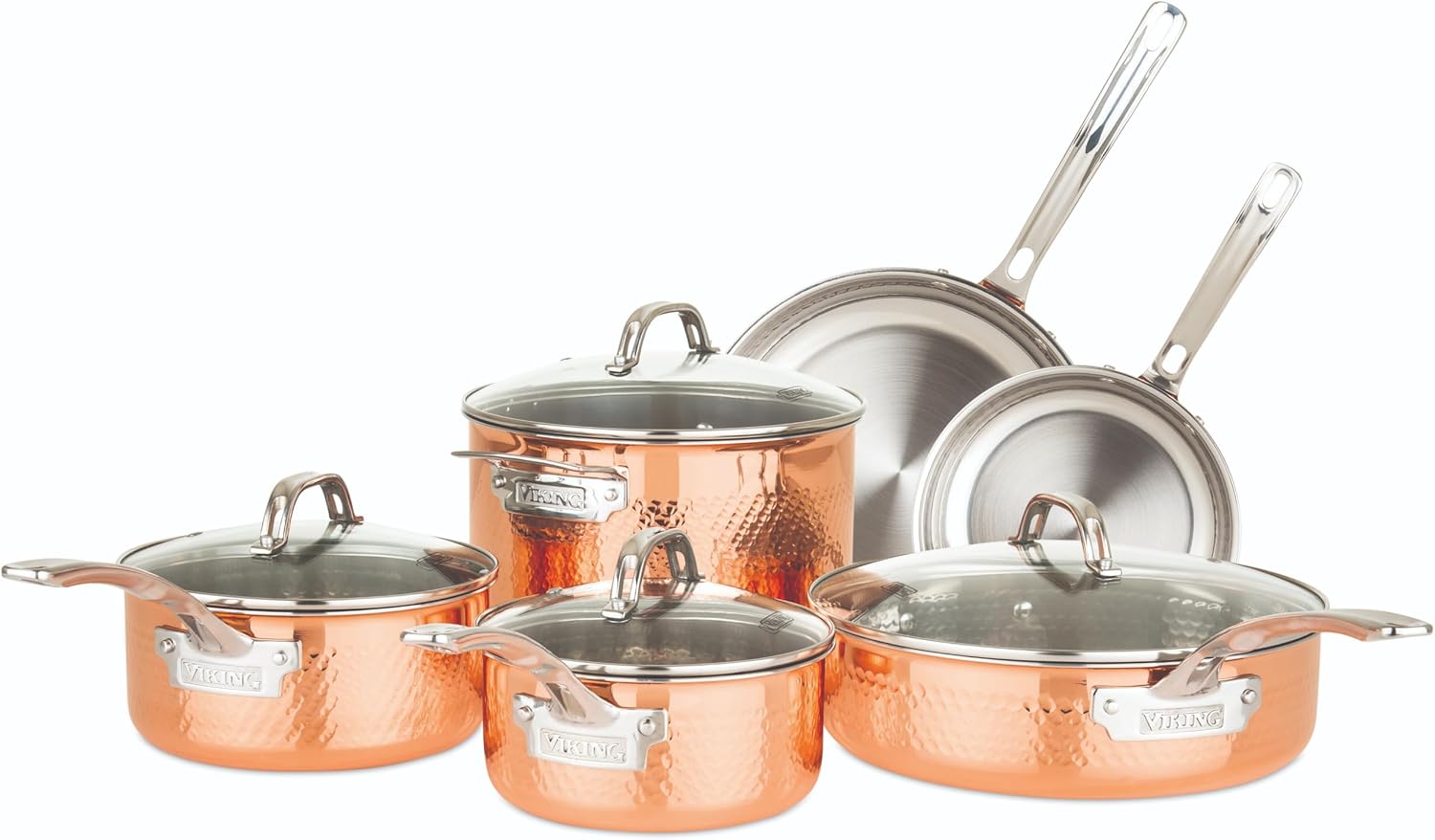
Lids play a vital role in trapping moisture, regulating internal temperatures, and speeding up boiling times for stocks and pasta. Selecting between solid metal lids and vented glass covers depends entirely on your cooking preferences. Solid stainless steel or copper lids offer maximum heat retention and durability, standing up to high oven temperatures without warping or cracking.
Vented glass lids allow you to monitor simmering dishes and food progress without lifting the cover and releasing accumulated steam. However, glass lids often carry lower maximum temperature limits for oven use compared to all-metal alternatives. Reviewing lid specifications helps you choose a set that supports both stovetop observation and high-heat oven roasting requirements.
Set Configuration and Vessel Variety
Cookware sets come in various piece counts, ranging from compact five-piece collections to extensive ten-piece bundles. A smaller set typically includes a basic saucepan, sauté pan, and skillet, which works well for individuals or couples with minimal storage space. Larger ten-piece configurations add specialized vessels like larger stockpots, secondary saucepans, and multi-quart sauciers to handle complex family meals.
Assessing your typical cooking habits helps determine which vessel selection best suits your kitchen workflow. If you frequently boil pasta, make homemade sauces, and sear meats simultaneously, a larger multi-piece set provides the necessary variety. Matching the included pot sizes to your household needs ensures you use every piece without cluttering your kitchen cabinets with redundant pans.
Frequently asked questions
Can copper cookware be used on modern induction cooktops?
Many copper cookware collections require specific design features to function properly on induction burners. Because traditional copper and aluminum are non-magnetic, induction cooktops cannot heat them directly unless the manufacturer includes a bonded magnetic stainless steel exterior or wrap-around base plate. Some traditional French copper sets require a separate induction interface disc placed between the burner and the pan. Always check the manufacturer specifications to confirm whether a specific copper set works with induction cooktops or if additional accessories are necessary for proper stovetop operation.
Is hand washing required for copper and multi-ply stainless steel cookware?
Most manufacturers strongly recommend hand washing high-end copper and multi-ply stainless steel cookware rather than placing them in a dishwasher. Automated dishwashers use harsh detergents, intense water pressure, and abrasive heat cycles that can dull polished metal surfaces, discolor exterior copper, and damage specialized handle finishes. Hand washing with mild soap and a soft sponge preserves the luster and protective layers of your pots and pans. Taking a few extra moments to wash and dry your cookware manually ensures long-lasting durability and consistent cooking performance.
What is the advantage of a copper core in bonded cookware?
A copper core provides exceptional thermal conductivity, allowing heat to spread rapidly and evenly from the base all the way up to the rim of the pan. This eliminates localized hot spots that can easily burn sauces or sear meats unevenly. Because copper responds instantly to changes in stovetop temperature, cooks gain precise control over delicate simmering and searing tasks. Combining this highly conductive copper center with durable stainless steel exterior and interior layers creates a resilient cooking vessel that balances professional heat performance with everyday durability.
How do I prevent warping when using multi-ply cookware?
Preventing warping requires managing thermal shock by allowing hot pans to cool down gradually before submerging them in water or running them under a tap. Placing a scorching hot pan directly into cold water creates a sudden temperature shift that can warp bonded metal layers. Additionally, avoid exposing empty pans to high heat for extended periods on active burners. Gradual heating and cooling practices protect the flat cooking surface, ensuring your pots and pans maintain steady contact with stovetop burners over years of daily use.
What is the difference between solid metal lids and glass lids?
Solid metal lids are crafted from stainless steel or copper to match the cookware body, offering maximum durability and higher oven temperature tolerances. They trap heat efficiently and withstand intense broiler heat without degradation. Vented glass lids allow you to observe cooking food and check liquid levels without lifting the cover, which helps maintain internal temperatures. However, glass lids generally feature lower maximum oven temperature ratings than all-metal lids. Choosing between them depends on whether you prioritize visual monitoring or higher oven-safe cooking limits.