Appliances · Buying Guide
Best Metal for Cookware: Choosing Durable Stainless Steel Sets
Finding the right materials for daily meal preparation involves understanding how different metals conduct heat and hold up over time in busy home kitchens. Stainless steel remains a top choice for cooking enthusiasts because it resists corrosion, cleans easily, and provides a reliable cooking surface for everything from boiling pasta to searing meats on busy days.
Multi-clad constructions and encapsulated aluminum bases further improve how heat moves across cookware pans, reducing hot spots and enhancing overall cooking precision across various recipes. Reviewing these specific stainless steel collections helps buyers match pot and pan configurations directly to their everyday meal preparation routines, kitchen storage spaces, and diverse stovetop compatibilities.
As an Amazon Associate, StacyLaughs earns from qualifying purchases.
Buying guide
Core Metal Construction and Cladding
Choosing the right metal for cookware starts with understanding how different layers interact during heating and daily use. Pure aluminum offers rapid thermal conductivity, distributing heat quickly across the entire cooking surface to eliminate cold spots. However, bare aluminum can react negatively to acidic foods like tomatoes and lacks the structural durability needed against heavy daily kitchen wear.
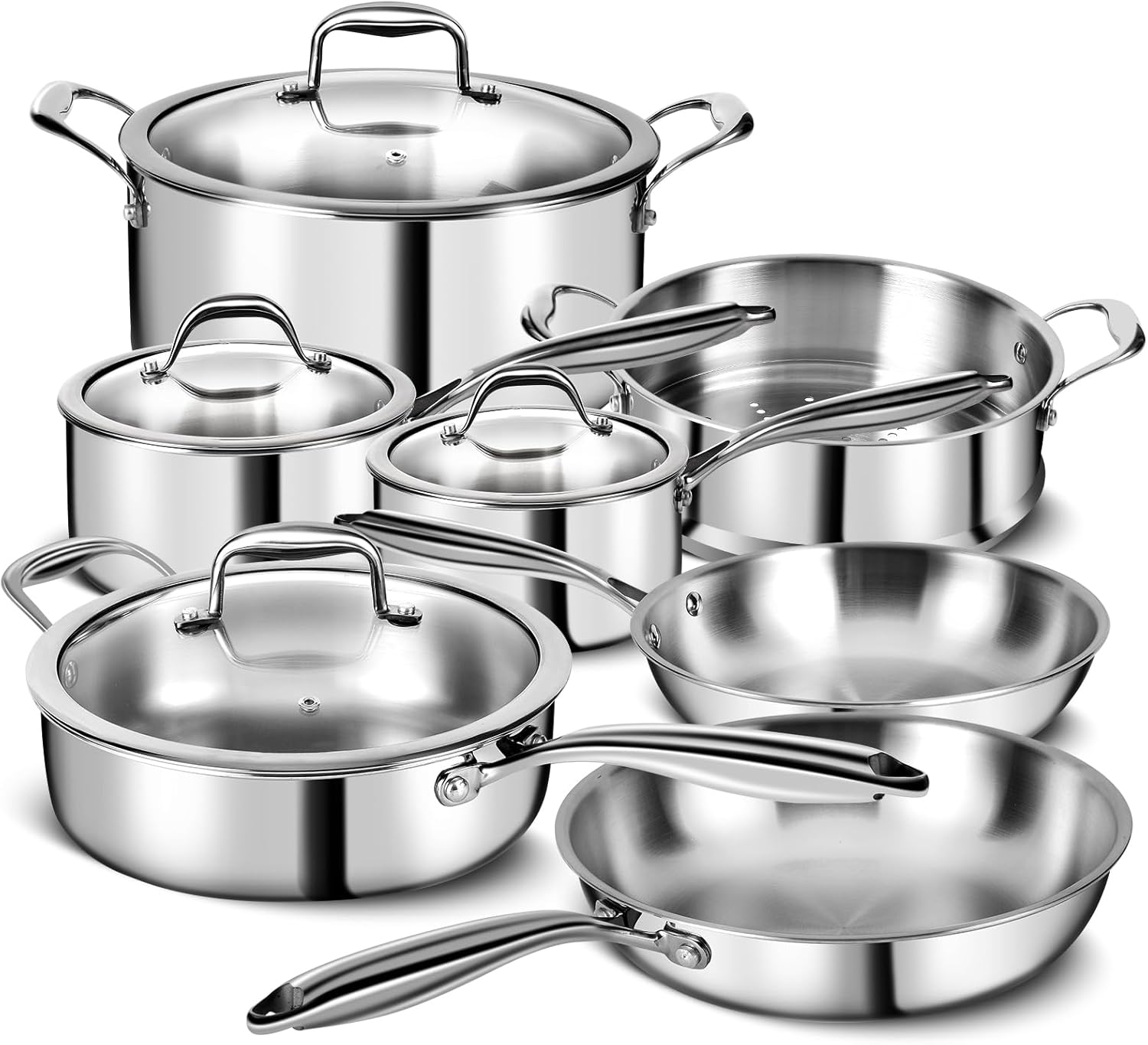
Combining metals through multi-clad or tri-ply construction solves these performance issues by sandwiching a thick aluminum core between durable stainless steel outer layers. This manufacturing method pairs the superior heat conductivity of aluminum with the corrosion resistance and polished strength of steel, creating reliable pots and pans that perform consistently across gas, electric, and induction cooktops.
Stovetop Compatibility and Induction Bases
Modern kitchens frequently feature diverse stovetop technologies, making cross-compatibility an essential purchasing factor for any cookware investment decision. Traditional gas and electric burners accept nearly all cookware materials easily, but modern induction cooktops specifically require magnetic metals on the base to complete the electrical circuit and generate cooking heat effectively during meal preparation.
Stainless steel cookware sets often incorporate a specialized magnetic exterior layer, such as grade four-thirty steel, to ensure seamless induction performance without sacrificing interior food safety or overall structural durability. Checking these specific base specifications guarantees that your chosen pots and pans will heat efficiently and reliably regardless of your kitchen setup.
Surface Finishes and Nonstick Technologies
Selecting between a traditional mirror-finished stainless steel surface and an advanced nonstick coating depends on your preferred cooking techniques. Traditional stainless steel provides exceptional searing capabilities and develops rich fond for pan sauces, though it requires proper preheating and fat usage to prevent sticking during everyday meal preparation tasks.
Hybrid nonstick coatings and textured ceramic surfaces combine metal durability with effortless food release, allowing you to cook with less oil and simplify cleanup routines. Many modern nonstick designs also accommodate metal utensils, offering greater versatility for cooks who prefer low-maintenance cleanup without sacrificing the structural strength of a tri-ply metal foundation.
Handle Design and Ergonomic Control
Handle construction heavily influences safety, comfort, and control when moving heavy pots filled with boiling water or dense ingredients. Riveted stainless steel handles provide permanent attachment security compared to screwed alternatives, ensuring that handles will not loosen over extended years of frequent kitchen use and heavy lifting.
Ergonomic shapes designed for underhand grips offer superior balance and leverage, especially when tilting large frying pans or transferring food to serving platters. Look for handles featuring heat isolation properties that remain comfortable to touch on stovetops, while remembering to use protective oven mitts whenever cookware transitions into high-temperature baking environments.
Lid Materials and Heat Retention
Lids play a critical role in locking in moisture, regulating internal temperatures, and speeding up boiling times across various recipes. Tempered glass lids allow cooks to monitor food progress visually without lifting the cover and releasing accumulated steam, making them exceptionally convenient for daily simmering tasks and monitoring vegetable steaming.
Stainless steel lids offer maximum durability and higher heat tolerance for oven-based braising, though they lack visual transparency. When evaluating cookware sets, consider whether you prefer monitoring food through glass covers or utilizing solid metal lids designed to withstand intensive baking temperatures alongside your main pots and pans.
Set Configurations and Storage Planning
Cookware sets vary dramatically in piece count, ranging from focused single-pan options to comprehensive seventeen-piece collections that include multiple saucepans, stockpots, skillets, and accessories. Assessing your household size and typical meal preparation habits helps determine whether a large collection is genuinely useful or if a smaller, targeted set fits your cooking style better.
Larger multi-piece configurations demand significant cabinet and drawer storage space, requiring careful kitchen planning before purchase. Additionally, verify whether the stated piece count includes lids as separate items, ensuring you have enough distinct cooking vessels to support simultaneous meal preparation for your family and guests.
Frequently asked questions
What makes stainless steel a popular choice for cookware sets?
Stainless steel remains popular because it provides exceptional durability, resists corrosion, and does not react negatively with acidic ingredients during cooking. It offers a sturdy foundation that withstands daily kitchen use across generations. When paired with an aluminum or copper core, stainless steel delivers even heat distribution while maintaining a sleek, professional appearance. Its compatibility with all cooktop types, including induction, makes it a versatile, long-lasting investment for any home kitchen.
Can metal utensils be used on stainless steel cookware?
Traditional stainless steel surfaces are hard enough to withstand metal utensils without sustaining functional damage, though scratching may occur over time. However, cookware featuring advanced nonstick or ceramic coatings requires careful attention to manufacturer guidelines. Many modern hybrid nonstick sets explicitly state compatibility with metal utensils due to reinforced protective layers. Always check the specific product features before using metal spatulas or whisks on coated nonstick cooking surfaces.
Why do some stainless steel pans feature an aluminum core?
Stainless steel on its own is a relatively poor conductor of heat, which can lead to localized hot spots and uneven cooking results. Manufacturers sandwich a thick layer of aluminum or copper between steel layers because these metals conduct heat rapidly and uniformly. This multi-clad construction allows the pan to heat up quickly and spread thermal energy evenly across the entire base and sides, ensuring precise temperature control for simmering, searing, and boiling tasks.
How should stainless steel cookware be cleaned after cooking?
Most stainless steel cookware is engineered to be dishwasher safe, offering convenient cleanup after family meals. However, hand washing with warm soapy water and a non-abrasive sponge helps preserve the polished mirror exterior and prevent water spots. For stubborn food residue or burned-on bits, soaking the pan or using a gentle stainless steel cleaner restores the surface without harming the metal construction. Always follow specific manufacturer care recommendations to maintain the warranty.
Are stainless steel pots and pans safe for oven use?
Yes, most stainless steel cookware is designed to transition safely from the stovetop into the oven for baking, roasting, or broiling tasks. However, maximum temperature limits vary depending on the specific components. While metal bodies and stainless steel handles often withstand temperatures up to five hundred or six hundred degrees, attached tempered glass lids usually feature lower heat thresholds. Always verify the manufacturer temperature limits for both pans and lids before baking.