Appliances · Buying Guide
Best Ninja Neverstick Cookware Set Options for Everyday Kitchens
Choosing the right cookware set for your kitchen involves balancing daily meal preparation needs with proper storage constraints and stovetop compatibility. A reliable cookware collection ensures that heat distributes evenly across various burners, preventing hot spots and scorched meals. Modern ceramic options provide smooth nonstick releases without requiring excessive oils or butter during everyday cooking tasks.
Evaluating different multi-piece configurations helps match your household size and cooking habits with appropriate pot and pan dimensions. Whether you frequently sear meats, simmer large batches of soup, or bake casseroles directly in the oven, understanding material construction and handle designs guides a practical purchase. Exploring these curated selections highlights specific configurations designed to fit diverse culinary routines seamlessly.
As an Amazon Associate, StacyLaughs earns from qualifying purchases.
Buying guide
Evaluating Piece Count and Set Composition
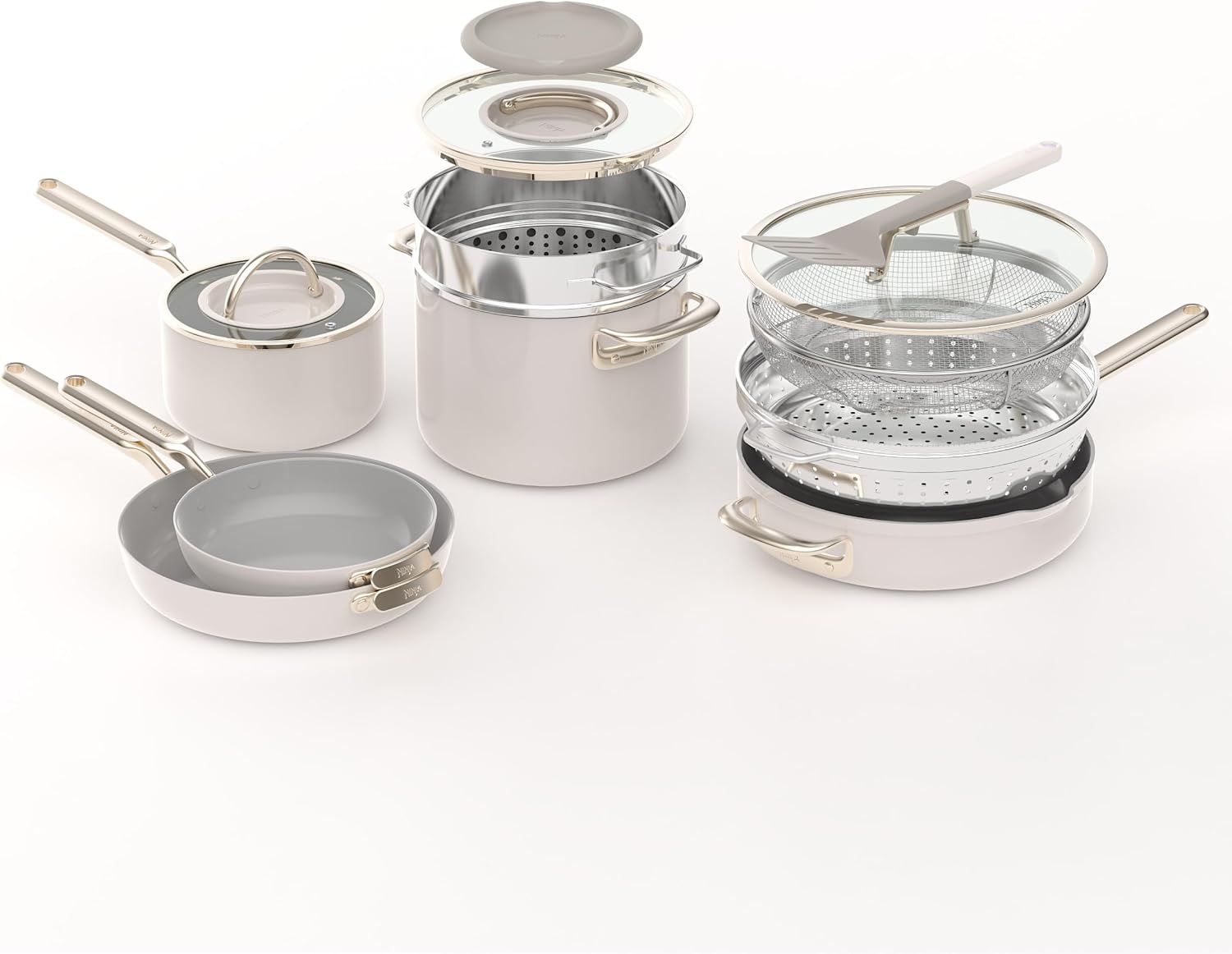
Choosing the right cookware set begins with examining how many pieces match your daily cooking habits. Smaller households often find compact five-piece configurations sufficient for basic meal preparation. Larger families frequently require eleven to thirteen-piece collections that incorporate stock pots, sauté pans, and specialized baskets. Matching the piece count to your typical recipes ensures you have the correct vessel dimensions without accumulating unused pots that crowd your kitchen cabinets.
Consider whether you need specialized additions like steamer baskets, strainer inserts, or multi-purpose pans. These extra components expand your culinary capabilities by allowing you to steam vegetables or strain pasta without extra kitchen tools. Reviewing the exact contents of each set prevents surprises and guarantees that your kitchen investment addresses your specific meal preparation routines effectively from day one.
Understanding Ceramic Nonstick Coatings
Modern ceramic nonstick surfaces offer smooth food release with minimal oil or butter during cooking tasks. These coatings are manufactured without harmful chemicals like PFAS, PFOA, PTFE, lead, or cadmium. Evaluating the durability of the coating helps determine how well the cookware resists everyday wear, scratching from utensils, and aggressive scrubbing. Premium bonding techniques help maintain reliable nonstick performance over years of regular family meal preparation.
Always check manufacturer guidelines regarding utensil compatibility for your chosen ceramic surface. Some advanced ceramic formulations safely accommodate metal utensils, while others require non-metal tools made of silicone, wood, or plastic to prevent scratching. Understanding these maintenance requirements preserves the integrity of the nonstick coating and ensures consistent food release throughout the lifespan of your pots and pans.
Assessing Heat Distribution and Base Construction
Efficient thermal performance depends heavily on the thickness and material composition of the cookware base. Heavy-gauge aluminum bases heat up rapidly and distribute thermal energy evenly across the entire cooking surface. This uniform heat distribution eliminates annoying hot spots that can scorch delicate sauces or unevenly cook meats. Checking base specifications ensures your cookware performs reliably across various burner types.
Stainless steel exterior layers combined with aluminum cores provide robust structural integrity alongside excellent thermal conductivity. Whether you are simmering a delicate reduction or searing a thick steak at high temperatures, a well-constructed base maintains stable cooking temperatures. Evaluating base thickness helps you select cookware capable of handling both gentle simmering and intensive browning routines without warping.
Verifying Stovetop and Oven Compatibility
Versatile cookware should transition seamlessly between different stovetop types, including gas, electric coil, glass ceramic, and induction cooktops. Ensuring all-range capability prevents compatibility issues if you upgrade your kitchen appliances in the future. Additionally, check the maximum oven safety temperature limits for both the pots and their accompanying lids. Higher temperature tolerances allow you to start searing food on the burner and finish it inside a hot oven.
Glass lids and metal lids often feature different heat thresholds, which affects your baking and broiling options. Reviewing these specific thermal limits ensures you can safely execute complex recipes requiring extended oven roasting. Selecting cookware with broad compatibility gives you the freedom to experiment with diverse cooking techniques without damaging your kitchen investment.
Examining Handle Design and Ergonomics
Comfortable handles significantly improve safety and control while moving heavy pots filled with hot liquids. Silicone handle grips provide a secure, cool-touch surface that lets you manage stovetop cooking without reaching for protective oven mitts. In contrast, polished steel or metal handles offer exceptional durability and high-temperature oven safety but require mitts during extended boiling sessions due to heat transfer.
Rivet-free interior handle attachments prevent food particles from getting trapped in hard-to-clean crevices. Evaluating how handles are secured to the cookware body helps streamline your cleanup routine after heavy meal preparation. Choosing the right handle material depends entirely on whether you prioritize cool-touch stovetop convenience or maximum oven temperature resistance.
Optimizing Kitchen Storage and Nesting Systems
Kitchen cabinet space is often limited, making efficient storage design a critical factor when selecting a cookware set. Look for collections featuring built-in nesting guides that prevent stacked pans from scratching or chipping each other. These smart storage features eliminate the need for bulky aftermarket protectors and save significant shelf space compared to conventional cookware designs.
Flat-topped lids that stack seamlessly further reduce vertical clutter inside crowded kitchen cupboards. Evaluating the storage footprint of a multi-piece set ensures your kitchen remains organized and accessible. Prioritizing space-saving designs prevents cabinet overcrowding and makes retrieving your favorite pots and pans quick and effortless during busy meal preparation times.
Frequently asked questions
Can I use metal utensils on ceramic nonstick cookware sets?
Utensil compatibility depends entirely on the specific ceramic formulation used by the manufacturer. Certain advanced ceramic collections feature robust titanium-infused or hardened coatings designed to withstand metal spoons and spatulas without scratching. However, many traditional ceramic pots and pans require non-metal tools crafted from silicone, wood, or plastic to preserve the smooth nonstick release surface over time. Always check the specific product guidelines before using metal implements to prevent accidental surface damage.
Are ceramic cookware sets compatible with induction cooktops?
Many modern ceramic cookware collections are fully compatible with induction cooktops, along with gas, electric coil, and glass ceramic surfaces. Induction cooking relies on magnetic properties to generate heat directly within the pan base. To ensure compatibility, manufacturers typically incorporate magnetic stainless steel layers or specialized conductive bases into the cookware construction. Reviewing the range compatibility specifications ensures the pots and pans will function correctly on your specific kitchen stovetop.
How should I clean and maintain my ceramic cookware?
Cleaning ceramic cookware is generally straightforward due to the smooth nonstick surface that prevents food from sticking tightly. Most sets are dishwasher safe, though hand washing with mild dish soap and a soft sponge helps extend the lifespan of the nonstick coating. Avoid using harsh abrasive scouring pads or steel wool, as these can scratch and degrade the finish. Following proper cleaning and maintenance instructions keeps your pots and pans performing reliably.
What is the benefit of a nesting storage system in cookware?
Built-in nesting guides and smart storage designs help protect your cookware from scratching and chipping while stacked inside kitchen cabinets. These features keep stacked pans separated properly without requiring extra accessory pads or mats. Additionally, space-saving nesting systems reduce the overall footprint of the cookware collection, allowing you to store large multi-piece sets efficiently within compact kitchen cupboards. This keeps your kitchen organized and prevents surface wear during daily storage routines.
Can I put ceramic cookware sets directly into the oven?
Most ceramic cookware collections are oven safe, allowing you to transition meals smoothly from stovetop searing to oven baking or roasting. However, the maximum temperature limits vary significantly depending on the specific product construction and handle materials. Some sets withstand temperatures up to four hundred degrees Fahrenheit, while more robust configurations handle up to five hundred fifty degrees. Always verify the exact temperature limits of both the pans and any attached lids.