Appliances · Buying Guide
Best Non Stick Camping Cookware for Backpacking and Family Trips
Selecting the right non stick camping cookware transforms how you prepare meals in the outdoors. Whether you are boiling water on a backcountry trail or frying eggs at a crowded state park campsite, having reliable pots and pans simplifies outdoor cooking. Manufacturers design these portable cooking kits using durable, lightweight materials like hard anodized aluminum to ensure rapid and even heating over various camp stoves.
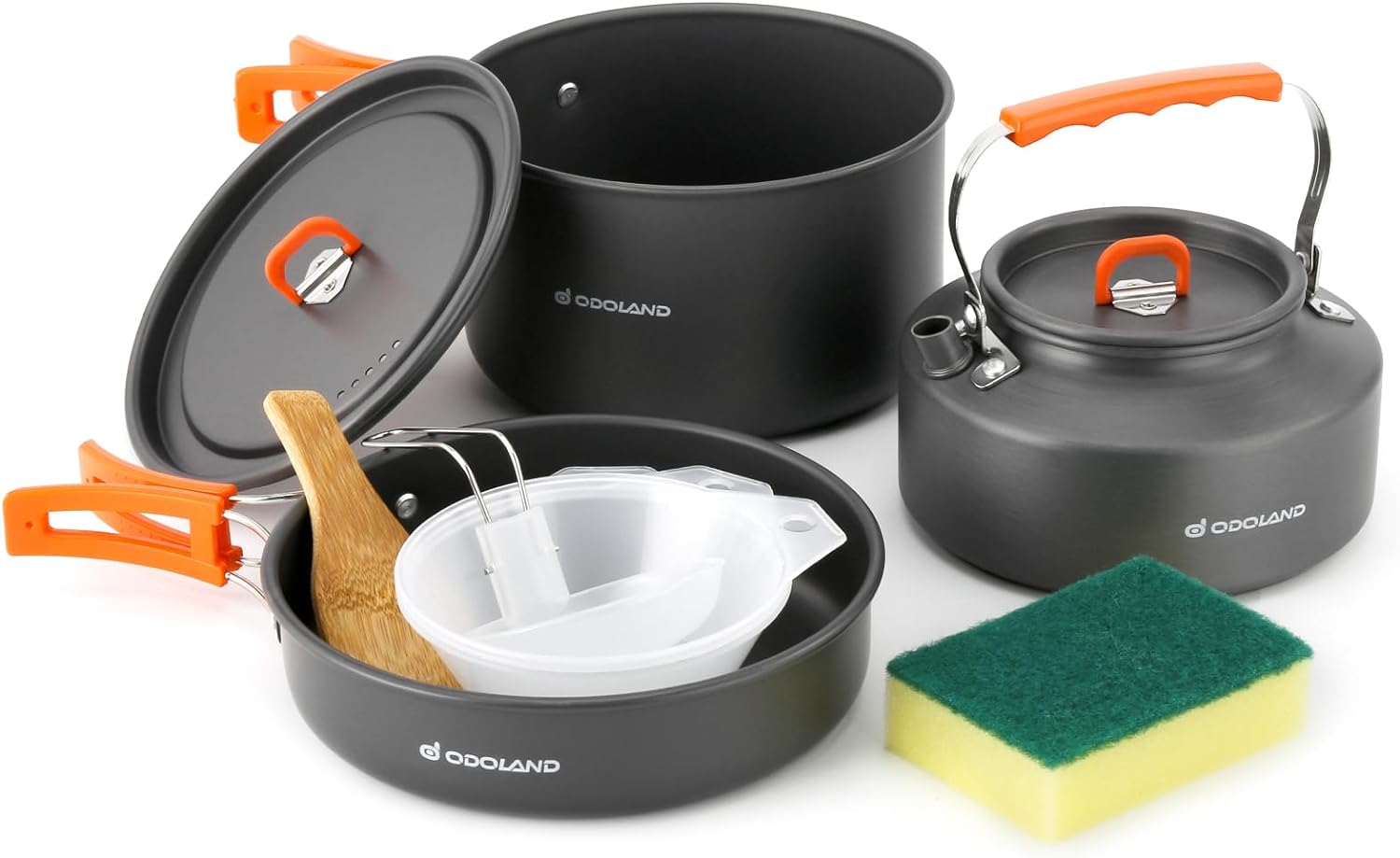
Finding a matching setup depends on your group size, travel style, and preferred menu. Some adventurers need a minimalist mess kit with a single pot and pan, while others look for multi-piece bundles complete with kettles, bowls, and detachable handles. Reviewing the physical dimensions, material composition, and included components helps you build a practical camp kitchen tailored to your next journey.
As an Amazon Associate, StacyLaughs earns from qualifying purchases.
Buying guide
Material Composition and Heat Conduction
When evaluating non stick camping cookware, material choice dictates long-term durability and daily cooking performance. Hard anodized aluminum stands out as a primary material because it conducts heat rapidly and evenly across the base of the pot or pan. This efficient thermal transfer prevents localized hot spots that can easily burn outdoor meals.
Additionally, manufacturers apply specialized non-stick coatings to these aluminum surfaces to simplify food release and post-meal cleanup. While these coatings reduce the scrubbing required after cooking sticky foods like eggs or oatmeal, they require careful temperature management. Avoiding excessively high heat preserves the protective integrity of the non-stick layer over seasons of outdoor adventures.
Weight and Packability for Backcountry Travel
Carrying cooking gear on foot requires strict attention to total weight and physical dimensions. Lightweight aluminum cookware kits often weigh under two pounds, making them highly suitable for backpackers and hikers covering extended distances. Compact nesting designs allow pots, pans, and kettles to stack neatly inside one another, conserving valuable space inside your pack.
In contrast, multi-piece collections designed for car camping or RV travel incorporate heavier components and numerous accessories. While these larger sets provide wonderful home-kitchen convenience, their added bulk makes them impractical for human-powered trail journeys. Matching your cookware weight to your specific travel method ensures comfortable movement throughout your outdoor trip.
Handle Design and Safety Mechanisms
Secure handling is essential when working with hot liquids and blazing camp stoves. Many outdoor cooking sets feature folding handles coated with thermally isolated materials to protect your fingers from accidental burns. These clever folding designs also tuck closely against the vessel walls during storage, preventing annoying snagging inside your backpack or storage bin.
Advanced locking mechanisms provide an extra layer of stability, ensuring the pot remains firmly grasped while you stir thick stews or boil water. When reviewing options, look for handles that lock securely into place during active use and release smoothly for compact packing. Reliable grips minimize accidental spills and enhance safety around open camp kitchens.
Included Accessories and Companion Utensils
Complete camp kitchen sets frequently bundle additional accessories such as bowls, plates, cups, and utensils. Selecting a kit with integrated tableware eliminates the need to pack separate eating gear, streamlining your outdoor preparation process. Many packages also include cleaning sponges, mesh storage bags, and specialized lids equipped with convenient drain holes for straining pasta.
However, more accessories increase the overall piece count and physical footprint of the kit. If you already own preferred camp cutlery or favor minimalist travel, a streamlined pot and pan pairing might suit your routine better. Weighing the convenience of bundled extras against your strict packing limits helps you choose the right configuration.
Stove Compatibility and Flame Management
Outdoor cooking environments vary widely, ranging from compact backpacking canister stoves to large multi-burner camp setups and open campfires. Most aluminum camp cookware functions effectively across propane, butane, and traditional grill setups. Ensuring your chosen pots match your preferred heat source prevents unexpected compatibility issues when preparing hot meals outdoors every single day.
Flame management remains critical when cooking with non-stick coated aluminum vessels. Keeping open flames low and contained beneath the pot base prevents direct fire exposure from wrapping up the sides, which can damage handles or degrade exterior coatings. Proper heat control preserves your cookware condition and ensures delicious trail meals.
Cleaning and Maintenance Requirements
Maintaining your non stick camping cookware requires simple cleaning routines to protect the delicate interior surface coatings from premature wear. Most manufacturers recommend hand washing aluminum pots and pans using mild soap and soft cleaning cloths or sponges. Avoiding abrasive metal scrubbers prevents deep surface scratches that compromise food release performance over time.
Drying the cookware thoroughly before nesting and storing it inside mesh carry bags prevents unwanted moisture accumulation during transit. Adhering to these basic maintenance guidelines keeps your camp kitchen operating smoothly trip after trip. Taking care of your equipment ensures dependable cooking performance whenever outdoor adventure calls your name.
Frequently asked questions
Can I use metal utensils with non stick camping cookware?
Using metal utensils with non stick camping cookware is generally discouraged because metal can scratch and damage the protective coating. Manufacturers typically recommend pairing these pots and pans with wooden, bamboo, silicone, or plastic utensils. If a set includes specific implements like a bamboo spatula or plastic bowls, rely on those friendly tools to preserve your cookware surface. Protecting the non-stick layer ensures food releases smoothly and cleanup remains fast throughout your outdoor cooking experiences.
How do I clean my non stick camping cookware on the trail?
Cleaning your non stick camping cookware on the trail is straightforward when you pack the right supplies, such as a soft cleaning sponge or cloth and mild soap. Let the pot cool down before washing to prevent warping, then gently wipe away food residue. Avoid harsh scouring pads that can strip the non-stick finish. After washing, dry each piece thoroughly with a towel or air dry them before nesting everything back into its mesh carry bag for storage.
Can I use camp cookware over an open campfire?
You can use aluminum camp cookware over an open campfire grill or flame, but proper heat management is vital. Flames should remain low and contained directly beneath the pot base to prevent them from licking up the sides, which can damage thermally insulated handles or degrade exterior finishes. Keeping the fire controlled ensures your pots heat efficiently without suffering unnecessary wear, allowing you to enjoy campfire cooking safely on every backcountry expedition you undertake.
What is the advantage of hard anodized aluminum in camp cookware?
Hard anodized aluminum offers an exceptional balance of lightweight portability and rapid, even heat distribution. This material conducts heat efficiently across the base of the pot or pan, reducing cooking times and preventing localized hot spots that burn meals. Additionally, the anodization process hardens the metal, making it durable, wear-resistant, and well-suited for rugged outdoor environments where standard kitchen pans would prove too heavy or fragile to transport easily in a backpack.
How do I choose between a minimalist kit and a multi-piece bundle?
Choosing between a minimalist kit and a multi-piece bundle depends entirely on your travel style and group size. Minimalist sets featuring a single pot and fry pan suit solo backpackers and hikers who want to minimize pack weight and bulk. Multi-piece bundles containing kettles, cups, plates, and cutlery are ideal for car campers or small groups wanting comprehensive dining utility. Evaluate your menu, transport method, and storage space to determine the right setup.