Appliances · Buying Guide
Best Non Stick Carbon Steel Wok Options for Everyday Cooking
Choosing a reliable non stick carbon steel wok can transform how you handle high-heat cooking, from quick weeknight stir-fries to slow braising. These pans rely on traditional metal seasoning and oil patinas rather than synthetic coatings to achieve food release. Because carbon steel responds rapidly to temperature changes, it offers precise control over searing and sautéing tasks on various stovetops.
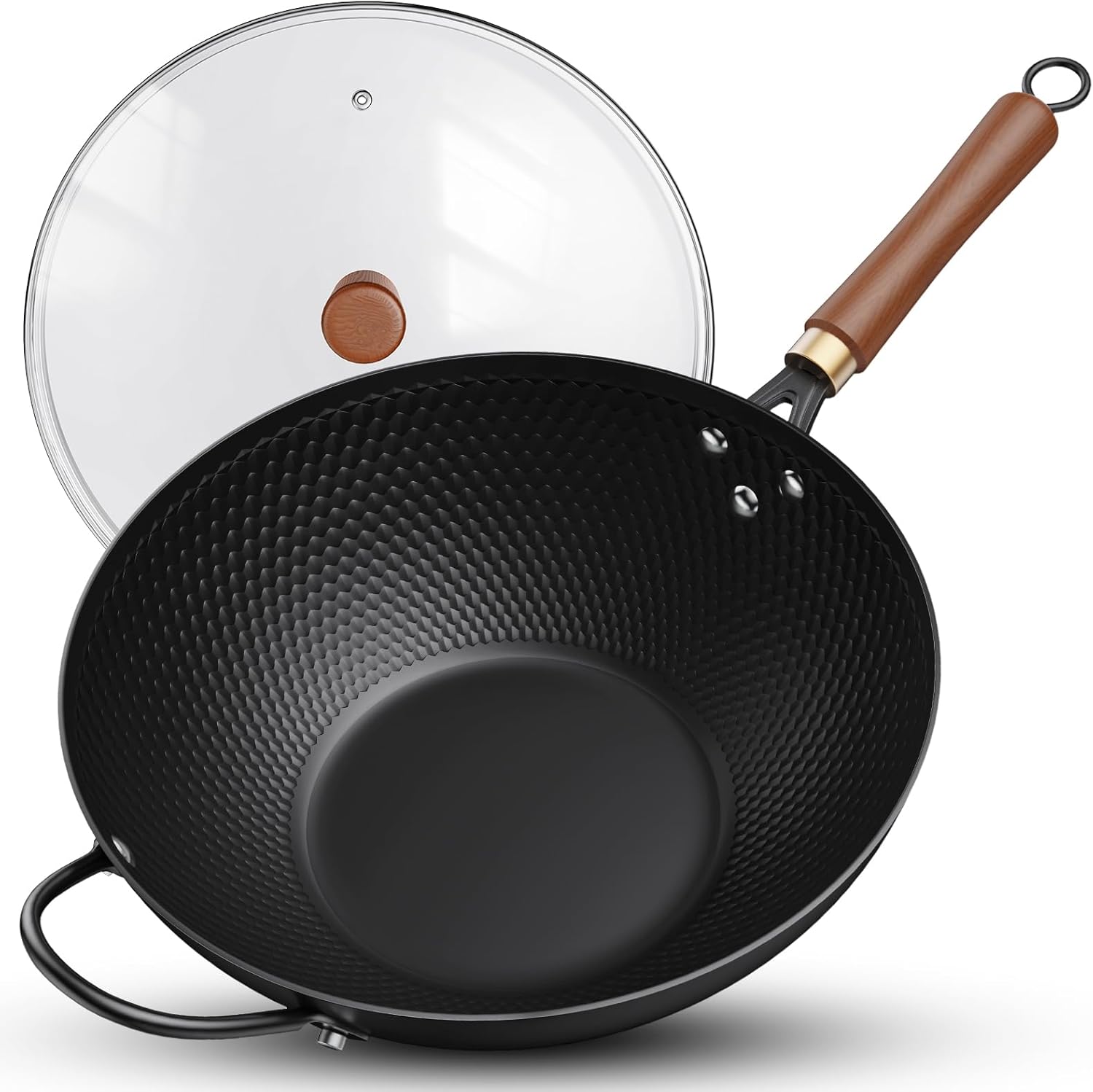
Whether you prefer a model equipped with a glass lid for monitoring progress or a lightweight forged design for effortless tossing, matching the pan to your cooking style is essential. Flat-bottom variants sit securely on modern induction elements as well as traditional gas burners, making them remarkably adaptable additions to any home kitchen setup.
As an Amazon Associate, StacyLaughs earns from qualifying purchases.
Buying guide
Material Construction and Durability
Carbon steel remains the defining material for authentic stir-fry pans, offering a middle ground between cast iron and stainless steel. It heats up rapidly, reacts instantly to burner adjustments, and withstands very high cooking temperatures without warping. Choosing a heavy-gauge build ensures long-term structural integrity during intense searing sessions.
Unlike synthetic coated pans, carbon steel relies on proper seasoning to build a natural non-stick patina over time. This metallic composition requires mindful maintenance, including hand washing and oil conditioning, but rewards you with a durable cooking surface that improves with age and frequent usage.
Base Shape and Stovetop Compatibility
Flat-bottom carbon steel woks provide exceptional versatility across modern kitchen environments. Unlike traditional rounded bottoms that demand special ring burners, flat bases sit securely on electric coils, smooth ceramic surfaces, and induction cooktops. This stable contact area ensures efficient heat transfer for everyday frying and boiling tasks.
When evaluating a wok, verify that the flat base diameter aligns with your primary cooking burner size. A well-matched base prevents hot spots and optimizes energy use, whether you cook on a standard gas range or an advanced glass-ceramic cooktop in a compact apartment kitchen.
Seasoning and Natural Nonstick Surfaces
Achieving reliable food release on carbon steel depends heavily on the seasoning process. Many modern woks arrive pre-treated at high temperatures to offer a dependable starting layer, yet they still require ongoing oil conditioning. Applying a thin layer of cooking oil after washing helps preserve this protective patina.
Natural non-stick performance builds gradually as starches and oils polymerize onto the metal pores during regular cooking. Embracing this organic process means avoiding harsh detergents and abrasive scrubbers, ensuring your pan maintains its slick cooking surface for years of reliable meal preparation.
Handle Design and Ergonomic Control
Handle configurations significantly impact how comfortable a wok feels during active cooking sessions. Traditional wooden handles stay cool to the touch and offer a secure grip when lifting heavy batches. Riveted construction provides added structural strength, preventing loosening over years of frequent flipping and stirring.
Many woks now feature a secondary helper handle opposite the main grip. This dual-handle arrangement makes transferring a filled pan much safer and easier, especially when dealing with heavy liquid-based braises or voluminous family meals that require extra leverage during kitchen cleanup.
Lids and Cooking Versatility
While traditional stir-frying is performed uncovered, adding a lid transforms your wok into a multi-functional braising and steaming vessel. Clear glass lids are particularly useful because they allow you to monitor simmering liquids and vegetables without releasing valuable heat and moisture into your kitchen environment.
Consider whether your cooking habits involve steaming dumplings or braising meats alongside fast stir-fries. A lid expands the pan utility beyond basic frying, though it also adds weight and requires additional storage space inside crowded kitchen cabinets.
Weight and Maneuverability Considerations
Pan weight dictates how easily you can toss ingredients and maneuver the wok during fast-paced cooking. Lightweight carbon steel models reduce arm fatigue significantly, making them ideal for cooks who prefer active flipping and frequent stirring without straining their wrists over extended meal prep.
Conversely, heavier gauge options provide greater thermal mass, which helps retain heat when cold ingredients are added to the pan. Balancing weight against your physical comfort ensures you select a wok that matches your cooking style and strength preferences.
Frequently asked questions
Can I use a carbon steel wok on an induction cooktop?
Yes, carbon steel woks with flat bottoms are fully compatible with induction cooktops. Because carbon steel is a ferrous metal, it interacts effectively with magnetic induction elements to generate rapid heat. To ensure optimal performance, verify that the flat base diameter matches your cooktop burner zone closely. This alignment prevents uneven heating and ensures efficient energy transfer during high-heat stir-frying, searing, and everyday cooking tasks across various modern kitchen setups.
Do I need to season a pre-seasoned carbon steel wok?
Pre-seasoned carbon steel woks arrive with a factory-applied protective layer that provides a convenient starting point for cooking right out of the box. However, like traditional cookware of this type, they still require ongoing oil seasoning over time. Regular use combined with a light application of cooking oil after hand washing helps maintain and continuously improve the natural non-stick patina, ensuring smooth food release and preventing oxidation throughout the lifespan of the pan.
Can I clean my carbon steel wok in the dishwasher?
No, carbon steel woks must never be washed in a dishwasher. Harsh dishwasher detergents and prolonged exposure to standing water will strip away the crucial seasoned oil patina and quickly cause the metal to rust. Instead, you should always wash the wok by hand using warm water and a soft sponge. Dry the pan thoroughly immediately after cleaning and apply a thin layer of cooking oil to protect the surface before storing it away.
Why does my carbon steel wok change color after cooking?
Color changes, ranging from dark blue to bronze or patchy dark spots, are completely normal and expected for carbon steel cookware. These chromatic shifts occur naturally as the metal responds to high heat and begins building its permanent seasoning layer. Far from being a defect, discoloration indicates that the carbon steel is developing the desired oxide patina, which enhances corrosion resistance and contributes to the pan natural non-stick cooking performance.
What is the benefit of a flat bottom on a wok?
A flat bottom allows a wok to sit securely and make direct contact with a wide variety of modern stovetops, including electric coils, smooth glass surfaces, and induction burners, without requiring a separate support ring. This stable base ensures efficient, even heat distribution across the cooking surface. While traditional rounded woks require specialized gas ring burners, flat-bottom designs bring high-heat stir-frying and versatile multi-purpose cooking capabilities directly into standard home kitchens.