Appliances · Buying Guide
Best Non Stick Cast Iron Cookware for Versatile Cooking
Choosing the right non stick cast iron cookware requires balancing material finishes, set components, and everyday cooking styles. Whether you prefer traditional pre-seasoned iron or smooth enamel surfaces, these collections offer dependable heat retention across various stovetops, ovens, and campfires. Evaluating your daily meal preparation needs helps determine which configuration suits your kitchen space and cooking habits best.
Navigating the available options involves understanding how different piece counts and configurations fit your cabinet storage and meal prep routines. By examining the specific items included in each set, you can find a reliable setup tailored to your specific cooking preferences without guessing about performance or material safety standards. Exploring these distinct sets reveals practical advantages for everyday meals.
As an Amazon Associate, StacyLaughs earns from qualifying purchases.
Buying guide
Material Composition and Nonstick Surfaces
Selecting the right nonstick cast iron cookware starts with understanding how different surface finishes affect your daily routine. Traditional cast iron relies on seasoned vegetable oil baked directly into the metal pores, creating a natural release layer that improves over time. This raw iron approach requires regular oil conditioning and hand-washing to maintain its protective seasoning layer.
In contrast, enameled cast iron features a glass-like porcelain coating fused to the metal body. This glazed finish eliminates the need for seasoning entirely and prevents acidic ingredients from reacting with the iron. Buyers should weigh whether they prefer the traditional maintenance of raw iron or the effortless cleanup of smooth enamel.
Piece Count and Kitchen Storage
Evaluating the number of pieces in a cookware set helps ensure it matches your household cooking volume and available storage space. Larger sets offering six to eight components provide incredible versatility, covering everything from morning eggs to weekend roasts and artisan bread baking. However, these extensive collections demand significant cabinet or rack space to store safely.
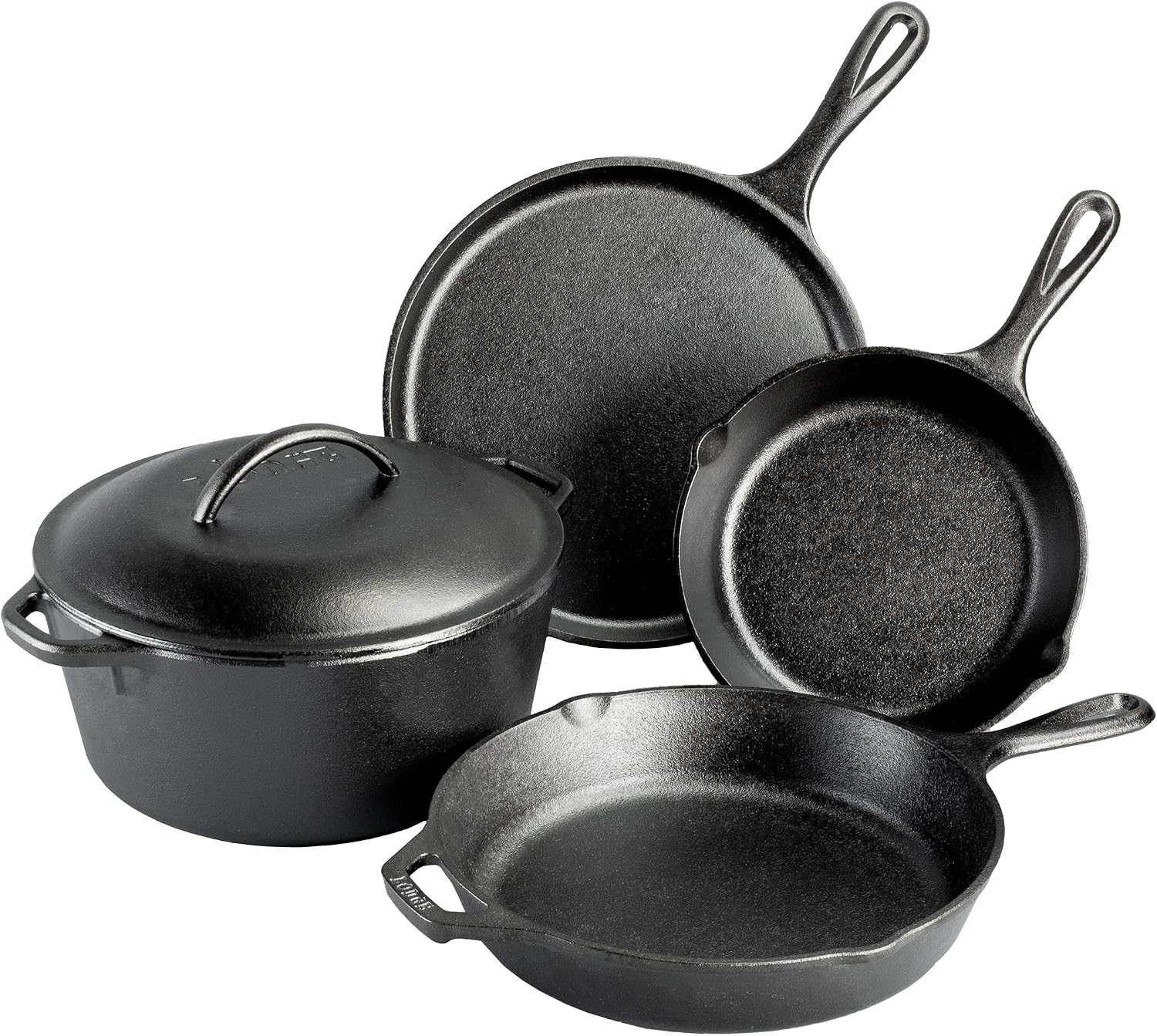
Smaller five-piece configurations focus on core essentials like standard skillets and a single Dutch oven, making them ideal for compact kitchens or minimalist cooks. Reviewing your daily meal preparation habits ensures you select a package with enough utility without cluttering your countertops or overflowing your kitchen cabinets.
Heat Retention and Distribution
Cast iron is renowned for its exceptional ability to absorb, retain, and distribute heat evenly across the entire cooking surface. This thermal property allows pots and pans to maintain stable temperatures even when cold ingredients are added to the hot pan. Whether searing thick steaks or simmering delicate stews, steady heat distribution prevents localized burning and ensures uniform cooking throughout your meal preparation process.
Both seasoned and enameled variants share this core structural advantage, though heavy walls enhance the slow-cooking performance of Dutch ovens. Understanding how your stove transfers energy helps maximize this heat retention, especially on induction and gas cooktops where consistent contact matters for optimal cooking results across various recipes.
Stovetop and Oven Compatibility
Modern cast iron cookware offers remarkable versatility across a wide variety of cooking appliances, transitioning effortlessly from stovetops to hot kitchen ovens. Most quality sets operate reliably on gas, electric, and smooth-surface induction cooktops without requiring special adapters. This cross-platform adaptability lets you sear meat on a burner before transferring the entire pan inside for roasting or baking.
Certain traditional sets also extend their utility to outdoor grills and campfires, providing rugged performance in rustic environments. Checking manufacturer compatibility guidelines ensures your chosen cookware handles your specific kitchen setup safely, whether you rely on modern glass ceramic surfaces or traditional open burner flames.
Lids and Accessories Integration
The inclusion of matching lids and specialized accessories significantly expands the practical utility of any cast iron collection. Tight-fitting lids trap moisture and steam inside Dutch ovens and casseroles, creating a self-basting environment that keeps meats tender and flavorful during long braises. Sets that include multiple lids or specialized inserts provide greater cooking flexibility for everyday recipes.
However, many basic multi-piece kits feature a single universal cover or omit lids for secondary frying pans, requiring careful management during complex multi-dish cooking. Considering whether you need dedicated covers for every single pan helps determine if a comprehensive lidded package or an open-skillet collection suits your cooking style best.
Maintenance and Long-Term Care
Proper cleaning and maintenance practices determine the long-term durability and nonstick performance of your cast iron cookware. Traditional pre-seasoned iron requires prompt hand-washing without harsh dishwashing detergents, followed immediately by thorough drying and a light oil application to prevent rust formation over time. Avoiding long water soaks keeps the natural seasoning layer completely intact.
Enameled cast iron offers easier cleanup since its smooth glazed surface tolerates mild soap and warm water, though abrasive metal scouring pads should be avoided to prevent surface scratching. Understanding these distinct upkeep requirements ensures your cookware remains a dependable kitchen companion across years of daily family meal preparation.
Frequently asked questions
What is the difference between seasoned and enameled cast iron?
Seasoned cast iron features bare metal treated with baked-on vegetable oil that builds a natural, chemical-free nonstick surface over time with regular use and maintenance. It is rugged and handles high-heat searing on grills or campfires exceptionally well. Enameled cast iron is coated with a fused glass porcelain finish, eliminating the need for seasoning and allowing you to cook acidic ingredients without metallic reactions. However, enamel requires more careful handling to avoid chipping the glazed exterior during kitchen storage or heavy use.
Can cast iron cookware be used on induction cooktops?
Yes, all forms of cast iron cookware are naturally compatible with induction cooktops because iron is a magnetic metal that interacts efficiently with induction magnetic fields. The heavy construction of these pots and pans ensures direct and steady heat transfer on smooth glass induction surfaces as well as traditional gas and electric burners. When cooking on induction, it is still important to match pan base sizes to burner zones to ensure even energy distribution and prevent localized overheating of the cookware base.
How do I prevent food from sticking to cast iron pans?
Preventing food from sticking depends largely on your cookware type and cooking preparation methods. For traditional seasoned iron, maintaining a well-oiled surface and preheating the pan properly before adding ingredients creates a reliable release barrier. For enameled variants, using a small amount of oil or butter over the smooth porcelain surface achieves similar nonstick results. Additionally, allowing proteins to sear naturally until they release on their own helps prevent tearing and sticking across both traditional and enameled iron surfaces.
Is it safe to put cast iron cookware in the dishwasher?
Dishwasher safety varies significantly depending on whether your cast iron cookware is traditional pre-seasoned metal or porcelain enameled. Traditional pre-seasoned iron should never be placed in a dishwasher because harsh detergents and prolonged moisture strip away the protective seasoning layer and immediately cause rust formation. Some enameled cast iron sets state they are dishwasher safe, but hand-washing with mild soap and soft sponges is widely recommended by manufacturers to preserve the exterior finish, prevent dulling, and maintain long-term product appearance.
How should I store multiple cast iron pots and pans safely?
Storing multiple cast iron items requires careful attention to weight distribution and surface protection to prevent scratching and cabinet overcrowding. Many pre-seasoned sets feature stackable designs that save substantial cabinet space, though placing protective fabric pads between stacked pans helps protect raw iron surfaces. Enameled sets often require more careful side-by-side arrangement or dedicated storage racks to prevent chipping the delicate porcelain glaze. Ensuring your shelves are sturdy enough to support the heavy weight of cast iron is essential for safe kitchen organization.