Appliances · Buying Guide
Best non stick coating on cookware options for everyday home cooking
Choosing the proper non stick coating on cookware can transform your daily meal preparation by making food release and cleanup straightforward. Different manufacturing techniques, from hard-anodized aluminum to ceramic infusions and diamond-reinforced layers, offer distinct surface behaviors for everyday frying, boiling, and sautéing tasks in standard home kitchens without unnecessary complications.
Exploring these varied options requires looking closely at core material composition, stovetop compatibility, and utensil guidelines rather than relying solely on advertising claims. Understanding how various coatings interact with heat sources and cleaning routines helps you select a cookware set that matches your specific cooking habits and kitchen maintenance preferences over time.
As an Amazon Associate, StacyLaughs earns from qualifying purchases.
Buying guide
Material Composition and Base Construction
Selecting appropriate cookware involves carefully evaluating the underlying metal core because it dictates how thermal energy moves from your burner into various ingredients. Aluminum cores heat quickly and distribute warmth evenly across standard burners, making them a popular choice for responsive everyday cooking tasks like rapid frying, browning, and gentle sautéing across multiple meals.
Stainless steel bodies provide enhanced structural rigidity and broader stovetop versatility, including reliable induction compatibility for modern kitchen environments. Matching the core metal composition and wall thickness to your primary cooking style ensures consistent thermal performance over years of regular meal preparation without unexpected warping, scorching, or localized hot spots occurring during use.
Coating Types and Surface Technologies
Modern nonstick coatings vary significantly across available cookware options on the market, ranging from traditional hard-anodized metal surfaces to advanced ceramic infusions and specialized diamond-textured multi-layer designs. Each unique formulation provides distinct food release properties that reduce the need for excessive cooking oils during daily meal preparation routines in busy home kitchens everywhere.
Understanding these surface technologies helps you choose a pan that closely aligns with your preferred cleaning habits, daily heat thresholds, and desired product longevity over time. Reviewing specific coating specifications carefully prevents unrealistic expectations regarding metal utensil use or extreme high-temperature oven baking applications across different manufacturer product lines and collections.
Stovetop Compatibility and Heat Sources
Ensuring your selected cookware matches your existing stovetop is a critical purchasing step for any home kitchen environment today. While traditional gas and electric coil ranges easily accommodate most standard aluminum pans, modern induction cooktops specifically require magnetic stainless steel bases or specially bonded metallic plates to conduct thermal energy properly during active use.
Checking compatibility details carefully prevents frustrating heating failures during routine meal preparation tasks in busy households. Always verify whether a candidate cookware set supports induction burners before finalizing your purchase if your kitchen uses modern magnetic cooktop technology for daily cooking activities throughout the week without experiencing any operational interruption whatsoever.
Handle Design and Ergonomic Comfort
Handle construction heavily influences how safely and comfortably you can maneuver pots and pans filled with heavy ingredients across active kitchen burners today. Dual-riveted silicone-over-stainless-steel handles provide a secure grip while insulating against stovetop heat, reducing hand fatigue during extended cooking sessions involving multiple recipe steps and heavy food volumes.
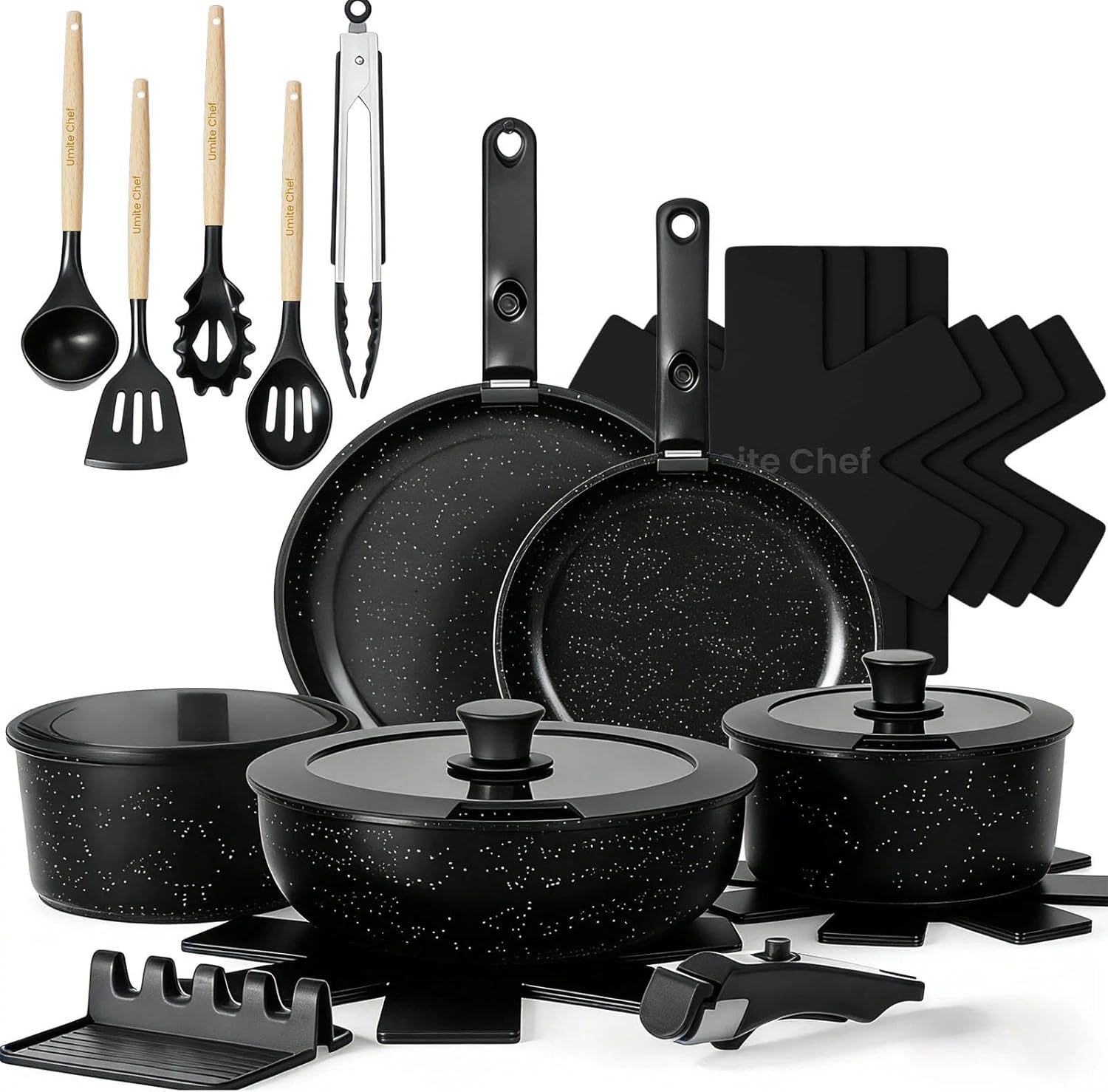
Detachable handles offer unique space-saving advantages for compact living areas like apartments or RVs, though they require manual attachment and removal steps during use. Evaluating handle materials and mechanical attachment mechanisms ensures your chosen set feels balanced, sturdy, and secure in your hands during daily use without unexpected wobbling issues developing over time.
Oven Safety and Temperature Limits
Many nonstick cookware sets feature oven-safe designs, allowing you to start a dish on the stovetop and finish it inside the oven effortlessly every single time. However, temperature limits vary widely based on handle materials and glass lid ratings, ranging from moderate heats up to extreme broiler levels depending on the specific product construction details provided.
Always check manufacturer guidelines regarding maximum oven temperatures before baking or broiling recipes in your personal home kitchen environment. Removable handles often require complete detachment before placing pans into high-heat ovens, ensuring you avoid damaging hardware components during complex baking tasks throughout the week without unexpected wear occurring on handles.
Cleaning and Maintenance Guidelines
Maintaining the longevity of a nonstick coating requires following manufacturer cleaning and maintenance instructions carefully over time in your personal kitchen. While many modern sets boast convenient dishwasher-safe construction, hand washing with mild soap and soft sponges often extends the lifespan of delicate nonstick surfaces by preventing aggressive chemical exposure from harsh dishwasher detergents.
Avoiding harsh abrasive pads and metal scouring tools prevents premature scratching across the cooking area during routine cleanup tasks. Storing pans with protective felt pads further protects nonstick coatings from friction damage during stacking in kitchen cabinets between daily uses and meal preparation routines throughout the year without causing any premature wear issues.
Frequently asked questions
Can I use metal utensils on nonstick cookware?
Using metal utensils on nonstick cookware depends entirely on the specific manufacturing technology of the coating. Traditional nonstick surfaces typically require nylon, silicone, or wooden utensils to prevent scratching and surface degradation over time. However, advanced diamond-reinforced or specially engineered ceramic coatings are tested to withstand metal tools without compromising food release. Always verify the manufacturer utensil compatibility guidelines before introducing metal spatulas or whisks to your specific pots and pans to ensure long-lasting surface performance during daily meal preparation.
Are dishwasher-safe nonstick pans completely safe for automated washing?
Many nonstick cookware sets are advertised as dishwasher safe, allowing for convenient cleanup after meals. Even though the materials can withstand automated washing cycles, many manufacturers recommend hand washing with mild soap and a soft sponge to preserve the nonstick coating's lifespan. Harsh dishwasher detergents and high water temperatures can dull exterior finishes or accelerate wear on delicate nonstick surfaces over prolonged periods. Assessing your cleaning preferences helps determine whether to use the dishwasher or stick to manual washing.
How do I know if a cookware set works on induction cooktops?
Determining whether a cookware set works on an induction cooktop requires checking the base material specifications. Induction cooktops rely on magnetic fields to generate heat directly in the pan, meaning aluminum pans need a bonded stainless steel base or embedded magnetic plate to function. Sets made entirely of tri-ply stainless steel or cast aluminum with specialized induction plates will explicitly list compatibility options. Always review product specifications before purchasing if your kitchen uses an induction range.
What are the benefits of detachable handles on pots and pans?
Detachable handles provide exceptional space-saving advantages for individuals living in small apartments, dormitories, or RVs where cabinet storage is strictly limited. By clipping the handle off, pots can nest neatly inside one another, reducing required storage footprint by up to seventy-five percent. Additionally, removing handles allows the pan body to transition easily into high-temperature ovens for baking tasks. Users must simply ensure the handle is securely attached during stovetop cooking and removed before oven baking.
Why is hard-anodized aluminum popular for nonstick cookware?
Hard-anodized aluminum is widely popular because the electrochemical treatment process hardens the metal, making it tougher and more corrosion-resistant than standard aluminum. This heavy-duty core provides rapid and even heat distribution across burners, eliminating hot spots that can scorch food during cooking. Paired with a durable nonstick coating, hard-anodized pots and pans deliver reliable food release and effortless cleanup for everyday home cooking tasks across standard gas and electric cooktop surfaces without warping easily.