Appliances · Buying Guide
Best Non Stick Induction Cookware Set for Versatile Everyday Kitchen Cooking
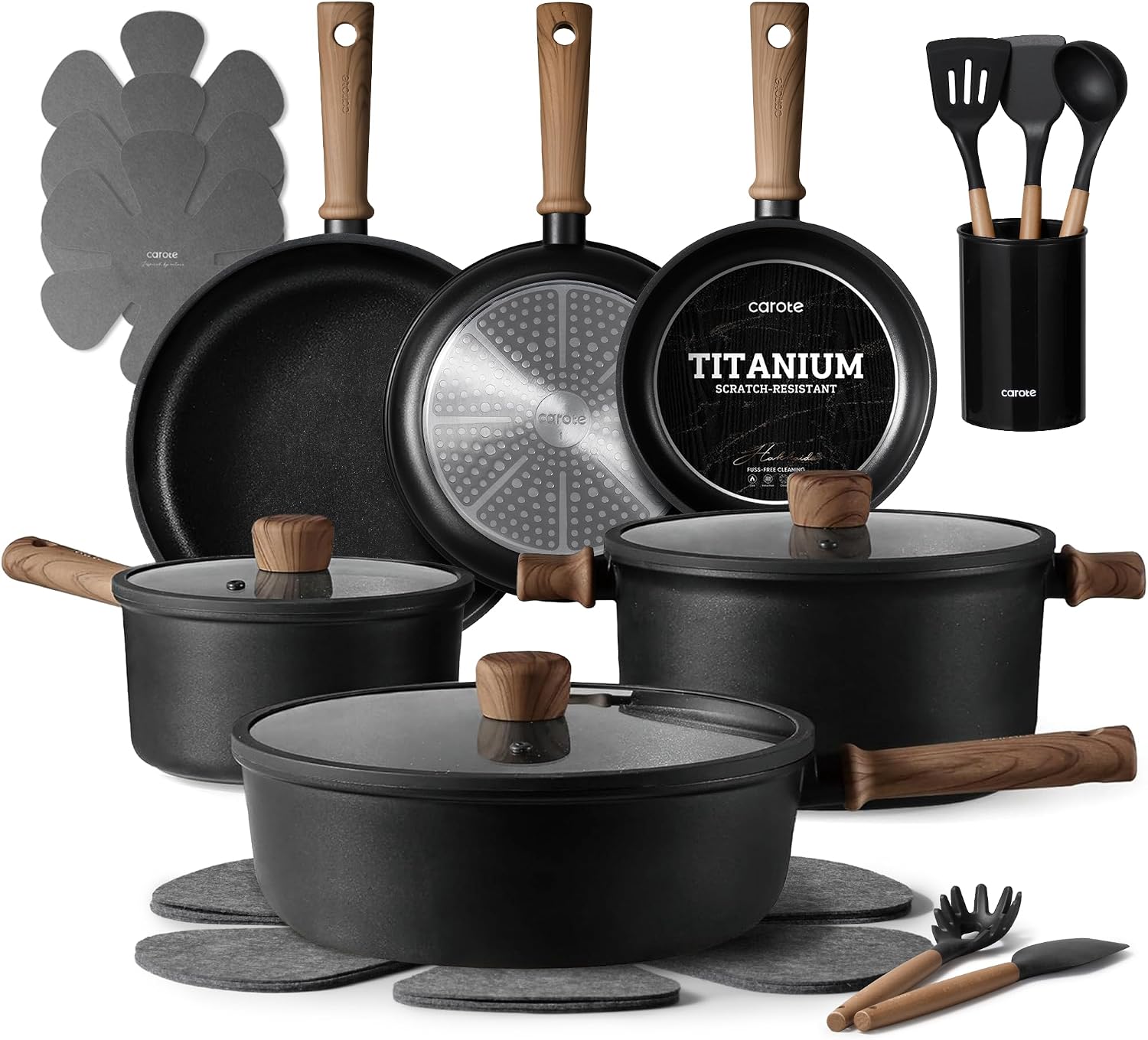
Choosing a reliable non stick induction cookware set requires balancing heat distribution, material durability, and daily maintenance needs. Modern kitchen setups demand hardware that performs consistently across various stovetops without requiring complicated cleaning routines. Buyers often weigh aluminum versus stainless steel bases alongside lid designs and handle grips to match personal cooking preferences and kitchen storage layouts.
Different configurations offer unique benefits, from expansive multi-piece collections to specialized aluminum or stainless steel builds. Understanding how specific construction elements like reinforced bases, riveted handles, and specialized nonstick coatings influence your routine helps narrow down choices for your home kitchen. Evaluating these features ensures you find a cookware assortment that handles boiling, frying, and simmering efficiently.
As an Amazon Associate, StacyLaughs earns from qualifying purchases.
Buying guide
Material Composition and Base Construction
Selecting the right material forms the foundation of any successful cookware purchase. Aluminum offers lightweight handling and rapid heat distribution, making it popular for everyday simmering and boiling tasks. Hard-anodized variants and die-cast aluminum options provide added structural durability. Steel bases bonded to these aluminum bodies ensure compatibility with induction cooktops, allowing magnetic connection for efficient energy transfer across flat glass surfaces.
Buyers must also consider multi-ply stainless steel construction, which layers aluminum between steel sheets for superior heat responsiveness. While heavier than standard stamped aluminum, these multi-ply builds resist warping under intense thermal stress. Evaluating your preferred cooking style helps determine whether a lightweight forged aluminum body or a heavy-duty tri-ply stainless steel vessel better matches your kitchen workspace requirements.
Nonstick Coating Technologies
Nonstick coatings dramatically simplify food release and cleanup routines by preventing ingredients from sticking to the pan floor. Traditional PTFE coatings and advanced ceramic finishes offer smooth cooking surfaces for eggs, fish, and delicate sauces. Ceramic options are often manufactured without intentionally added PFAS or PFOA substances. Titanium-reinforced or diamond-textured surfaces add extra scratch resistance to withstand everyday spatula movement during active meal preparation.
Understanding coating limitations ensures long-term satisfaction with your purchase. Some ceramic and reinforced nonstick surfaces perform best when paired with silicone or wooden utensils rather than sharp metal tools. Reviewing manufacturer guidelines regarding coating composition helps you select a surface that balances effortless food release with your preferred cooking habits and utensil choices.
Handle Design and Ergonomic Handling
Comfortable handles significantly improve kitchen safety and operational control when moving heavy pots filled with boiling water or dense stews. Cast stainless steel handles offer robust attachment strength, often secured with dual rivets to prevent loosening over years of frequent use. Silicone grips added to stainless steel handles provide a cooler touch point and a secure hold during active stovetop cooking sessions.
Alternative handle materials like Bakelite provide heat-resistant properties but require careful placement during high-heat baking or broiler use. When evaluating cookware sets, consider how the handle shape balances the weight of the pan. Proper balance reduces wrist strain when tilting pans to pour sauces or transferring heavy vessels from burners to countertops.
Lid Styles and Moisture Retention
Lids play an essential role in trapping heat, steam, and flavor inside the vessel during simmering and braising tasks. Tempered-glass lids allow home cooks to monitor food progression visually without lifting the cover and releasing valuable heat. Silicone-sealed rims provide a tight, cushioned fit that reduces rattling and protects glass edges from accidental chipping during washing and storage routines.
Some specialized lids incorporate integrated straining holes and pour spouts, eliminating the need for a separate colander when draining pasta or vegetables. Checking whether lids are interchangeable across different pan sizes adds practical flexibility to your kitchen storage. Choosing sets with versatile lid configurations maximizes utility while reducing clutter in your cabinets.
Temperature Limits and Oven Compatibility
Stovetop cooking is only part of the equation when selecting versatile cookware for diverse culinary recipes. Many pots and pans support oven use, allowing you to start a dish on the burner and finish it under the broiler or inside a hot oven cavity. Temperature thresholds vary significantly between metal bodies and glass lids, with lids often featuring lower maximum heat tolerances than the pans themselves.
Reviewing maximum temperature ratings prevents accidental warping or glass fracture during high-heat roasting tasks. Sets designed for extreme heat resistance accommodate roasting and broiling without requiring you to transfer food into separate baking dishes. Matching your typical baking habits with the stated oven limits ensures your cookware adapts seamlessly to advanced recipes.
Cleaning Requirements and Maintenance Routines
Maintaining a cookware set properly preserves its nonstick performance and exterior appearance over years of daily service. Dishwasher-safe designs offer undeniable convenience for busy households, allowing quick cleanup after dinner without manual scrubbing. However, certain manufacturers recommend hand-washing with neutral dish soap to prevent residue buildup on specialized aluminum bases or to protect sensitive ceramic and metal finishes from harsh dishwasher detergents.
Evaluating your willingness to hand-wash specific pots and pans helps determine the right set for your lifestyle. While dishwasher-compatible hardware saves time, following recommended cleaning guidelines prevents premature wear on nonstick coatings and exterior trims. Balancing cleanup convenience with maintenance requirements ensures your cookware remains a reliable kitchen companion for a long time.
Frequently asked questions
Are non stick induction cookware sets compatible with traditional gas and electric stovetops?
Most induction-compatible cookware sets feature magnetic steel bases that work seamlessly across conventional gas, electric coil, and smooth glass cooktops. Induction technology relies on magnetic fields to generate heat directly within the pan base, meaning these steel-backed vessels conduct heat effectively on traditional burners as well. However, you should always verify the manufacturer compatibility guide to ensure your specific cooktop type is supported. Using induction-ready pots on standard gas or electric ranges provides great versatility if you ever change your kitchen stove setup in the future.
What is the benefit of hard-anodized aluminum in pots and pans?
Hard-anodized aluminum undergoes an electrochemical process that hardens the metal, making it significantly stronger and more durable than ordinary aluminum. This treatment creates a scratch-resistant surface that resists corrosion and warping during high-temperature cooking tasks. Hard-anodized cookware also distributes heat rapidly and evenly across the base, reducing hot spots that can burn food. While it adds some physical weight compared to stamped aluminum, the enhanced durability makes hard-anodized pots and pans an excellent choice for daily, heavy-duty meal preparation on induction and standard stovetops.
Can I put my nonstick pots and pans into the dishwasher for cleaning?
Many modern nonstick cookware sets feature dishwasher-safe construction designed to simplify post-meal cleanup routines. However, cleaning requirements vary by manufacturer and material type. Some brands recommend hand-washing with neutral dish soap to prevent residue formation on exposed aluminum bases or to protect exterior coatings from harsh dishwasher detergents. Always check the specific product care instructions before loading your pots and pans into the dishwasher. Hand-washing is often recommended for ceramic and specialized nonstick surfaces to maintain long-term food release performance and exterior appearance.
Why do some cookware lids include silicone rims and straining features?
Lids equipped with silicone rims create a snug, cushioned seal that locks in heat and moisture while preventing the glass from rattling or chipping against the rim of the pan. This tight seal helps enrich foods with flavor during simmering and braising. Additionally, lids featuring integrated straining holes and pour spouts allow home cooks to drain liquids directly from saucepans without needing a separate colander. These thoughtful design details streamline active kitchen tasks, making food preparation faster and reducing the number of extra dishes you need to wash afterward.
How do ceramic nonstick coatings differ from traditional nonstick surfaces?
Ceramic nonstick coatings are crafted from inorganic mineral-based materials, offering a smooth cooking surface that releases food easily with minimal oil or butter. These coatings are typically produced without intentionally adding PFAS, PFOA, lead, or cadmium. While traditional nonstick surfaces have been used for decades, ceramic alternatives provide an appealing option for home cooks seeking mineral-based coatings. Both types require gentle handling to preserve their nonstick performance, though ceramic surfaces often benefit from being paired with silicone or wooden utensils rather than abrasive metal tools.