Appliances · Buying Guide
Best Non Stick Induction Cookware for Modern Kitchens
Finding reliable non stick induction cookware requires evaluating core material construction, handle ergonomics, and stove-to-oven versatility. Modern kitchens demand cookware that reacts quickly to electromagnetic stovetops while offering seamless food release without requiring excessive oils during daily cooking tasks. Reviewing base thicknesses and surface reinforcements helps clarify how different configurations perform under routine heat applications.
This overview examines five distinct non stick induction cookware options, ranging from multi-piece sets with detachable handles to heavy-duty hard-anodized and diamond-infused tri-ply configurations. Each selection brings unique manufacturing materials and physical designs suited to specific meal preparation routines, helping you match your cookware directly to your everyday cooking habits, storage constraints, and cleanup expectations without relying on generic claims.
As an Amazon Associate, StacyLaughs earns from qualifying purchases.
Buying guide
Material Composition and Base Construction
Selecting non stick induction cookware starts with examining core materials. Aluminum offers rapid thermal conductivity, while tri-ply stainless steel configurations provide structural rigidity. Because induction cooktops rely on magnetic fields, manufacturers bond ferromagnetic steel plates to the bottom of cookware bodies. Checking for thick, edge-to-edge steel bases ensures heat spreads uniformly without creating hot spots or warping over time.
Buyers should verify whether nonstick coatings cover interior and exterior surfaces. Hard-anodized exteriors resist scratching during daily use, whereas fully nonstick designs simplify cleanup. Matching the material grade to your cooking intensity prevents premature degradation. Prioritizing robust base bonding guarantees reliable electromagnetic contact on induction cooktops, ensuring consistent thermal performance across regular meal preparation routines.
Nonstick Surface Technologies and Durability
Evaluating nonstick surfaces involves looking at the specific reinforcement technologies used by manufacturers. Options range from traditional PTFE coatings to diamond-reinforced ceramic layers and aerospace-grade nonstick matrices designed to resist scratching. Ceramic coatings formulated without intentionally added PFAS offer alternative nonstick performance. Assessing whether a surface is metal utensil safe helps determine how cautious you must be during daily stirring and flipping tasks.
While advanced scratch-defense technologies enhance longevity, many manufacturers still recommend pairing their cookware with silicone, nylon, or wooden tools to preserve the nonstick finish. Durable coatings reduce the need for excessive butter or oil, allowing for lighter food release during routine frying and sautéing. Understanding these surface characteristics ensures you select cookware that withstands your preferred culinary techniques without premature flaking or loss of nonstick efficiency.
Handle Ergonomics and Attachment Methods
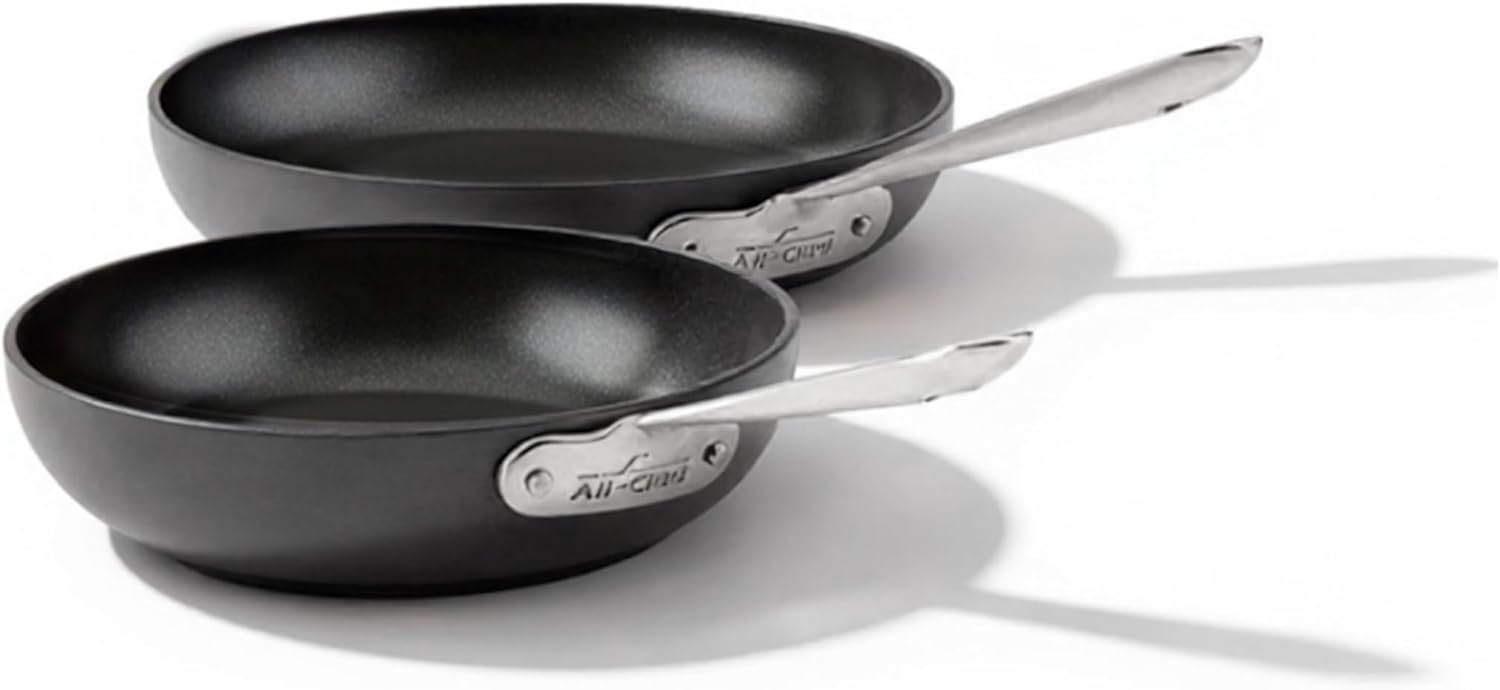
Handle design significantly impacts comfort, balance, and safety during active cooking. Cast stainless steel handles provide sturdy attachment points, often secured with rivets to ensure long-term stability when lifting heavy, food-filled pots. Some handles incorporate silicone grips to enhance tactile feedback and reduce heat transfer during stovetop use. Evaluating whether handles are fixed or detachable is equally important for managing storage space in crowded kitchen cabinets.
Detachable handle systems allow cookware vessels to nest tightly together, freeing up valuable cabinet and refrigerator space. However, removable grips require manual attachment before moving pans between burners and ovens. Conversely, traditional riveted handles offer permanent stability without mechanical parts but demand more lateral storage room. Assessing your kitchen storage capacity alongside your handling preferences helps determine which handle configuration best fits your daily meal preparation routine.
Temperature Limits and Oven Compatibility
Cookware versatility often depends on maximum temperature thresholds for both the main vessels and their accompanying lids. Many aluminum and hard-anodized nonstick sets support oven use up to 400 or 500 degrees Fahrenheit, allowing users to start dishes on the induction stovetop and finish them in the oven. However, tempered glass lids frequently feature lower heat limits, often capping out around 350 to 425 degrees Fahrenheit.
Checking these temperature limits prevents accidental warping or degradation of silicone rims and glass components during high-heat baking or broiling applications. If your recipes frequently transition from stovetop browning to high-temperature oven roasting, verifying the exact manufacturer limits for pans and lids is essential. Choosing cookware with broad thermal tolerances ensures seamless transitions across diverse cooking techniques without risking structural damage to handles or protective coatings.
Lid Designs and Pouring Conveniences
The inclusion of matching lids and specialized rim designs enhances overall kitchen efficiency. Tempered glass lids allow cooks to monitor food progress without lifting the cover, locking in heat and moisture. Some specialized pots incorporate built-in straining lids and pour spouts, which simplify draining liquids from vegetables or sauces without requiring a separate colander. Wrapped rims also facilitate clean pouring, reducing messy drips down the exterior walls.
Assessing whether a cookware set includes silicone lids, glass covers, or dedicated storage lids helps clarify how versatile the collection will be for food preservation. Lids equipped with secure knobs or heat-resistant handles ensure safe handling when checking simmering dishes. Prioritizing thoughtful rim and lid engineering streamlines routine kitchen workflows, making fluid transfers and moisture management simpler during complex meal preparation tasks.
Cleaning Requirements and Maintenance Guidelines
Proper maintenance preserves the longevity and performance of nonstick induction cookware. Many modern sets claim dishwasher-safe construction, allowing for convenient cleanup after family meals. However, hand washing with mild dish soap, warm water, and a non-abrasive sponge is frequently recommended to protect delicate nonstick coatings and maintain exterior finishes over extended periods of regular use. Following manufacturer care guidelines prevents surface dulling and premature wear.
Evaluating your willingness to hand wash specialized pans versus relying entirely on automated dishwashers will guide your purchasing decision. Cookware featuring fully nonstick interiors and smooth exterior rivets also minimizes crevices where food residue can accumulate, making manual cleaning faster when necessary. Selecting sets that align with your preferred cleanup routine ensures your kitchen investment remains hygienic and visually appealing through years of daily cooking tasks.
Frequently asked questions
Are all non stick pots and pans compatible with induction cooktops?
Not all nonstick cookware works on induction cooktops, because induction technology relies on magnetic fields to generate heat directly within the pan base. Standard aluminum or copper pans lack magnetic properties and require a bonded ferromagnetic steel plate or stainless steel layer embedded in the bottom to function correctly on an induction burner. When shopping for non stick induction cookware, always verify that the manufacturer explicitly lists induction compatibility among supported stovetop types, ensuring the magnetic base establishes proper contact for efficient heating.
Can I use metal utensils on non stick induction cookware?
Using metal utensils depends heavily on the specific nonstick coating and reinforcement technology used in the cookware construction. While some advanced diamond-infused or ceramic-reinforced surfaces are engineered to withstand metal tools without immediate scratching, many standard PTFE nonstick coatings will scratch, flake, or degrade when scraped with metal spatulas or forks. To preserve the longevity of your nonstick interior, manufacturers frequently recommend sticking to silicone, nylon, or wooden utensils during daily cooking, stirring, and food-transfer tasks.
Is it safe to put non stick induction cookware into the dishwasher?
Many modern non stick induction cookware sets feature dishwasher-safe construction designed to simplify cleanup after meals. However, harsh dishwasher detergents and high water temperatures can gradually dull exterior finishes and degrade nonstick performance over extended periods. Because of this, manufacturers often recommend hand washing cookware with mild soap, warm water, and a soft sponge to maintain the surface integrity. Checking individual product care instructions helps determine whether automated dishwasher cycles fit your routine maintenance preferences.
What is the advantage of detachable handles on cookware sets?
Detachable handle cookware sets offer major storage advantages by allowing pots and pans to nest tightly together inside crowded kitchen cabinets or refrigerator shelves. Removing the handles eliminates protruding grips, saving substantial space compared to traditional fixed-handle cookware. This modular design also facilitates seamless transitions from induction stovetops directly into ovens, grills, or tabletop serving positions. Users must manually attach and detach the grips during cooking, balancing storage efficiency with an extra mechanical step.
How do I prevent food from sticking to my induction pans?
Preventing food from sticking involves maintaining your cookware properly, using appropriate heat levels, and applying minimal cooking oils when necessary. While nonstick surfaces reduce food adhesion, overheating empty pans can break down coatings and ruin food release properties. Using medium heat settings on induction burners allows the base to distribute warmth evenly without scorching ingredients. Additionally, cleaning pans thoroughly after each use prevents microscopic oil residue buildup that can interfere with future cooking performance.