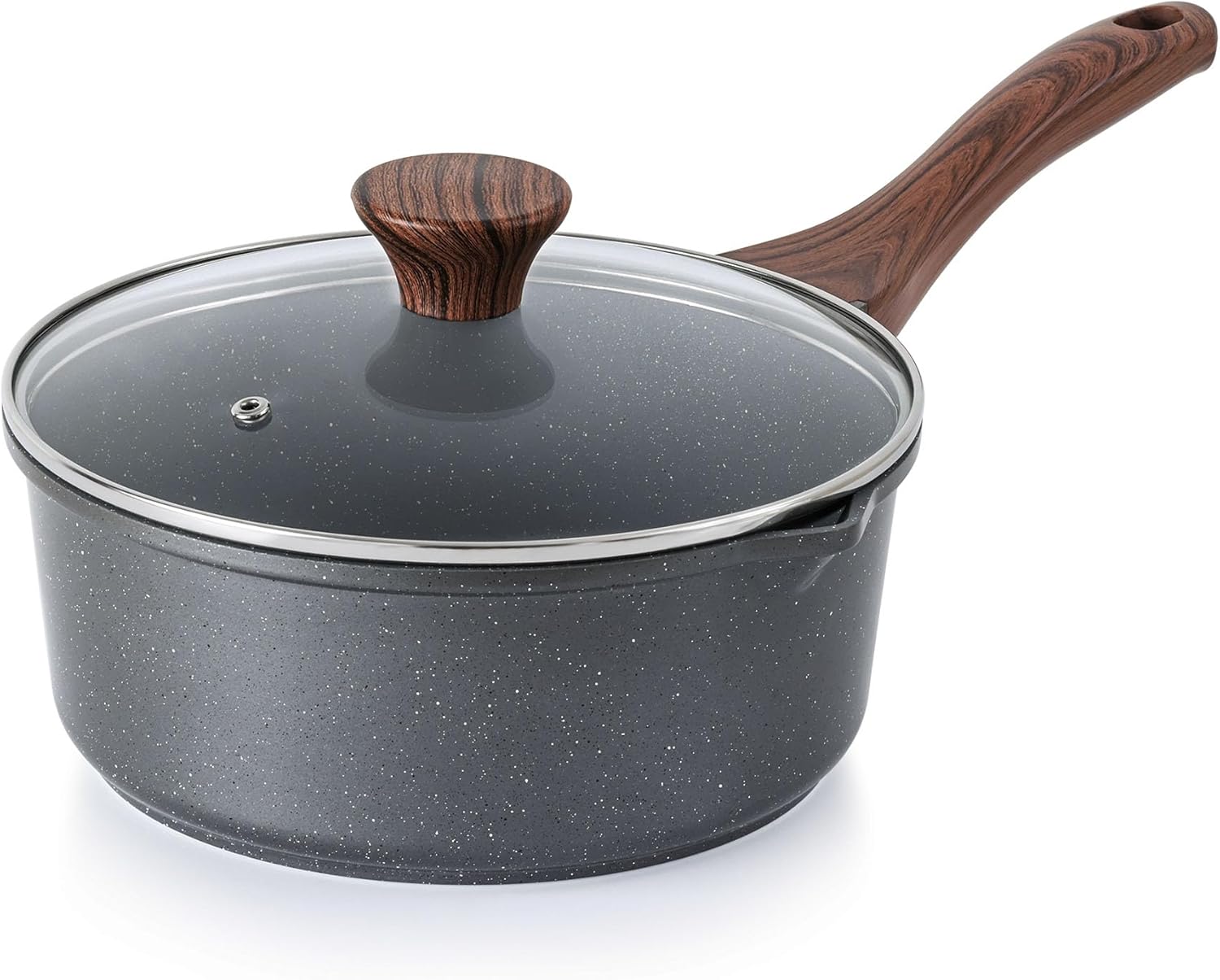
Appliances · Buying Guide
Best Non Stick Induction Saucepan Options for Every Kitchen
Finding the right non stick induction saucepan involves carefully balancing cooking capacity, core material construction, and reliable daily stovetop compatibility. Modern home kitchens demand versatile cookware that transitions smoothly from boiling grains to simmering delicate sauces without demanding extensive cleanup routines or complicated maintenance steps during busy cooking schedules.
Evaluating available choices requires looking closely at foundational metals like cast aluminum and multi-ply stainless steel, alongside specialized interior surfaces engineered for effortless food release. Understanding how distinct handle designs, integrated pouring spouts, and tempered glass lid configurations fit your specific cooking style ensures you select a durable, practical tool for preparing diverse everyday meals across various stovetops.
As an Amazon Associate, StacyLaughs earns from qualifying purchases.
Buying guide
Capacity and Volume Selection
Choosing the correct volume for your non stick induction saucepan depends entirely on your typical household size and the types of dishes you prepare regularly. Smaller 1.5-quart options work well for single-portion oatmeal, warm milk, or quick individual sauces. Moving up to 2-quart or 2.5-quart models provides enough room for standard vegetable sides or small soup batches without taking up excessive stove space.
For households cooking for three to four people, a 3-quart saucepan offers the necessary depth and width to handle noodles, grains, and family-sized portions comfortably. Assess your daily cooking habits before purchasing to avoid choosing a pot that feels constantly overcrowded or unnecessarily bulky for simple side dish tasks.
Core Materials and Heat Distribution
The foundational material of your saucepan dictates how efficiently it absorbs and transfers thermal energy from your burner to your food. Cast aluminum cores heat up quickly and deliver impressive thermal distribution across the base, making them lightweight and responsive during cooking. Alternatively, multi-ply stainless steel constructions layer durable metals together to ensure long-lasting structural strength and consistent performance over time.
When pairing these materials with induction cooktops, a bonded high magnetic stainless steel base is essential for completing the electromagnetic circuit. Evaluating both the inner core and the exterior base ensures your chosen cookware responds predictably to temperature adjustments and resists warping under frequent thermal cycling.
Interior Coating Technology
Interior surface treatments determine how easily food releases from the pan and how straightforward your cleanup routine will be after cooking. Granite coatings, diamond-infused ceramic layers, and advanced aerospace nonstick surfaces eliminate stubborn sticking and reduce the need for excessive cooking oils during meal preparation. These specialized interior coatings help delicate ingredients slide freely without leaving burnt residues behind on the bottom.
Reviewing the specified coating properties helps you determine whether a model comfortably accommodates metal kitchen utensils or requires gentler silicone and wooden tools to prevent surface scratching. Selecting a robust finish ensures lasting performance whether you are wiping down a smooth interior or managing a textured searing pattern.
Lid Design and Visibility
The included lid plays a vital role in sealing in heat, retaining moisture, and preventing messy splatters across your stovetop during boiling and simmering tasks. Tempered glass lids provide a clear visual window into the cooking progress, allowing you to monitor liquid reduction without repeatedly lifting the cover and releasing valuable thermal energy into the kitchen.
Some specialized saucepan lids incorporate integrated straining holes alongside built-in pour spouts, streamlining workflows when draining hot liquids from pasta or vegetables. Checking the maximum temperature rating of the lid itself is also crucial if you plan to transfer your saucepan directly from the stovetop into a hot oven.
Handle Comfort and Safety Limits
Handle construction directly influences your control, balance, and comfort while lifting a filled saucepan or pouring its contents into another container. Options featuring silicone-wrapped stainless steel, stay-cool bakelite, or sturdy riveted metal provide secure grips designed to minimize hand fatigue during active cooking sessions. Evaluating how the handle attaches to the body also impacts interior cleaning ease.
Furthermore, the specific materials used in handle and lid knob construction dictate the absolute maximum oven safe temperature for the entire cookware unit. Bakelite components typically limit oven exposure to moderate levels around three hundred degrees, whereas all-metal configurations support much higher baking environments safely without degrading.
Stovetop Compatibility and Maintenance
Ensuring your cookware functions seamlessly across your specific kitchen setup requires verifying magnetic base compatibility for modern induction cooktops alongside traditional gas and electric burners. A high magnetic conductive stainless steel base ensures rapid and even energy transfer when using induction zones. Additionally, reviewing manufacturer maintenance guidelines helps preserve the nonstick coating and overall lifespan of your investment.
While many modern saucepans feature dishwasher-safe construction, hand washing with mild soap and a soft sponge often prolongs the integrity of specialized granite or ceramic coatings. Following recommended care instructions prevents premature wear, maintaining smooth food release and consistent thermal performance across years of daily meal preparation tasks.
Frequently asked questions
Can I use a non stick induction saucepan on a traditional gas stovetop?
Yes, these saucepans are engineered for broad versatility across multiple burner types, including gas, electric, ceramic, and induction cooktops. The inclusion of a magnetic stainless steel base allows the pan to interact with induction magnetic fields while remaining fully functional on open flames or electric coils. You do not need separate cookware for different heat sources, making these pots adaptable additions to kitchens with mixed appliance types. Always match the burner size to the base diameter for even heating.
Are these nonstick saucepans safe for use in the oven?
Oven safety varies depending on the specific materials used in the handle, lid, and body construction of each individual saucepan. Models featuring woodgrain bakelite handles typically support oven temperatures up to approximately three hundred and two degrees Fahrenheit. Conversely, all-metal multi-ply stainless steel models or ceramic hybrid options with stainless handles often withstand extreme oven heat ranging from four hundred up to nine hundred degrees Fahrenheit. Always check manufacturer ratings before transferring cookware.
How should I clean my nonstick saucepan to maintain its coating?
Maintaining your nonstick coating involves following manufacturer cleaning instructions, which frequently recommend washing the pan by hand using warm soapy water and a soft sponge. Although certain models are labeled as dishwasher safe, frequent exposure to harsh dishwasher detergents and high heat can degrade specialized coatings over time. Avoiding abrasive scouring pads or harsh metal scrubbers helps preserve the smooth interior release surface, ensuring long-lasting performance for everyday cooking tasks and simpler cleanup routines.
What capacity saucepan should I choose for everyday cooking?
Selecting the right capacity depends on your household size and the typical recipes you prepare. A compact 1.5-quart saucepan works exceptionally well for heating single portions of soup, melting butter, or making small batches of oatmeal for one or two people. If you regularly cook side dishes, grains, or sauces for a small family, a 2-quart or 2.5-quart model provides better volume. For households of three to four people, a 3-quart option offers ideal depth and width.
Do I need to use cooking oil with these nonstick saucepans?
The specialized interior coatings, such as Swiss ILAG granite or diamond-infused ceramic surfaces, are engineered to provide effortless food release with little to no oil. While you can cook with minimal oil to support a healthy diet, the nonstick properties prevent delicate ingredients like sauces, grains, and oatmeal from sticking stubbornly to the base. However, using a tiny amount of oil or butter can still enhance browning and flavor depending on the specific culinary recipe you follow.