Appliances · Buying Guide
Best Non Stick Roasting Pan Options for Holiday Meals
Choosing the right non stick roasting pan transforms how you prepare savory meats, crisp vegetables, and hearty holiday feasts for family and friends during special gatherings. These specialized pans combine durable metal construction with specialized nonstick coatings to help food release effortlessly while promoting even heat distribution across the cooking base for optimal browning.
Whether you are roasting a massive holiday turkey or preparing a simple mid-week chicken, carefully matching your cookware dimensions and material to your available oven capacity ensures consistent culinary results. Exploring the distinct features of top roaster models helps you select a reliable kitchen companion tailored to your everyday cooking habits, storage limitations, and cleanup preferences.
As an Amazon Associate, StacyLaughs earns from qualifying purchases.
Buying guide
Selecting the Right Dimensions
Measuring your oven interior carefully before purchasing any non stick roasting pan prevents frustrating fit issues on busy cooking days. Standard kitchen ovens easily accommodate pan widths ranging from fifteen to seventeen inches, but checking side clearance remains essential to ensure proper heat circulation around the vessel walls. Always measure your oven racks and depth before selecting an oversized model.
Consider your typical meal sizes when evaluating overall pan dimensions for your household. Smaller cooking setups benefit greatly from compact models measuring under fourteen inches, whereas holiday hosts require expansive roasting surfaces to support multi-pound poultry and side vegetables simultaneously without crowding the cooking space or spilling hot liquids over the rim edges.
Understanding Capacity and Weight Limits
Evaluating weight capacities ensures your chosen non stick roasting pan safely handles heavy holiday turkeys and large beef roasts without structural strain. Manufacturers frequently specify maximum food weights, such as twenty or twenty-four pounds, guiding you toward models that match your entertaining needs. Exceeding these suggested limits compromises stability and cooking performance inside the oven cavity.
Alternatively, some roasters list volume specifications in cubic inches rather than pounds. Translating these measurements requires assessing the physical depth and surface area of the base. Selecting a model with adequate depth prevents splashing during basting while ensuring sufficient room for gravies and side ingredients to cook alongside the main protein.
Evaluating Material and Build Quality
The underlying material of your non stick roasting pan dictates its durability, weight, and resistance to warping under high heat. Heavy-duty alloy steel and thick aluminum provide sturdy foundations that maintain structural integrity during extended baking sessions. Thicker gauges prevent the base from bending when exposed to high oven temperatures up to the manufacturer's specified limits.
Carbon steel models offer a lighter alternative while still delivering reliable heat distribution for everyday meals. Inspecting edge reinforcement and wall thickness helps determine how well the cookware will withstand regular scrubbing, storage stacking, and frequent transport between countertops and hot oven racks throughout its working lifespan.
Nonstick Coating Considerations
A quality non stick roasting pan simplifies both food release and post-cooking cleanup routines, reducing the need for aggressive scrubbing or overnight soaking. Double-layered coatings and specialized finishes provide smooth interior surfaces where roasted meats and vegetables slide out easily. Checking whether the coating covers both interior and exterior walls enhances overall maintenance convenience.
Pay close attention to temperature thresholds associated with nonstick surfaces, as most standard roasters maintain safety and performance ratings up to four hundred fifty degrees Fahrenheit. Adhering to these thermal limits prevents coating degradation, while using soft sponges and warm soapy water preserves the nonstick longevity over years of regular kitchen use.
Rack Design and Food Elevation
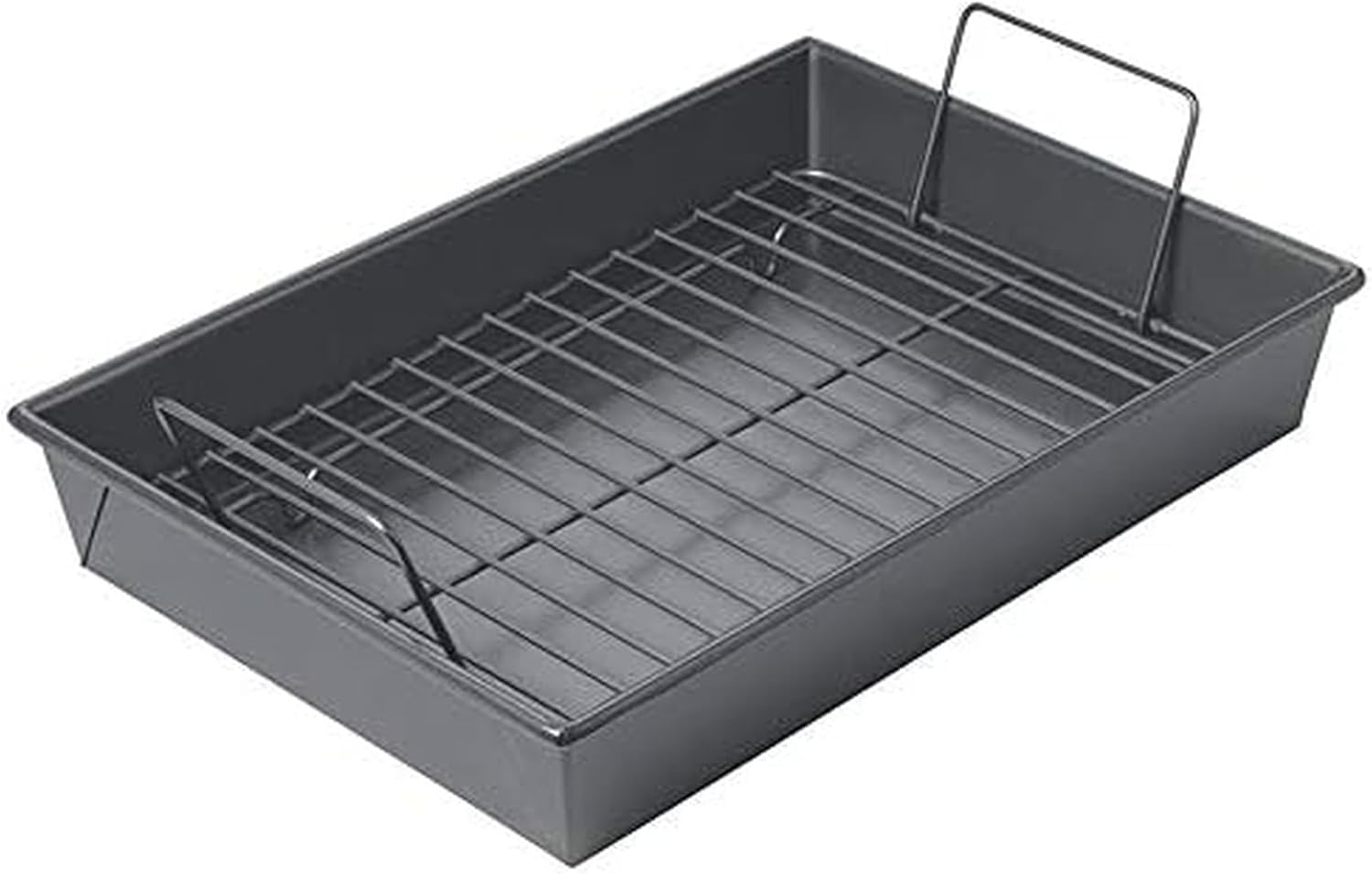
Using a roasting rack inside your non stick roasting pan elevates meats away from accumulated fats and pan drippings, promoting superior browning and even heat circulation. Flat wire racks and U-shaped inserts support heavy poultry securely while opening up the bottom pan for simultaneous vegetable roasting or gravy preparation during cooking cycles.
Handle placement on the rack also matters significantly when transferring cooked roasts out of deep pans. Racks equipped with wide side handles provide better leverage and safety, making it much easier to lift heavy, slippery poultry without disturbing the delicate exterior crust or risking spills.
Handle Security and Storage Practicality
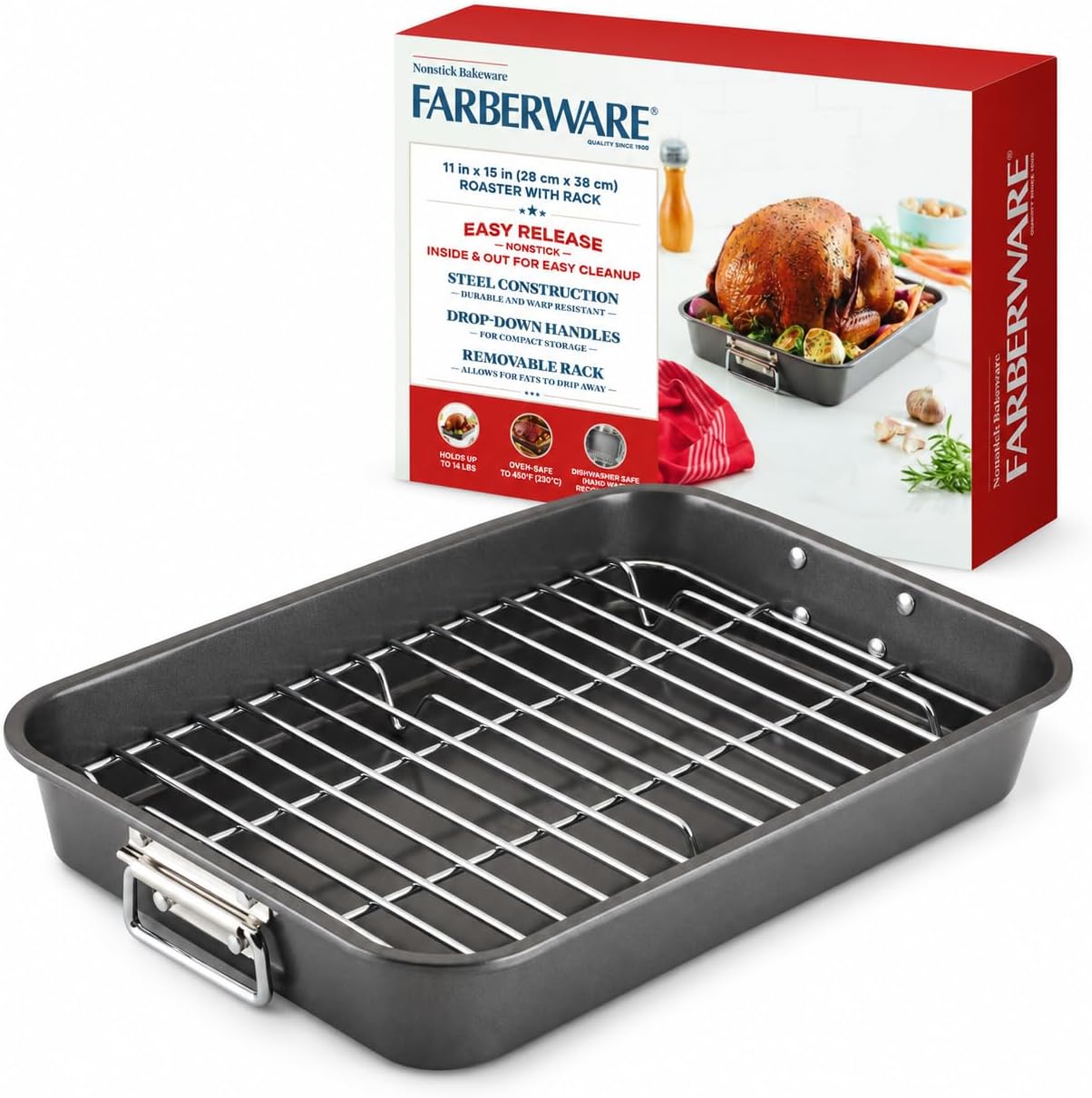
Secure handles are essential when maneuvering a heavy, hot non stick roasting pan loaded with holiday meals. Wide, dual-riveted stainless steel handles provide a confident grip, allowing you to lift bulky cookware safely wearing oven mitts. Foldable handle designs offer a practical solution for kitchens with limited cabinet storage space, collapsing flat against the pan walls.
Assessing your storage space alongside handle design ensures your new roaster fits comfortably in pantries or lower cabinets without obstruction. Fixed handles require more clearance room but offer maximum stability during transport, whereas folding variants prioritize space-saving convenience for smaller kitchen layouts and crowded storage areas.
Frequently asked questions
Can I use metal utensils on a non stick roasting pan?
While certain manufacturers explicitly state their specific coatings are metal utensil safe, many nonstick surfaces benefit greatly from the use of wooden, silicone, or plastic tools. Avoiding sharp metal forks, knives, and spatulas helps prevent accidental scratching and premature wear on the delicate interior coating. Checking the manufacturer guidelines for your exact model ensures you maintain the protective nonstick layer and extend the operational lifespan of your roasting cookware over years of regular use.
How do I clean a burned non stick roasting pan safely?
Cleaning stubborn burnt residue from a non stick roasting pan requires gentle methods to protect the specialized coating. Avoid harsh steel wool or abrasive scouring pads that can scratch or strip the surface. Instead, fill the cooled pan with warm soapy water and allow it to soak for a brief period to loosen baked-on food particles. Gently scrub the interior using a soft sponge, rinse thoroughly, and dry completely before storing your roaster away in the cabinet.
What is the purpose of the rack included with a roasting pan?
The included rack serves to elevate meats, poultry, and vegetables above the bottom of the non stick roasting pan. This elevation promotes continuous air circulation underneath the food, ensuring even browning and cooking performance. Additionally, lifting the meat allows rendered fats and juices to drip safely into the base of the pan. This separated space gives you the opportunity to roast vegetables or collect drippings simultaneously to create rich gravies without boiling the meat in its own juices.
Are non stick roasting pans safe for high-temperature oven cooking?
Most standard non stick roasting pan models feature maximum temperature limits restricted to four hundred fifty degrees Fahrenheit. Exceeding this threshold can damage the nonstick coating, leading to smoke emission or coating degradation. Always verify the manufacturer specifications for your specific roaster before utilizing high-heat searing or roasting techniques. If your recipes demand higher thermal levels, traditional uncoated metal pans may serve as a more appropriate alternative for those specific extreme-heat culinary applications.
How do I store a large roasting pan with foldable handles?
Roasters equipped with foldable stainless steel handles offer distinct advantages for tight kitchen layouts and crowded cabinet storage. To store these pans effectively, simply collapse the handles inward so they lie flat against the outer rim walls. This streamlined profile allows the cookware to slide neatly onto standard pantry shelves or stack smoothly among other large baking sheets. Ensure the pan is completely dry and clean before storing to prevent moisture accumulation and protect the nonstick surface.