Appliances · Buying Guide
Best Non Stick Stone Cookware Sets for Every Kitchen Need
Upgrading your kitchen with reliable non stick stone cookware can completely transform your daily meal preparation routine, whether you are cooking quick weekday breakfasts, simmering complex sauces, or hosting large family gatherings. Selecting the right collection depends heavily on your specific stovetop compatibility, available cabinet storage constraints, and your preferred daily cleanup methods.
Modern cookware sets incorporate advanced reinforced coatings designed to release food smoothly while minimizing excess oils and butters during cooking. Evaluating the available options requires looking closely at piece counts, handle designs, and oven safety limits to find a dependable setup that perfectly matches your household cooking habits and long-term kitchen goals. Understanding these structural differences ensures you invest in cookware built to last.
As an Amazon Associate, StacyLaughs earns from qualifying purchases.
Buying guide
Stovetop Compatibility and Induction Bases
Selecting cookware requires carefully verifying that the base material matches your specific kitchen range type. Modern induction cooktops demand high-magnetic stainless steel bases embedded into the cookware bottom to generate heat effectively through magnetic induction fields. Without this specialized magnetic construction, induction burners will fail to recognize or heat the pan properly during active meal preparation.
Traditional gas, electric coil, and smooth glass ceramic ranges accept standard aluminum bottoms without issue. Reviewing your exact cooktop specifications before purchasing ensures optimal thermal transfer, prevents heating inconsistencies, and supports energy-efficient cooking across your entire daily routine. Taking time to match the base construction prevents costly compatibility mistakes down the line and guarantees steady performance.
Coating Technology and Nonstick Performance
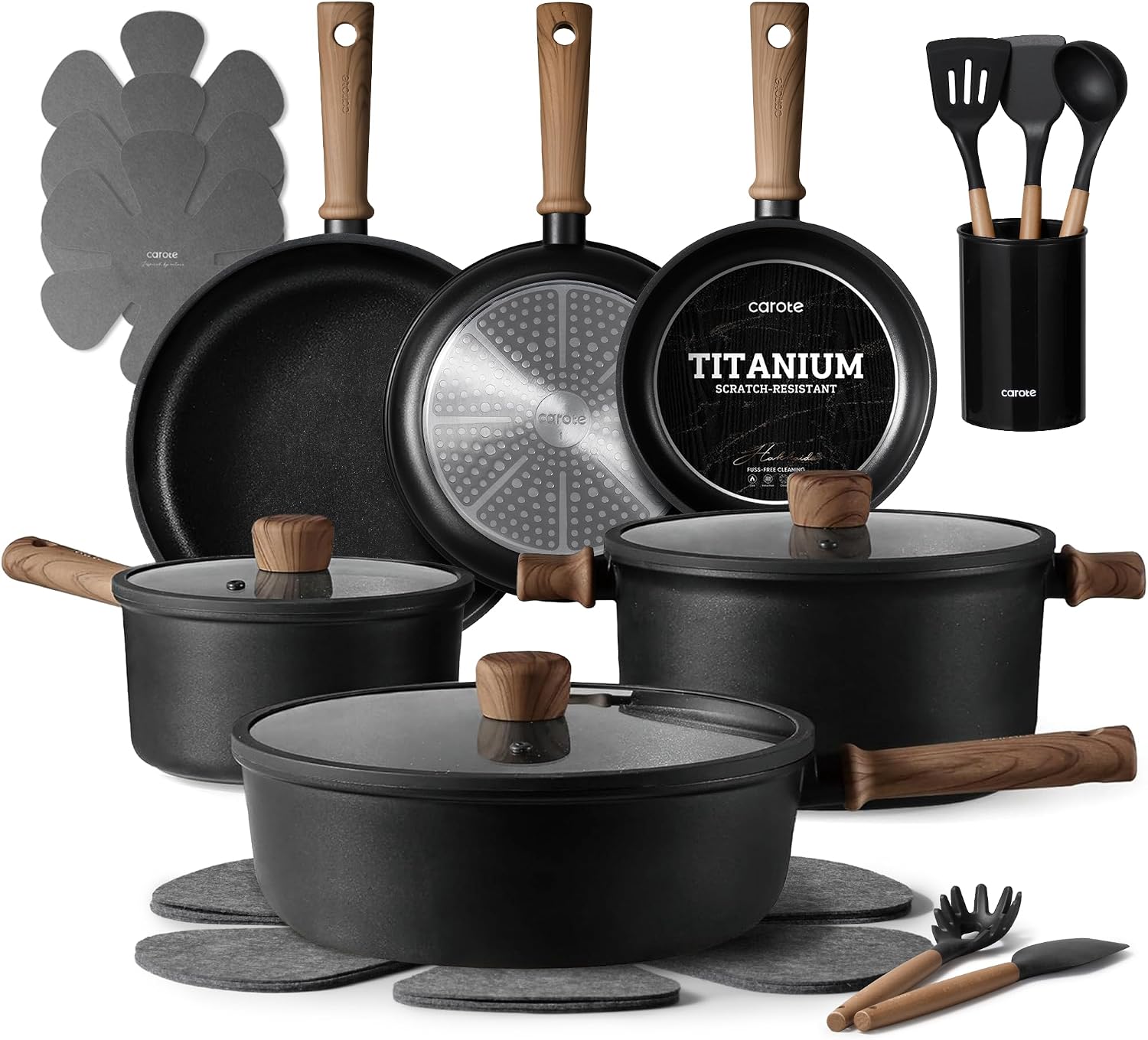
Advanced nonstick coatings transform how you cook by allowing delicate foods like eggs and pancakes to release smoothly with minimal added oils or butters. Options range from diamond-infused mineral surfaces and titanium-reinforced layers to specialized Swiss ILAG formulations. Each proprietary coating aims to provide durable food release while minimizing stubborn sticking during busy weeknight dinners.
Choosing the right coating involves balancing your daily cooking habits with proper maintenance expectations. While these advanced surfaces simplify both cooking and wiping away food residues, following manufacturer guidance regarding approved utensils and recommended heat levels preserves the nonstick lifespan significantly over years of regular household use. Protecting the coating ensures long-term reliability.
Piece Count and Storage Requirements
Cookware sets vary dramatically in size, ranging from compact starter kits with around twelve pieces to massive twenty-piece bundles covering every conceivable cooking need. Large sets provide exceptional versatility by including multiple frying pans, saucepans, stockpots, steamer inserts, and various specialized baking pans designed specifically for big families, batch cooking, and large holiday gatherings.
However, housing numerous pots and pans requires substantial cabinet or drawer storage space in your home kitchen environment. Assess your available kitchen storage capacity carefully before buying, or look for stackable designs and detachable handles if your apartment or small kitchen features severely limited square footage. Proper organization keeps your cooking space completely functional and accessible.
Handle Materials and Oven Safety Limits
Handle construction dictates how safely and comfortably you can maneuver pots and pans during active cooking sessions on the range. Common materials include stay-cool metal designs, ergonomic bakelite, and silicone grips that remain comfortable to hold while you stir sauces and flip ingredients on busy weeknights. Selecting the right handle style improves your cooking confidence.
Additionally, you must check temperature thresholds if you plan to transfer pans from the range directly into the hot oven for finishing dishes. Bakelite handles often carry strict heat limits around 350 degrees Fahrenheit, whereas specialized removable handles or all-metal constructions handle much higher baking temperatures safely without degrading over time. Reviewing limits avoids accidental damage.
Cleaning Methods and Maintenance Guidelines
Proper cleaning routines extend the lifespan of your nonstick cookware investment and maintain consistent cooking performance over the years. While many modern sets advertise dishwasher safety for ultimate convenience, certain manufacturers specifically recommend gentle hand-washing with mild dish soap to protect exterior aluminum finishes and prevent dark residue buildup on the base. Taking care preserves slickness.
Adhering to these manufacturer maintenance guidelines prevents premature wear on delicate nonstick coatings and keeps your cookware looking pristine on open display. Always follow the specific care instructions provided by the brand rather than relying on generalized assumptions about cleaning everyday pots and pans in automated dishwashers or using harsh scouring pads. Proper upkeep ensures lasting kitchen reliability.
Material Construction and Heat Distribution
The underlying core material of your cookware heavily influences how fast and evenly food cooks on the stove. Die-cast and forged aluminum cores are widely favored because they heat up rapidly and distribute thermal energy uniformly across the entire cooking surface, effectively eliminating frustrating hot spots that burn food during delicate simmering and boiling tasks.
Pairing quality aluminum bodies with reinforced exterior coatings creates sturdy, warp-resistant pans that withstand daily culinary demands in busy households. Evaluating the core construction helps you select cookware that delivers reliable boiling, simmering, and frying performance meal after meal without unexpected warping issues occurring over extended periods of regular household use.
Frequently asked questions
Can I use metal utensils with non stick stone cookware?
Compatibility with metal utensils depends entirely on the specific manufacturing specifications of your chosen cookware set. Some advanced diamond-infused or titanium-reinforced nonstick surfaces are engineered to withstand metal spatulas, whisks, and spoons without scratching the coating. However, many standard nonstick and ceramic sets explicitly recommend using silicone, wooden, or plastic utensils to protect the delicate nonstick layer from premature wear and abrasion. Always check the manufacturer guidelines provided with your exact product before introducing metal tools into your cooking routine to maintain optimal food release performance over time.
Are non stick stone cookware sets safe for induction cooktops?
Not all non stick stone cookware sets work on induction ranges, so you must verify the product specifications before purchasing. Induction cooktops require cookware featuring a high-magnetic stainless steel base embedded into the bottom of the pan to generate heat via magnetic fields. While many modern aluminum cookware sets now incorporate specialized magnetic induction plates on the base to support glass ceramic and induction cooktops, standard aluminum pans without this magnetic layer will not function on an induction burner. Always review the compatibility labels to ensure your stove type matches the cookware design.
How should I clean my non stick stone pots and pans?
Cleaning instructions vary depending on the brand, so you should always follow the specific manufacturer guidelines provided. Although numerous modern cookware collections advertise full dishwasher safety for maximum convenience, many brands recommend gentle hand-washing using a soft sponge, warm water, and mild dish soap. Hand-washing helps prevent dark residue from forming on exposed aluminum bases and protects the longevity of advanced nonstick coatings. Avoid using harsh abrasive scouring pads or steel wool, as these aggressive tools can scratch and ruin the protective nonstick surface permanently regardless of dishwasher claims.
Can these cookware sets go straight from the stovetop into the oven?
Oven safety depends on the specific materials used in the cookware body and, most importantly, the handle construction. Many aluminum sets with cast-metal or specialized heat-resistant handles can safely transition from the stovetop into the oven to finish roasting or baking dishes. However, sets equipped with standard bakelite handles usually carry strict temperature limitations, often restricted to around 350 degrees Fahrenheit for limited durations. Always verify the maximum temperature threshold for both the pan body and the handles before placing any cookware into a hot oven environment.
Why do some nonstick sets feature detachable handles?
Cookware sets featuring detachable handles are specifically designed to maximize storage efficiency and simplify organization in tight kitchen spaces, such as small apartments or RVs. By removing the handles, pots and pans can stack neatly inside one another, saving up to seventy percent of cabinet storage space compared to traditional fixed-handle cookware. Additionally, removing the handles allows pans to fit easily into crowded refrigerators for food storage with sealing lids attached, or into compact ovens for baking tasks. This modular design alters traditional cooking workflows for maximum versatility.