Appliances · Buying Guide
Best Non Stick Wok With Lid Options For Everyday Home Cooking
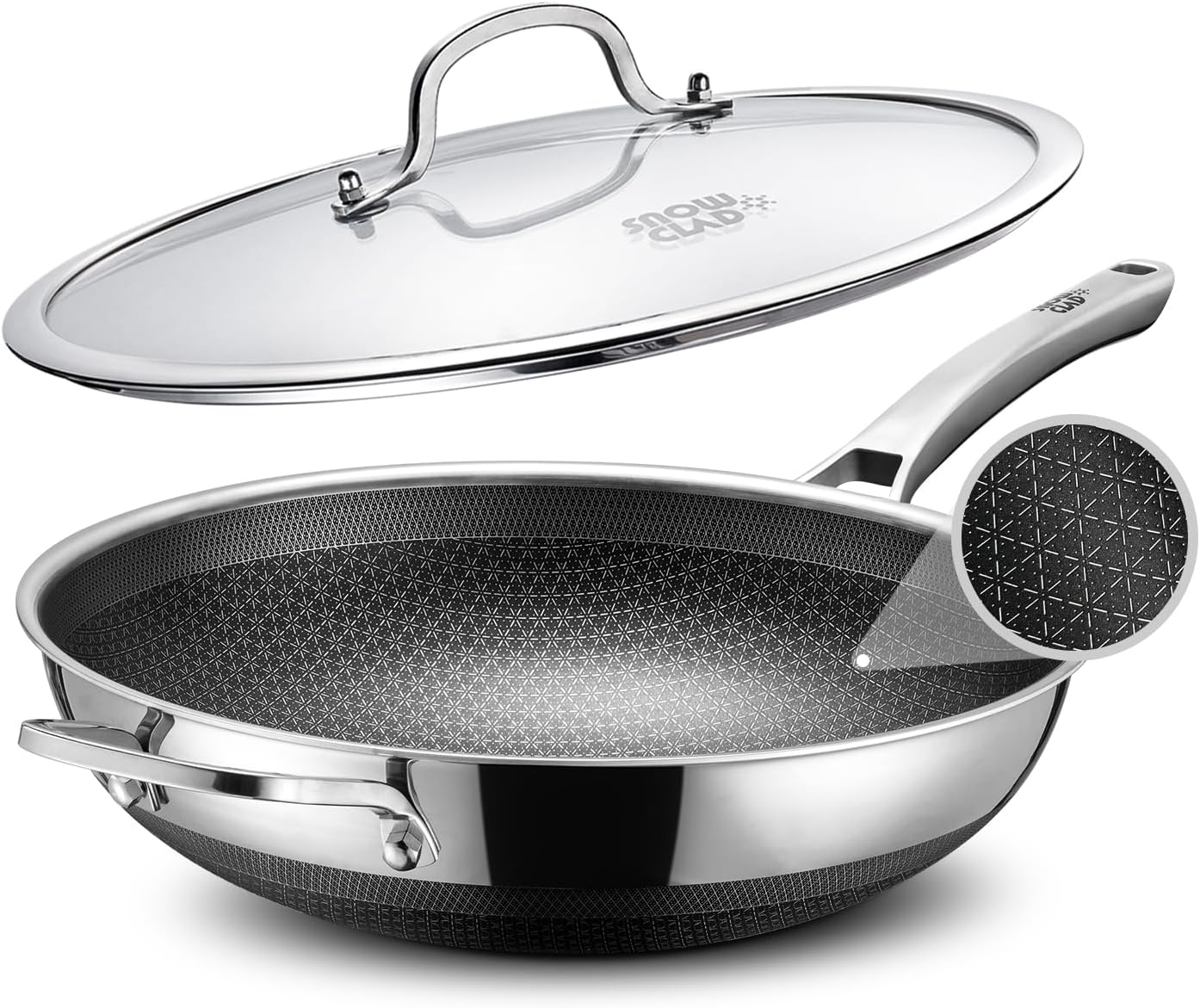
Finding the right cookware for high-heat stir-frying, braising, and hearty family meals requires carefully matching your specific stovetop type and preferred maintenance routine with the correct pan construction. A quality non stick wok with lid pairs a spacious curved cooking surface with a tight-fitting glass lid to trap heat and moisture effectively during daily kitchen tasks and complex multi-step recipes.
Manufacturers build these versatile kitchen pans using varied materials like carbon steel, durable stainless steel, and die-cast aluminum paired with specialized nonstick coatings. Reviewing individual product specifications helps clarify which model handles modern induction heating, convenient dishwasher cleanup, or traditional seasoning best, ensuring your selected wok matches your specific cooking habits, storage constraints, and daily kitchen space limitations.
As an Amazon Associate, StacyLaughs earns from qualifying purchases.
Buying guide
Material Composition and Heat Distribution
Material choice dictates how quickly a wok responds to temperature shifts. Carbon steel and aluminum offer rapid thermal reaction, while multi-layer stainless steel clad construction evenly distributes heat to eliminate troublesome cold spots during cooking.
Selecting the right metal depends heavily on your cooking style. Heavy multi-ply options retain high heat effectively for searing, whereas lighter aluminum bodies let you transition between burner settings instantly, preventing scorched ingredients during delicate sautéing tasks.
Nonstick Coating Types and Safety
Modern woks employ diverse nonstick technologies, ranging from traditional carbon steel seasoning and natural ceramic layers to laser-etched physical stainless barriers and advanced granite coatings. These varied options reduce cooking oil usage and simplify food release without relying on harsh chemicals. Each coating style brings distinct benefits for daily meal preparation.
Reviewing specific coating compositions ensures your cookware matches your safety preferences and cooking habits. Chemical-free formulations give confidence during high-heat searing, while physically etched patterns or hardened granite surfaces resist daily wear better than standard sprays. Matching the coating to your utensil habits prevents accidental scratching.
Stovetop Compatibility and Base Design
Ensuring compatibility with your kitchen range is crucial before purchasing a wok. While traditional round-bottom designs require specialized rings, modern flat-bottom woks sit securely on gas burners, electric coils, and smooth glass cooktops. Magnetic stainless steel base plates also enable seamless heating on modern induction ranges.
Flat-bottom configurations provide stable contact areas that prevent rocking during active stirring and tossing. Checking base specifications guarantees that the pan transfers thermal energy efficiently regardless of whether you cook over an open flame, standard electric coils, or a high-tech induction surface.
Lid Design and Moisture Control
Transparent glass lids offer a distinct advantage by letting you monitor simmering liquids, braised vegetables, and steaming dishes without lifting the cover. This visual access preserves internal cooking temperatures and traps essential steam, helping proteins and starches cook evenly throughout the process.
Tight-fitting lids also prevent messy splatters during vigorous braising or boiling tasks. Evaluating how securely a lid seals onto the rim ensures that moisture circulates properly back into your ingredients, enhancing flavor retention during extended simmering sessions for soups and sauces.
Maintenance and Cleaning Requirements
Maintenance routines vary widely depending on the pan materials and surface coatings you select. Stainless steel and aluminum models often feature dishwasher-safe construction for quick cleanup, whereas carbon steel woks demand hand washing followed by thorough drying and oil conditioning to prevent rust.
Weighing cleaning convenience against material durability helps prevent unexpected maintenance frustrations. If you prefer low-effort cleanup, look for dishwasher-compatible options. If you enjoy traditional seasoning upkeep, a carbon steel or specialized coated pan rewards your care with exceptional nonstick performance.
Capacity and Physical Weight Balance
Matching pan capacity to your household size prevents overcrowding ingredients during high-heat stir-frying. Capacities range from compact three-quart models for small households to generous 5.8-quart options designed for larger families, ensuring you have adequate room to toss noodles and rice comfortably.
Physical weight is equally important for comfortable handling during continuous tossing movements. Lighter die-cast aluminum and stamped steel woks reduce arm fatigue, while multi-ply stainless steel builds provide sturdy heft and durability at the expense of extra weight.
Frequently asked questions
Can I use metal utensils on all nonstick wok pans?
Metal utensil compatibility depends entirely on the specific manufacturing materials and surface coatings of your chosen wok. Hybrid stainless steel models and well-seasoned carbon steel woks generally withstand metal turners without sustaining permanent damage. However, granite-coated aluminum, ceramic, and traditional chemical nonstick surfaces require wooden, silicone, or plastic tools to prevent scratching and peeling. Always review the manufacturer guidelines before introducing metal spatulas or ladles to protect your cookware's longevity and performance.
How do I clean a carbon steel wok without causing rust?
Cleaning a carbon steel wok requires washing the surface by hand using warm water and a soft sponge rather than placing it in a dishwasher. Avoid harsh detergents and abrasive steel wool that strip away protective seasoning layers. After washing, dry the wok completely over a warm burner to eliminate remaining moisture. Finally, apply a thin coat of cooking oil with a paper towel before storing it in a dry location to prevent rust and maintain its natural nonstick properties.
Will a flat-bottom wok work effectively on an induction cooktop?
A flat-bottom wok works exceptionally well on an induction cooktop provided the pan features a magnetic stainless steel base or an induction-compatible aluminum and steel construction. Traditional round-bottom woks lack the necessary flat surface contact required for magnetic induction transfer. When shopping for induction use, check the product specifications to confirm magnetic base compatibility, ensuring the pan sits steadily on the glass surface and heats up rapidly without wobbling or losing thermal contact.
Why is seasoning required for carbon steel woks?
Seasoning creates a natural nonstick polymer layer by baking oil into the pores of the carbon steel surface at high temperatures. This process builds up a smooth, slick coating that prevents food from sticking during high-heat stir-frying and protects the raw metal from oxidation and rust. Over time, continuous cooking and periodic oil applications make the surface even more effective. Unlike factory chemical coatings, proper seasoning improves with age and regular kitchen use.
What is the difference between ceramic and granite coatings?
Ceramic coatings consist of natural inorganic materials bonded to an aluminum or metal body, providing a toxin-free surface that withstands high heat without emitting fumes. Granite coatings typically combine reinforced nonstick mineral particles over an aluminum core, offering exceptional slickness for effortless food release with minimal oil. While both options require gentle hand washing and non-metal utensils to preserve their coatings, they differ in underlying composition and the specific tactile feel they provide during cooking.