Appliances · Buying Guide
Best Non Toxic Electric Skillet Options for Every Kitchen Space
Finding the right cooking appliance involves balancing kitchen counter space, family meal sizes, and interior surface materials. Electric skillets offer a convenient way to fry, simmer, and roast without tying up standard stovetop burners. Modern appliance designs incorporate ceramic nonstick coatings to streamline food release and simplify cleanup after busy weeknight dinners.
Whether you need a compact model for easy cabinet storage or an extra-large surface for hosting gatherings, various configurations are available on the market. Reviewing specific dimensions, wattage, and lid designs helps match an appliance to your everyday cooking habits. This overview examines five distinct ceramic electric skillets to highlight their practical features, physical dimensions, and everyday capabilities.
As an Amazon Associate, StacyLaughs earns from qualifying purchases.
Buying guide
Surface Materials and Ceramic Nonstick Coatings
Selecting the right interior coating is essential for daily cooking success. Ceramic nonstick surfaces provide an alternative to traditional chemical treatments, allowing food to release smoothly with minimal added oils. These materials facilitate faster cleanup routines since residues wipe away easily after meals. Evaluating how a coating handles heat distribution helps ensure that cooking performance remains consistent across the entire base.
Buyers should examine whether the manufacturing process excludes materials like PFAS, PFOA, lead, and cadmium. While ceramic options offer great nonstick utility, maintaining them properly requires using appropriate utensils, such as wood or silicone, to prevent scratches. Choosing a durable ceramic layer protects your investment and preserves the cooking surface over months of regular breakfast, lunch, and dinner preparation sessions.
Capacity and Cooking Surface Dimensions
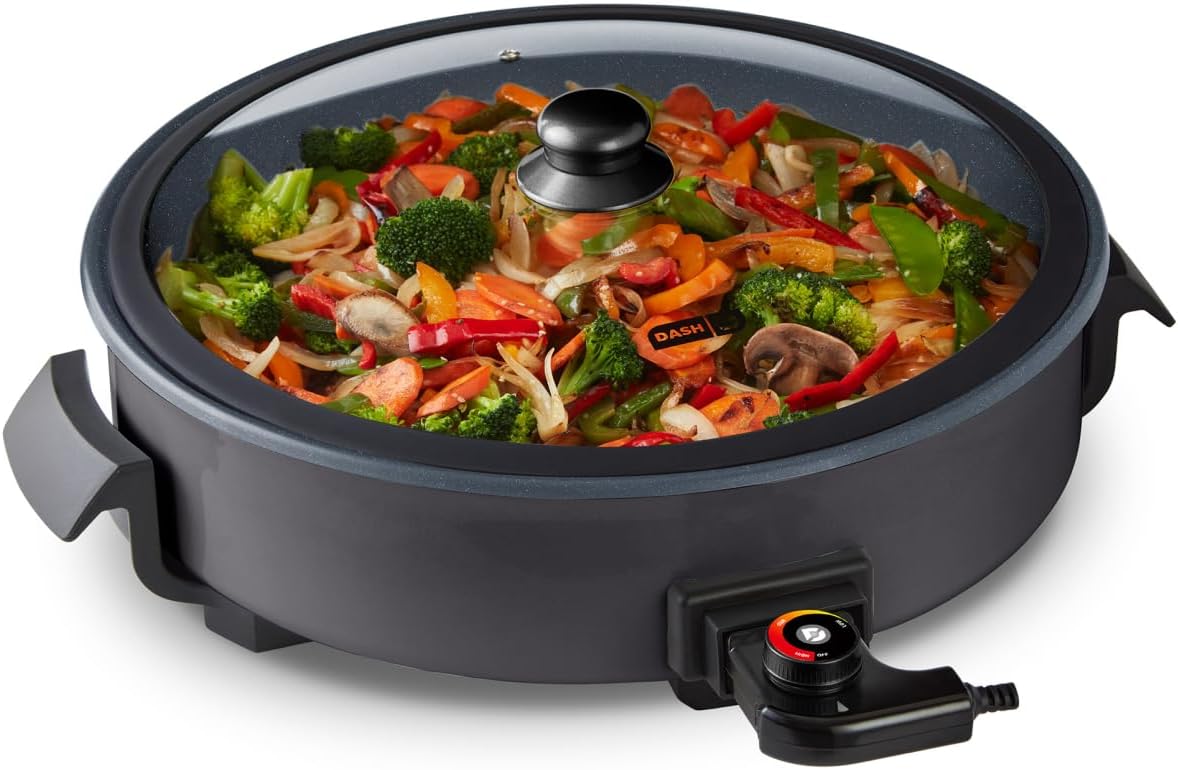
Assessing capacity ensures the skillet matches your household cooking volume. Models range from compact 12-inch designs up to expansive 14-inch surfaces holding six quarts or more. A larger surface area accommodates family-sized batches of stir-fry, pancakes, or pasta without overcrowding the ingredients. However, physical dimensions directly influence how much counter space the appliance occupies during operation.
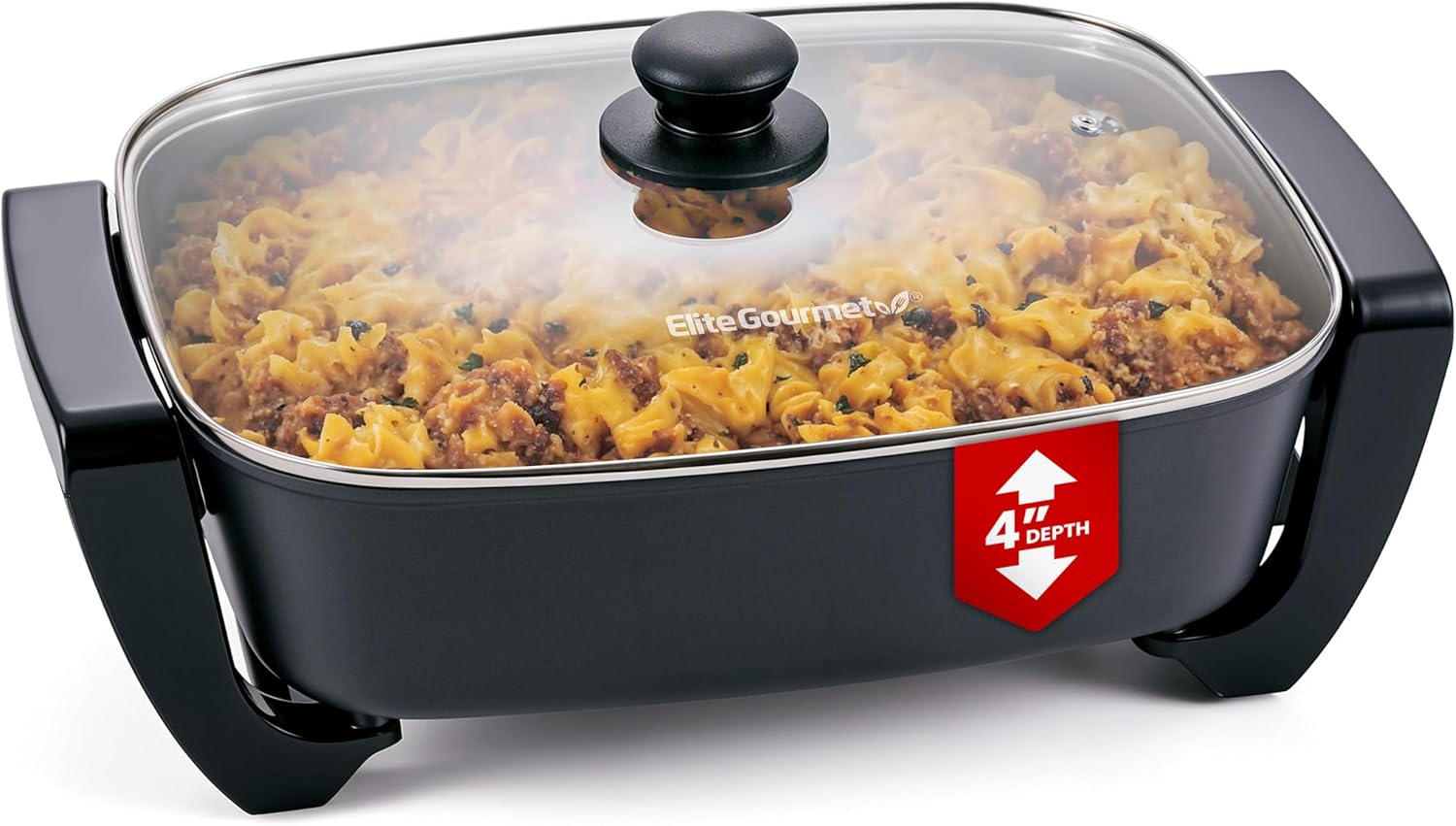
Consider the depth of cookware alongside its width. Deeper walls measuring three to four inches prevent spills when preparing liquid-heavy dishes like chili or stews. Shallower pans work well for quick searing and flipping but may limit total volume. Matching dimensions to your typical recipes prevents the frustration of overflowing ingredients or inadequate portions during dinner preparation.
Wattage and Heating Performance
Electrical wattage dictates how quickly an electric skillet heats up and maintains its temperature. Units typically range from 1200 watts to 1500 watts, with higher wattages providing faster preheating times. Fully embedded heating elements distribute thermal energy evenly across the aluminum base, reducing hot spots that can scorch delicate foods. Evaluating power specs helps ensure the appliance handles heavy loads efficiently.
Consistent thermal maintenance is especially important when adding cold ingredients to a hot pan. A reliable heating system recovers temperature swiftly to keep cooking times predictable. Reviewing how the heating element integrates with the pan body provides insight into overall thermal reliability. Balanced heat distribution ensures that every section of the cooking surface performs predictably during complex meal preparation routines.
Temperature Control Mechanisms
Precise temperature regulation gives you control over different cooking techniques, from gentle simmering to high-heat frying. Many models feature removable temperature control probes with adjustable ranges spanning up to 400 degrees Fahrenheit. Others utilize simple control knobs built directly into the housing. Removable probes offer the added benefit of detaching so the main pan can be immersed or placed in a dishwasher.
Examining the granularity of temperature settings helps match the appliance to your culinary style. Multiple discrete settings or continuous dials allow you to fine-tune heat levels for delicate sauces or searing meats. Ensuring the control interface feels intuitive prevents accidental adjustments while cooking. Reliable temperature management guarantees that breakfast eggs and evening casseroles cook evenly without constant monitoring.
Storage and Space-Saving Features
Kitchen cabinet space is often at a premium, making storage design a vital purchasing criterion. Some modern electric skillets incorporate innovative space-saving systems featuring inverted lids and locking clamps. These designs allow the unit to be stored vertically or on its side, cutting required cabinet footprint significantly. Evaluating how easily a skillet packs away prevents countertop clutter between uses.
For models without specialized stacking mechanisms, consider total height including the lid and handles. Detachable power cords and removable temperature probes simplify tucking the appliance into tight spaces. Checking dimensions against your available cupboard clearance ensures the skillet fits comfortably out of sight. Prioritizing storage compatibility keeps your kitchen organized without sacrificing cooking surface area.
Portability and Transport Convenience
If you frequently attend potlucks, tailgates, or family gatherings, transport features become essential. Skillets equipped with sturdy lid clamps and cool-touch handles simplify moving cooked dishes safely without messy spills. Locking mechanisms secure the lid tightly to the pan body during transit. These attributes transform a standard countertop appliance into a mobile serving vessel for social events.
Ergonomic side handles also facilitate transferring the skillet from the kitchen counter directly to the dining table. A secure grip reduces the risk of slips when handling a heavy, food-filled pan. Evaluating weight and balance of the unit ensures comfortable lifting. Choosing a model with reliable transport aids makes sharing home-cooked meals with friends and family much more convenient.
Frequently asked questions
Can I put my electric skillet in the dishwasher?
Dishwasher compatibility depends entirely on the specific model manufacturer guidelines. Many ceramic electric skillets feature removable temperature probes that must be detached before washing. Some pans and tempered glass lids are designated as dishwasher safe, typically on the top rack, while others require gentle hand-washing to protect the nonstick coating and exterior finish. Always check the manufacturer manual instructions before placing any electrical cooking component into a dishwasher to avoid damaging internal wiring or surface coatings.
What is the advantage of a ceramic nonstick coating?
Ceramic nonstick coatings provide a smooth cooking surface that allows food to release effortlessly with minimal oil or butter usage. This makes everyday cooking and subsequent cleanup significantly faster since food residues wipe away with minimal scrubbing. Additionally, many ceramic coatings are manufactured without traditional chemical additives like PFAS, PFOA, lead, and cadmium. While durable, maintaining their performance requires using non-metal utensils such as wood or silicone to prevent scratching the delicate nonstick layer over time.
How do I store an electric skillet to save cabinet space?
Storing an electric skillet efficiently depends on its physical design and included accessories. Some modern models feature space-saving systems with inverted lids and locking clamps that let you store the entire unit on its side or vertically inside a cabinet. For standard models, detaching the power cord or temperature control probe and storing the lid upside down on the pan can reduce overall height. Always measure your available cabinet clearance before purchasing to ensure a proper fit.
What temperature range do most electric skillets offer?
Most electric skillets provide adjustable temperature controls reaching up to 400 degrees Fahrenheit, accommodating a wide variety of cooking techniques. Lower temperature settings are ideal for simmering soups, warming food, or melting ingredients, while higher settings handle frying, searing, and rapid boiling. Models often use either a continuous dial or a removable control probe with multiple distinct settings. Reviewing the temperature range ensures the appliance matches your specific cooking preferences and recipe requirements.
Are electric skillets suitable for transporting food to gatherings?
Certain electric skillet models are specifically engineered for on-the-go transport to potlucks, tailgates, and holiday dinners. These portable units feature sturdy lid clamps that lock the tempered glass or specialized lid securely to the pan body, preventing accidental spills during transit. Additionally, cool-touch handles make lifting and moving the appliance straightforward. If you plan to travel with cooked meals frequently, choosing a skillet with built-in transport locks provides extra security compared to standard countertop-only designs.