Appliances · Buying Guide
Best Non Toxic Roasting Pan Options for Holiday Meats and Everyday Meals
Selecting an appropriate roasting pan involves looking closely at metal composition, physical dimensions, and included racks to match your specific kitchen oven space. Uncoated stainless steel options provide robust, durable construction for preparing large holiday turkeys, savory meats, and side dishes without relying on chemical nonstick coatings during high-heat baking sessions.
Exploring various pan configurations helps align your cookware with everyday cooking habits, whether you require induction compatibility, multi-tier rack setups, or integrated lids for auxiliary stovetop tasks. Reviewing precise measurements and depth specifications ensures proper fit inside standard home ovens while comfortably accommodating generous ingredient capacities for large family holiday meals and celebrations.
As an Amazon Associate, StacyLaughs earns from qualifying purchases.
Buying guide
Material Composition and Coatings
When evaluating non toxic roasting pan choices, examining the base metal and surface coating matters greatly for long-term kitchen performance and cooking results. Many available models feature pure stainless steel or multi-ply bonded layers constructed without chemical nonstick treatments, which helps prevent surface peeling or flaking over years of heavy holiday use and frequent high-temperature roasting sessions.
Alternative designs incorporate hybrid etched surfaces or polished mirror finishes designed to assist with food release and routine cleanup tasks. Reviewing these structural differences ensures you select a cookware piece that matches your preferred maintenance routine and high-heat cooking habits without unexpected material compromises or excessive cleaning difficulties after large meals.
Sizing and Oven Fit
Physical dimensions dictate whether a roasting pan can slide smoothly into your oven and rest comfortably on standard interior wire racks. Measuring your oven cavity beforehand prevents frustrating clearance issues, especially with larger models exceeding twenty inches in overall length. Balancing pan dimensions with your available kitchen space ensures seamless baking operations during busy holidays.
Depth is another critical consideration, as taller side walls safely accommodate bulkier holiday turkeys and prevent liquid splashes, while shallower designs offer easier spatula access for side ingredients. Matching the pan footprint to your typical meal size guarantees efficient heat circulation and successful roasting outcomes without crowding your oven cavity.
Racks and Food Elevation
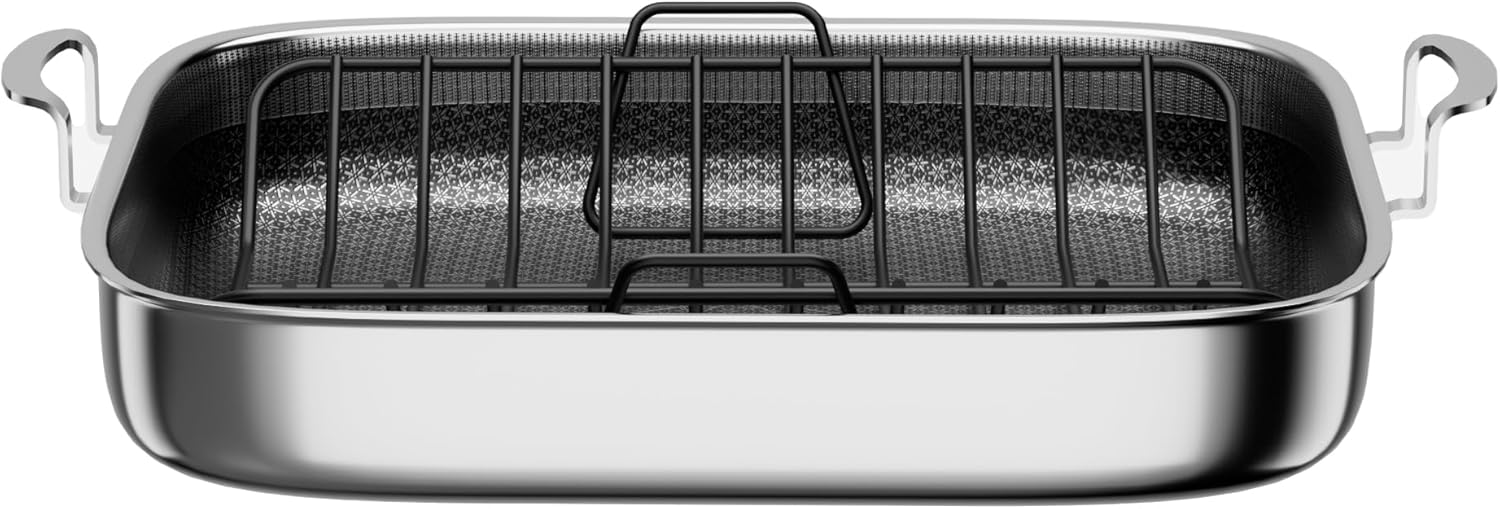
Elevated metal racks play an essential role in roasting by lifting meats above accumulated drippings to promote even heat circulation and crisp exterior browning across the meal. Many roasting sets include removable V-shaped wire racks that stabilize heavy poultry and keep birds elevated safely out of pooled cooking juices during extended oven cycles.
Secondary flat racks provide additional utility, often serving double duty for cooling baked goods or grilling seafood outside the primary roasting workflow. Assessing the included rack configuration helps determine how well the setup handles both large holiday birds and everyday side dishes without requiring separate accessory purchases for your kitchen.
Handle Design and Grip Security
Secure handles are vital when lifting heavy roasting pans filled with hot liquids and large cuts of meat from a scorching oven cavity. Riveted stainless steel handles provide durable attachment points, though metal surfaces typically absorb oven heat and require reliable protective mitts during transit across the kitchen workspace.
Raised stationary handles offer distinct ergonomic advantages by allowing easier hand clearance when grabbing the pan with bulky oven mitts. Evaluating how handles are positioned relative to the rim ensures you can maneuver the heavy cookware securely and confidently in busy kitchen environments without awkward wrist angles or slipping risks.
Heat Distribution and Stovetop Compatibility
Superior thermal performance depends heavily on the underlying metal construction, such as aluminum encapsulated bases or tri-ply bonded walls that distribute heat evenly across the cooking surface. Even heating prevents localized hot spots that can scorch pan drippings or leave certain sections of your holiday roast undercooked during long baking sessions.
Stovetop compatibility is another key consideration if you plan to make rich pan gravies or sear ingredients directly on burner grates after oven roasting. Checking whether a specific pan supports induction, gas, or electric cooktops expands its overall utility beyond the standard oven interior for comprehensive meal preparation routines.
Cleaning and Maintenance Guidelines
Properly maintaining a roasting pan involves following manufacturer instructions regarding dishwasher use, hand-washing recommendations, and overall surface care routines. Many stainless steel pans are labeled dishwasher safe, though careful hand-washing often helps preserve polished exterior finishes and prevents minor cosmetic wear over extended periods of repeated use in busy family kitchens.
Proper cleaning also prevents stubborn residue buildup from baked-on drippings, keeping the metal cooking surfaces hygienic and ready for future holiday cooking events. Reviewing these manufacturer maintenance guidelines ensures your roasting equipment remains durable, clean, and dependable through years of family holiday gatherings and large celebratory feasts.
Frequently asked questions
Can stainless steel roasting pans be used on stovetops?
Many stainless steel roasting pans offer stovetop compatibility, allowing you to create pan gravies or sear ingredients directly on burner grates. However, compatibility depends entirely on the specific model's base construction. For example, some pans feature aluminum encapsulated bases or multi-ply bonded layers that support induction, gas, and electric cooktops, while other variants explicitly exclude induction use. Always review the manufacturer specifications before placing any roasting pan onto a home stovetop to ensure proper heating performance and avoid potential cookware damage.
Are roasting pans with racks better for cooking turkeys?
Roasting pans equipped with racks offer distinct advantages when preparing turkeys and large poultry cuts. The included rack elevates the bird above the bottom of the pan, which promotes all-around heat circulation and helps achieve an even, crispy exterior browning. Additionally, elevating the meat prevents it from sitting directly in accumulated cooking juices and fats. This separation also leaves valuable space at the bottom of the pan for baking vegetables or collecting clean drippings intended for gravies and sauces.
How do I clean stuck-on food from a stainless steel roaster?
Cleaning stuck-on food from an uncoated stainless steel roaster typically involves soaking the pan in warm, soapy water to loosen stubborn drippings. Many stainless steel roasting pans are marked as dishwasher safe, but improper loading or harsh detergents can sometimes mar the finish. For persistent residues, gentle hand-washing with non-abrasive cloths or specialized stainless steel cleaners helps maintain the polished appearance. Always follow the specific manufacturer maintenance guidance provided with your cookware to ensure long-term durability and appearance.
What size roasting pan do I need for a large holiday turkey?
Selecting the correct roasting pan size depends heavily on the weight of your turkey and the internal dimensions of your oven. Medium pans around sixteen inches often accommodate moderate holiday birds alongside side dishes, while larger models exceeding seventeen to twenty inches handle massive family roasts with ease. Before purchasing, carefully measure your oven cavity and interior wire rack dimensions to ensure the pan fits comfortably with adequate clearance on all sides for safe heat circulation.
Do stainless steel roasting pans contain chemical nonstick coatings?
Traditional stainless steel roasting pans feature uncoated cooking surfaces crafted without added chemical nonstick treatments like PTFE, PFOA, or PFOS. These pure metal surfaces provide durable performance that will not peel or flake over time under high-heat roasting conditions. While some hybrid or specialized roasting models incorporate etched nonstick surface designs for easier food release, standard stainless steel variants rely purely on metal construction and proper pre-heating or fat usage to prevent food sticking during meal preparation.