Appliances · Buying Guide
Best Nonstick Non Toxic Cookware Sets for Everyday Cooking
Finding reliable kitchen equipment involves balancing health priorities with daily cooking performance. Many home cooks seek alternative surfaces that eliminate unwanted chemical concerns while still providing reliable food release. Modern ceramic, titanium-infused, and specialized multi-layer coatings offer slick cooking surfaces without relying on standard polytetrafluoroethylene compounds, transforming how everyday meals are prepared on the stovetop.
Exploring options requires careful attention to material construction, stovetop compatibility, handle design, and overall cleanup routines. Whether you are outfitting a compact apartment or upgrading a busy family kitchen, reviewing specific set configurations helps match cookware features to actual meal preparation habits. Examining these details ensures you choose a kitchen setup that fits your exact culinary requirements.
As an Amazon Associate, StacyLaughs earns from qualifying purchases.
Buying guide
Material Composition and Core Construction
Understanding how cookware is built dictates its overall durability, heat distribution, and physical weight. Aluminum cores heat up rapidly and spread warmth evenly across the base, preventing frustrating hot spots. Die-cast or stamped variants offer distinct structural stiffness levels, directly influencing how the pan handles daily stovetop cooking tasks and heavy flipping.
Multi-ply stainless steel alternatively blends inner conductive metal layers with outer magnetic steel for superior thermal retention and rigidity. Evaluating whether you prefer lightweight aluminum handling or heavy-duty multi-ply durability ensures your kitchen tools match your exact physical preferences and cooking style without causing undue wrist fatigue during extended meal preparations.
Nonstick Coating Safety and Technology
Modern nonstick surfaces have evolved significantly, offering reliable food release without relying on older chemical compounds. Ceramic, granite, and titanium-infused coatings provide slick cooking environments where eggs and delicate sauces slide freely. Verifying that a set is explicitly free from hazardous materials like PTFE, PFOA, and heavy metals brings essential peace of mind to health-conscious households.
Choosing a non-toxic surface also influences how much oil or butter you need during active cooking, supporting lighter dietary choices. However, these specialized coatings require respectful treatment, such as avoiding extreme burner settings and abrasive scrubbing pads, to ensure long-lasting performance across months of regular family meal preparation sessions.
Stovetop and Oven Compatibility
Your existing kitchen range dictates which cookware options will function properly in your home environment. While gas and electric coils accommodate almost any pan style, induction ranges require specific magnetic metallic bases to generate necessary heat. Checking for an induction-ready steel plate embedded in the bottom prevents costly compatibility mistakes when upgrading your kitchen.
Beyond standard stovetops, many modern sets offer impressive oven safety ratings for tasks like searing then roasting or finishing casseroles. Temperature thresholds vary widely between metal pan bodies and glass lids, so reviewing these specific limits ensures you can safely transition dishes from burner to oven without damaging handles or hardware components.
Handle Design and Ergonomics
Handle construction heavily influences safety, comfort, and physical maneuverability during active cooking sessions. Ergonomic bakelite handles generally stay cool to the touch on standard stovetops, reducing the risk of accidental burns when lifting filled pans. Stainless steel riveted handles alternatively provide robust, permanent attachment for high-heat oven use where plastic materials might not be rated.
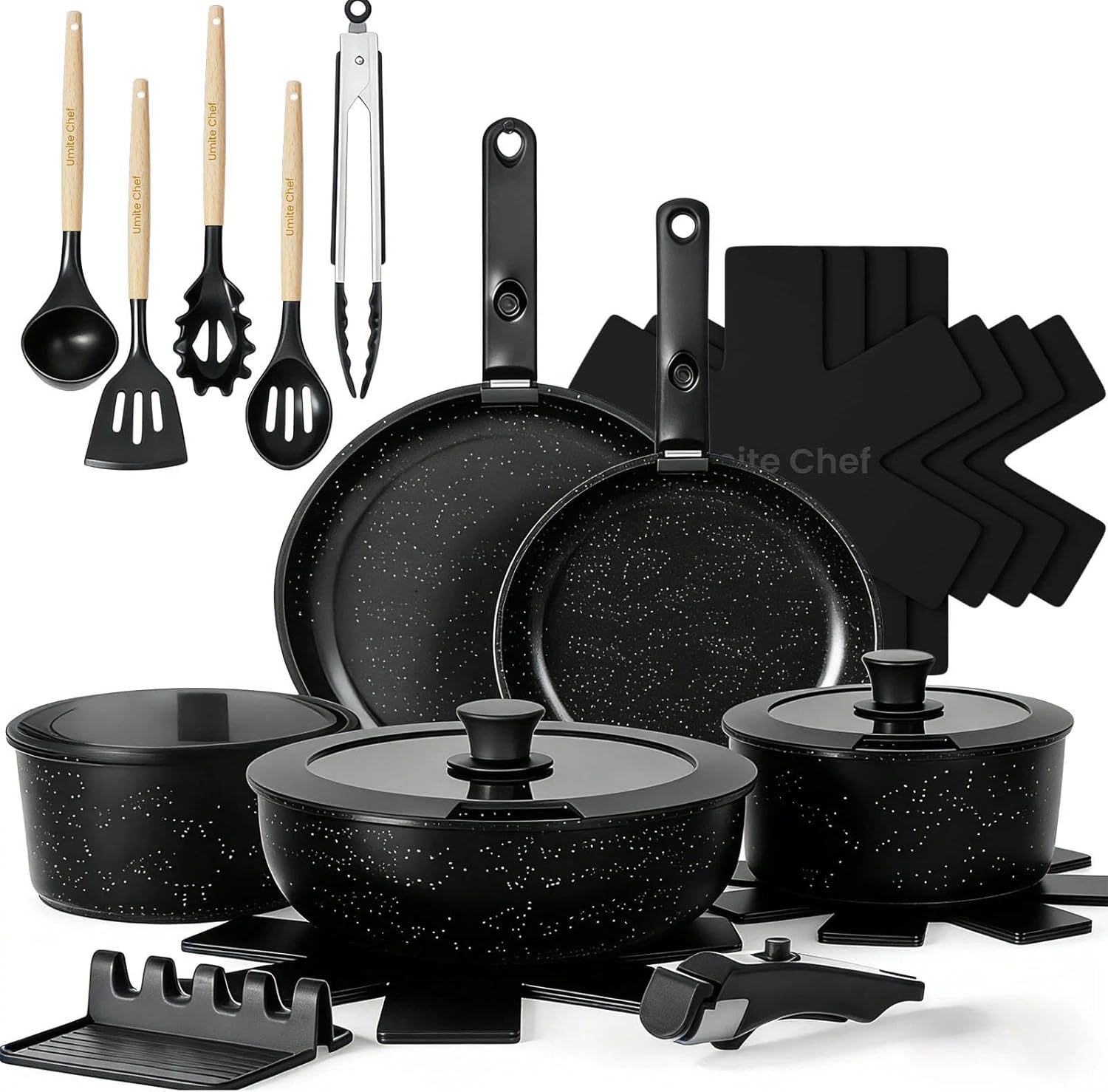
Detachable handle systems offer a unique space-saving advantage for tiny kitchens by allowing pots to nest tightly together inside cramped cabinets. Evaluating whether you prioritize permanent stainless steel rigidity or removable handle versatility helps tailor your purchase decision to your specific cabinet storage layout constraints and daily cooking habits.
Set Size and Piece Assortment
Cookware sets range from compact multi-piece collections to massive bundles containing over twenty distinct items. Assessing your household size and typical meal types ensures you do not pay for unused specialty pots. Smaller configurations focus entirely on essential frying pans and saucepans for simple daily cooking tasks and basic meal setups.
Larger sets often include large stockpots, deep sauté pans, matching utensils, and protective pads designed for safe cabinet stacking. Balancing the total number of included pieces against your available kitchen storage space prevents frustrating overcrowding and ensures every single item serves a practical purpose in your daily meal preparation routine and cooking style.
Maintenance and Cleaning Guidelines
Proper maintenance preserves the longevity and nonstick performance of your cookware investment over years of use. While many modern sets claim dishwasher safety, manufacturers frequently recommend gentle hand washing with soft sponges and mild soap to protect delicate ceramic coatings. Harsh chemical detergents and metal scouring pads can degrade nonstick surfaces prematurely.
Allowing hot pans to cool completely before washing prevents thermal shock and structural warping. Following specific care instructions regarding utensil choice, such as using wooden or silicone tools instead of metal forks, ensures your pots and pans maintain their smooth food release over extended periods of reliable home kitchen service and daily use.
Frequently asked questions
Are ceramic nonstick cookware sets truly free of toxic chemicals?
Many ceramic cookware sets feature coatings formulated without polytetrafluoroethylene, perfluorooctanoic acid, perfluorooctane sulfonate, lead, and cadmium. Manufacturers design these nonstick surfaces to offer natural food release without releasing hazardous fumes at normal cooking temperatures. However, it is always important to review the specific material disclosures provided for each individual collection to verify exactly which chemical compounds are excluded, as precise manufacturing formulations can vary significantly between brands.
Can I use metal utensils on ceramic nonstick pots and pans?
Compatibility with metal utensils depends entirely on the specific surface reinforcement of the cookware set. While standard ceramic coatings can scratch or chip when scraped with sharp metal forks or spatulas, certain advanced hybrid models feature diamond or titanium reinforcement designed to withstand metal tools safely. To maximize the lifespan of traditional ceramic pans, manufacturers generally recommend using wooden, plastic, or silicone utensils during your daily cooking tasks.
Do nonstick ceramic cookware sets work on induction stovetops?
Induction compatibility depends on the construction of the pan's bottom rather than the ceramic coating itself. Cookware that features an embedded magnetic stainless steel base plate or a fully bonded magnetic metal layer will heat efficiently on induction ranges. Always check the manufacturer specifications to confirm induction readiness before purchasing, as some lightweight aluminum pans lack the necessary magnetic iron properties required by modern induction cooktops.
Is it safe to put nonstick ceramic cookware in the dishwasher?
Many manufacturers state that their cookware sets are dishwasher safe, allowing for convenient cleanup after heavy meals. However, harsh dishwasher detergents and intense heat cycles can degrade delicate ceramic nonstick coatings over time. To preserve optimal food release and prevent premature wear, hand washing with a soft sponge and mild dish soap is frequently recommended by makers as the best maintenance practice for ensuring long-term product durability.
What is the benefit of detachable handles on pots and pans?
Detachable handle systems offer exceptional space-saving advantages, particularly for individuals living in small apartments, dormitories, or traveling in RVs and campers. By removing the handles, pots can nest securely inside one another, reducing required cabinet storage space by a substantial margin. Furthermore, removing handles allows cookware bodies to transition easily into hot ovens for baking tasks without plastic or bakelite components getting damaged by excessive high heat.