Appliances · Buying Guide

Best pampered chef stock pot alternatives for large family meals and soups

Finding the right cooking vessel for large batches of soup, stock, or pasta requires careful attention to internal capacity, heat distribution, and overall stovetop compatibility. Home cooks frequently look for robust options that can handle heavy boiling tasks without warping or losing thermal efficiency over years of regular home use.

This overview examines several alternative heavy-duty stock pots designed to deliver reliable performance across various everyday and large-scale culinary applications. By focusing closely on material construction, handle ergonomics, lid designs, and cleaning requirements, you can easily select a suitable cooking pot for your specific kitchen routines and family hosting needs.

As an Amazon Associate, StacyLaughs earns from qualifying purchases.

P&P Chef 20 Quart Stainless Steel Stock Pot with Lid
#1 Best Overall

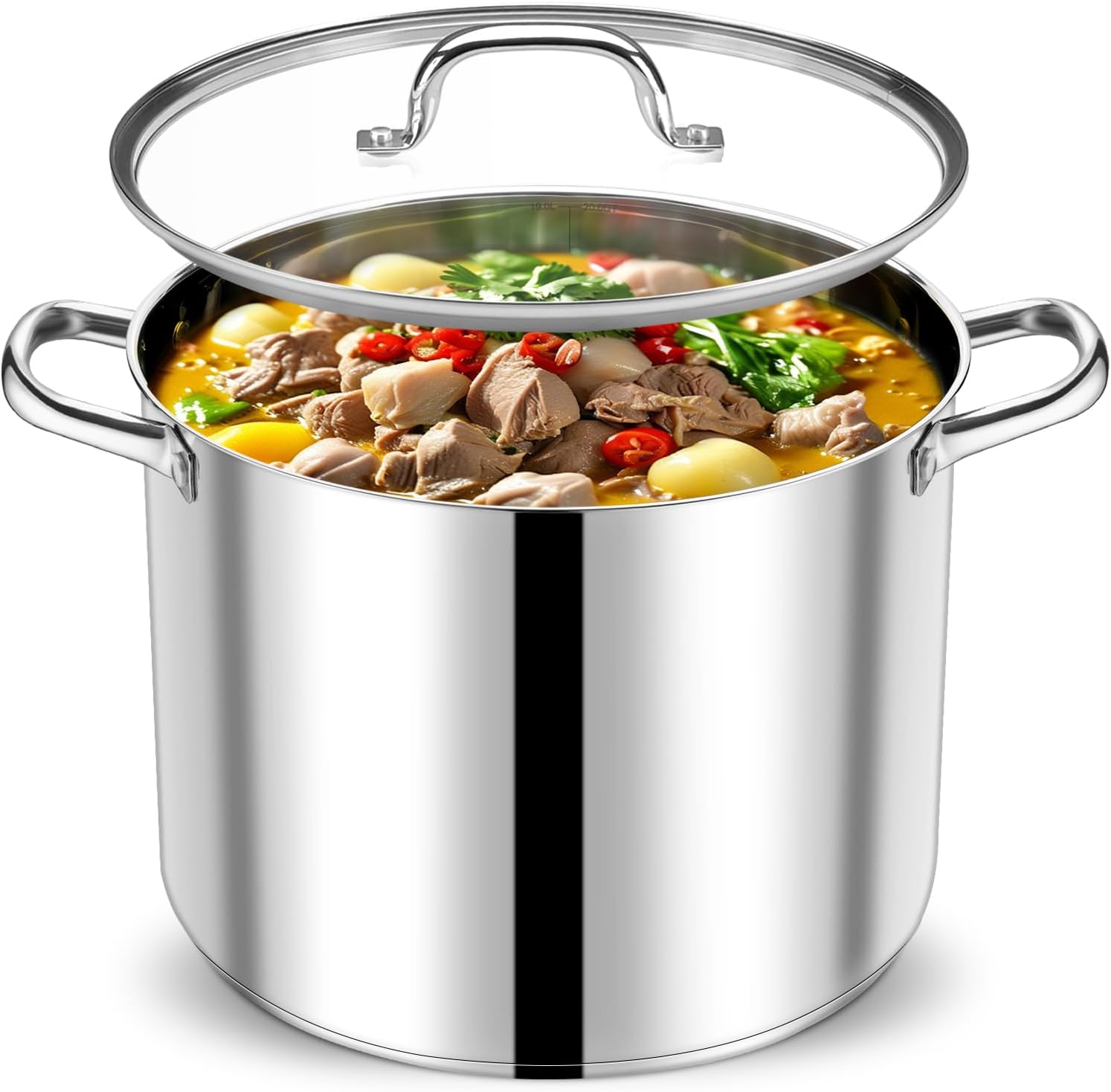
P&P Chef 20 Quart Stainless Steel Stock Pot with Lid

This twenty-quart stainless steel stock pot features a three-ply bottom with an aluminum core for even heat distribution across gas, electric, and induction stoves. It includes clear interior measurement marks, wide riveted ergonomic handles, and a tempered glass lid with a steam vent. The mirror-polished exterior provides a glossy finish, and the pot is dishwasher safe for straightforward cleanup after large family meals.

Best for High-capacity soup and stock preparation

Tri-ply stainless steel bottom20 quart large capacityVisible glass lid designInternal clear measurement marksDishwasher safe easy cleanup
View on Amazon →

What stands out

  • The three-ply bottom incorporates an aluminum core to provide fast and even heat distribution across various stovetops including induction.
  • Interior measurement marks let you accurately control liquid volume without needing separate measuring tools during recipe preparation.
  • The tempered glass lid features an integrated vent hole to release excess steam while letting you monitor cooking progress easily.

What to consider

  • The twenty-quart capacity and substantial dimensions require significant storage space in standard kitchen cabinets and demand extra care when lifting heavy loads.
  • Cleaning a pot of this massive size by hand can prove cumbersome in smaller kitchen sinks despite the smooth mirror-polished surface finish.
Key specifications
Capacity
20 quarts
Item Dimensions D x W x H
12.99"D x 12.99"W x 9.84"H
Material Type
Glass, Stainless Steel
Pot Purpose
stock making
Heat Distribution
Even Heat Distribution
Included Components
Lid

The practical verdict

This twenty-quart stock pot is best suited for large families, gatherings, and professional cooks who routinely prepare massive volumes of soup, stock, or boiled seafood. Avoid it if your kitchen has limited storage space or if you typically cook smaller everyday meals. The main trade-off is gaining exceptional cooking capacity at the expense of a heavy, bulky vessel that demands careful handling and ample cabinet room.

#2
Cuisinart Chef's Classic 10 Quart Stainless Steel Stock Pot
Classic Mirror-Finish Stockpot

Cuisinart Chef's Classic 10 Quart Stainless Steel Stock Pot

Best for Standard family soup and casserole cooking

Built with a polished mirror finish on both the interior and exterior, this ten-quart stainless steel stockpot includes riveted side handles designed for a comfortable grip. It fits standard ovens and works well for preparing large quantities of soups, casseroles, or pasta. The dishwasher-safe construction ensures routine cleanup remains straightforward after family dinners, making it a functional addition to standard cookware collections.

What stands out

  • The polished mirror finish provides a classic aesthetic appearance while remaining compatible with standard dishwasher cleanup routines.
  • Riveted side handles offer a secure and comfortable grip when moving the pot between countertops and cooking surfaces.
  • The ten-quart capacity accommodates family-sized batches of soups, stews, and casseroles without taking up excessive burner space.

What to consider

  • The stainless steel construction lacks an encapsulated multi-ply base, which may require careful heat management to prevent localized hot spots on certain burners.
  • The included lid configuration and handle placement require dedicated storage clearance compared to lower-profile cookware pieces in crowded kitchen cabinets.
Key specifications
Capacity
10 quarts
Item Dimensions D x W x H
12.99"D x 8.66"W x 11.22"H
Material Type
Steel
Finish Types
Mirror Finish
Pot Purpose
Stock Making
Included Components
10 Qt Stockpot, Lid

The practical verdict

This ten-quart stockpot is best for home cooks preparing medium-sized batches of soups, stews, and family casseroles who prefer a classic mirror finish. Avoid it if you require advanced multi-ply heat distribution bases for delicate simmering. The primary trade-off involves getting a dependable, oven-safe mid-sized vessel at the cost of lacking specialized core layers for rapid temperature adjustments.

#3
KitchenAid Hard-Anodized Induction Nonstick 8 Quart Stock Pot
Hard-Anodized Nonstick Simmering

KitchenAid Hard-Anodized Induction Nonstick 8 Quart Stock Pot

Best for Nonstick everyday stew and chili prep

Forged from durable hard-anodized aluminum, this eight-quart stock pot features a triple-layer nonstick interior designed to stand up to daily wear and tear. It includes a thick base engineered for consistent heat distribution on induction and traditional stovetops. The riveted handles feature enhanced nonstick finishes, and both the pot and glass lid are completely dishwasher safe for easy cleaning after everyday meals.

What stands out

  • A triple-layer nonstick interior coating provides reliable food release and stands up well to regular daily cooking tasks.
  • The thick forged aluminum base ensures even heat distribution across induction, gas, and electric stovetops.
  • Handle rivets are finished with enhanced nonstick coating to prevent food buildup around attachment points during cleaning.

What to consider

  • The nonstick coating requires careful selection of utensils to avoid scratching or compromising the protective surface over extended periods of use.
  • An eight-quart capacity may fall short for large batch preserving or hosting extensive gatherings requiring massive food volumes.
Key specifications
Capacity
8 quarts
Material Type
Aluminum
Product Care Instructions
Dishwasher Safe
Coating Description
Silicone Polyester
Additional Features
Electric Stovetop Compatible, Gas Stovetop Compatible, Induction Stovetop Compatible
Included Components
8-Quart Stockpot with Lid

The practical verdict

This eight-quart nonstick stock pot is best for everyday home cooks preparing chilis, stews, and pasta who value effortless food release and simple cleanup. Avoid it if you prefer uncoated metal surfaces or need a massive vessel for very large groups. The key trade-off is receiving convenient nonstick performance that requires utensil mindfulness to maintain the protective coating over time.

#4
Viking 3-Ply Stainless Steel 12 Quart Stock Pot with Lid
Professional Three-Ply Performance

Viking 3-Ply Stainless Steel 12 Quart Stock Pot with Lid

Best for High-efficiency boiling and slow simmering

This twelve-quart professional stock pot features a three-ply construction comprising a non-reactive stainless steel interior, an aluminum core, and a magnetic exterior. Designed for efficient heating, it reaches boiling points quickly and handles high oven temperatures up to six hundred degrees Fahrenheit. Ergonomic riveted handles provide balance and control, while the polished finish and cut rims complement modern kitchen decors during cooking and serving.

What stands out

  • The three-ply construction distributes heat quickly and evenly, allowing liquids to reach a rolling boil faster than conventional pots.
  • Oven safety up to six hundred degrees Fahrenheit provides versatile transition options from stovetop searing to oven baking.
  • Ergonomic riveted handles offer balanced control and comfortable grip security when moving heavy loads with oven mitts.

What to consider

  • The premium three-ply stainless steel build results in a heavier empty weight that requires two-handed lifting when filled to capacity.
  • The polished exterior finish can show water spots or fingerprints easily, demanding extra wiping to maintain its pristine showroom appearance.
Key specifications
Capacity
12 quarts
Item Dimensions D x W x H
11"D x 13"W x 9"H
Material Type
Stainless Steel
Finish Types
Polished
Heat Distribution
Even Heat Distribution
Included Components
Stock pot and lid

The practical verdict

This twelve-quart pot is best for enthusiastic home chefs seeking professional-grade three-ply construction and high oven temperature tolerance. Avoid it if you prefer lightweight cookware or want a nonstick interior surface. The main trade-off is experiencing superior heat distribution and robust durability at the expense of a heavier empty weight and a higher price point tier.

#5
Calphalon Brushed Stainless Steel 6 Quart Stock Pot with Lid
Rapid-Heating Compact Stock Pot

Calphalon Brushed Stainless Steel 6 Quart Stock Pot with Lid

Best for Compact sauce and side dish prep

Built with durable three-layer stainless steel, this six-quart stock pot utilizes specialized technology to heat up significantly faster than standard alternatives. An aluminum core provides even heating across the entire cooking surface, while riveted stainless steel handles stay cool on stovetops. The pot is oven-safe up to four hundred fifty degrees Fahrenheit, making it a versatile choice for seamless transitions from stovetop simmering to oven roasting.

What stands out

  • Specialized heating technology allows the pot to reach cooking temperatures up to thirty percent faster than standard stainless steel models.
  • Riveted stainless steel handles are engineered to stay cool on stovetops during extended simmering and boiling sessions.
  • Oven safety up to four hundred fifty degrees Fahrenheit enables flexible cooking transitions from burner to oven.

What to consider

  • A six-quart capacity limits the volume of liquid or ingredients you can process at one time compared to standard ten or twenty-quart stock pots.
  • The brushed stainless steel exterior demands routine maintenance to keep the finish looking uniform and free of stubborn cooking residues.
Key specifications
Capacity
6 quarts
Item Dimensions D x W x H
8.07"D x 9.84"W x 12.99"H
Material Type
Stainless Steel
Finish Types
Uncoated
Handle Material
Stainless Steel
Included Components
6-Qt Stock Pot with Lid

The practical verdict

This six-quart stock pot is best for smaller households and everyday side dish preparation where rapid heating and compact storage are priorities. Avoid it if you frequently cook large family batches or bulk soups. The primary trade-off is receiving faster heat times and a compact footprint in exchange for a restricted cooking capacity that cannot handle massive recipe volumes.

Buying guide

Evaluating Stock Pot Capacity and Kitchen Scale

Choosing the correct pot capacity depends heavily on your typical household size and the types of recipes you prepare regularly. Smaller six to eight-quart options fit standard stovetops easily and handle everyday side dishes or moderate family meals without overcrowding burner grates. They require minimal storage clearance in average kitchen cabinets.

Conversely, larger ten to twenty-quart vessels are necessary for bulk meal prep, canning, and hosting large gatherings. However, these oversized pots demand significantly more vertical storage space and heavier lifting effort. Assessing your routine cooking volumes ensures you select a practical size that balances recipe requirements with your physical storage and handling capabilities.

Understanding Stovetop Compatibility and Heat Distribution

Stovetop compatibility is a vital factor when purchasing any modern stock pot for your kitchen. Most quality stainless steel and aluminum pots function smoothly across gas, electric, and ceramic cooktops. If you cook with induction, you must verify that the pot features a magnetic stainless steel exterior layer or base capable of establishing proper thermal contact with the burner surface.

Heat distribution directly influences cooking consistency and prevents scorching during long simmering sessions. Pots constructed with multi-ply layers or thick aluminum cores transfer thermal energy uniformly across the entire base. This design minimizes hot spots, ensuring that thick soups, delicate sauces, and boiling liquids cook evenly without requiring constant stirring or manual temperature adjustments.

Comparing Material Construction and Durability

The material makeup of a stock pot dictates its long-term durability, weight, and maintenance requirements. Stainless steel offers exceptional resistance to corrosion, staining, and chemical reactions with acidic ingredients like tomatoes. When combined with aluminum core layers, stainless steel achieves a reliable balance between structural strength and efficient thermal conductivity for daily cooking tasks.

Hard-anodized aluminum and nonstick coatings provide alternative surface benefits, focusing primarily on effortless food release and simplified cleanup. While uncoated metal stands up to metal utensils and high-heat searing, nonstick variants require gentle care to protect the coating over years of use. Reviewing your cooking habits helps determine which material profile aligns best with your maintenance preferences.

Assessing Handle Ergonomics and Safety

Handle design plays a critical role in the safe transport of heavy stock pots filled with boiling liquids. Look for robust handles that are firmly attached through strong rivets rather than spot welding, as secure fasteners prevent loosening over years of heavy use. Ergonomic shapes ensure that your hands maintain a stable and comfortable grip.

When handling large pots filled with hot water or soup, proper balance and control are essential to avoid spills. Wide handles accommodate various hand sizes and provide enough clearance for oven mitts or thick kitchen towels. Evaluating how a pot feels in your hands before purchase prevents handling difficulties during active kitchen workflows.

Reviewing Lids and Steam Management Features

Lids serve a crucial function in trapping heat, moisture, and flavor inside the pot during long simmering tasks. Tempered glass lids offer the distinct advantage of letting you monitor cooking progress visually without lifting the cover and releasing accumulated steam. This transparency helps maintain consistent internal temperatures and speeds up cooking times.

Integrated vent holes on pot lids provide an essential safety mechanism by releasing excess air and pressure during rolling boils. A well-fitting lid ensures that water vapor circulates evenly before condensing and falling back onto the food. Checking lid construction details helps you select a vessel that manages internal moisture effectively.

Cleaning, Maintenance, and Dishwasher Compatibility

Routine cleanup after preparing large meals can be time-consuming if a stock pot features complex interior crevices or reactive surfaces. Smooth mirror-polished or brushed stainless steel finishes reduce the risk of stubborn food sticking. Many modern stock pots feature dishwasher-safe construction, allowing you to place the vessel directly into the machine for effortless post-cooking maintenance.

Following manufacturer care guidelines preserves the appearance and longevity of your cookware over time. Stainless steel may occasionally require specialized cleaners to remove heat discoloration, while nonstick surfaces benefit from soft dishcloths and mild detergents. Selecting a pot with straightforward cleaning requirements ensures hassle-free ownership and keeps your kitchen routine efficient.

Frequently asked questions

What size stock pot should I choose for general family cooking?

Selecting the right stock pot size depends primarily on your household size and how frequently you cook in bulk. For typical families of four, an eight to ten-quart pot generally provides sufficient capacity for everyday soups, pasta, and stews without taking up excessive storage space. If you regularly host large gatherings, process garden harvests, or prepare massive batches of chili, upgrading to a twelve or twenty-quart model is recommended. Always measure your storage cabinets and sink dimensions before purchasing an oversized cooking vessel to ensure a practical fit.

Can stainless steel stock pots be used on induction cooktops?

Many stainless steel stock pots are compatible with induction cooktops, provided they feature a magnetic exterior layer or an encapsulated base made of ferromagnetic metal. Induction cooktops rely on magnetic fields to generate heat directly within the cookware, meaning non-magnetic aluminum or copper pots will not function unless they include an induction-ready base plate. Always check the manufacturer specifications to confirm stovetop compatibility before trying to use a new stock pot on an induction burner surface to ensure proper heating performance.

Are dishwasher-safe stock pots truly maintenance-free?

While dishwasher-safe stock pots can be placed directly into an automatic dishwasher for routine cleanup, they still require occasional manual attention to maintain their finish. Hard water minerals, dishwasher detergents, and high drying temperatures can cause stainless steel to develop water spots or minor discoloration over extended periods. Hand washing with a soft cloth and mild soap often preserves the polished exterior shine better than repeated machine washing. Following the manufacturer care instructions helps prevent premature wear and keeps your cookware looking pristine.

Why do some stock pots feature multi-ply bottom construction?

Multi-ply bottom construction incorporates alternating layers of stainless steel and thermally conductive metals like aluminum to improve heat distribution across the cooking surface. Pure stainless steel is durable and non-reactive, but it can sometimes heat unevenly and create localized hot spots on burners. Inserting an aluminum core between steel layers allows heat to spread quickly and evenly across the entire pot base. This technological design minimizes the risk of scorching thick sauces, soups, or stocks during long simmering cooking sessions.

How do I prevent food from sticking to a stainless steel stock pot?

Preventing food from sticking in a stainless steel stock pot involves proper preheating techniques and adequate use of cooking oils or liquids. Allowing the empty pot to warm up on the burner for a brief moment before adding oil helps create a smoother cooking surface. Ensuring that your ingredients are not excessively cold when added to the pan also minimizes adhesion. Maintaining moderate heat levels rather than using maximum burner settings prevents proteins and starches from burning onto the un-coated metal interior during meal preparation.

Final thoughts

Selecting the ideal stock pot requires balancing your daily cooking capacity, preferred materials, and kitchen storage limitations. Whether you choose a compact multi-ply stainless steel vessel or a massive high-capacity boiling pot, matching the specifications to your culinary routines ensures lasting satisfaction.

By carefully reviewing handle ergonomics, lid designs, and heat distribution properties, you can invest in cookware that handles everyday family meals and large gatherings with equal ease. Proper maintenance will further preserve your chosen pot for years of reliable kitchen use.