Appliances · Buying Guide
Best Induction Cookware Sets for Everyday Kitchen Cooking
Finding the right cookware for an induction cooktop requires carefully matching your cooking style with compatible metal bases and durable construction. Many modern sets combine magnetic stainless steel outer layers with responsive inner cores to ensure rapid and uniform heat distribution across your kitchen burners, preventing frustrating hot spots during meal prep sessions.
Whether you prefer hard-anodized aluminum, traditional multi-ply stainless steel, or advanced hybrid nonstick surfaces, exploring the available options helps streamline your daily routine. Reviewing specific set pieces, handle materials, and maximum oven temperatures makes it easier to select a reliable kitchen setup that meets your exact cooking demands, ensuring long-lasting performance for all household recipes.
As an Amazon Associate, StacyLaughs earns from qualifying purchases.
Buying guide
Material Composition
Choosing the right metal for your cookware set directly influences how your pots and pans perform on an induction cooktop. Traditional stainless steel offers incredible structural durability and a polished exterior finish that withstands high oven temperatures without warping during intensive baking tasks. Pairing this metal with magnetic bases ensures seamless compatibility across modern kitchen burners and stovetops.
On the other hand, hard-anodized aluminum provides a sturdy alternative that distributes heat efficiently and resists everyday surface wear effectively. Reviewing your preferred cooking habits will help determine whether robust metal strength or responsive aluminum construction best suits your daily kitchen routine and long-term food preparation goals.
Heat Distribution and Bases
Induction cooktops rely on magnetic attraction to generate heat directly within the cookware base rather than warming the glass surface externally. Impact-bonded and encapsulated aluminum bases ensure that thermal energy spreads evenly across the bottom of the pan, preventing frustrating hot spots that can burn delicate sauces or unevenly sear meats during busy cooking sessions.
Evaluating how quickly a set responds to temperature adjustments helps you maintain precise control while simmering, boiling, or frying various ingredients on the stove. Multi-ply construction further enhances this thermal efficiency by sandwiching responsive aluminum between durable outer layers of magnetic steel for consistent, reliable cooking results every single time.
Nonstick Coatings and Maintenance
Nonstick coatings simplify food release and make cleaning up after heavy meal preparation significantly easier for busy households. Advanced hybrid surfaces, ceramic finishes, and textured circle designs offer varying levels of resistance against everyday scratches from metal utensils and wear. Understanding these surface technologies helps you choose a finish that matches your cleaning preferences and cooking style.
Checking manufacturer maintenance guidelines ensures your nonstick pans retain their smooth performance over extended periods of frequent use. While many modern sets advertise dishwasher-safe construction, following recommended hand-washing practices often prolongs the lifespan of delicate nonstick interior layers and preserves polished exterior colors across all your cookware pieces.
Handle Design and Ergonomics
Comfortable handles are essential for safely moving heavy pots and pans filled with boiling water or dense ingredients across the busy kitchen. Riveted stainless steel handles provide a secure, permanent attachment to the cookware body, ensuring long-term stability during frequent lifting tasks and transport between counters and burners every day.
Many metal handles are engineered to stay cool during standard stovetop use, but they will absorb significant heat when placed inside a hot oven during baking tasks. Checking whether a set includes silicone grips or supportive helper handles helps you manage heavy stockpots and large pans with greater confidence and comfort.
Lids, Spouts, and Straining Features
Integrated design elements like tempered glass lids, built-in pour spouts, and straining covers can dramatically streamline your everyday cooking workflow in the busy home kitchen. Transparent glass covers allow you to monitor simmering food without lifting the lid and releasing valuable moisture and heat into your room during active cooking sessions.
Meanwhile, specialized rims with pour spouts and straining holes make draining liquids from cooked vegetables or pasta simpler without requiring a separate colander tool. Balancing these convenient features against your personal preference for traditional solid lids ensures your cookware collection perfectly meets your exact daily meal preparation routine at home.
Set Composition and Storage
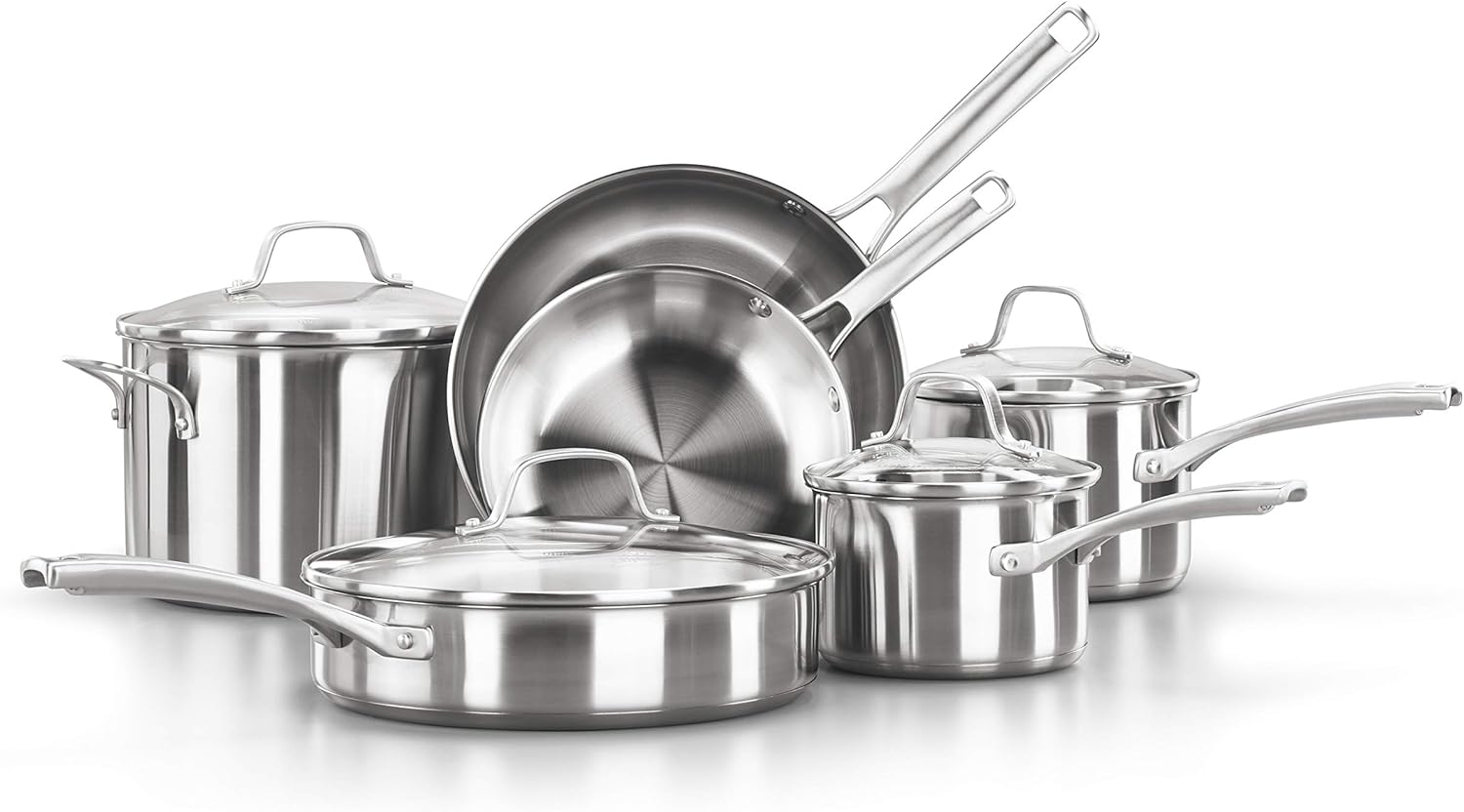
Cookware sets range from compact ten-piece collections to massive multi-piece bundles complete with cooking utensils, protective pads, and specialized steaming inserts for vegetables. Assessing the specific pieces included in a set ensures you receive the right mix of frying pans, saucepans, and large stockpots for your typical household recipes and daily meal demands.
Larger sets offer incredible versatility but require substantial cabinet and drawer space to store all the extra components safely without creating clutter or damaging surfaces. Measuring your available kitchen storage before purchasing helps you choose a collection that provides maximum utility without overcrowding your kitchen storage cupboards and daily food preparation areas.
Frequently asked questions
Do all stainless steel cookware sets work on induction cooktops?
Not necessarily. While stainless steel is a popular choice for modern kitchens, induction cooktops specifically require cookware with a magnetic metal base to generate heat effectively. Pure copper or standard aluminum pans will not activate an induction burner unless they feature an embedded magnetic stainless steel plate or encapsulated bottom layer. When shopping for an induction-compatible set, always review the manufacturer specifications to confirm that the pots and pans feature magnetic stainless steel bases designed to interact with induction cooktops properly.
Can I use metal utensils on nonstick induction cookware?
Using metal utensils depends entirely on the specific coating technology used in your chosen cookware set. Traditional nonstick coatings can easily scratch and degrade when exposed to metal spatulas or whisks, which is why silicone or wooden tools are frequently recommended. However, advanced hybrid sets featuring diamond-reinforced or ceramic-infused nonstick surfaces are specifically engineered to withstand metal utensils without compromising their food release performance. Always check the manufacturer guidelines for your particular set before using metal tools.
Are dishwasher-safe pots and pans recommended for daily use?
Dishwasher-safe cookware offers undeniable convenience for cleaning up after preparing family meals, making it a popular feature for busy households. However, harsh dishwasher detergents and intense heat cycles can gradually dull exterior finishes and degrade delicate nonstick coatings over extended periods of time. Many manufacturers recommend routine hand washing with mild soap and a soft sponge to preserve the appearance and performance of your cookware pieces, even when the items are officially rated as dishwasher safe.
What is the advantage of hard-anodized aluminum over stainless steel?
Hard-anodized aluminum undergoes an electrochemical treatment that makes the metal construction significantly harder than standard stainless steel while remaining relatively lightweight for daily handling. This material provides exceptional heat distribution across burners, helping prevent annoying hot spots during cooking. Unlike traditional aluminum, hard-anodized versions resist corrosion and wear effectively. However, they usually require bonded stainless steel bases to function properly on induction cooktops, combining rapid aluminum heat response with necessary magnetic compatibility for modern stoves.
How do I store a large multi-piece cookware set efficiently?
Storing a large multi-piece cookware collection requires careful planning to prevent scratches and maximize your available kitchen cabinet space. Utilizing included pan protectors or felt pads between stacked frying pans helps safeguard nonstick and textured exterior surfaces from abrasion. Hanging pots from a ceiling rack or organizing them on pull-out cabinet shelves can also make accessing individual pieces much easier during daily meal preparation without creating cluttered stacks that are difficult to manage safely.