Appliances · Buying Guide
Best Rated Nonstick Cookware Sets for Everyday Kitchen Cooking
Finding the right cooking equipment transforms daily meal preparation, making flipping delicate pancakes and simmering rich sauces remarkably straightforward. Modern nonstick options reduce the need for excessive oils while simplifying after-dinner cleanup routines for busy home cooks who want dependable performance. Choosing the correct set depends heavily on your daily menu, stovetop compatibility, and preferred cleanup methods.
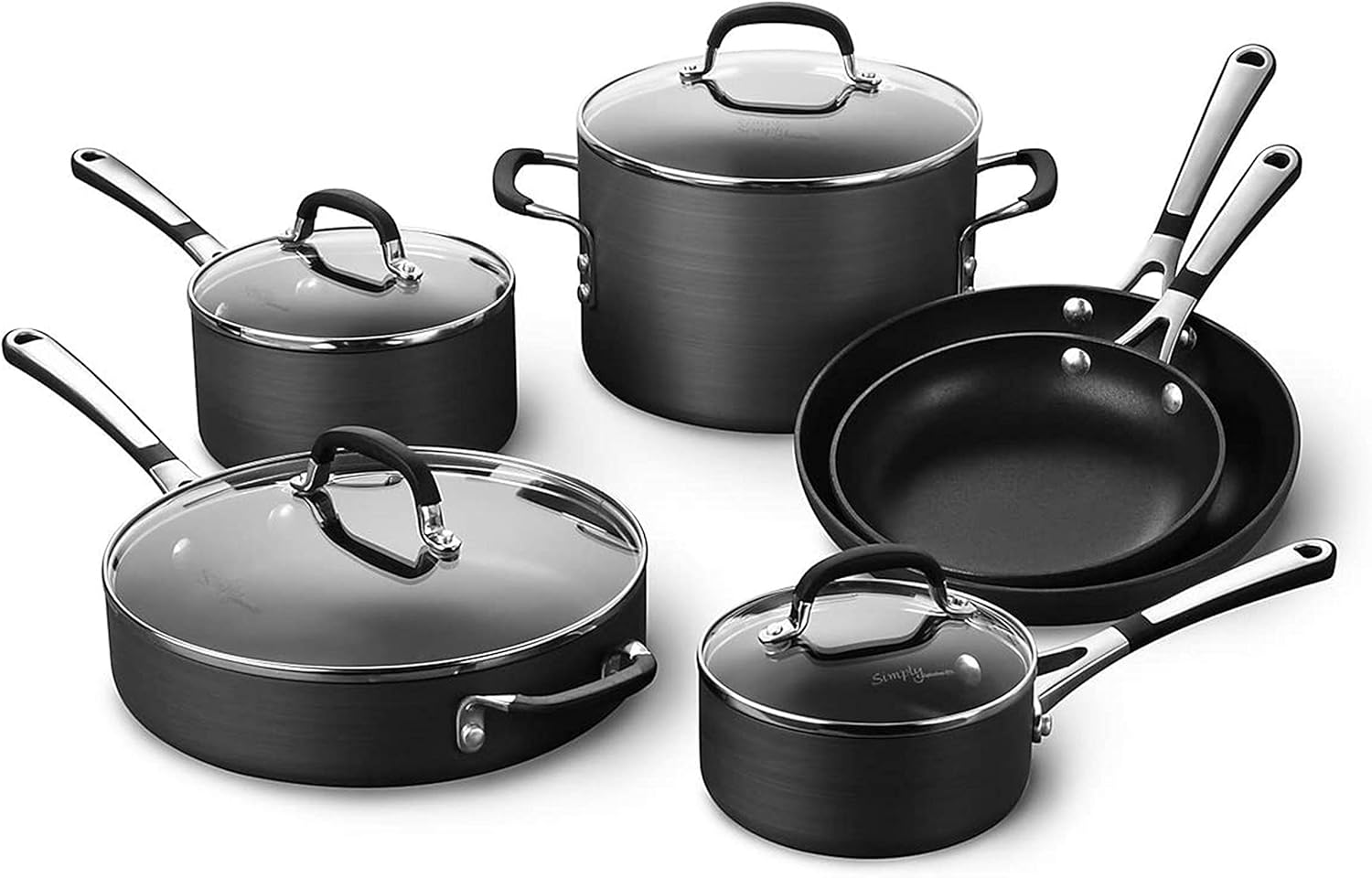
This overview carefully examines five prominent cookware bundles featuring durable hard-anodized aluminum, advanced ceramic coatings, and versatile multi-piece configurations. Reviewing these selections helps match specific kitchen setups, burner types, and cooking habits with suitable pots and pans without unnecessary hassle. Every option brings distinct material strengths and configuration styles to your home kitchen environment.
As an Amazon Associate, StacyLaughs earns from qualifying purchases.
Buying guide
Material Composition and Heat Distribution
Choosing the right cookware material significantly impacts how evenly your food cooks and how long the pots last. Hard-anodized aluminum provides exceptional warp resistance and thermal conductivity, making it a favorite for traditional gas and electric stovetops. Stainless steel bases add structural rigidity and permit use on induction burners. Understanding your primary cooking heat sources ensures you select materials that complement your specific culinary style without premature degradation.
Ceramic and titanium coatings offer distinct advantages for low-oil cooking and effortless food release. Evaluating how each base metal interacts with inner coatings helps you anticipate maintenance requirements. Some advanced hybrid constructions fuse stainless steel strength with diamond-textured ceramic layers for superior metal utensil durability. Matching your daily menu complexity to the correct material foundation guarantees better cooking results across every meal you prepare.
Nonstick Coating Technologies and Longevity
Nonstick coatings have evolved beyond basic layers to include diamond-infused ceramics and multi-tier titanium surfaces. These advanced formulations improve scratch resistance and extend the lifespan of your frying pans. When shopping, examine whether the coating requires delicate silicone tools or safely accommodates metal utensils. Investing in robust nonstick technology minimizes frustrating food sticking and reduces the amount of butter or oil needed daily.
Surface longevity also depends heavily on proper cleaning habits and temperature management. Overheating empty pans can degrade specialized nonstick layers prematurely, regardless of initial coating strength. Reviewing manufacturer care instructions helps preserve the slick release surface over years of heavy daily use. Selecting a coating that aligns with your preferred cooking temperatures and utensil habits ensures lasting satisfaction with your cookware investment.
Stovetop Compatibility and Kitchen Integration
Before purchasing any cookware set, verify that the base construction matches your specific kitchen range. Gas and electric coil cooktops accommodate virtually all aluminum and stainless steel pots. However, induction cooktops require magnetic stainless steel bases to generate heat efficiently. Checking these technical specifications prevents costly mistakes and ensures your new pans function seamlessly from day one.
Kitchen integration also involves considering countertop aesthetics and storage limitations. Bronze finishes or polished stainless steel exteriors offer distinct visual looks that complement your existing kitchen appliances. Ensuring your stovetop supports the cookware prevents operational friction during meal prep. Taking a moment to assess your range type guarantees optimal thermal performance and avoids compatibility disappointments down the road.
Handle Design and Ergonomic Comfort
Comfortable handles transform how safely you maneuver heavy stockpots filled with boiling water or dense soups. Look for cast riveted handles wrapped in silicone or designed with stay-cool properties to protect your hands during extended stovetop sessions. Ergonomic angles reduce wrist strain when flipping heavy ingredients in large sauté pans. Secure handles provide peace of mind and improve overall cooking safety significantly.
Handle attachment methods also influence long-term durability and cleaning ease. Riveted designs offer superior structural strength compared to welded alternatives, preventing loosening over years of heavy use. However, interior rivets can occasionally trap food particles, requiring extra attention during washing. Balancing ergonomic comfort with simple maintenance characteristics helps you choose pots and pans that feel natural and secure in your hands.
Lid Construction and Moisture Retention
Tempered glass lids allow you to monitor simmering stews and boiling vegetables without lifting the cover and releasing valuable heat. Vented designs prevent excessive pressure buildup, while silicone-sealed edges create a tight barrier that locks in natural flavors and moisture. Evaluating lid construction ensures your recipes maintain optimal hydration levels during long braising or simmering processes.
Oven safety ratings for lids differ significantly from the pots themselves, which is a crucial detail for recipes starting on the stove and finishing in the oven. Check maximum temperature thresholds for glass covers to prevent cracking during high-heat baking tasks. Selecting sets with durable, well-fitting lids enhances your culinary versatility and keeps your kitchen workflow running smoothly from prep to plate.
Cleaning Requirements and Maintenance Routines
Maintaining your cookware properly preserves its nonstick performance and extends its overall operational lifespan. While many modern sets boast dishwasher-safe construction, hand washing with non-abrasive sponges is frequently recommended to protect delicate coatings from harsh detergents. Establishing a quick cleanup routine prevents stubborn grease buildup and keeps your pots looking pristine over years of regular family meal preparation.
Consider your personal cleaning preferences when selecting a cookware set. If you rely heavily on automatic dishwashing appliances, filtering out hand-wash-only collections prevents daily friction. Conversely, if you do not mind a quick sink rinse, you can open up your choices to a wider range of textured exterior styles. Matching maintenance requirements to your lifestyle guarantees lasting happiness with your kitchen investment.
Frequently asked questions
Can I use metal utensils with nonstick cookware?
While traditional nonstick coatings scratch easily when exposed to metal utensils, advanced ceramic or diamond-infused surfaces are engineered to withstand metal tools without compromising food release. However, manufacturers frequently recommend sticking with silicone, wooden, or plastic utensils to maximize the longevity of any nonstick layer. If you regularly use metal spatulas or whisks, check the product specifications carefully to ensure the coating features specialized reinforcement. Protecting the surface from unnecessary scratching prevents premature wear and keeps your pans performing like new over years of daily cooking.
Are all nonstick cookware sets compatible with induction cooktops?
No, not all nonstick cookware sets work on induction cooktops. Induction ranges require magnetic metals like stainless steel or specialized magnetic bases to generate heat through electromagnetic fields. Many standard aluminum pots lack this magnetic property unless they incorporate an integrated stainless steel bottom plate. If your kitchen features an induction cooktop, you must verify stovetop compatibility before purchasing to ensure the pans heat up correctly. Checking product details for explicit induction support prevents buying equipment that fails to warm on your specific range.
Is hand washing always required for nonstick pots and pans?
Hand washing is not strictly mandatory for every nonstick collection, as many modern sets feature dishwasher-safe construction. However, hand washing with mild soap and a non-abrasive sponge is frequently recommended by manufacturers to protect delicate coatings from harsh automatic dishwasher detergents. Exposing pans to intense dishwasher cycles over time can dull exterior finishes and degrade nonstick efficiency. If you prefer effortless cleanup without visiting the sink, look specifically for sets explicitly certified as dishwasher safe, while keeping in mind that gentle hand cleaning extends overall lifespan.
What causes nonstick coatings to lose their release properties?
Nonstick coatings typically lose their release properties due to overheating empty pans, abrasive cleaning tools, and buildup from cooking oils or food residues. When oils polymerize on a hot surface, they form an invisible microscopic film that traps food particles and makes the pan appear sticky. Using low to medium heat settings and avoiding aerosol cooking sprays helps protect the nonstick layer. Additionally, washing away food residue completely after every use prevents stubborn carbon buildup that gradually diminishes the smooth sliding performance of your cookware.
How do I choose the right cookware set size for my household?
Choosing the correct cookware set size depends primarily on your household size and typical meal preparation habits. Smaller ten-piece configurations offer essential fry pans and saucepans suited for couples or compact kitchens. Larger twelve to twenty-six-piece bundles include multiple stockpots, specialized sauté pans, steamers, and matching utensils, making them ideal for large families or avid home cooks who prepare complex multi-course meals. Assess your daily menu requirements and available kitchen storage space to determine whether a compact or expansive collection best fits your lifestyle.