Appliances · Buying Guide
Best Rectangular Cast Iron Skillet and Pan Options for Your Kitchen
Choosing the right rectangular cast iron cookware brings reliable heat retention and versatile performance to everyday baking, searing, and roasting tasks. Unlike standard round skillets, rectangular designs fit efficiently across multiple stovetop burners or slide neatly into standard ovens to accommodate family-sized meals without wasting precious spatial footprints in your busy kitchen.
Whether you are preparing layered casseroles, searing thick cuts of meat, or grilling breakfast foods, these heavy-duty iron pans offer natural non-stick surfaces when properly seasoned and maintained over time. Exploring the specific dimensions, weights, and multi-piece configurations available helps match your cooking style to the most suitable rectangular iron cookware for your daily routine and cooking habits.
As an Amazon Associate, StacyLaughs earns from qualifying purchases.
Buying guide
Material Composition and Seasoning Maintenance
Selecting rectangular cast iron cookware requires understanding how traditional iron construction influences daily performance. Most options feature a rugged cast iron build combined with a vegetable oil seasoning coat. This coating creates a natural non-stick surface that improves with regular use and proper care. Maintaining this finish requires hand washing and occasional light oiling after each cooking session.
Unlike synthetic non-stick coatings, seasoned iron safely withstands high oven temperatures and direct open flames without degrading. Buyers should evaluate whether they are willing to commit to these simple hand-care routines. Embracing proper seasoning practices ensures the cookware develops lasting durability and reliable food release characteristics for generations of family meals.
Dimensions, Capacity, and Stovetop Fit
Rectangular iron pans come in various lengths and widths designed to bridge multiple stovetop burners or slide securely into standard ovens. Measuring your oven interior and burner spacing before purchase prevents compatibility issues during meal preparation. Larger griddles span over twenty inches, requiring expansive surfaces, while compact casserole pans fit easily into standard domestic ovens without crowding.
Capacity also dictates what type of meals you can prepare comfortably for family dinners or gatherings. Deep models exceeding six quarts accommodate family-sized lasagnas and whole roasts with high walls that prevent messy spills over the edge. Matching the physical dimensions of the pan to your usual portion sizes and kitchen appliances ensures smooth cooking sessions.
Dual-Function Configurations and Skillet Lids
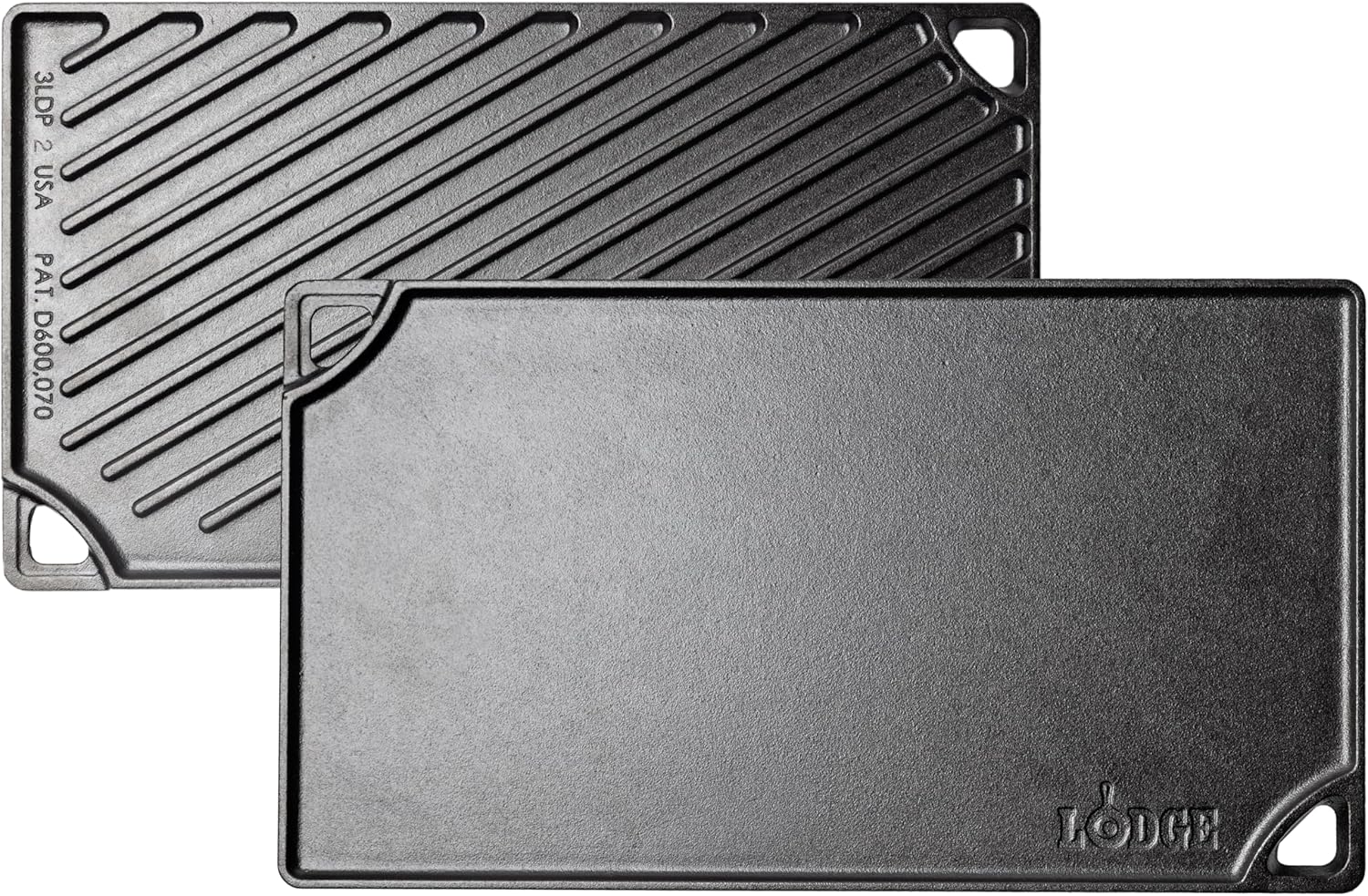
Many rectangular iron sets offer versatile two-in-one designs featuring a deep bottom base paired with a multifunctional lid. This lid often doubles as a shallow skillet or griddle when flipped upside down. Such configurations allow you to bake bread or roast meats in the covered base while simultaneously frying eggs on the separate lid piece.
This dual-function approach maximizes your kitchen investment by providing multiple cooking vessels in a single stored footprint. However, combining two heavy iron components increases the overall weight significantly. Buyers must weigh the benefits of expanded cooking flexibility against the challenge of handling heavier multi-piece cookware assemblies during busy meal preparation.
Weight Considerations and Ergonomic Handling
Cast iron is renowned for its durability and heat retention, but these benefits come with substantial weight. Rectangular pans and griddles frequently range from seven to nearly seventeen pounds depending on their capacity and multi-piece design. Lifting a fully loaded pan requires steady two-handed control and sufficient physical strength to navigate safely between hot surfaces.
Manufacturers often incorporate sturdy side handles to improve grip security during transport. Evaluating your comfort level with heavy cookware is essential before committing to a large iron piece. Ensuring the handles offer enough clearance for oven mitts helps prevent accidental burns when moving heavy dishes from the hot oven to the dining table.
Heat Retention and Cooking Performance
A primary advantage of heavy-duty iron cookware is its exceptional ability to absorb, retain, and distribute thermal energy evenly across the entire cooking surface. This consistent heat performance helps eliminate hot spots, ensuring uniform searing on steaks or even baking results for delicate casseroles and artisan breads. Preheating the iron properly before adding food optimizes this natural thermal distribution.
Because iron retains heat for extended periods, it continues cooking food even after burners are turned off or dishes are removed from the oven. This characteristic makes rectangular pans excellent for table service, keeping meals warm longer. Cooks should utilize appropriate thermal pads and handle covers to protect hands from the lingering heat.
Versatility Across Stovetops and Outdoor Heat Sources
Rectangular cast iron cookware shines through its remarkable adaptability across diverse cooking environments and heating appliances. These robust pans function seamlessly on standard gas burners, electric coils, modern induction cooktops, and enclosed indoor ovens. Many models are also rugged enough for outdoor use over open campfires or backyard grill grates during weekend camping excursions.
This broad compatibility allows you to transition a meal directly from stovetop searing to oven roasting without switching pans mid-recipe. Buyers should check specific temperature thresholds to ensure safe usage with their preferred heat sources. Selecting highly adaptable cookware simplifies complex recipes and expands your cooking locations far beyond your traditional kitchen setup.
Frequently asked questions
How do I clean and maintain a pre-seasoned rectangular cast iron skillet?
Cleaning pre-seasoned cast iron requires washing the pan by hand using warm water without harsh dish soaps that can strip the protective seasoning layer. After washing, dry the cookware thoroughly with a towel or place it on a warm burner to evaporate any lingering moisture completely. Once dry, apply a very light coat of vegetable oil to the surface while the iron is still slightly warm to protect against rust. Storing the pan in a dry environment maintains its natural non-stick finish for future meals.
Can rectangular cast iron pans be used on modern induction cooktops?
Yes, rectangular cast iron cookware is inherently compatible with induction cooktops because cast iron is a magnetic material that reacts efficiently with induction magnetic fields. When using long griddles or large rectangular pans across dual induction burners, ensure your cooktop can bridge the zones for even heating. It is also important to place and move the heavy iron pan carefully across glass cooktop surfaces to avoid scratching or cracking the delicate glass material during meal preparation.
What are the main benefits of choosing a rectangular cast iron skillet over a round one?
Rectangular cast iron pans provide a significantly larger and more structured surface area compared to traditional round skillets, making them ideal for accommodating long items like fish fillets, racks of ribs, or multiple sandwiches simultaneously. Their straight edges fit efficiently across two stovetop burners or slide neatly into rectangular oven cavities without wasting space. This shape also supports family-sized lasagnas and baking tasks that require standard 9 by 13-inch proportions while delivering identical heat retention properties.
Why do some rectangular cast iron sets include a skillet lid?
Two-in-one rectangular cast iron sets feature a deep bottom base and a versatile lid that doubles as a shallow skillet when inverted. This clever design maximizes your cookware investment by providing two distinct cooking vessels that nest together for compact storage. You can use the deep base for roasting meats or baking bread while utilizing the lid separately to fry eggs or sear vegetables, effectively doubling your available cooking options with a single purchase.
How heavy are large rectangular cast iron pans, and how do I handle them safely?
Large rectangular cast iron cookware is notably heavy, with empty weights ranging from seven pounds for standard casserole pans up to sixteen pounds or more for multi-piece Dutch oven sets. Maneuvering these heavy pieces safely requires using both hands and sturdy side handles designed for a secure grip. Always wear thick heat-resistant oven mitts, as the iron handles absorb high temperatures during cooking, and ensure you have a clear landing surface ready before lifting the hot pan.