Appliances · Buying Guide
Best Stainless Steel Cookware Sets for Every Kitchen Layout
Selecting stainless steel cookware involves carefully balancing piece counts, storage limitations, and everyday heating needs across different stovetops. Modern kitchen setups require reliable metal construction that handles high heat without relying on artificial nonstick coatings that wear down over time. Exploring various configurations ensures you find equipment matching your unique culinary habits and kitchen layout.
The following selections highlight diverse assemblies, ranging from expansive multi-piece sets equipped with specialized accessories to compact nesting designs and targeted saucepan bundles. Reviewing these distinct options helps match your cooking style, available cabinet space, and daily meal preparation requirements with the most practical hardware available for your home cooking needs.
As an Amazon Associate, StacyLaughs earns from qualifying purchases.
Buying guide
Material Construction and Layering
Understanding metal layers helps buyers select stainless steel cookware that resists warping and delivers consistent heat distribution across various burners. Multi-clad construction often combines exterior steel with inner aluminum or copper layers to balance thermal responsiveness. This layered approach prevents localized scorching when preparing delicate sauces or boiling liquids over high heat settings on gas or induction ranges.
Reviewing these core specifications ensures your pots handle high stovetop temperatures without degrading structural integrity over years of regular use. Matching material thickness to your cooking frequency prevents hot spots during long simmering sessions. Evaluating these construction details provides reliable performance for everyday kitchen tasks.
Storage and Space Management
Kitchen storage capacity heavily dictates whether a multi-piece cookware set or a compact nesting assembly fits your home layout. Traditional cookware requires expansive shelf space because individual pots stack vertically with lids attached separately. Nesting alternatives utilize folding handles and interlocking designs to minimize footprint inside cramped kitchen cabinets without sacrificing performance or durability.
Assessing available cabinet dimensions before purchasing prevents clutter and awkward stacking arrangements in smaller kitchens. Choosing space-saving configurations keeps your counters organized while retaining essential vessel options for daily cooking routines. Careful measurement ensures your new cookware integrates smoothly into existing storage spaces, shelves, and kitchen drawers.
Stovetop Compatibility and Heat Sources
Ensuring your chosen cookware matches your specific stovetop type prevents heating inefficiencies and potential functional damage to the pan base. Modern stainless steel collections frequently support gas, electric, glass, and induction cooktops through specialized magnetic base layers. Verifying these compatibility options guarantees seamless daily operation across various kitchen setups, burners, and meal plans.
Induction cooktops specifically require magnetic stainless steel outer layers to complete the electrical circuit and generate heat efficiently. Checking hob specifications before buying ensures your pots perform reliably regardless of your kitchen's installed range type. Understanding these thermal requirements avoids frustrating performance issues during routine meal preparation and cooking tasks throughout the week.
Handle Design and Ergonomics
Handle design significantly impacts safety and comfort when lifting heavy pots filled with boiling water or dense ingredients. Riveted stainless steel handles offer permanent attachment strength, though metal designs can conduct heat during extended cooking sessions on the stove. Some collections incorporate stay-cool engineering or folding hinges to optimize handling comfort and overall storage efficiency.
Evaluating handle placement and grip style helps prevent hand fatigue and accidental spills in busy kitchen environments. Sturdy attachments provide the confidence needed for frequent transport between countertops, sinks, and stovetops. Choosing ergonomic grips ensures secure maneuvering during complex recipes and everyday meal preparation tasks throughout the busy cooking week.
Lid Styles and Moisture Retention
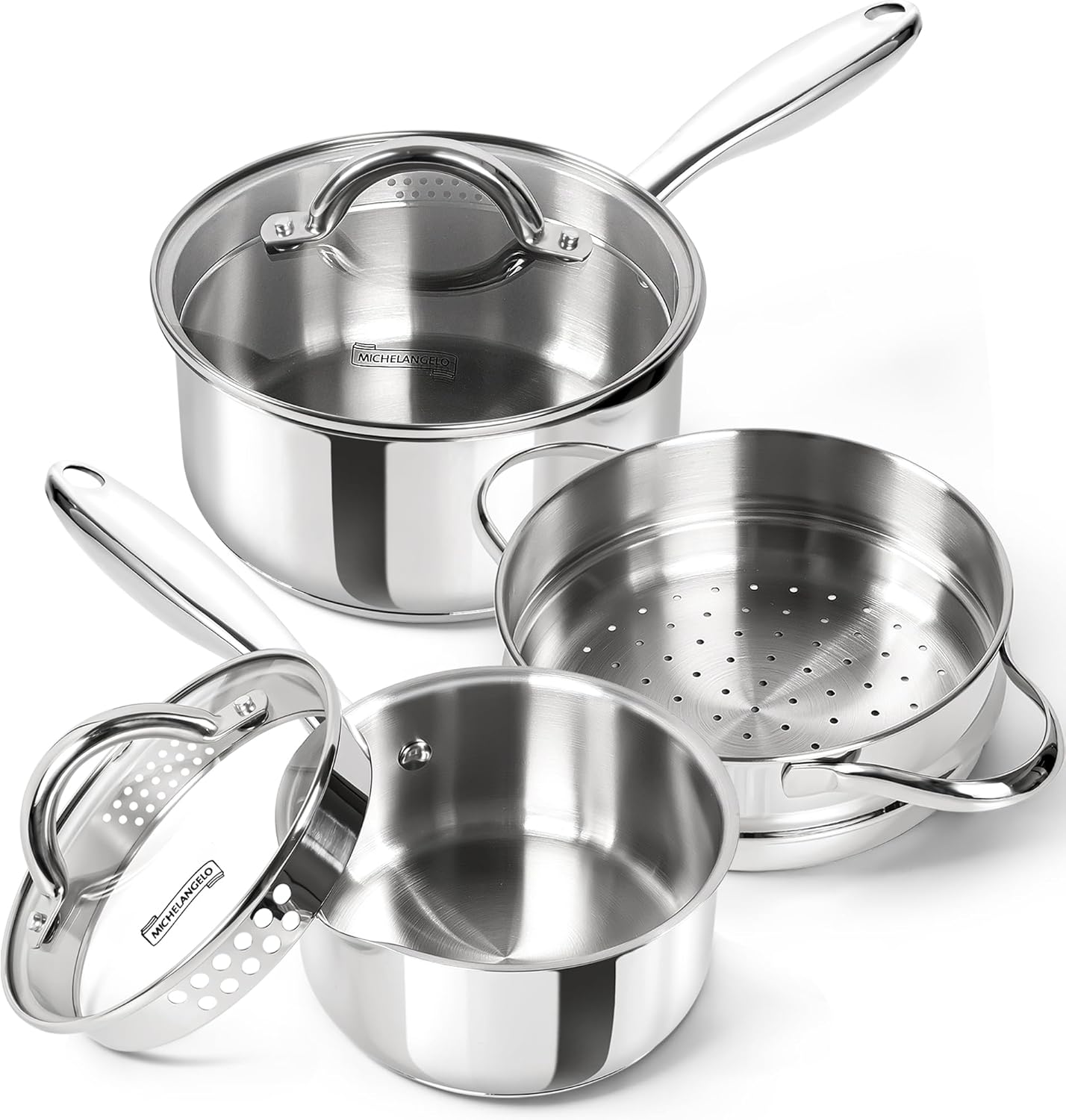
Lid construction dictates how well pots retain steam, heat, and moisture during simmering and boiling processes. Domed stainless steel lids improve heat conduction, whereas glass lids allow visual monitoring without releasing accumulated steam. Some specialized lids include built-in strainer perforations that eliminate the need for a separate colander when preparing pasta or vegetables.
Integrated strainer holes or pour spouts add functional utility for draining liquids directly from saucepans. Selecting the right lid features enhances cooking control and simplifies cleanup routines after meals. Matching lid styles to your cooking preferences ensures a streamlined culinary experience every single day in your home kitchen setup and routine.
Cleaning and Maintenance Protocols
Maintaining stainless steel cookware requires following manufacturer care instructions, such as washing by hand or using dishwasher cycles when permitted by the brand. Uncoated stainless surfaces resist scratching from metal utensils but can develop water spots if not dried promptly after washing. Following these guidelines keeps metal surfaces bright and functional for daily meal preparation tasks and recipes.
Proper preheating over moderate heat with oil or butter prevents food sticking without relying on artificial nonstick coatings. Adopting these simple cleaning habits preserves the polished exterior finish over years of regular use. Regular maintenance ensures long-term durability across all your cooking pots, saucepans, skillets, and kitchen pans.
Frequently asked questions
Can stainless steel cookware be used on induction cooktops?
Yes, many stainless steel cookware sets feature magnetic outer layers or tri-ply induction bases that allow them to function efficiently across induction cooktops as well as traditional gas, electric, and glass ranges. Verifying the specific compatibility options listed in the product specifications ensures your chosen pots and pans will work seamlessly with your kitchen's installed stovetop type before you complete a purchase decision. Always check manufacturer guidelines regarding burner matching and base construction details to guarantee optimal heating performance during everyday cooking tasks.
How do I prevent food from sticking to uncoated stainless steel pans?
Preventing food from sticking to uncoated stainless steel cooking surfaces involves proper preheating techniques over moderate heat settings before adding cooking oil or butter. Allowing the pan to reach the correct temperature helps create a temporary thermal barrier that minimizes food adhesion. Additionally, ensuring your ingredients are not excessively cold and allowing meats to sear naturally before turning them will significantly improve your cooking results without relying on artificial nonstick coatings.
Are stainless steel pans dishwasher safe?
Many stainless steel cookware collections indicate that they are dishwasher safe for convenient cleanup, though checking the specific care instructions for each brand is always recommended. Hand washing with mild dish soap and warm water can help preserve the polished exterior finish and minimize water spots over years of regular use. If your dishwasher is permitted by the manufacturer, drying the metal pieces promptly after the cycle finishes helps maintain their appearance.
What are the benefits of multi-clad or tri-ply stainless steel construction?
Multi-clad and tri-ply stainless steel construction combines an exterior metal layer with an inner core of aluminum or copper to deliver fast and even heat distribution. This layered design eliminates hot spots across the cooking base, ensuring your sauces, broths, and sautés cook uniformly. Additionally, the durable metal build resists warping under high heat and eliminates the need for nonstick coatings that can wear away over extended periods of regular kitchen use.
How do I manage storage space for large multi-piece cookware sets?
Managing storage space for large multi-piece cookware collections requires careful measurement of your kitchen cabinets, shelves, and available drawer dimensions before purchasing. If you have limited space, choosing specialized nesting sets featuring folding handles and interlocking components can save up to fifty percent more room than standard vertical stacks. Alternatively, utilizing hanging hooks with lid stands helps keep individual pots and matching lids organized without cluttering your main pantry shelves.