Appliances · Buying Guide
Best Sam's Club Stainless Steel Cookware Sets for Home Kitchens
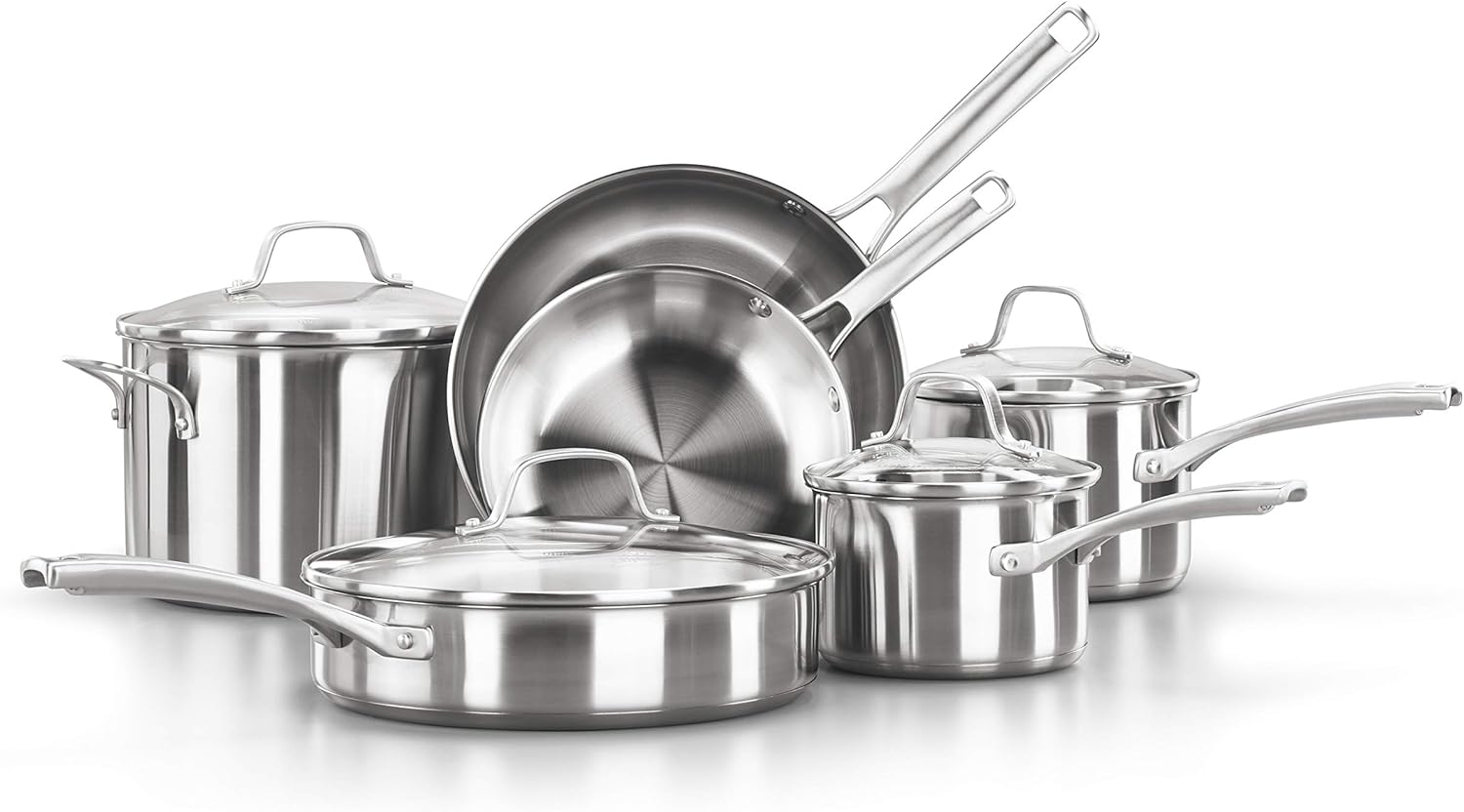
Equipping a kitchen with reliable pots and pans involves choosing materials that handle everyday meals with steady consistency. Stainless steel options provide durable cooking surfaces that resist reacting with various ingredients, making them popular choices for home cooks seeking long-term performance across multiple cooking methods like searing, simmering, and boiling on various cooktops.
Selecting the right set depends heavily on your cooking style, preferred stovetop compatibility, and routine cleanup preferences. Exploring multi-clad constructions, encapsulated aluminum bases, and varied piece counts helps match your everyday kitchen routines with equipment designed specifically for precise heat distribution, ergonomic handling, and lasting durability without guesswork.
As an Amazon Associate, StacyLaughs earns from qualifying purchases.
Buying guide
Construction and Ply Count
Understanding stainless steel construction helps buyers select cookware matching daily kitchen heating needs. Encapsulated bases use an aluminum disk bonded to the bottom, providing fast heat distribution across standard burners. Multi-clad options extend the metal core entirely up the sidewalls, eliminating cold spots and ensuring uniform cooking across the whole interior surface.
Consider your typical recipes and burner types when evaluating these choices. Encapsulated base sets excel at general boiling and basic simmering tasks. Multi-clad sets suit cooks who frequently sear meats or reduce delicate sauces needing sidewall heat transfer. Balancing construction complexity with your cooking habits ensures reliable performance without paying for unnecessary metallurgical layers.
Stovetop Compatibility and Heat Sources
Modern stainless steel cookware is engineered to work across a wide variety of kitchen cooktops, including traditional gas, electric coils, and smooth glass-ceramic surfaces. Induction compatibility requires a magnetic stainless steel exterior layer to interact with electromagnetic coils, making magnet-tested bases essential for induction cooking. Checking your specific cooktop type before purchasing ensures proper energy transfer and prevents heating inconsistencies.
Beyond stovetops, thermal limits dictate how cookware safely transitions into home ovens and broilers. Different sets support varying maximum temperatures, ranging from standard baking thresholds up to high-heat broiling limits. Reviewing these thermal ratings prevents warping or component damage during intensive roasting tasks, helping your investment withstand high temperatures without unexpected degradation.
Handle Design and Ergonomic Comfort
Handle design significantly impacts how securely you maneuver pots and pans during busy meal preparation. Riveted stainless steel handles offer permanent attachment strength, ensuring stability when lifting heavy stockpots filled with water. Many collections incorporate hollow-core or ergonomic shaping to slow heat transfer from the body of the pan, keeping grips comfortable during standard stovetop cooking.
However, metal handles absorb heat when pans are placed inside hot ovens or under broilers. Recognizing this characteristic reminds you to use protective oven mitts during high-heat cooking removal. Evaluating helper handles on larger sauté pans and stockpots also helps determine how easily you can transfer heavy loads from burner to countertop safely.
Maintenance and Cleaning Requirements
Maintaining stainless steel cookware requires understanding manufacturer care guidelines regarding dishwasher use versus traditional hand washing. Many sets feature dishwasher-safe construction, offering convenient cleanup after routine family meals. Other professional-grade collections specify hand washing to preserve polished exterior finishes and prevent aesthetic wear over years of heavy kitchen use.
Proper cleaning also involves addressing stuck-on food or mineral deposits using appropriate non-abrasive tools and safe cleaning agents. Stainless steel cooking surfaces tolerate metal utensils well in many models, though wooden or silicone tools help protect polished interiors. Following recommended maintenance steps keeps cooking surfaces releasing fond smoothly and extends the functional lifespan of every pot and pan.
Piece Count and Kitchen Storage
Choosing the right piece count depends on your household size, cooking frequency, and available kitchen storage space. Comprehensive ten- to twelve-piece sets typically include multiple saucepans, skillets, a sauté pan, and a large stockpot, covering nearly every recipe requirement. However, larger collections demand substantial cabinet and drawer space for organized storage inside standard home kitchens.
Assess your actual cooking habits before committing to a large cookware set. If you rarely prepare multi-course meals or bulk stocks, a compact set with fewer pieces might prevent cluttered cabinets. Conversely, avid home cooks hosting frequent dinner parties benefit from having specialized vessels like steamer inserts and sauciers readily available within their kitchen setup.
Included Lids and Specialty Features
Specialty features and lid designs add notable practical convenience to daily cooking tasks. Tempered glass lids allow you to monitor simmering foods without lifting the cover, though they require temperature management to prevent thermal shock. Stainless steel covers offer durability and higher oven safety limits, enduring intense thermal environments without cracking risks.
Other functional additions like interior measurement markings, drip-free pouring rims, and integrated straining covers improve overall kitchen efficiency. Pour spouts and built-in strainer holes eliminate the need for separate colanders during pasta preparation or vegetable draining. Evaluating these extra features helps you select a cookware set that simplifies your cooking workflow and minimizes cleanup steps after dinner.
Frequently asked questions
Can stainless steel cookware be used on induction cooktops?
Many stainless steel cookware sets feature induction compatibility, allowing them to work effectively across electromagnetic cooktops. Induction cooktops require cookware with a magnetic exterior layer to generate heat properly through magnetic fields. When shopping for stainless steel pots and pans, checking the manufacturer specifications ensures the bottom layer contains magnetic stainless steel or an encapsulated induction-ready plate. Sets with pure non-magnetic aluminum or copper exteriors will not function on induction burners unless they include a bonded magnetic stainless steel base layer specifically engineered for this cooktop technology.
Are stainless steel cookware sets safe for use in the oven?
Most stainless steel cookware sets offer oven-safe performance, allowing you to transition dishes smoothly from stovetop browning to oven roasting. However, maximum temperature limits vary significantly depending on the specific materials and lid types included. Sets featuring tempered glass lids typically restrict overall oven safety to moderate temperatures around 450 degrees Fahrenheit, whereas all-metal sets with stainless steel lids or specialized 5-ply construction can often withstand much higher temperatures up to 800 degrees Fahrenheit. Always review the manufacturer guidelines regarding maximum heat thresholds and handle precautions before baking.
Do stainless steel handles stay cool during stovetop cooking?
Stainless steel cookware sets frequently incorporate riveted handles designed to stay cool on the stovetop during normal cooking sessions. Many manufacturers utilize ergonomic shaping, hollow-core construction, or specialized stainless alloys to slow heat transfer from the heated body of the pot or pan to your hand. Despite these design features, metal handles will eventually absorb heat when exposed to prolonged cooking times or high burner settings. Furthermore, handles invariably become very hot when placed inside a hot oven, requiring you to use protective mitts.
How should I clean stuck-on food from stainless steel pans?
Cleaning stuck-on food and accumulated fond from stainless steel cooking surfaces typically involves simple deglazing techniques using warm liquids while the pan is still slightly warm. For tougher residues, filling the pan with hot, sudsy water and letting it soak helps loosen stubborn particles without scratching the metal. Many stainless steel sets are dishwasher safe for automated cleanup, though manufacturer care recommendations for premium professional collections often suggest hand washing with non-abrasive sponges to preserve the polished exterior finish and prevent long-term cosmetic dullness over time.
What is the difference between encapsulated bases and multi-clad cookware?
Encapsulated base cookware features a disk of aluminum or copper bonded strictly to the bottom of the pot, providing fast heat distribution across the burner surface. This design keeps manufacturing costs lower while delivering reliable bottom heating for boiling and simmering tasks. In contrast, multi-clad cookware bonds metal layers entirely edge-to-edge from the base up through the sidewalls. This full-clad construction eliminates cold spots and delivers rapid, uniform temperature responsiveness along the entire interior surface, making it ideal for advanced searing, browning, and delicate sauce preparation.