Appliances · Buying Guide
Best Saucepan With Strainer Lid Options For Easy Draining
Cooking everyday meals often involves juggling multiple pots, separate colanders, and messy cleanup routines. A saucepan with strainer lid integrates the draining process directly into the cookware design, saving time and counter space. These specialized pots feature built-in holes on the tempered glass lid and convenient pour spouts, allowing you to drain liquids effortlessly right into the sink without grabbing an extra tool.
Selecting the right model depends on your preferred cooking surface, capacity needs, and material choices like aluminum or tri-ply stainless steel. Whether you are boiling pasta, simmering delicate sauces, or steaming vegetables, having an integrated straining system simplifies kitchen tasks. Exploring the available features helps match a specific pot to your daily meal preparation habits.
As an Amazon Associate, StacyLaughs earns from qualifying purchases.
Buying guide
Material Composition and Heat Distribution
Choosing the correct material for your saucepan with strainer lid impacts how evenly food cooks and how long the pot retains heat on the stovetop. Stainless steel models with multi-ply metal cores offer exceptional durability and non-reactive cooking surfaces suitable for acidic ingredients like tomatoes and citrus. Aluminum options frequently feature advanced nonstick coatings that simplify food release and post-cooking cleanup routines for daily meals.
Consider your preferred cooking style when selecting between metal types for your kitchen. Fully clad tri-ply stainless steel conducts heat up the sidewalls, preventing scorching during delicate sauce simmering tasks. Capsule bottom designs concentrate thermal mass primarily at the base for rapid boiling performance. Matching the material structure to your typical recipes ensures consistent heating results every single day.
Capacity Sizing and Portion Control
Evaluating capacity requirements ensures your saucepan handles everyday meal preparation without overcrowding or causing messy boil-overs on the active stove. Smaller models holding two to two and a half quarts suit single servings, melting butter, or warming milk efficiently for small households. Three-quart options provide a versatile middle ground for boiling vegetables, cooking rice, and preparing standard family side dishes.
Larger households require greater working volumes, such as 3.7-quart pans, to comfortably accommodate family-sized portions of pasta or hearty soups. Internal measurement markings help you gauge liquid levels accurately right inside the pot without dirtying extra cups. Matching the pot volume to your typical household size prevents cooking limitations and guarantees comfortable stovetop management during busy meal preparation routines.
Straining Lid Mechanics and Pour Spouts
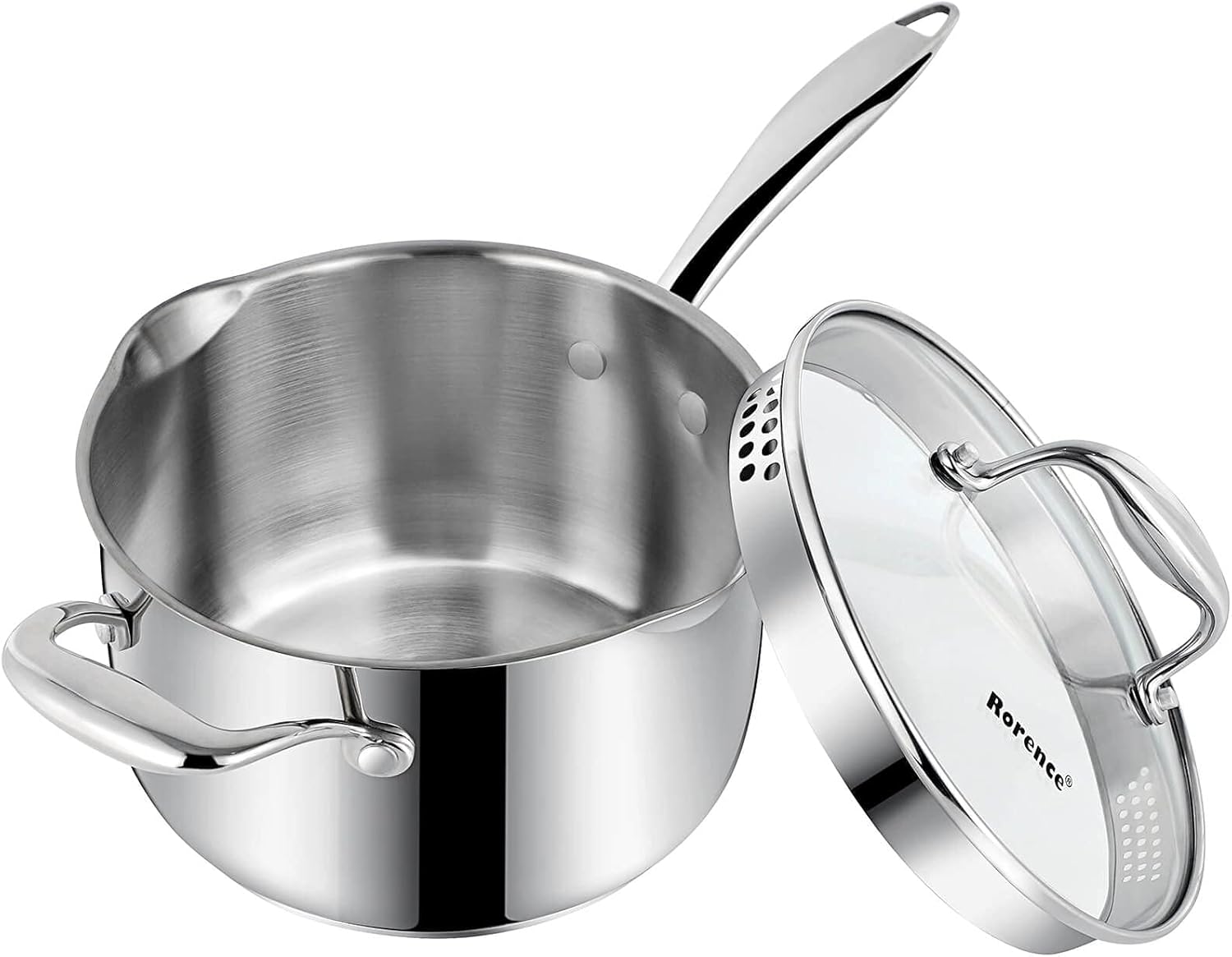
The primary advantage of choosing a specialized draining saucepan lies in its integrated lid design and rim spouts. Tempered glass lids featuring built-in straining holes allow you to tip the pot and drain cooking liquids directly into the sink without retrieving a separate bulky colander. This streamlined setup reduces kitchen cleanup and prevents accidental steam burns associated with traditional heavy strainers.
Look for pans equipped with single or dual pour spouts that direct liquids cleanly into serving bowls without dribbling down the polished exterior walls. Symmetrical dual spouts accommodate both left-handed and right-handed cooks equally well during fast-paced kitchen routines. Evaluating how the lid seals against the rim ensures stable liquid drainage during high-speed pasta or vegetable straining tasks.
Cooktop Compatibility and Base Design
Modern kitchens feature diverse stovetop technologies, making cooktop compatibility a critical purchasing factor for any new saucepan investment. Most metal pans work well on traditional gas and electric coil burners, but modern induction cooktops require specific magnetic stainless steel base constructions to function correctly. Checking the exterior base material specification ensures the pot heats properly across your specific household stovetop surface.
Encapsulated base plates and edge-to-edge magnetic steel layers enhance induction efficiency while promoting warp-resistant stability under high heat conditions. Smooth ceramic surface cooktops also benefit from flat, stable pan bases that prevent wobbling during active stirring tasks. Reviewing manufacturer specifications guarantees seamless daily integration into your existing kitchen cooking environment.
Handle Ergonomics and Oven Safety
Comfort and safety during transport depend heavily on handle construction and overall oven temperature thresholds. Riveted stainless steel handles provide a secure, permanent attachment that resists loosening over years of frequent heavy lifting. Some modern handles incorporate silicone grips to enhance comfort and reduce heat transfer during standard stovetop cooking sessions without requiring mitts.
Oven safety limits determine whether your saucepan can transition smoothly from simmering on the burner to finishing dishes inside a hot oven. Models frequently withstand temperatures ranging from 350 to 500 degrees Fahrenheit, though tempered glass lids often carry lower temperature ratings than solid metal bodies. Matching these specific thermal ratings to your baking habits prevents accidental equipment damage.
Maintenance and Cleaning Convenience
Keeping your cookware pristine requires understanding manufacturer cleaning guidance, particularly regarding dishwasher compatibility and daily surface care. Many stainless steel and aluminum saucepans feature dishwasher-safe construction to streamline post-meal cleanup routines without requiring intensive manual scrubbing. Nonstick coatings benefit from gentle washing practices that preserve their specialized food release properties over extended periods of frequent use.
Stainless steel surfaces resist staining and tolerate reactive ingredients, but may require occasional care to maintain their mirror or brushed exterior finish over time. Evaluating maintenance requirements helps you choose a pot that fits your household lifestyle. Selecting dishwasher-safe models saves valuable time after preparing family dinners or complex multi-course recipes every evening.
Frequently asked questions
How do saucepan strainer lids work during cooking?
Saucepan strainer lids feature built-in drainage holes integrated directly into the tempered glass rim, allowing you to pour out boiling liquids without needing a separate colander. During cooking, the lid locks in heat and steam just like a standard cover. When it is time to drain pasta, vegetables, or rice, you simply align the strainer holes with the pour spout on the side of the pan, hold the secure handle, and tip the pot directly over your sink drain. This method reduces kitchen clutter and simplifies meal cleanup significantly.
Can these saucepans be used on induction cooktops?
Many saucepans with strainer lids are fully compatible with induction cooktops, provided they feature a magnetic stainless steel exterior base or an edge-to-edge induction steel plate. Traditional aluminum pans require a bonded magnetic base layer to conduct heat on induction surfaces, while full tri-ply stainless steel models naturally work on induction because of their outer magnetic layer. Always check the manufacturer specifications before purchasing to ensure your chosen saucepan will heat effectively on your specific glass-ceramic induction burner.
Are stainless steel and nonstick strainer saucepans dishwasher safe?
Most stainless steel and coated aluminum strainer saucepans included here are explicitly certified as dishwasher safe by their manufacturers, allowing for convenient cleanup after meals. However, following proper maintenance guidelines helps preserve the lifespan of specialized coatings like copper ceramic or aerospace nonstick surfaces. While running pots through the dishwasher saves time, occasional hand washing with mild soap can further protect nonstick finishes and exterior polishes from harsh detergent wear over years of regular use in busy kitchens.
What is the benefit of a tri-ply stainless steel saucepan?
A tri-ply stainless steel saucepan features a multi-layer construction consisting of an inner food-grade stainless steel cooking surface, a thick aluminum core for heat conduction, and a magnetic stainless steel exterior. Unlike pots with just a bonded disc on the bottom, fully clad tri-ply cookware conducts heat up the sidewalls of the pan as well as across the floor. This even thermal distribution prevents hot spots, stops delicate milk-based sauces or gravies from scorching, and provides superior temperature control during everyday cooking tasks.
How do I choose the right capacity for my needs?
Choosing the right capacity depends primarily on your household size and the types of dishes you prepare most frequently. Smaller 2 to 2.5-quart models suit single servings, melting butter, warming milk, or boiling small vegetable portions for one or two people. Standard 3-quart saucepans offer a versatile mid-sized volume for everyday family side dishes, rice, and standard sauces. If you regularly cook larger family-sized batches of soups, stews, or pasta, opting for a larger 3.7-quart capacity pot prevents overcrowding and messy boil-overs.