Appliances · Buying Guide
Best Stainless Steel and Nonstick Saucepans With Two Handles

Finding the right saucepan with two handles involves balancing capacity, material composition, and cooktop compatibility to match your daily cooking habits. Dual-handle designs offer balanced control when lifting pots filled with soups, sauces, or pasta, distributing weight evenly compared to single long handles. Whether you need a compact vessel for small portions or a larger pot for family meals, options range from reactive-free stainless steel to quick-heating aluminum with nonstick coatings.
Evaluating these cookware options requires looking closely at base construction, lid features, and handle materials to ensure practical daily performance. Some models feature helper handles or dual side grips for stable transport, while others integrate straining lids or measurement markings for added kitchen convenience. Reviewing the specific physical attributes of each option helps clarify which saucepan suits your preferred cooking techniques and stovetop setup.
As an Amazon Associate, StacyLaughs earns from qualifying purchases.
Buying guide
Evaluating Stainless Steel Versus Aluminum Materials
Choosing the right material for your two-handled saucepan impacts how heat transfers and how long the cookware lasts. Stainless steel models offer non-reactive cooking surfaces that resist rust and do not impart metallic tastes to acidic foods like tomato sauces. These pots often rely on encapsulated aluminum or impact-bonded bases to improve thermal conductivity across the cooking surface.
Aluminum alternatives provide lighter overall weights and rapid heat distribution, frequently paired with nonstick coatings for easier food release. While aluminum heats quickly, it requires careful handling and adherence to manufacturer guidelines to maintain surface integrity. Buyers should match the material type to their daily cleaning habits and typical ingredient choices.
Understanding Capacity and Physical Dimensions
Capacity ratings indicate how much liquid or food a saucepan can hold, ranging from compact 2-quart pots up to 4.5-quart vessels. Selecting the correct size depends on your household size and whether you typically prepare single portions or multi-person family meals. Smaller volumes excel at warming sauces or boiling small side dishes.
External dimensions and pot depth also influence storage space in kitchen cabinets and crowd management on crowded stovetops. A wider base provides more surface contact for searing, while deeper walls contain bubbling liquids safely. Reviewing these spatial factors helps prevent purchasing a pot that is either too restrictive or excessively bulky.
Cooktop Compatibility and Base Construction
Stovetop compatibility determines where you can safely use your saucepan, with many modern pots supporting induction, gas, electric, and glass surfaces. Induction cooking requires a magnetic stainless steel base layer to generate heat properly, meaning aluminum-only or specific alloy pots will not function on these cooktops. Checking base specifications prevents compatibility issues.
Thicker base constructions help distribute heat evenly across the burner, reducing hot spots that can scorch delicate sauces or grains. Impact-bonded or multi-layer clad bottoms store thermal energy efficiently, allowing foods to maintain simmer temperatures. Matching the base design to your specific stove type ensures reliable cooking performance.
Handle Design and Ergonomic Transport
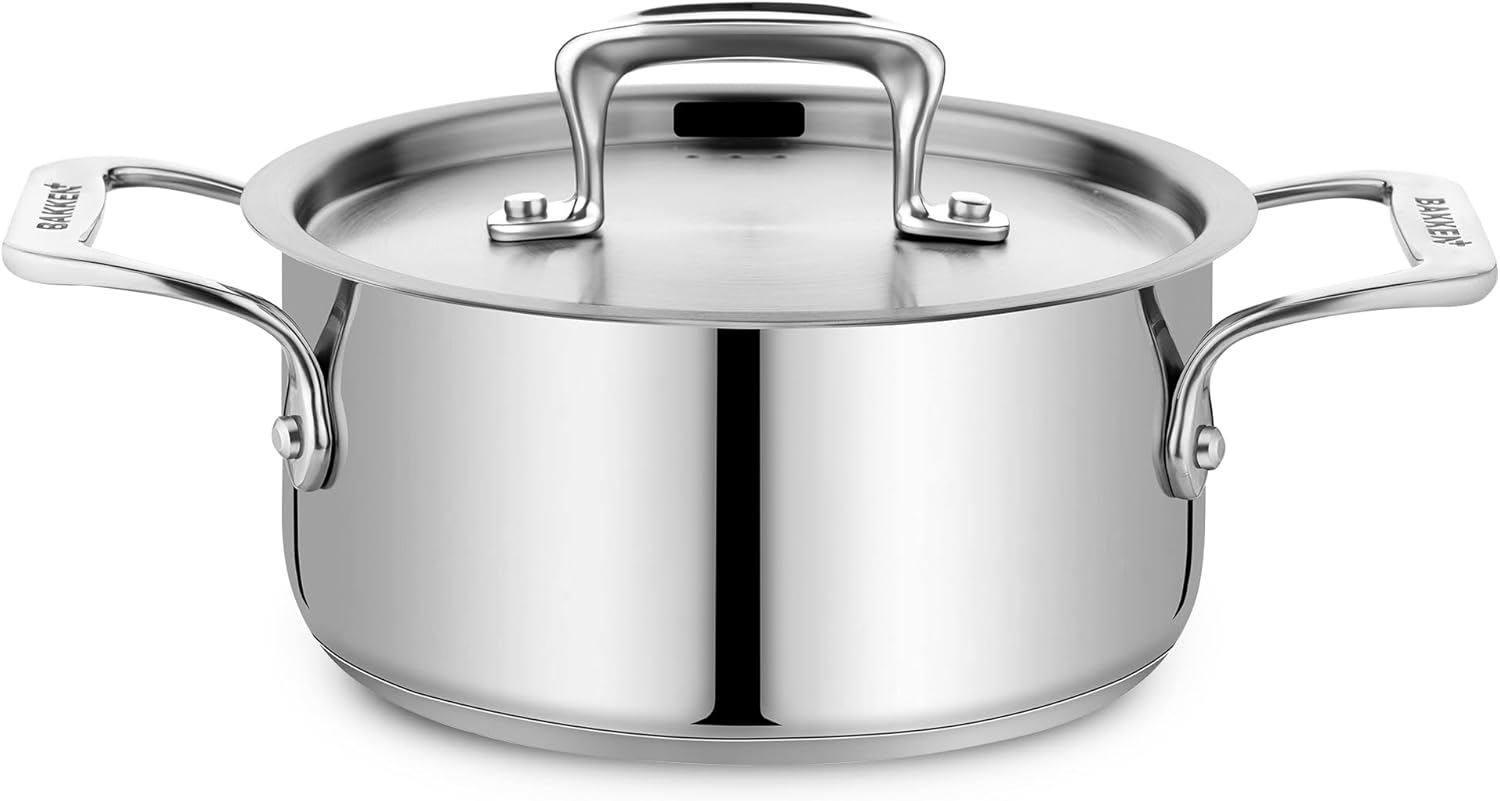
Dual-handle saucepans rely on two side grips instead of one long handle, distributing weight evenly when lifting heavy loads. Handles made from stainless steel offer durability and oven safety, though they may require potholders if heat transfers from the pot body. Silicone coatings or Bakelite grips provide tactile comfort and stay cooler during stovetop boiling.
Riveted handle attachments ensure long-term structural strength, keeping grips firmly anchored under heavy lifting conditions. Rivetless interior designs simplify cleaning by eliminating food traps around attachment points. Assessing handle materials helps balance heat resistance, comfort, and cleanup preferences.
Lid Features and Strainer Integration
Lid construction plays a significant role in moisture retention and cooking visibility during simmering tasks. Tempered glass lids allow you to monitor food progress without lifting the cover and releasing accumulated heat. Built-in steam vents help prevent excess pressure buildup and reduce the likelihood of messy liquid boil-overs.
Some saucepan lids incorporate specialized straining holes paired with dual pour spouts on the pot rim. This design allows users to drain cooking water directly from the vessel without needing a separate colander. Evaluating these lid accessories streamlines common kitchen routines like cooking pasta or vegetables.
Maintenance, Cleaning, and Finish Types
Maintaining your cookware finish depends on whether the exterior features a brushed finish, mirror polish, or a specialized nonstick coating. Stainless steel pots generally tolerate dishwasher cycles and scrubbing pads well, though polished surfaces may require occasional care to prevent water spots. Nonstick surfaces usually demand gentle hand washing with soft sponges.
Adhering to manufacturer cleaning instructions preserves the functional lifespan of coatings and specialty handle materials. Rivetless interiors and smooth granite surfaces prevent stubborn food residue accumulation during cleanup. Choosing a finish that matches your willingness to hand wash or machine wash ensures lasting satisfaction.
Frequently asked questions
What are the advantages of a saucepan with two handles?
A saucepan with two handles provides balanced weight distribution when lifting and transporting heavy loads of liquid or food. Unlike long single handles that can leverage the pot awkwardly, dual side handles allow for a stable, two-handed grip. This design also takes up less horizontal space on crowded stovetops and fits more easily into compact storage cabinets.
Can all stainless steel saucepans be used on induction cooktops?
Not all stainless steel saucepans are compatible with induction cooktops. Induction cooking requires a magnetic metal base to generate heat through electromagnetic fields. While many modern stainless steel pots feature induction-compatible bonded bases, some models are explicitly designed for gas, electric, or halogen stoves only. Checking the manufacturer specifications before purchase is essential.
Are glass lids safe for high-temperature oven cooking?
Glass lid safety in ovens depends entirely on the specific manufacturer temperature thresholds and the materials used in the knob and rim construction. Tempered glass handles moderate heat well, but silicone grips, plastic components, or specific glass ratings have strict limits. Always verify the maximum temperature rating for both the pot and lid before placing them inside an oven.
How do I prevent food from sticking in stainless steel pots?
Preventing food from sticking in stainless steel cookware involves proper preheating techniques and using adequate cooking oils or liquids. Allowing the empty pot to reach proper cooking temperature before adding oil helps create a temporary nonstick barrier. Maintaining moderate heat levels and stirring ingredients during simmering also minimizes residue buildup on the metal surface.
Is dishwasher cleaning safe for all dual-handle saucepans?
Dishwasher safety varies depending on the specific materials and surface coatings of each saucepan. While many bare stainless steel pots and glass lids tolerate dishwasher cycles without issue, nonstick coated surfaces often require hand washing to preserve their release properties. Additionally, certain handle materials may degrade or discolor under harsh dishwasher detergents.