Appliances · Buying Guide
Best Saucepans for Gas Cooktop: Top Picks for Every Kitchen
Cooking on a gas cooktop requires cookware that handles direct flame heat efficiently. Choosing the right saucepan means balancing heat distribution, material composition, and daily practical needs. Gas burners deliver immediate thermal energy, making responsive construction essential for preventing hot spots during simmering and boiling tasks across your favorite recipes.
This guide evaluates five distinct saucepans compatible with gas cooktops, ranging from multi-ply stainless steel models to aluminum-core nonstick options. Each selection highlights specific design attributes, capacities, and handling features to help you match cookware specifications directly to your everyday meal preparation routines without unnecessary guesswork.
As an Amazon Associate, StacyLaughs earns from qualifying purchases.
Buying guide
Material Composition for Gas Flames
Gas cooktops deliver direct, intense flame heat directly to the base of your cookware. Selecting saucepans with multi-layer construction helps diffuse this localized energy evenly across the entire bottom surface. Aluminum or copper cores bonded between stainless steel layers prevent dangerous hot spots that can scorch delicate sauces during active boiling routines.
Evaluated options like fully clad tri-ply and 5-ply stainless steel models excel at translating burner heat uniformly across standard grates. Understanding how different metals conduct thermal energy ensures your cookware responds predictably to sudden temperature adjustments. Prioritizing robust thermal layering safeguards your ingredients against uneven cooking while supporting dependable daily kitchen performance across varied recipes.
Capacity Selection for Daily Cooking
Choosing the correct saucepan capacity depends heavily on your household size and typical meal types. One-quart and two-quart models suit single-serving tasks, melting butter, or warming small milk portions. Meanwhile, larger 2.5-quart and 3-quart vessels provide ample room for simmering family-sized soups, boiling pasta batches, or preparing rich homemade sauces without overcrowding the cooking vessel.
Matching pot volume to your routine prevents unnecessary spills and ensures efficient heat absorption on your stovetop burner. Overfilling a small saucepan leads to messy boil-overs on gas grates, while using an oversized pot for tiny portions wastes thermal energy. Assess your regular recipes carefully to select a capacity that satisfies your cooking demands effortlessly every day.
Handle Design and Stovetop Safety
Ergonomic handles are critical when managing saucepans filled with hot liquids over open gas flames. Stay-cool stainless steel handles and insulated bakelite grips help protect your hands from rising burner heat during extended simmering tasks. Look for securely riveted or seamless handle attachments that maintain structural stability under heavy liquid loads.
Proper handle length and angle also influence overall balance and maneuverability on crowded stovetops. An oversized handle with a comfortable grip makes lifting and pouring much more secure, especially when working with heavier multi-ply pots. Prioritizing thoughtful handle engineering minimizes accidental slips and enhances user confidence throughout your daily cooking routines across varied burners.
Surface Coatings and Maintenance
Deciding between bare stainless steel and nonstick coatings shapes your cleaning and cooking experience significantly. Stainless steel surfaces resist scratching from metal utensils and withstand high oven temperatures up to six hundred degrees. Nonstick granite coatings offer effortless food release with minimal oil usage, simplifying cleanup after sticky reduction tasks.
Consider your preferred maintenance habits when selecting a saucepan finish for your kitchen setup. Stainless steel pots often tolerate dishwasher cycles and rigorous scrubbing without structural degradation. Nonstick alternatives usually require gentle hand washing with soft sponges and mild soap to preserve the protective coating over years of repeated stovetop exposure and active cooking.
Lid Features and Pouring Mechanics
Lids play a vital role in trapping heat and moisture during boiling, simmering, and braising tasks. Fitted stainless steel covers lock in steam effectively for steady cooking results, while tempered glass lids let you monitor food status without lifting the cover. Precision pouring rims and dual spouts prevent messy drips down the exterior walls during liquid transfers.
Evaluating spout design is especially helpful if you frequently transfer warm sauces, milks, or soups into separate serving containers. Dual spouts accommodate both left and right-handed cooks smoothly, reducing accidental spills on your busy countertop. Selecting cookware with well-designed rims and fitted lids transforms ordinary kitchen tasks into clean, organized procedures every single day.
Stovetop-to-Oven Versatility
Many modern saucepans offer the convenience of transitioning directly from active gas burners into the heated oven chamber. All-metal stainless steel models frequently support high oven temperatures up to six hundred degrees, making them ideal for finishing dishes under the broiler. Checking maximum temperature ratings ensures your chosen cookware matches your specific baking requirements.
Pots featuring bakelite handles or glass lids typically possess lower thermal limits, such as three hundred degrees. Respecting these manufacturer guidelines prevents handle degradation or lid damage during high-heat roasting tasks. Choosing the right thermal threshold ensures flexible operation across both stovetop and oven environments without unexpected material failure during long cooking sessions.
Frequently asked questions
Can stainless steel saucepans be used on gas cooktops?
Yes, all-metal stainless steel saucepans function exceptionally well on gas cooktops because their durable metallic construction withstands direct flame exposure without warping. Multi-layer designs featuring aluminum or copper cores distribute the intense localized heat from gas burners evenly across the base and up the sidewalls. This prevents hot spots and scorched ingredients during boiling and simmering. However, because stainless steel conducts heat so effectively, using medium or low burner settings is often recommended for everyday cooking tasks to maintain precise temperature control.
Can nonstick saucepans handle high-heat cooking on gas burners?
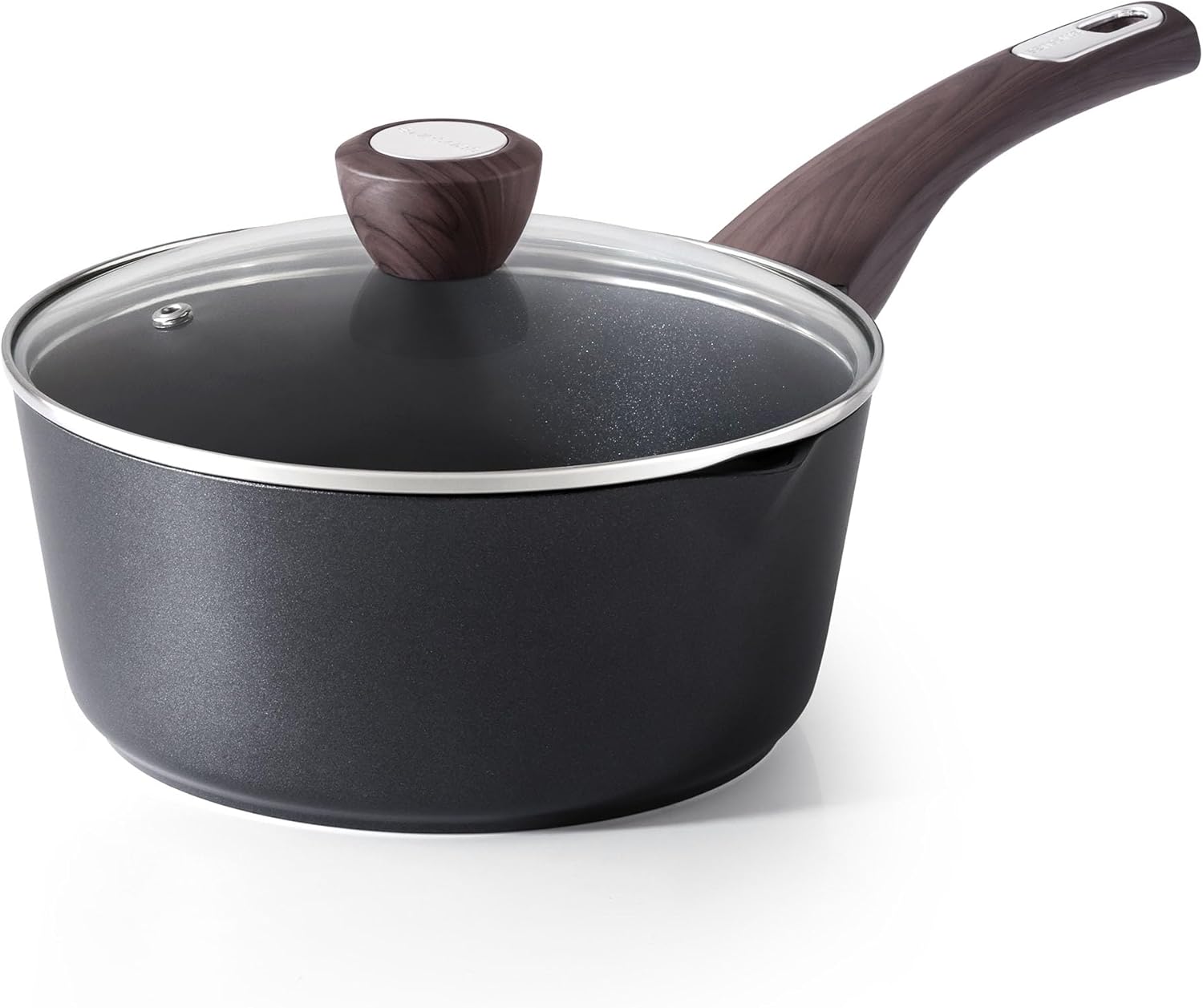
Nonstick saucepans featuring materials like Swiss ILAG granite coatings or die-cast aluminum cores are generally designed for low to medium-heat cooking applications. High-intensity flames on gas cooktops can overheat nonstick surfaces, potentially degrading the coating over time. Additionally, pots with bakelite handles often feature strict temperature limits, such as three hundred degrees in the oven. To preserve your nonstick saucepan, it is best to avoid empty preheating on high burners and use moderate temperature settings for everyday sauce and soup preparation.
How do I clean burned food off a stainless steel saucepan?
Cleaning stubborn or burned food from a stainless steel saucepan starts with soaking the pot in warm, soapy water to loosen residue. For tougher spots, you can gently boil a mixture of water and vinegar inside the pot to lift stuck-on particles naturally. Scrubbing with a non-scratch nylon pad or using a specialized stainless steel cleaner helps restore the polished finish. Avoid harsh steel wool scouring pads that can scratch the polished metal surface, and follow the manufacturer guidance for dishwasher compatibility when routine cleanup is needed.
Why is fully clad tri-ply construction recommended for gas stoves?
Fully clad tri-ply construction is highly recommended for gas stoves because gas flames provide intense, localized heat directly beneath the center of the pan. A tri-ply design bonds an inner aluminum or copper heat-conducting layer between durable outer stainless steel sheets extending from the base all the way to the rim. This seamless thermal layer ensures that heat spreads rapidly and uniformly across the entire cooking vessel rather than concentrating in a single spot. Consequently, ingredients simmer evenly and resist scorching.
What saucepan capacity is best for everyday cooking tasks?
The best saucepan capacity for everyday cooking depends heavily on your household size and recipe requirements. A one-quart saucepan suits single portions, melting butter, or warming small quantities of milk. Two-quart and 2.5-quart models offer versatile mid-sized options ideal for standard sauces, oatmeal, and side dishes for small families. If you frequently prepare larger batches of soups, pasta, or multi-serving reductions, a three-quart saucepan provides the necessary volume to prevent overcrowding and messy boil-overs while maintaining efficient heat distribution on standard gas burners.