Appliances · Buying Guide
Best Saucepan With Strainer Lids for Everyday Kitchen Tasks
Cooking everyday meals often involves juggling multiple pots, separate colanders, and extra measuring tools just to drain pasta, vegetables, or starches. A quality saucepan with strainer lids simplifies this busy kitchen routine by combining boiling and draining functions into a single piece of cookware. This practical design minimizes countertop clutter and reduces the number of dishes required after preparing a homemade family dinner.
Manufacturers build these specialized pots using durable materials like stainless steel, hard-anodized aluminum, and copper-ceramic nonstick coatings to match various stovetops and cooking styles. Exploring available options helps home cooks find a balanced tool that fits their specific culinary preferences, storage limits, and daily cleanup needs without unnecessary complexity or redundant equipment.
As an Amazon Associate, StacyLaughs earns from qualifying purchases.
Buying guide
Material Composition and Heat Distribution
Choosing the right material for a saucepan with strainer lids impacts how evenly your food cooks and how long the pot lasts. Stainless steel models with full tri-ply cladding or encapsulated aluminum cores offer durability and unreactive surfaces for acidic sauces like tomato or citrus. Aluminum options with nonstick coatings heat up rapidly and provide excellent release properties, though they require careful attention to utensil types to prevent scratching the finish.
Consider your typical culinary recipes when selecting a metal type. Stainless steel handles high heat effortlessly, while ceramic or aerospace nonstick surfaces excel at delicate simmering tasks without sticking. Matching the material to your preferred recipes ensures reliable daily performance.
Capacity and Dimensional Fit
Saucepan capacity dictates the volume of liquid, grains, or sauces you can prepare in a single batch. Three-quart models provide an ideal middle ground for small families or side dishes, offering enough room for boiling pasta without constant splashing. Larger options exceeding three and a half quarts accommodate bigger family portions but add extra weight and take up more cabinet storage space.
Always evaluate your typical portion sizes before purchasing. A compact footprint stores easily on crowded shelves, whereas larger vessels demand more clearance. Balancing volume with physical weight ensures comfortable lifting.
Cooktop Compatibility
Before selecting any straining saucepan, verify that its bottom construction matches your specific kitchen stove type. Induction cooktops require a magnetic steel base to generate proper heat, rendering standard aluminum pots without steel inserts entirely incompatible. Gas, electric coil, and ceramic cooktops generally accept almost any metal type, including plain aluminum, hard-anodized surfaces, and multi-layer stainless steel formulations.
Carefully checking manufacturer specifications prevents frustrating compatibility issues before your cookware arrives at your home. Selecting an induction-ready base also ensures long-term flexibility if you decide to upgrade your kitchen appliances or move to a different appliance setup in the future.
Straining Lid Mechanics
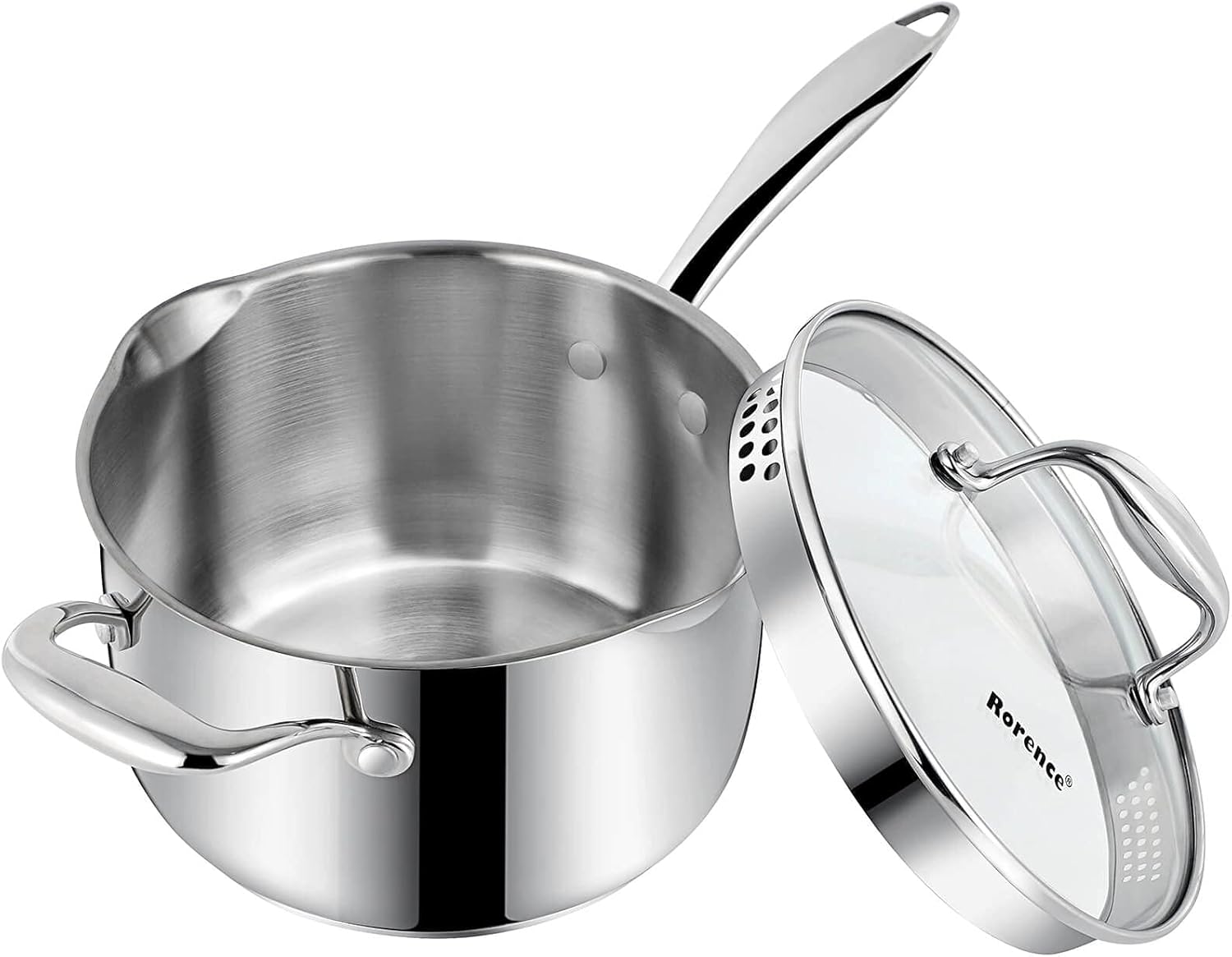
The primary feature defining these specialty pots is the integrated straining lid. Lids featuring built-in drainage holes eliminate the need for a separate colander, saving time and reducing washing tasks. Some designs include dual-sided pour spouts that align with the lid perforations, allowing you to tip the pan cleanly without losing runaway pasta or steam-softened vegetables into the sink drain.
Examine how the lid locks, seals, or rests during the tipping motion. Secure handles and well-positioned drainage holes ensure safe, controlled liquid disposal without burning your fingers or accidentally spilling hot cooking water onto your kitchen counters.
Handle Ergonomics and Safety
Handling a heavy pot filled with boiling water demands secure, comfortable grips. Riveted stainless steel handles provide sturdy long-term attachment, though some solid metal handles can absorb heat during extended simmering periods on the stove. Alternative designs incorporate silicone grips or cast construction to insulate against high temperatures, improving overall comfort and balance when carrying the full pan to the sink.
Consider whether you prefer traditional all-metal handles that tolerate high oven temperatures or insulated silicone wraps for daily stovetop comfort. Properly balanced ergonomics and secure dual-riveted joints reduce wrist strain during heavy lifting, tipping, and pouring tasks.
Cleanup and Maintenance
Maintenance requirements vary significantly between plain stainless steel and coated nonstick saucepans. Dishwasher-safe models streamline daily cleanup routines, but hand washing often preserves the longevity of ceramic or aerospace nonstick coatings over years of regular use. Stainless steel surfaces tolerate vigorous scrubbing when foods catch on the bottom, whereas coated options require gentle nonabrasive sponges to protect their delicate release layers from unnecessary abrasion.
Review manufacturer care guidelines to understand maximum temperature limits and recommended cleaning agents for your specific model. Proper maintenance protects your cookware investment and ensures consistent cooking performance across countless meal preparations in your kitchen.
Frequently asked questions
How do strainer lids work on saucepans?
Strainer lids feature built-in drainage holes of varying sizes punched directly into the rim of the tempered glass cover. When you finish boiling ingredients like pasta, potatoes, or vegetables, you simply align the lid holes with the pour spout or edge of the pan. By holding the handle securely and tipping the vessel toward the sink, cooking liquids drain out smoothly while solid foods remain safely trapped inside. This clever design eliminates the need for a separate colander, reducing both clutter and cleanup time after every meal.
Can these saucepans be used on induction cooktops?
Cooktop compatibility depends entirely on the specific metal construction of the saucepan's base. Models crafted with full tri-ply stainless steel or embedded magnetic steel discs work seamlessly on induction stoves because they interact with the magnetic field. However, standard aluminum pots without a dedicated magnetic stainless steel outer base will not function on induction surfaces. Always review the product specifications to confirm whether an individual saucepan supports gas, electric coil, ceramic, or induction cooktops before making your purchase decision.
Are nonstick straining saucepans dishwasher safe?
Many modern nonstick saucepans are labeled as dishwasher safe by manufacturers, allowing convenient cleanup after preparing messy sauces or grains. However, running coated pots through a dishwasher repeatedly can gradually degrade some ceramic and traditional nonstick surfaces over extended periods. Hand washing with mild dish soap and a soft sponge is frequently recommended to extend the lifespan of delicate nonstick coatings. Always check the manufacturer care instructions provided with your specific cookware model before placing it in the dishwasher.
What is the advantage of a pour spout on a saucepan?
A built-in pour spout provides a designated channel for transferring liquids, gravies, soups, and melted butter out of the pan without messy spills or dribbles running down the exterior walls. When paired with a straining lid, the spout helps direct drained water into a narrow stream directly over the sink drain. This functional detail prevents hot liquids from splashing onto your countertops and ensures accurate transfer into bowls or measuring cups during food plating and recipe preparation.
How do I choose between stainless steel and nonstick saucepans?
Choosing between stainless steel and nonstick models depends heavily on your cooking habits and preferred maintenance routines. Stainless steel offers exceptional durability, tolerates high heat, and resists scratching from metal utensils, making it ideal for boiling, searing, and acidic tomato sauces. Nonstick saucepans excel at preparing delicate foods like eggs, melted chocolate, or cheese sauces without sticking, offering effortless food release and quick cleanup. Evaluate which recipes you prepare most frequently to determine the ideal material surface for your kitchen.