Appliances · Buying Guide
Best Small Saucepan with Lid Options for Everyday Kitchen Tasks
Finding the right small saucepan with lid can completely transform how you handle everyday kitchen tasks, ranging from melting butter and warming milk to simmering delicate sauces for dinner. A compact cooking vessel heats quickly and fits easily onto crowded stovetops, making it an essential staple for single-serving meals, small portions, and quick side dishes.
Different materials and surface coatings, stretching from polished stainless steel to advanced nonstick granite or ceramic finishes, offer distinct practical advantages for home cooks. Closely reviewing individual capacities, handle designs, and heat distribution properties ensures you choose a reliable pot that matches your exact stove compatibility and cooking routine without guesswork.
As an Amazon Associate, StacyLaughs earns from qualifying purchases.
Buying guide
Material Composition and Heat Distribution
Choosing the ideal small saucepan starts with evaluating the core material and how it handles heat. Stainless steel models offer long-lasting durability and non-reactive cooking surfaces, while aluminum options often incorporate encapsulated bases to distribute heat quickly and eliminate annoying hot spots. Tri-ply designs layer metals for superior thermal performance, ensuring your sauces simmer evenly without scorching at the edges.
Understanding these material differences helps you match the pot to your specific cooking habits. If you frequently boil acidic liquids like tomato-based sauces, a non-reactive stainless steel or coated surface prevents metallic flavors from leaching into your food. Evaluating how fast a material heats up guides your daily efficiency on the stove.
Nonstick Coatings and Health Considerations
Nonstick surfaces significantly simplify the process of preparing delicate items like melted cheese, roux, or oatmeal. Modern saucepans frequently feature granite, ceramic, or Quantanium nonstick layers that require very little oil for everyday cooking. Ceramic coatings are often chosen by shoppers seeking options free from PFOA, PTFE, and PFAS chemicals, providing peace of mind during daily meal preparation routines.
However, these coated surfaces demand specific care to maintain their integrity over years of regular use. Using silicone or wooden utensils instead of metal prevents scratching, while hand washing with mild soap preserves the non-stick properties longer than automatic dishwashers. Balancing convenience with maintenance requirements ensures your cookware stays functional.
Stovetop Compatibility and Induction Support
Before purchasing any small saucepan, verify that its base matches the specific type of cooktop installed in your kitchen. Traditional aluminum and standard stainless steel pots work seamlessly on gas, electric, and ceramic radiant burners. However, induction cooktops require a high magnetic conductive stainless steel base embedded in the bottom of the cookware to generate heat properly.
Checking these compatibility details prevents frustration and ensures the pot actually heats up on your stove. If you plan on upgrading your kitchen appliances in the near future, investing in an induction-compatible saucepan now saves you from needing to replace your entire cookware collection later down the road.
Capacity and Practical Portion Sizing
Saucepan capacities generally range from tiny half-quart melting pots up to versatile one-and-a-half-quart vessels designed for small side dishes and individual portions. Selecting the correct size depends entirely on what you typically prepare. A zero-point-five-quart pot suits butter melting or warming small amounts of syrup, whereas a one-to-one-point-five-quart model accommodates single-serving soups, oatmeal, and homemade gravies for one or two people easily.
Buying a pot that matches your typical portion size avoids the inefficiency of heating oversized cookware for minor kitchen tasks. Compact saucepans also take up minimal cabinet space and crowd your stovetop less when you are juggling multiple dishes simultaneously during busy weeknight cooking sessions or holiday meal preparations.
Handle Design and Stovetop Safety
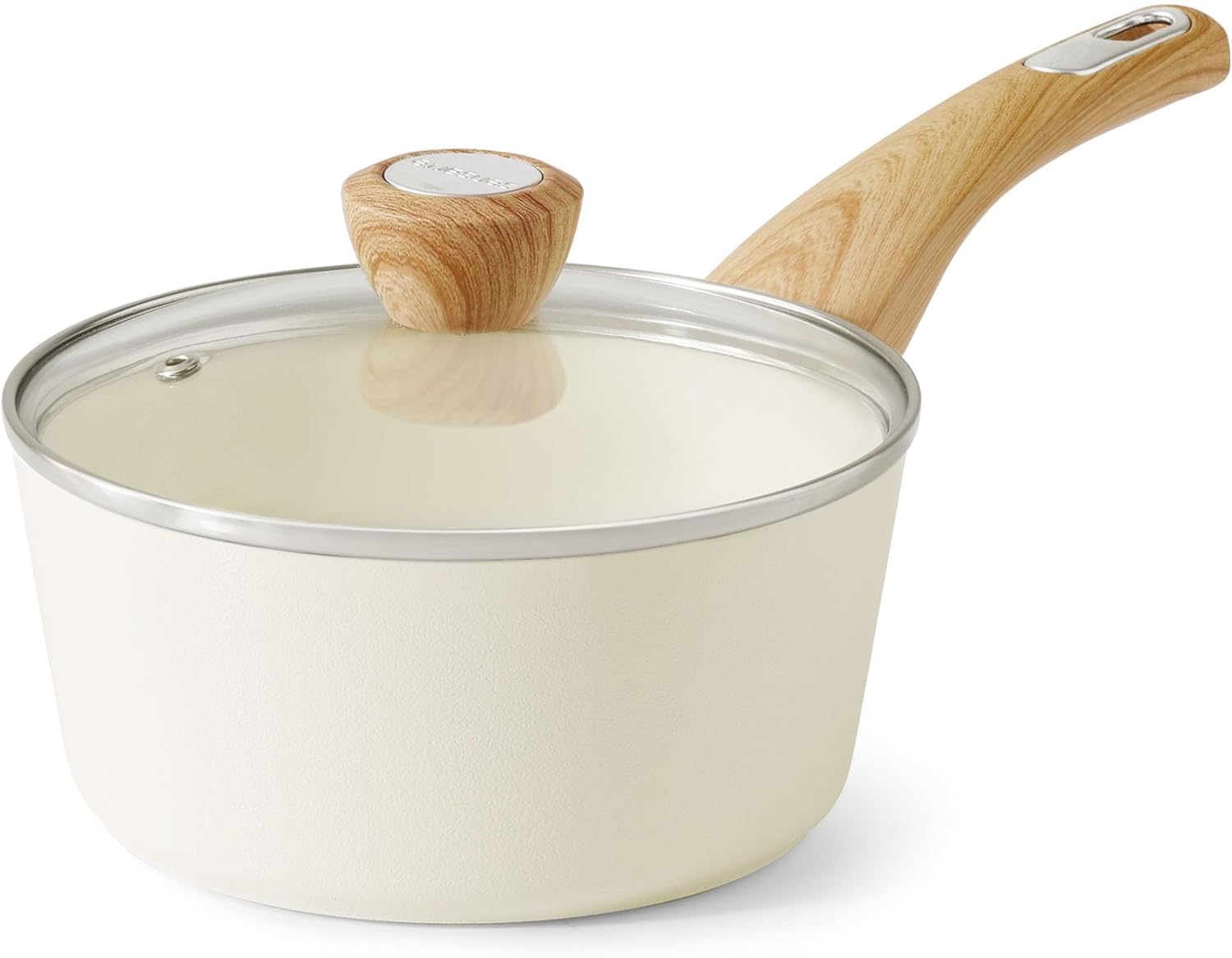
Ergonomic handles are essential for safe maneuverability when lifting a hot saucepan filled with boiling liquid, hot milk, or heavy sauces. Solid stainless steel riveted handles provide a secure structural attachment that will not loosen over extended periods. Many models incorporate cool-grip technology or woodgrain bakelite to ensure the handle remains comfortable to touch while the pot sits on an active burner.
Pay careful attention to how handle materials interact with your wider cooking environment. While bakelite handles stay remarkably cool during stovetop boiling, they frequently carry strict temperature limits if you intend to transfer the saucepan directly into a heated oven for baking or broiling tasks.
Lids, Pouring Rims, and Cleanup Convenience
Thoughtful design features like tempered glass lids and drip-free pouring rims greatly enhance the daily usability of a small saucepan. Glass covers let you monitor cooking progress without releasing trapped heat, while unique lip rims direct liquids smoothly out of the pot to prevent messy drips down the exterior sides. Rivet-free interiors also eliminate stubborn trapped food particles.
Cleanup convenience varies widely depending on whether a saucepan is dishwasher safe or requires gentle hand washing. Stainless steel models often withstand automatic dishwashers easily, whereas nonstick granite or ceramic coatings benefit from simple wipe-downs with warm soapy water and sponges to protect their specialized finishes over time.
Frequently asked questions
Can small saucepans with lids be used on induction cooktops?
Induction compatibility depends entirely on the specific base construction of the saucepan. Models featuring a high magnetic conductive stainless steel base, such as certain aluminum or tri-ply pots, work seamlessly on induction ranges. However, traditional hard-anodized aluminum or standard aluminum saucepans without a magnetic base will not generate heat on induction cooktops. Always verify the manufacturer specifications regarding stove compatibility before purchasing to ensure the pot functions correctly on your specific kitchen range.
Are nonstick granite and ceramic coatings safe for everyday cooking?
Modern nonstick coatings like Swiss granite or ceramic surfaces are designed for everyday cooking and are typically manufactured free of harmful chemicals such as PFOA, PTFE, and PFAS. These coatings provide excellent food release, allowing you to prepare meals with minimal oil. To maintain their safety and performance, it is important to follow manufacturer care guidelines, such as using wooden or silicone utensils and avoiding abrasive metal scrubbers that could scratch the surface over time.
How do I clean a saucepan without damaging the coating or finish?
Cleaning methods vary based on the specific material of your saucepan. Stainless steel pots are generally dishwasher safe and can handle warm soapy water with standard scrub pads. In contrast, nonstick granite and ceramic saucepans often recommend gentle hand washing using a soft sponge and mild soapy water to preserve the non-stick properties. Avoiding harsh metallic scouring pads prevents scratching the delicate interior coatings, ensuring the cookware remains functional and attractive for a long time.
What is the practical difference between a 0.5-quart and a 1.5-quart saucepan?
The practical difference lies entirely in capacity and intended use cases. A zero-point-five-quart mini saucepan is extremely compact, making it ideal for micro-tasks like melting butter, warming syrup, or scaling down small ingredients for one person. A larger one-point-five-quart saucepan offers much more versatility, accommodating single-serving soups, oatmeal, hot milk, and small side dishes for one to two people comfortably without spilling over the rim during boiling or general simmering tasks.
Do stainless steel handles really stay cool on the stovetop?
Solid stainless steel riveted handles on quality saucepans are specifically engineered with cool-grip designs that stay comfortable to touch during standard stovetop cooking. However, the exact performance can vary depending on burner size and cooking duration. If a burner is significantly wider than the base of the small saucepan, flames or heat may travel up the sides and warm the handle. Always exercise caution and use oven mitts if a pot has been heated for extended periods.