Appliances · Buying Guide
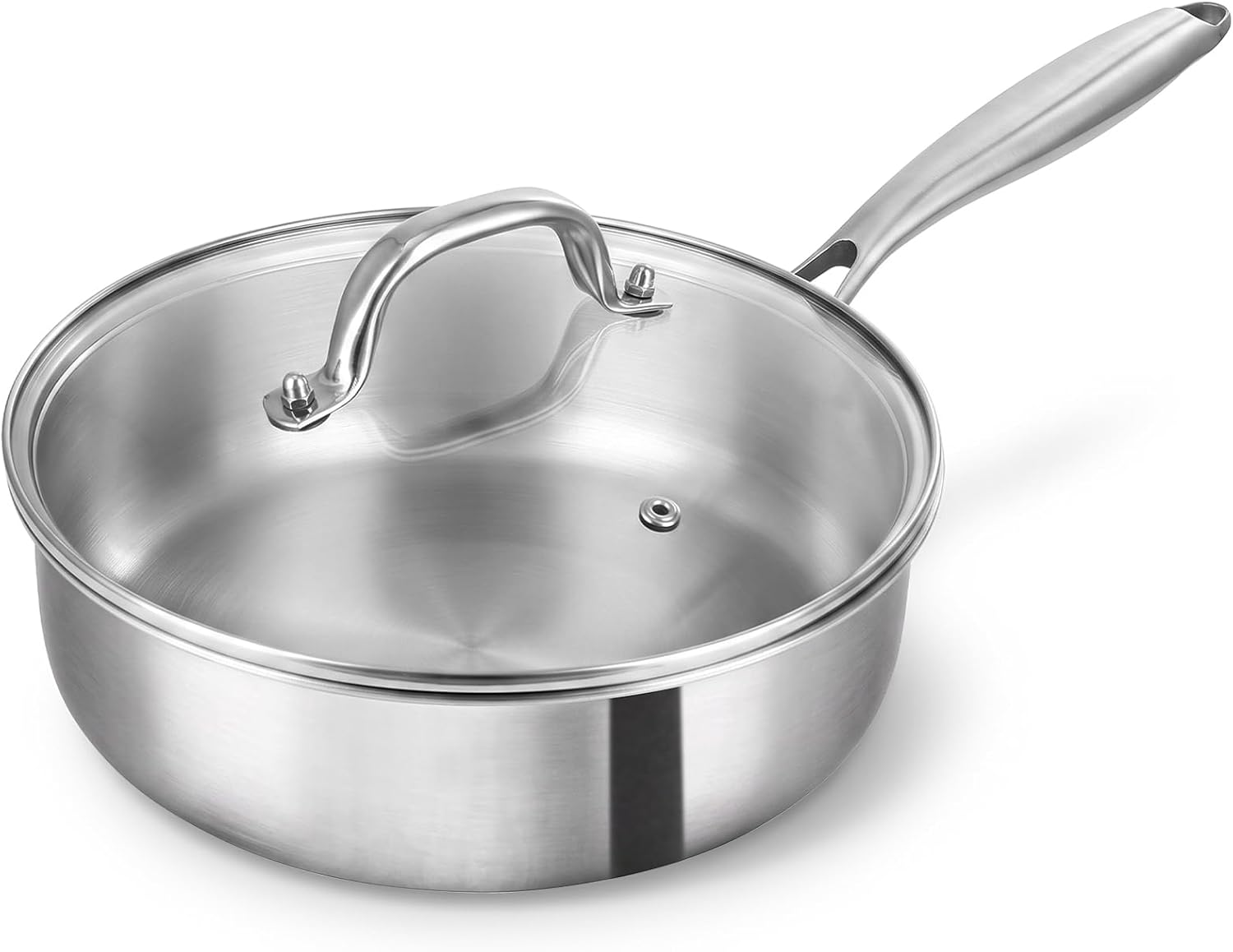
Best Stainless Saute Pan With Lid Options For Home Kitchens
Finding the right stainless steel saute pan with lid can completely transform your daily cooking routine, offering an uncoated cooking surface that stands up to heavy use without chipping or wearing down over time. Whether you need to sear meats, simmer sauces, or execute deep braises, these versatile pans provide dependable performance across various stovetops, including induction cooktops.
Navigating the available options involves weighing capacity, lid materials, and handle construction to match your household size and culinary habits. We examine five distinct stainless steel pans featuring multi-ply designs and riveted handles to help you identify the ideal cookware piece for your specific kitchen needs.
As an Amazon Associate, StacyLaughs earns from qualifying purchases.
Buying guide
Material Construction and Ply Design
Choosing the right stainless steel pan starts with understanding its core construction. Multi-ply or clad options feature layers of aluminum or copper sandwiched between stainless steel sheets, which ensures rapid and even heat distribution across the bottom and up the sides. This prevents hot spots that can burn food during searing or simmering.
Uncoated stainless steel surfaces offer exceptional durability with nothing to chip or wear off over time. They do not react with acidic ingredients like tomatoes or citrus, preserving natural flavors. While they require proper preheating and a touch of oil to achieve natural non-stick performance, their long-term reliability makes them a cornerstone of durable kitchen cookware collections.
Capacity and Cooking Volume
Pan capacity dictates what recipes you can successfully tackle in your kitchen environment. Smaller three-quart models suit solo cooks, couples, or small families, providing enough room for daily sautés, browning meats, and preparing quick side dishes. They heat up quickly and remain very easy to maneuver during heavy tossing tasks on crowded stovetops.
Larger 5.5-quart and 7-quart pans easily accommodate generous family meals, bulky vegetables, and voluminous stews or braises. Deep vertical sides help minimize messy stovetop splatters while you stir, fry, or simmer sauces. Matching your household size and typical portion requirements to the appropriate capacity ensures efficient daily meal preparation without constantly overcrowding the cooking surface.
Lid Types and Materials
Lids play an essential role in trapping heat, moisture, and flavor during long braising and simmering tasks. Stainless steel covers offer robust durability and higher oven-safe temperature limits, making them ideal for heavy roasting and high-heat oven applications. They resist warping and seamlessly match the polished look of the main pan body.
Tempered glass lids let you easily monitor cooking progress without lifting the cover and releasing valuable heat or moisture. Many glass lids incorporate protective stainless steel rims and built-in steam vents for added kitchen utility. Consider your preferred cooking style when deciding between the unbreakable nature of metal and the visual convenience of glass.
Stovetop and Oven Compatibility
Modern stainless steel cookware offers exceptional versatility across diverse kitchen cooking environments and appliance setups. Most quality pans feature induction-compatible magnetic bases that work seamlessly on gas, electric, and smooth ceramic cooktops. This universal surface compatibility ensures you can upgrade your cookware collection without worrying about future appliance changes or future kitchen renovations.
Transitioning directly from stovetop searing to oven finishing is another major advantage of quality tri-ply stainless steel pans. Always check specific manufacturer temperature ratings, because metal handles and glass lids often have distinct thermal limits. Understanding these operational thresholds prevents accidental damage while expanding your daily cooking repertoire into baking, roasting, and broiling.
Handle Design and Ergonomics
Handle construction directly impacts user comfort, safety, and daily maneuverability during heavy everyday kitchen cooking tasks. Riveted stainless steel handles provide a secure, permanent attachment that will not loosen over time under heavy loads. Many designs incorporate stay-cool technology or ergonomic shapes to minimize heat transfer from the hot stovetop surface.
Helper handles on larger pans are particularly valuable when lifting heavy, fully loaded cookware from burner to countertop or oven. Meanwhile, innovative detachable handles offer unique storage benefits in tight kitchen cabinets and drawers. Evaluating how a handle feels in your hand ensures confident control when safely transporting hot meals around your busy home kitchen.
Cleaning and Maintenance
Maintaining stainless steel cookware requires following specific manufacturer guidelines to preserve its polished aesthetic exterior and cooking performance. While many pans are dishwasher safe, hand-washing with warm sudsy water and a soft sponge helps prevent minor surface scratches caused by crowded dishwasher racks. Uncoated metal surfaces can withstand gentle scrubbing if stubborn food residue requires extra attention.
Regular maintenance prevents mineral buildup and keeps your cookware looking pristine over years of dependable daily service. Avoid thermal shock by letting hot pans cool completely before washing them in cold water. Proper care ensures your investment delivers consistent cooking results meal after meal without ever losing its structural and functional integrity.
Frequently asked questions
Do stainless steel saute pans require seasoning before cooking?
Uncoated stainless steel pans do not require traditional seasoning like cast iron, but preheating them correctly is essential for achieving natural non-stick performance. You should heat the pan thoroughly on medium heat before adding oil. You can test readiness by dropping water onto the surface; if the water beads and rolls freely without evaporating, the pan is fully preheated. Adding a thin layer of cooking oil then creates a slick surface that prevents food from sticking during searing or frying.
Can I put my stainless steel saute pan in the dishwasher?
Most stainless steel saute pans are rated as dishwasher safe by manufacturers, allowing for convenient cleanup after preparing everyday meals. However, hand-washing with warm sudsy water and a soft sponge is frequently recommended to keep the exterior polish bright and prevent minor surface marring caused by improper loading against other dishes. If you do use a dishwasher, arrange the pan carefully to avoid scratches, and dry it promptly to prevent water spots from forming on the mirror-polished finish.
What is the advantage of a tri-ply stainless steel construction?
Tri-ply stainless steel construction features an aluminum core sandwiched between inner and outer layers of durable stainless steel. This layered design delivers rapid and even heat distribution across the entire bottom and up the sides of the pan, eliminating troublesome hot spots that can burn food. The interior stainless steel surface remains non-reactive with acidic ingredients, while the magnetic exterior layer ensures full compatibility with modern induction cooktops alongside gas, electric, and ceramic surfaces.
How do I choose between a glass lid and a metal lid?
Choosing between a glass lid and a stainless steel lid depends largely on your cooking style and oven requirements. Tempered glass lids let you monitor cooking progress and check liquid levels without lifting the cover and releasing heat or moisture, often featuring steam vents. Stainless steel covers offer superior durability, resist warping, and typically withstand much higher oven temperatures, making them ideal for heavy roasting and broiler-safe tasks where glass components might exceed their thermal limits.
Are stainless steel saute pans safe for induction cooktops?
Yes, stainless steel saute pans equipped with a magnetic outer stainless steel layer or encapsulated induction-ready base work seamlessly on all major stovetop types, including induction cooktops, gas burners, electric coils, and smooth ceramic glass. The magnetic properties allow the induction burner to generate heat directly within the pan base for efficient temperature control. Always check the product specifications to confirm induction compatibility before purchasing if you rely primarily on an induction cooktop for your daily meal preparation.