Appliances · Buying Guide
Best Stainless Steel Cookware Black Friday Choices for Your Kitchen
Finding dependable kitchen tools often leads home cooks to explore durable metal options during major seasonal shopping events like Black Friday. Upgrading pots and pans can dramatically transform everyday meal preparation, offering reliable surfaces for searing proteins, simmering delicate sauces, and boiling large batches of pasta for family gatherings or quiet weeknight dinners across your home kitchen setup.
Modern stainless steel collections provide lasting durability across various stove types, including induction, gas, and electric cooktops. Reviewing specific multi-piece configurations helps identify which setups best match your unique cooking style, storage constraints, and household demands without relying on speculative claims, ensuring you make a grounded choice for your kitchen workspace.
As an Amazon Associate, StacyLaughs earns from qualifying purchases.
Buying guide
Evaluating Material Construction and Cladding
Stainless steel sets often feature either impact-bonded bases or full tri-ply clad construction extending all the way up the sidewalls. Tri-ply designs securely bond pure aluminum between outer and inner steel layers, ensuring heat travels evenly across the entire cooking vessel rather than resting solely on the bottom surface. This uniform thermal delivery helps prevent scorching when simmering thick sauces or browning large cuts of meat on medium burner settings.
Impact-bonded bases weld a thick aluminum disc directly to the bottom of a standard stainless steel body, offering great heat retention for flat burners. Deciding between these methods depends on whether your daily cooking benefits from active sidewall heating or standard flat-bottom thermal performance. Reviewing your typical recipes will clarify which construction type supports your kitchen routine most effectively.
Understanding Heat Distribution and Base Design
Consistent thermal behavior remains critical for successful searing, boiling, and simmering tasks in any home kitchen. Encapsulated and bonded aluminum bases draw heat rapidly from stove burners, dispersing thermal energy uniformly across the flat pan bottom. This engineered reduction in localized hot spots prevents accidental burning when preparing delicate foods, eggs, or sticky reductions during everyday meal preparation.
Full clad models extend that thermal efficiency directly up the sidewalls, making them especially useful for deep sautés, pan sauces, and braising liquids that make contact with upper walls. Matching base design to your favorite cooking techniques ensures reliable results across various recipes without requiring constant food stirring or frequent burner adjustments.
Cooktop Compatibility and Stove Requirements
Modern kitchens feature diverse stovetop technologies, making cross-compatibility an essential purchasing factor for any cookware investment. Magnetic stainless steel bodies allow pots and pans to function seamlessly on induction cooktops, alongside traditional gas, electric, and glass-ceramic radiant burners. Verifying compatibility ensures your chosen collection integrates directly into your existing kitchen layout without requiring expensive range upgrades.
Glass-ceramic cooktops also benefit from smooth, flat-bottomed metal bases that prevent scratching sensitive glass surfaces during sliding movements. Always check manufacturer specifications regarding burner sizing to maximize thermal transfer efficiency. Proper alignment between burner diameters and pan bases prevents wasted heat and supports faster boiling times across all cooking sessions.
Handle Ergonomics and Oven Safety Limits
Cookware handles dictate comfort and security when lifting heavy, loaded pots from burners to countertops or sinks. Riveted stainless steel handles provide a permanent connection that avoids loosening over time. Many designs incorporate stay-cool engineering to prevent burns during stovetop simmering, though users must remember that metal handles absorb heat rapidly inside hot ovens.
Oven safety thresholds vary significantly between metal bodies and accompanying lids. While stainless pans frequently withstand extreme temperatures up to five hundred or six hundred degrees, glass lids usually feature lower maximum limits around three hundred fifty to four hundred fifty degrees. Reviewing these temperature caps prevents accidental lid cracking or hardware damage during broiling and baking tasks.
Cleaning Maintenance and Surface Care
Uncoated stainless steel surfaces offer exceptional longevity because there are no synthetic nonstick layers to wear away over time. These durable cooking areas handle high-heat searing, metal utensils, and acidic ingredients without degrading. However, maintaining a spotless mirror or brushed finish requires proper cleaning habits, such as using warm soapy water and non-abrasive scouring pads for stubborn food residue.
Many stainless collections feature dishwasher-safe construction for convenient cleanup, though hand washing often preserves exterior sheens longer. Deglazing hot pans with liquids helps lift stuck food particles naturally, reducing aggressive scrubbing. Following manufacturer guidelines for maintenance ensures your pots and pans remain visually appealing and functionally reliable through years of regular family meal preparation.
Choosing the Right Piece Count and Set Configuration
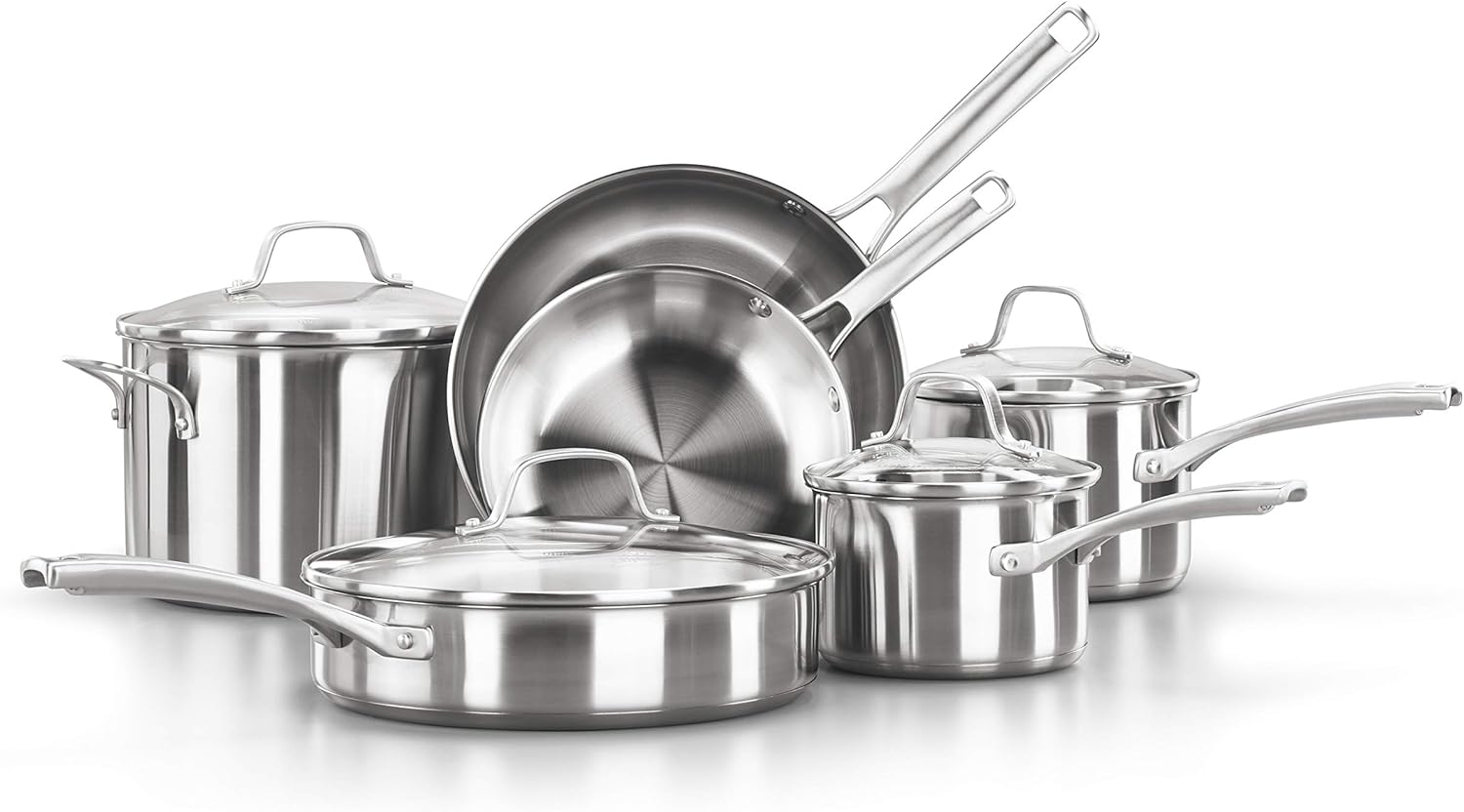
Selecting the ideal set size depends entirely on your household size, storage capacity, and regular cooking habits. Smaller ten-piece collections usually cover essential frying pans, saucepans, and one stockpot, making them ideal for compact kitchens and couples. Larger sets expanding past twenty pieces introduce specialized sauté pans, extra fry pans, utensils, and steamer inserts for comprehensive multi-course meal preparation.
Assess your available cabinet and pantry space carefully before committing to large cookware bundles to avoid cramped kitchen storage conditions. Choosing a configuration that closely matches your actual meal routines ensures you utilize every included pot and pan rather than accumulating redundant items that sit unused on your shelves.
Frequently asked questions
Are stainless steel cookware sets compatible with induction cooktops?
Most modern stainless steel cookware collections feature magnetic metal bases or full-clad bodies that work seamlessly on induction cooktops, alongside traditional gas, electric, and glass-ceramic stoves. Because induction technology relies on magnetic fields to generate heat directly within the pan, the outer layer of the cookware must contain magnetic stainless steel. Manufacturers typically specify induction readiness in their product details. Always review these compatibility guidelines before purchasing to ensure your chosen pots and pans function correctly on your specific stovetop surface without heating issues.
Can stainless steel pots and pans go safely into the oven?
Yes, many stainless steel pots and pans are engineered for high-temperature oven use, frequently withstanding limits up to five hundred or six hundred degrees Fahrenheit. However, you must always check the specific manufacturer ratings for both the metal bodies and any included lids. While stainless handles and metal pans endure extreme oven heat, tempered glass lids usually feature much lower maximum safety thresholds, often restricted to three hundred fifty or four hundred fifty degrees. Using oven mitts is essential because metal handles absorb heat rapidly inside closed ovens.
How do I prevent food from sticking to uncoated stainless steel surfaces?
Preventing food from sticking on uncoated stainless steel requires proper preheating and temperature management. Warm your empty pan over medium heat for a brief moment before adding a small amount of cooking oil or butter to coat the surface. Allowing the oil to heat properly creates a natural barrier before introducing proteins or vegetables. Avoid cooking on excessively high heat right away, and let proteins release naturally from the metal surface once a proper sear forms during the cooking process.
Are stainless steel cookware sets safe to wash in the dishwasher?
Many stainless steel cookware collections are explicitly designated as dishwasher safe by manufacturers, allowing for convenient cleanup after preparing family meals. Running pots and pans through a dishwasher cycle removes grease and food residue without requiring intensive manual scrubbing. However, some home cooks prefer hand washing their stainless cookware with warm soapy water and soft sponges to preserve the polished or brushed exterior finish over long-term use. Always consult the specific product care instructions provided by the manufacturer before running items through your dishwasher.
What is the difference between impact-bonded bases and full tri-ply clad cookware?
Impact-bonded bases consist of a thick disc of aluminum welded directly to the bottom of a standard stainless steel pot, providing excellent flat-bottom heat retention and even browning on standard burners. In contrast, full tri-ply clad cookware bonds an aluminum core layer between inner and outer stainless steel sheets extending edge-to-edge up the sidewalls. This full-clad construction delivers active thermal distribution across both the base and the walls, improving temperature control for delicate pan sauces, simmering liquids, and complex sautéing tasks.