Appliances · Buying Guide
Best Stainless Steel Deep Frying Pans for Versatile Home Cooking
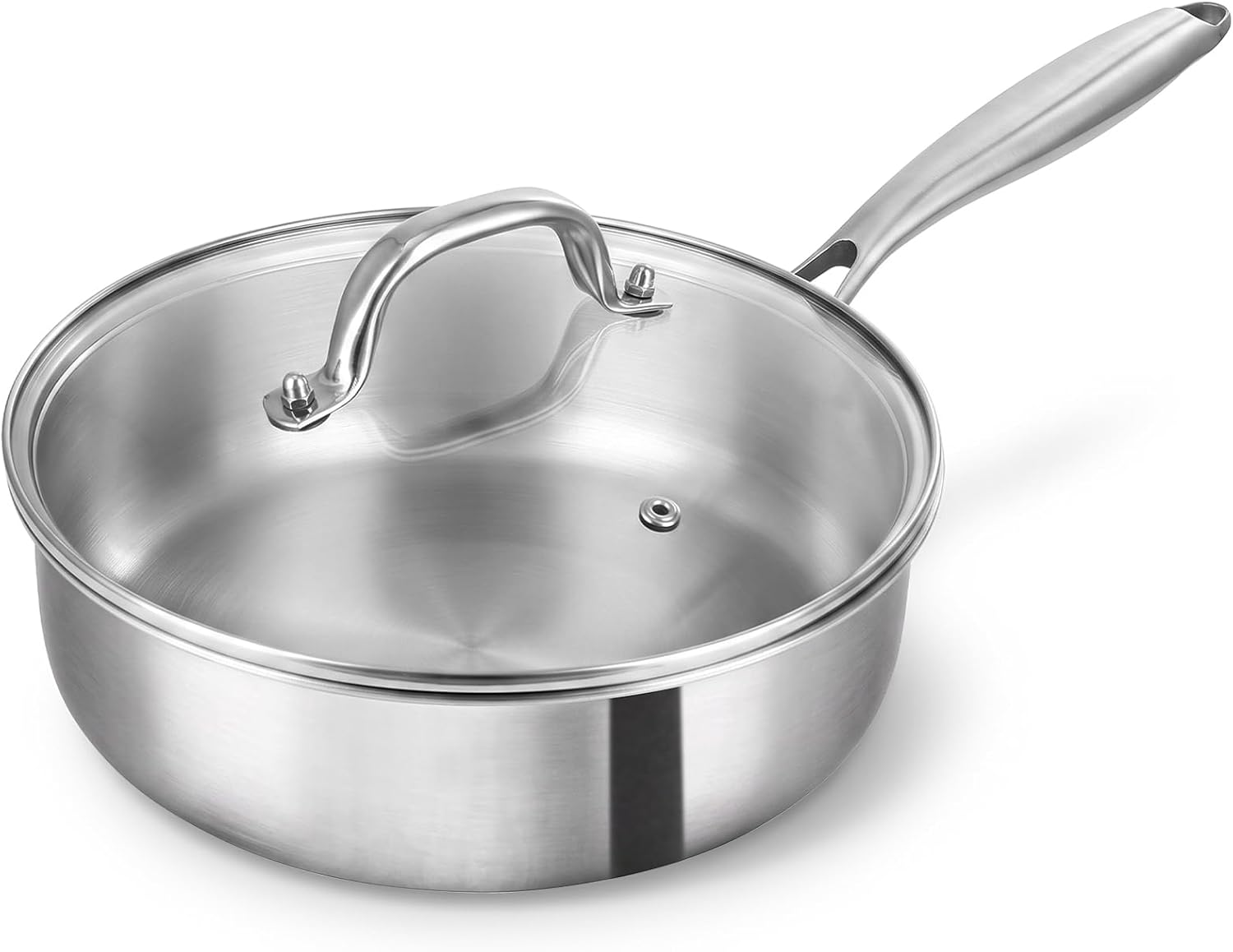
Finding the right cookware for daily meal preparation involves balancing reliable heat distribution, generous capacity, and broad stovetop compatibility. A quality stainless steel deep frying pan offers an uncoated cooking surface that resists chipping while handling high-heat searing, braising, and simmering tasks across various cooking appliances.
These pans typically feature multi-ply clad construction or encapsulated aluminum bases designed to transfer heat efficiently from the burner to the rim. Reviewing specific design traits, handle configurations, and lid inclusions helps match a skillet to your everyday kitchen routine without guessing about performance.
As an Amazon Associate, StacyLaughs earns from qualifying purchases.
Buying guide
Material Construction and Ply Layers
Selecting a stainless steel deep frying pan begins with understanding how metal layers affect thermal performance across different burners. Models utilizing tri-ply clad construction sandwich a thick aluminum core between interior and exterior steel sheets. This engineered design promotes rapid, even heat transfer across the entire bottom surface and up the tall sidewalls.
Encapsulated aluminum bases offer another reliable method for spreading thermal energy evenly and eliminating unwanted hot spots during everyday cooking tasks. Reviewing these structural differences ensures you choose cookware that responds predictably to temperature adjustments. Matching the specific metal construction style to your routine prevents uneven food browning and scorched sauces.
Capacity and Dimensional Sizing
Evaluating pan capacity is essential for matching cookware dimensions accurately to your household size and typical meal preparation routines. Smaller 3.5-quart pans handle modest portions for couples or individuals without taking up excessive storage room in tight kitchens. Larger 5.5 to 7-quart options provide ample interior space for batch cooking, family dinners, and bulky ingredients.
Consider your typical cooking volume before purchasing a deep skillet to avoid overcrowding ingredients or struggling with undersized cooking vessels. Wider frying diameters also require adequate burner coverage to maintain consistent edge-to-edge heating across the metal base. Measuring your available cabinet storage space beforehand guarantees your new cookware fits comfortably at home.
Handle Design and Ergonomic Support
Handle construction directly influences safety and comfort when maneuvering a heavy, liquid-filled stainless steel pan across your kitchen workspace. Look for hollow handles or riveted stainless designs engineered to reduce thermal transfer during prolonged stovetop cooking sessions. Helper handles on larger models provide essential balance when lifting substantial meal loads between burners and counters.
Detachable handles offer unique advantages for compact storage and oven transitions where space is strictly limited in kitchen cabinets. Assessing how a handle attaches and feels in your hand ensures secure control during active stirring and serving tasks. Prioritizing ergonomic comfort prevents wrist strain when managing heavy cooking workflows.
Stovetop and Oven Compatibility
Broad stovetop compatibility ensures your frying pan works seamlessly whether you use gas burners, electric coils, or smooth glass induction cooking surfaces safely. A flat magnetic exterior base is required for efficient induction heating performance without scratching delicate glass cooktops. Checking temperature limits for oven use is equally important for versatile meal preparation routines.
Many stainless steel pans withstand high oven heat up to 500 degrees Fahrenheit for finishing casseroles or roasting meats safely. However, matching lids often feature lower heat tolerances, such as 350 degrees Fahrenheit for glass covers. Reviewing these temperature thresholds prevents accidental material degradation during complex baking steps and extended broiling sessions.
Lid Inclusion and Visibility
Lids play a crucial role in retaining heat, locking in moisture effectively, and preventing messy stovetop splatters during deep frying or braising tasks. Tempered glass lids offer the distinct advantage of letting you monitor cooking progress visually without lifting the cover and losing valuable steam. Steel lids provide maximum durability for high-temperature oven roasting tasks and broiling.
Evaluating whether a matching cover comes included with your skillet saves extra time and ensures a proper vapor seal. Steam vents on glass lids help regulate internal pressure safely during simmering and boiling tasks. Assessing these lid design features enhances your overall cooking control, safety, and daily convenience in the kitchen environment.
Maintenance and Cleaning Guidelines
Proper maintenance preserves the polished finish and structural integrity of stainless steel cookware over years of frequent use. While many pans feature dishwasher-safe construction, manufacturer guidance often recommends gentle hand-washing to prevent surface marring from improper rack loading. Allowing hot pans to cool completely before washing prevents destructive thermal shock warping.
Following preheating instructions, such as the water drop test, helps achieve natural food release on uncoated steel surfaces without relying on chemical coatings. Avoiding excessive empty high-heat exposure protects the multi-layer metal structure from damage. Proper care routines ensure your stainless steel deep frying pan remains a dependable kitchen staple for every active household.
Frequently asked questions
How do I prevent food from sticking to a stainless steel deep frying pan?
Preventing food from sticking on uncoated stainless steel requires proper preheating and temperature management. Always preheat your pan over medium to medium-high heat before adding cooking oils. You can test the surface by sprinkling a few drops of water; if the water droplets roll freely across the metal without evaporating instantly, the pan is fully preheated. Adding a thin layer of cooking oil right after preheating creates a temporary natural non-stick barrier that helps release meats, vegetables, and eggs easily during cooking tasks.
Can stainless steel deep frying pans be used on induction cooktops?
Yes, most quality stainless steel deep frying pans are fully compatible with induction cooktops, provided they feature a magnetic outer steel layer. Manufacturers typically use 430 stainless steel or a specialized magnetic base to ensure steady, efficient heat transfer on smooth induction glass surfaces. Always verify the manufacturer specifications before purchase if you rely exclusively on induction cooking. A flat, magnetic base ensures the pan makes proper contact with the burner zone without scratching or damaging your glass cooktop during everyday meal preparation.
Are stainless steel frying pans safe to put in the dishwasher?
Many stainless steel frying pans are rated as dishwasher safe by manufacturers for added cleaning convenience. However, proper loading is essential to prevent surface marring, scratching, or dulling of mirror-finish exteriors caused by crowded rack placement or colliding items. Many cooks prefer gentle hand-washing with warm sudsy water and a soft sponge to preserve the exterior polish and extend the lifespan of the cookware. Always consult specific manufacturer care guidelines regarding dishwasher compatibility for both the pan and its matching lid.
What is the benefit of tri-ply construction in a deep frying pan?
Tri-ply construction combines multiple metal layers to maximize cooking performance. Typically, this engineering sandwiches a thick aluminum core between an inner 304 food-grade stainless steel cooking surface and an outer magnetic steel layer. The aluminum core conducts thermal energy rapidly and distributes heat evenly across the entire bottom and up the sidewalls, eliminating hot spots that can scorch food. This efficient energy transfer also helps save fuel or electricity during daily cooking tasks while providing a durable, corrosion-resistant cooking environment.
Can I put my stainless steel frying pan and lid into the oven?
Most stainless steel frying pans are oven-safe, often supporting temperatures ranging from 400 to 500 degrees Fahrenheit, allowing you to transition seamlessly from stovetop searing to oven baking. However, you must check the temperature limits of the accompanying lid separately. While some stainless steel covers match the high heat tolerance of the pan, many tempered glass lids are rated only up to 350 degrees Fahrenheit. Always verify both component limits before placing covered cookware into a hot oven.