Appliances · Buying Guide
Best Stainless Steel Induction Cookware for Every Home Kitchen
Choosing the right stainless steel induction cookware requires balancing heat distribution, handle comfort, and your specific daily cooking habits. Modern stainless steel options offer robust durability across multiple cooktops, making them reliable choices for both simple weeknight dinners and complex weekend meal preparations, ensuring dependable performance over years of regular use.
Whether you need a compact set for a small apartment or a comprehensive multi-piece collection for hosting large gatherings, understanding core construction differences helps streamline your daily kitchen decision. Fully clad designs and encapsulated bases perform differently under intense heat, meaning your choice depends heavily on your preferred cooking techniques, storage constraints, and regular maintenance routines.
As an Amazon Associate, StacyLaughs earns from qualifying purchases.
Buying guide
Material Construction and Heat Distribution
Choosing the correct material construction directly influences how evenly your cookware heats up on an induction cooktop. Full tri-ply models bond pure aluminum between outer stainless steel layers from the base all the way to the rim, ensuring consistent sidewall heating. This construction style minimizes hot spots and responds rapidly to burner adjustments during delicate simmering tasks.
Encapsulated base designs instead rely on an aluminum disc bonded exclusively to the bottom of the vessel. While these options heat rapidly on the flat base, full-clad configurations prevent temperature variances more effectively during intensive cooking sessions. Evaluating your standard recipes helps determine whether edge-to-edge clad performance or a simpler base disc suits your everyday cooking style.
Piece Count and Set Composition
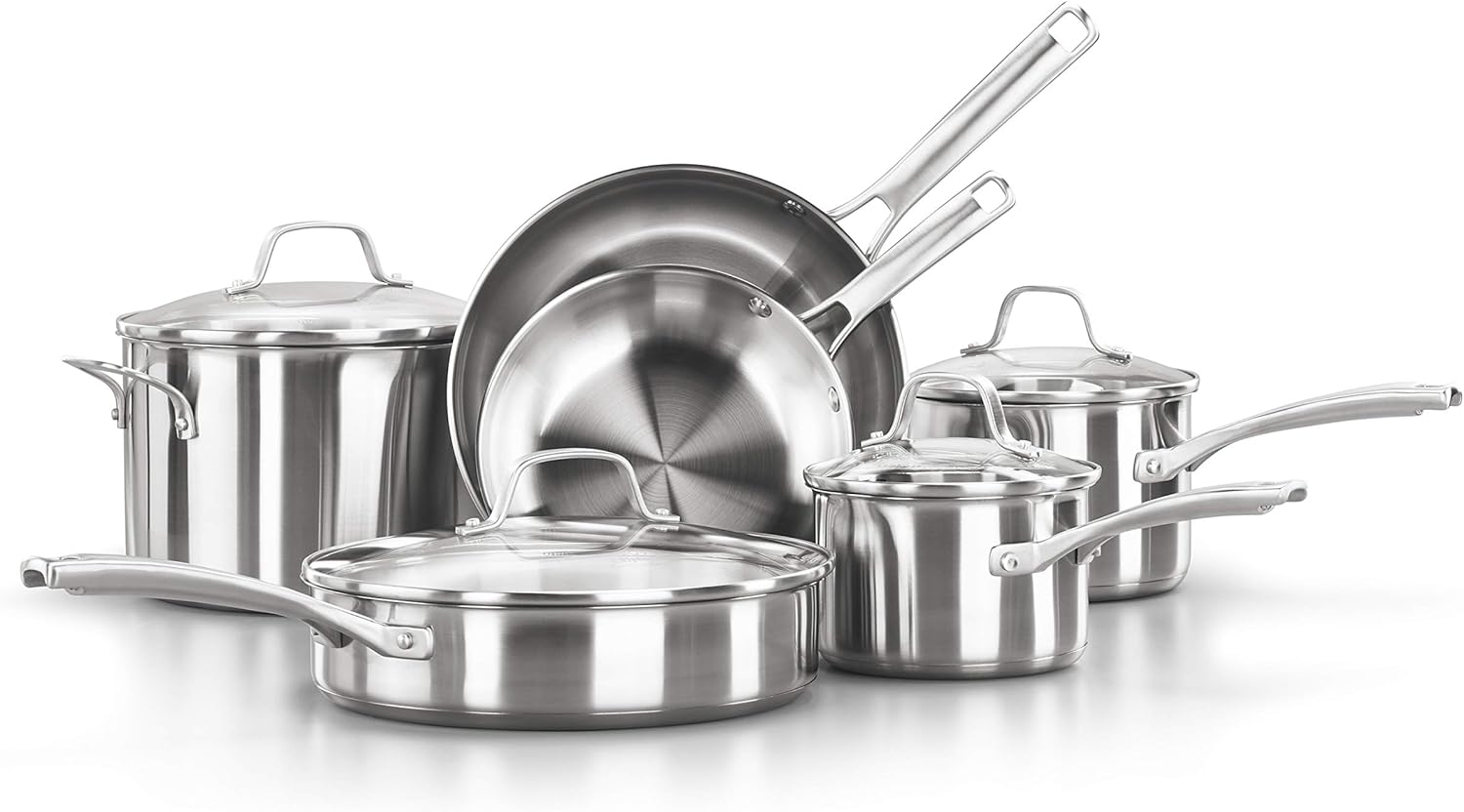
Evaluating set composition ensures you receive the exact pots and pans required for your household size and cooking habits. Smaller five-piece collections work well for individuals or minimalists who only require a frypan, saucepan, and sauté pan for quick meals. Larger collections expanding past ten or fifteen pieces offer stockpots, multiple saucepans, and specialty items.
Assess your typical meal preparation routines before selecting a set size to avoid storing unused vessels. Hosting large dinners or preparing complex multi-course meals demands diverse pot capacities and dedicated steamer inserts. Matching the included components directly to your culinary repertoire prevents kitchen clutter while providing all necessary tools for everyday stovetop cooking tasks.
Stovetop and Oven Compatibility
Compatibility extends beyond induction surfaces to include gas, electric, and glass-ceramic cooktops. Selecting versatile stainless steel cookware ensures your investment transitions smoothly if you ever change kitchen ranges. Furthermore, check the maximum temperature ratings for both the cookware body and its lids before transferring dishes from the stovetop into a hot kitchen oven.
Many stainless steel bodies withstand high oven temperatures up to five hundred or six hundred degrees Fahrenheit. However, accompanying glass lids or synthetic handles frequently feature lower heat tolerance thresholds, often capping out around four hundred fifty degrees. Reviewing these specific manufacturing limits protects your cookware from accidental thermal damage during baking and broiling.
Handle Design and Ergonomics
Handle construction heavily impacts safety, comfort, and maneuverability when lifting heavy pots filled with liquid. Ergonomic stainless steel handles riveted to the cookware body provide a secure grip during active stovetop cooking. Many designs incorporate stay-cool engineering to prevent handle temperatures from rising rapidly while burners remain active under normal cooking conditions.
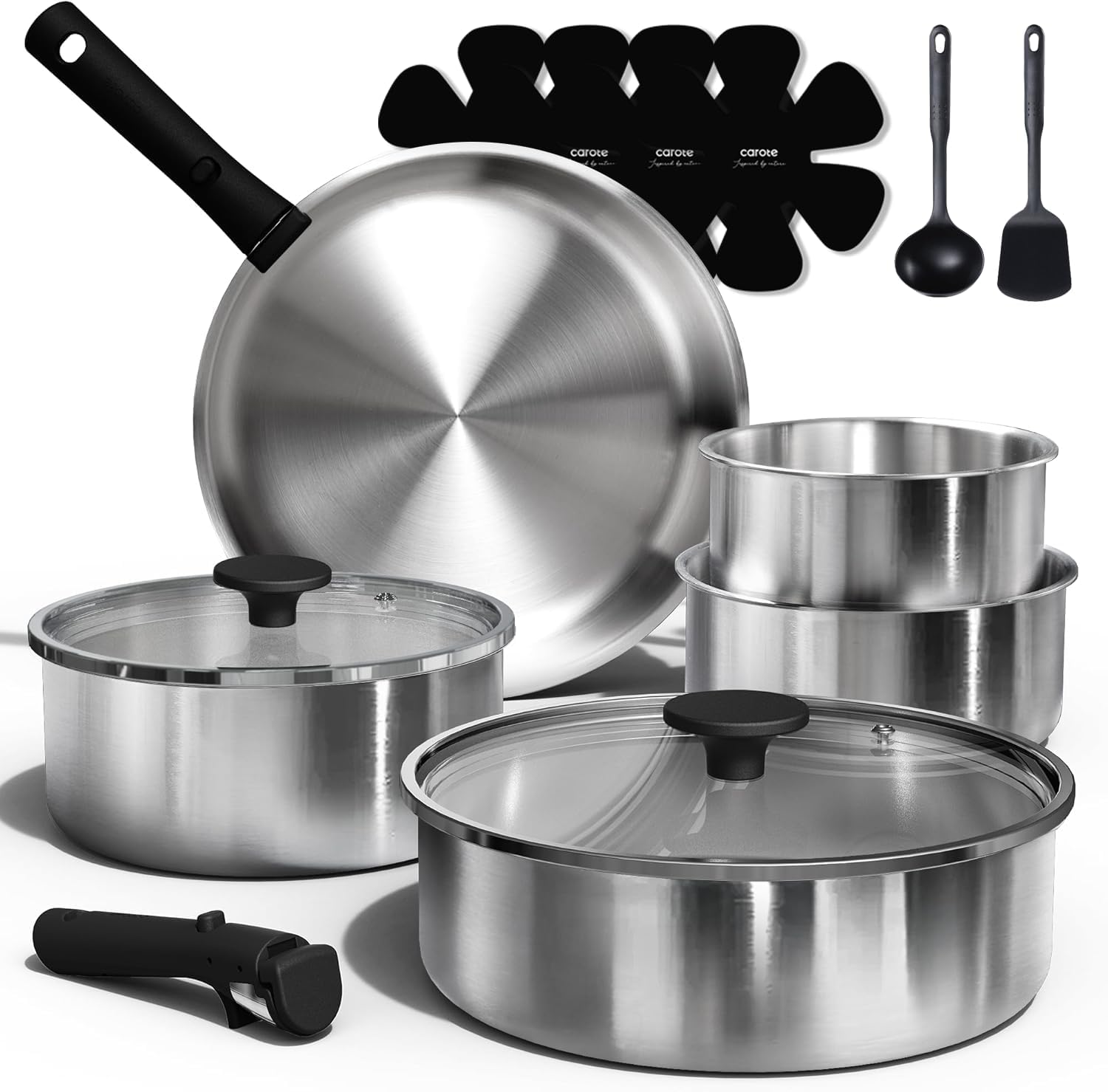
Specialty sets also feature detachable handles designed to streamline storage in cramped kitchen cabinets. While removable handles save significant space, they require extra mechanical steps to attach or detach during meal preparation. Consider whether you prefer permanent riveted handles for maximum stability or flexible detachable options for compact cabinet organization.
Lid Selection and Special Features
Lids play an essential role in retaining heat, moisture, and flavor during simmering and boiling tasks. Tempered glass lids allow you to monitor cooking progress visually without lifting the cover, though they often feature lower oven safety limits. Conversely, tight-fitting stainless steel covers withstand higher oven temperatures and resist breakage during busy kitchen routines.
Additional design features such as integrated pour spouts, straining holes, measurement markings, and steamer inserts further enhance usability. Measuring marks eliminate the need for separate measuring cups when adding liquids to sauces or stockpots. Evaluating these practical additions helps you select cookware that simplifies routine kitchen tasks and reduces cleanup effort.
Maintenance and Cleaning Requirements
Proper maintenance ensures your stainless steel cookware maintains its appearance and performance over years of regular use. Most stainless steel sets are dishwasher safe, allowing for convenient cleanup after routine meals. However, manual washing with warm soapy water often preserves the exterior finish and prevents water spotting over extended periods of frequent household operation.
Stainless steel surfaces lack chemical nonstick coatings, meaning they require proper heat management to prevent food sticking during searing tasks. Deglazing pans with warm liquids easily releases baked-on fond, simplifying manual cleanup routines. Understanding these routine care requirements helps you maintain your cookware investment and ensures reliable performance across all future meals.
Frequently asked questions
Are all stainless steel cookware sets compatible with induction cooktops?
Not every stainless steel pot or pan is automatically compatible with induction cooktops. Induction cooking relies on magnetic fields to generate heat directly within the cookware base. For a stainless steel vessel to work on an induction range, its bottom must contain a magnetic grade of steel, such as 430 stainless steel, or feature a dedicated induction-compatible encapsulated base. Pure austenitic stainless steels like 304 are non-magnetic on their own. Always check manufacturer specifications before purchasing to confirm that the cookware explicitly supports induction surfaces.
What is the difference between an encapsulated base and full tri-ply construction?
An encapsulated base cookware design features a pure aluminum disc bonded exclusively to the bottom of the pot or pan. This provides rapid heat conduction on the flat base surface. In contrast, full tri-ply construction bonds an aluminum core between stainless steel layers extending from the bottom all the way up the sidewalls. Full-clad designs deliver superior edge-to-edge heat distribution, eliminating hot spots and maintaining stable temperatures across the entire vessel during complex simmering and searing cooking tasks.
Can stainless steel cookware be placed safely inside a kitchen oven?
Most stainless steel cookware bodies are safe for oven use, but maximum temperature limits vary depending on manufacturing materials and attached components. Many stainless steel pans withstand temperatures up to five hundred degrees Fahrenheit or higher. However, accompanying tempered glass lids or specific handle designs often feature lower heat thresholds, frequently capping out around four hundred fifty degrees. Always review manufacturer guidelines and remove glass lids or use protective oven mitts when transferring hot cookware into the oven.
How do I prevent food from sticking to stainless steel pans?
Preventing food from sticking on stainless steel surfaces requires proper heat management and preparation techniques. Unlike nonstick coatings, stainless steel requires preheating the empty pan over medium heat before adding cooking oil. Allow the oil to heat until it shimmers before introducing food items. If food develops a natural sear, it will typically release easily from the pan surface once browning is complete. Deglazing the warm pan with broth or water also helps lift remaining food particles.
Are stainless steel cookware sets dishwasher safe for daily cleaning?
Many stainless steel cookware sets are explicitly labeled as dishwasher safe for convenient cleanup after daily meals. However, washing your cookware by hand using warm water, mild soap, and a non-abrasive sponge helps preserve the exterior mirror or brushed finish over time. Dishwasher detergents can sometimes cause dullness or water spotting on stainless steel surfaces. Following manufacturer maintenance guidelines ensures your pots and pans maintain their structural integrity and polished appearance throughout their operating lifespan.