Appliances · Buying Guide
Best Stainless Steel Saucepan Set Options for Every Kitchen
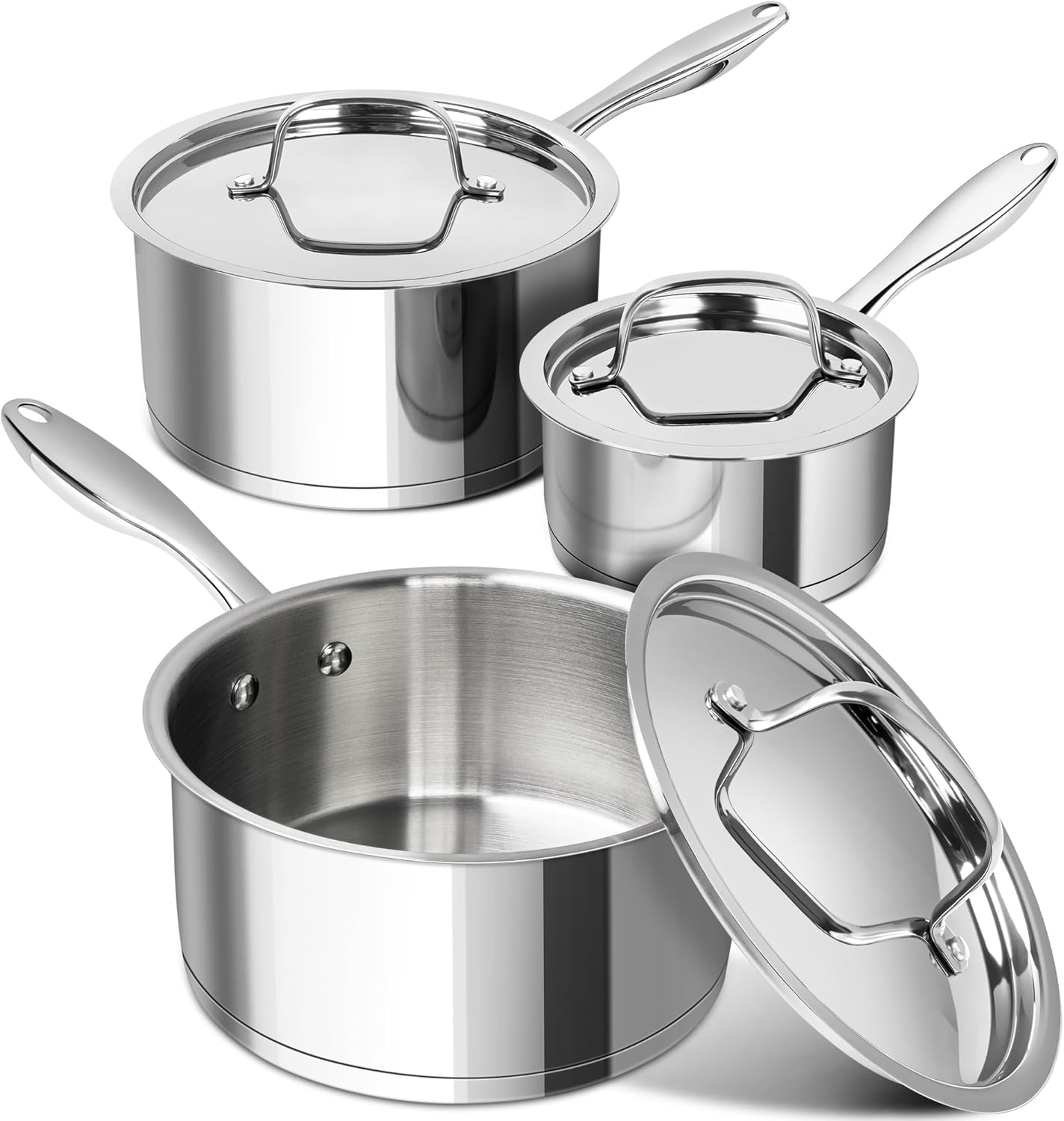
Finding the right cookware for daily simmering, boiling, and reheating tasks can significantly improve how you manage kitchen routines. A reliable stainless steel saucepan set provides versatile capacities ranging from small single servings to family-sized sides. These sets typically include essential 1-quart, 2-quart, and 3-quart pots, giving home cooks dependable vessels for everything from delicate milk sauces to hearty soups.
Choosing an uncoated metal construction ensures you do not have to worry about degrading nonstick surfaces over time. Modern sets incorporate multi-ply bases or fully clad bodies to spread heat evenly and reduce scorching risks across gas, electric, and induction cooktops. Reviewing specific handle designs, lid materials, and oven temperature thresholds helps align your choice with everyday cooking habits.
As an Amazon Associate, StacyLaughs earns from qualifying purchases.
Buying guide
Evaluating Stainless Steel Construction Types
Understanding how a saucepan is constructed helps determine its thermal performance and long-term durability in everyday kitchen environments. Tri-ply bases combine conductive aluminum layers with protective stainless steel to spread heat evenly across the bottom surface, effectively preventing localized scorching during delicate simmering tasks like warming milk or melting chocolate. Selecting the correct build quality protects your ingredients from sudden temperature spikes.
Fully clad models extend this multi-layer construction up the entire sides of the pot, delivering superior edge-to-edge heat distribution for complex sauces and grains. Choosing between base-only designs and fully clad options depends on your specific cooking style, budget considerations, and personal preference for weight distribution during heavy lifting. Heavier constructions often provide better stability on traditional burner grates.
Assessing Capacity and Pot Sizing Needs
Selecting the right capacities ensures your cookware matches your daily meal preparation routines without cluttering your workspace. A standard three-piece set typically provides one-quart, two-quart, and three-quart sizes to accommodate everything from single portions of broth to family side dishes. Smaller one-quart pots handle butter and sauces, while larger pots manage pasta and soups efficiently.
Evaluating your household size and typical recipes prevents purchasing pots that are either too small for batch cooking or excessively bulky for simple tasks. Reviewing the dimensions helps verify that your chosen vessels fit comfortably on your stovetop burners simultaneously without overcrowding the cooking surface. Proper sizing improves overall kitchen efficiency and storage organization.
Understanding Stovetop and Oven Compatibility
Modern stainless steel saucepans generally support a wide range of cooktops, including gas, electric, ceramic, and induction glass surfaces. Induction compatibility requires a magnetic exterior layer, so checking your specific cooktop specifications ensures proper heating performance before purchasing. Ensuring universal stovetop support provides flexibility if you upgrade your kitchen appliances later.
Oven safety limits vary significantly depending on handle materials and lid construction. While stainless steel vessels often endure high temperatures up to six hundred degrees, attached Bakelite handles or glass lids frequently feature lower thermal thresholds. Always verify manufacturer limits before transferring pots from the stovetop into a hot oven for finishing dishes or keeping meals warm.
Comparing Handle Design and Thermal Safety
Handle construction directly influences comfort, lifting stability, and safety during active cooking routines. Solid stainless steel, hollow metal, and Bakelite handles each offer distinct tactile experiences and weight distributions. Riveted attachments provide long-lasting structural strength, ensuring the handle remains securely fastened to the pot body through years of heavy lifting, washing, and thermal expansion.
Thermal management is equally important when selecting handle styles for stovetop use. Many stainless steel handles incorporate heat-resistant designs or hollow channels to stay cool to the touch during boiling tasks, reducing accidental burn risks. However, metal handles can absorb heat during prolonged cooking sessions, requiring caution or protective mitts when handling pots on high heat.
Evaluating Lids and Pouring Spout Features
Lids play a crucial role in retaining moisture, heat, and nutrients during simmering and boiling processes. Transparent glass lids allow you to monitor food progress without lifting the cover and releasing valuable heat, while steam vents help prevent liquid from boiling over. Ensure the lid material matches your baking needs if you plan to use the pots in the oven.
Pouring design features like flared rims or rolled edges help guide liquids cleanly from the pan to a plate or bowl. These functional contours minimize messy drips along the exterior pot walls, keeping your stovetop and countertops cleaner during meal preparation. Combining well-fitted lids with clean pouring lips enhances overall usability.
Cleaning Maintenance and Surface Care
Uncoated stainless steel cookware offers the benefit of avoiding peeling nonstick chemical layers, but proper maintenance keeps surfaces looking polished and functioning smoothly. Most stainless steel saucepans are dishwasher safe for convenient cleanup, though hand washing with mild soap helps preserve the exterior mirror finish and reduce hard water spotting over time.
Preventing food sticking requires proper cooking techniques, such as preheating the metal correctly and adding adequate cooking oils or butter before introducing starches or dairy. Allowing hot pots to cool naturally before washing prevents thermal shock warping. Following manufacturer guidelines ensures your stainless steel saucepan set maintains its performance and appearance for years.
Frequently asked questions
Can I use metal utensils with uncoated stainless steel saucepans?
Uncoated stainless steel cooking surfaces are exceptionally durable and generally resist scratching from standard metal kitchen utensils better than coated nonstick alternatives. However, many manufacturers recommend using wooden, silicone, or plastic tools to preserve the polished interior mirror finish and prevent cosmetic surface marks over time. While the structural integrity of the metal handles and pot body will not be compromised by metal spoons or whisks, gentle utensils help maintain the aesthetic appearance of your cookware set throughout its lifespan.
Are stainless steel saucepans safe for induction cooktops?
Most modern stainless steel saucepans feature induction compatibility because they incorporate magnetic stainless steel exterior layers or fully clad metallic bonding that interacts with induction magnetic fields. It is always wise to verify the manufacturer specifications for each specific saucepan set to confirm induction cooktop support before purchasing. Induction stovetops require ferrous metal bases to generate heat efficiently, and compatible stainless steel pots provide rapid, energy-saving thermal performance across small and medium burner zones.
How do I prevent food from sticking to uncoated stainless steel pots?
Preventing food from sticking on uncoated stainless steel surfaces relies primarily on proper preheating techniques and temperature management. Heat your empty saucepan over medium heat for a brief moment before adding a small amount of cooking oil, butter, or liquid. Allowing the oil to heat until it shimmers creates a natural barrier that prevents starches, dairy, and proteins from bonding directly to the metal pores. Cooking over moderate heat rather than excessively high temperatures further reduces scorching risks.
Can I put stainless steel saucepans and glass lids in the oven?
Oven safety depends entirely on the specific materials used in the saucepan handles and lid construction. While the stainless steel pots themselves frequently withstand high oven temperatures ranging from three hundred twenty up to six hundred degrees Fahrenheit, attached glass lids and Bakelite handles often feature much lower thermal thresholds, typically around three hundred fifty degrees. Always check the manufacturer guidelines to confirm whether you need to remove glass lids or switch covers before transferring your cookware into a hot oven.
Why should I choose a multi-ply base instead of a single layer?
Multi-ply bases incorporate conductive aluminum or copper cores sandwiched between layers of durable stainless steel to vastly improve heat distribution. Single-layer pots often develop localized hot spots that can scorch sauces, burn milk, or cook grains unevenly because heat concentrates directly over the burner flame. By spreading thermal energy uniformly across the entire base surface, tri-ply and fully clad cookware designs deliver consistent simmering, boiling, and reheating results that make daily cooking much more predictable and reliable.