Appliances · Buying Guide
Best Stainless Steel Soup Pot Options for Every Kitchen
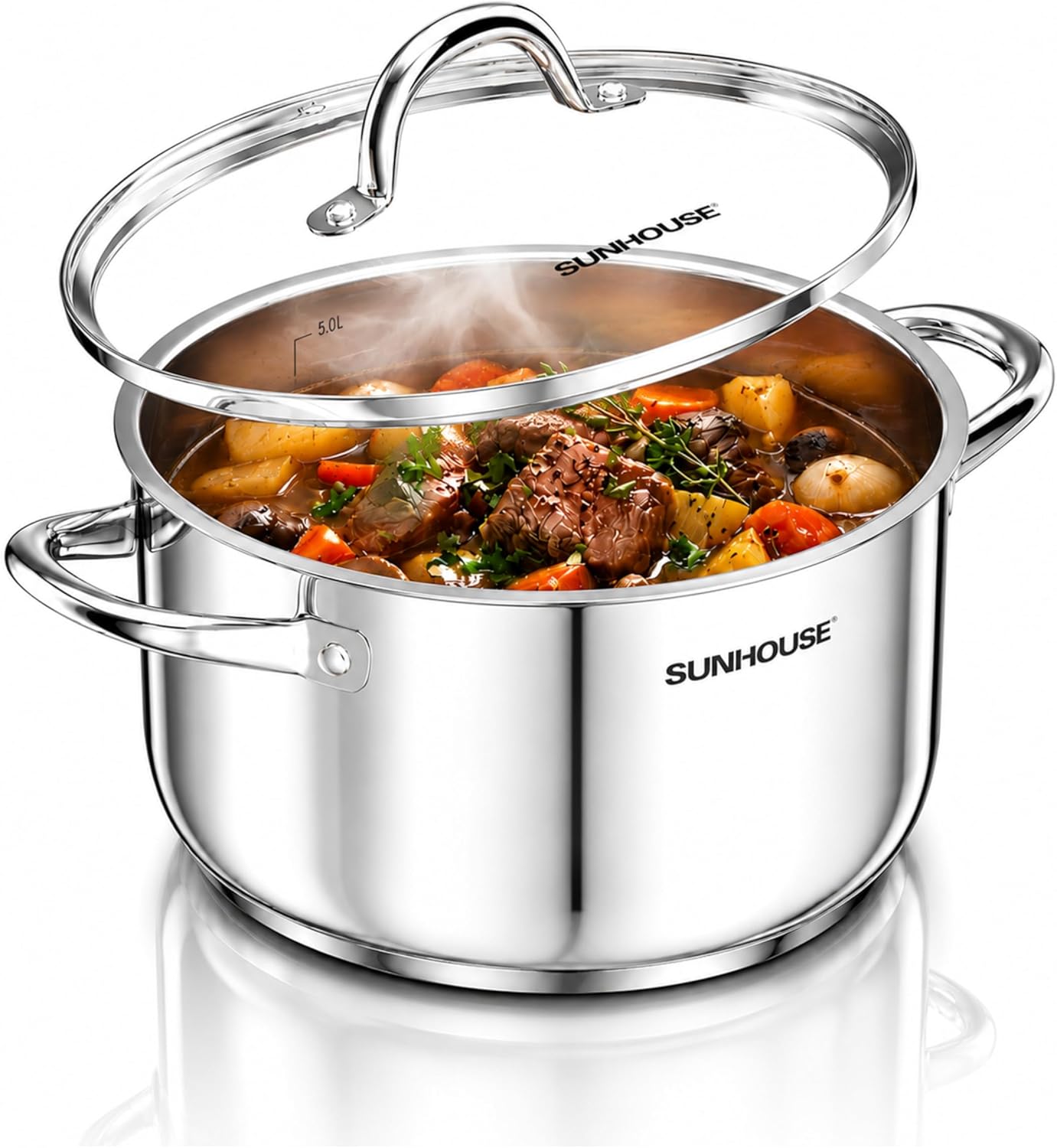
Finding the right stainless steel soup pot transforms how you handle large batches of broths, pastas, and stews in your home kitchen. These cooking vessels rely on durable metal construction and multi-layer bases to manage heat efficiently across various stovetops, offering reliable performance for daily meal preparation without altering natural food flavors or aromas.
Whether you need a compact six-quart setup or a massive ten-quart capacity for large family gatherings, matching the pot to your specific cooking style ensures steady thermal distribution and handling ease. We examine five distinct options based strictly on their stated physical characteristics, capacity limits, and design features to help you choose wisely.
As an Amazon Associate, StacyLaughs earns from qualifying purchases.
Buying guide
Capacity and Batch Sizing
Selecting the correct capacity for your stainless steel soup pot depends directly on your typical household size and cooking habits. Smaller households often find six or seven quarts sufficient for daily meals and side dishes. Larger families or those who enjoy meal prepping benefit significantly from stepping up to eight or ten quarts, ensuring ample room for generous batches of stock without boiling over.
Keep in mind that larger pots require more storage space in your cabinets and demand stronger lifting strength when filled with liquid. Matching the volume to your actual cooking needs prevents awkward handling issues while ensuring you can prepare enough food for gatherings or weekly meal schedules effortlessly.
Base Construction and Heat Distribution
The foundation of any reliable cooking pot lies in its base engineering, particularly how layers of metal are bonded together for thermal performance. Multi-layer and impact-bonded bases combine durable stainless steel with highly conductive inner cores like aluminum to spread thermal energy evenly across the entire bottom surface. This prevents localized hot spots that can easily scorch delicate broths, simmering soups, or sensitive sauces during long cooking sessions.
When evaluating your options, look closely for thick encapsulated or multi-ply bases that promote both rapid and uniform heat absorption. Such sturdy construction ensures your cookware responds efficiently whether placed on traditional gas flames, electric coils, or modern induction cooktops, delivering consistent culinary results every single time.
Stovetop and Cooktop Compatibility
Modern kitchen setups vary widely, making multi-cooktop compatibility a critical purchasing factor for any stainless steel soup pot you consider buying. Most quality stock pots feature magnetic stainless steel outer layers or specialized encapsulated bases designed to function smoothly across gas, electric, ceramic, halogen, and modern induction surfaces. Verifying this broad compatibility ensures your cookware investment will continue performing reliably regardless of future kitchen appliance upgrades.
Induction cooktops specifically require a dedicated magnetic base layer to complete the necessary electrical circuit and generate adequate heat for boiling. Checking the manufacturer specifications beforehand guarantees the pot will activate properly on induction burners, saving you from frustrating heating delays or compatibility issues during busy meal preparation routines.
Handle Design and Ergonomic Safety
Moving a heavy pot filled with boiling water or dense stew demands secure, well-designed handles that inspire confidence. Riveted stainless steel side handles offer superior structural strength compared to welded alternatives, ensuring the grips remain firmly attached under heavy loads over years of regular use. Ergonomic shaping further assists by providing a comfortable hold during transport.
Some handle designs incorporate stay-cool technology or thoughtful spacing to minimize heat transfer from the body of the pot to your hands. While oven-safe models may still require mitts at high temperatures, having sturdy handles prevents slips and accidents when moving large volumes of liquid from the stovetop to the sink or counter.
Lid Features and Moisture Control
The lid of your soup pot plays a vital role in regulating internal temperature, trapping moisture, and managing condensation during long cooking sessions. Transparent tempered-glass lids allow you to monitor simmering liquids, pasta boils, and stew reductions closely without lifting the cover and losing valuable heat. Integrated steam vents further prevent unwanted pressure buildup by releasing excess vapor safely into the surrounding air.
Alternatively, solid metal lids offer maximum durability and high-temperature oven safety when recipes require transferring the entire vessel into a hot oven for baking or roasting. Consider whether you prefer the visual monitoring convenience of glass or the rugged simplicity of metal based entirely on your typical cooking style and cleaning preferences.
Oven Safety and Thermal Limits
Many soup recipes start on the stovetop and finish inside an oven, making thermal limit thresholds an essential consideration for versatile cookware. Stainless steel pots frequently offer oven-safe capabilities, but maximum temperature ratings vary significantly between different models. Some pots support moderate temperatures up to three hundred fifty degrees Fahrenheit, while heavy-gauge variants handle up to five hundred degrees.
Always check whether the included lid can withstand oven heat, as glass components often require removal before baking. Understanding these thermal boundaries prevents accidental damage to handles, knobs, or lids, ensuring your stainless steel pot remains a durable, multi-purpose staple in your kitchen for years to come.
Frequently asked questions
Can stainless steel soup pots be used on induction cooktops?
Yes, many stainless steel soup pots feature magnetic base layers or encapsulated aluminum bottoms specifically engineered to work efficiently on induction cooktops. Induction cooking relies on magnetic fields to generate heat directly within the cookware base, so verifying that the pot includes a compatible magnetic layer ensures proper activation and fast heating. Always review the product specifications to confirm induction support before purchasing, as certain stainless steel grades lacking magnetic properties will fail to heat on induction stoves.
What is the benefit of a multi-layer bottom in a stock pot?
A multi-layer bottom combines conductive metals like aluminum with durable stainless steel to improve thermal performance across the entire cooking surface. This construction distributes heat quickly and evenly, preventing localized hot spots that can scorch delicate broths, sauces, or starches during long simmering processes. Furthermore, thick multi-ply bases enhance overall sturdiness and help maintain steady temperatures, ensuring reliable cooking results whether you are boiling pasta, making stock, or braising vegetables on various stovetop types.
Are stainless steel soup pots safe to use in the oven?
Many stainless steel soup pots are oven-safe, but the maximum temperature limit depends heavily on the specific construction and included components. Some models handle moderate temperatures up to three hundred fifty degrees Fahrenheit, while heavy-gauge alternatives withstand up to five hundred degrees. Additionally, you must check whether the lid is oven-safe; glass lids often have lower thermal thresholds or require removal before placing the pot into a hot oven for baking or roasting applications.
How do I clean and maintain a stainless steel soup pot?
Maintaining a stainless steel soup pot typically involves routine washing with warm soapy water and a non-abrasive sponge to remove food residues. Many stainless steel stock pots are dishwasher-safe for added convenience, though hand washing helps preserve exterior mirror finishes. If stubborn food particles or discoloration occur, using specialized stainless steel cleaners or boiling a mixture of water and vinegar can restore the surface without harming the durable metal construction or altering natural food flavors.
Why should I choose stainless steel over aluminum pots?
Stainless steel offers superior resistance to rust, corrosion, warping, and food reactions compared to traditional aluminum cookware. This durable material ensures that acidic ingredients like tomato sauces or citrus broths will not react with the pot interior, preserving natural tastes and preventing metallic flavors in your recipes. While aluminum provides fast heating, modern stainless steel pots overcome this by incorporating encapsulated or multi-layer aluminum core bases, giving you the best of both durability and thermal efficiency.