Appliances · Buying Guide
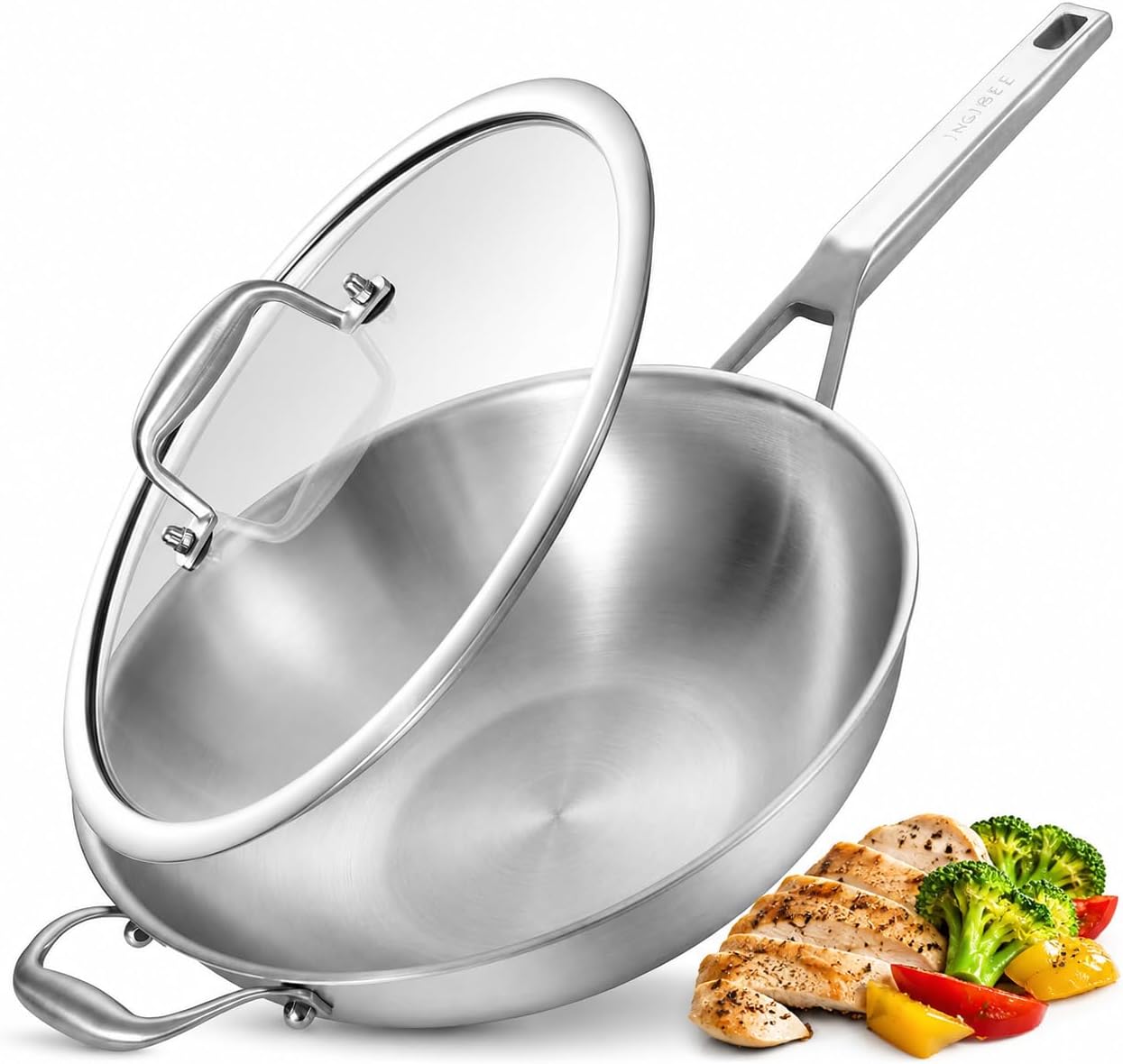
Best Stainless Steel Wok with Lid for Every Kitchen
Cooking enthusiasts often seek reliable cookware that handles high heat while keeping daily maintenance straightforward. A stainless steel wok with lid offers a versatile option for frying, steaming, and simmering family meals across induction, gas, and electric cooktops. These multi-layered pans distribute heat efficiently across the base and sides, helping home cooks achieve consistent results during intensive stir-frying sessions.
Choosing the right model involves looking at core construction materials, handle configurations, and overall capacity to match specific household cooking habits. Evaluating these physical attributes ensures the selected cookware meets everyday demands without unnecessary complications, providing a dependable surface for searing meats, tossing vegetables, and preparing large batches of noodles.
As an Amazon Associate, StacyLaughs earns from qualifying purchases.
Buying guide
Material Construction and Heat Distribution
Selecting a stainless steel wok requires understanding core metal construction and thermal properties. Tri-ply designs sandwich a responsive aluminum core between layers of high-grade steel, spreading heat rapidly from the center outward across the entire pan surface. This advanced construction prevents localized scorching during intensive high-heat stir-frying, vegetable tossing, and meat-searing tasks in busy home kitchens.
Quality metal layers ensure structural durability over years of regular use without warping under extreme thermal stress. While pure aluminum heats quickly, combining it with durable outer steel creates a sturdy cooking surface that withstands daily kitchen demands and heavy ingredients effortlessly. Buyers should always verify fully-clad metal construction for optimal thermal performance across different burner configurations.
Capacity and Sizing Choices
Choosing the correct wok capacity depends heavily on household size and typical meal portions. Models ranging from 12 to 14 inches provide wide cooking surfaces suited for families or entertaining guests. Deep sloping sides keep ingredients securely contained while allowing effortless tossing of noodles, vegetables, and rice without spilling over the outer rim onto your counters.
Larger pans accommodate generous batches of food easily but require more storage space in kitchen cabinets and larger burner elements on your stove. Smaller households might find compact 12-inch options much easier to maneuver during daily cooking routines. Matching the physical dimensions of the wok to your standard meal volume ensures comfortable handling and efficient preparation.
Handle Designs and Storage Flexibility
Handle configurations significantly influence both stovetop control and cabinet storage convenience. Many modern stainless steel woks feature ergonomic handles designed to stay cool over high flames, enhancing safety during active cooking. Some models incorporate removable or detachable handles, which allow the pan body to fit easily inside standard ovens and compact storage spaces.
Dual handle setups, combining a long grip with a helper handle, offer superior balance when lifting heavy, fully loaded pans filled with food. Buyers with limited cabinet space should evaluate whether detachable hardware or fixed dual handles best fit their kitchen organization strategy. Proper handle maintenance ensures secure attachment over years of frequent culinary use.
Stovetop Compatibility and Heat Limits
Modern stainless steel woks offer broad compatibility across gas, electric coil, ceramic, and induction cooktops. A flat-bottom design ensures proper contact with smooth glass surfaces and induction burners, promoting efficient thermal transfer. Checking manufacturer specifications regarding maximum temperature thresholds is essential, especially when transitioning cookware directly from stovetops into hot ovens for broiling tasks.
While many fully-clad stainless steel pans withstand temperatures up to 600 degrees Fahrenheit, included glass lids often feature lower heat limits. Understanding these distinct thresholds prevents thermal shock and accidental damage to lids during high-heat baking or broiling. Matching your kitchen stove type with appropriate cookware specifications ensures reliable, long-term performance across varied cooking techniques.
Cleaning and Maintenance Practices
Maintaining uncoated stainless steel cookware involves straightforward cleaning routines and proper preheating habits before cooking. Preheating the pan correctly until water drops dance across the surface helps create a natural food release without synthetic non-stick coatings. Most quality stainless steel woks are dishwasher safe, though hand washing with mild detergent preserves the polished exterior shine.
Avoiding abrasive scouring pads protects the metal finish from deep scratches while maintaining smooth cooking performance over time. Following manufacturer guidance for seasoning and maintenance ensures the cooking surface remains resilient and responsive. Proper care prevents food residue buildup and keeps your stainless steel wok looking professional and functioning reliably for years.
Lid Types and Moisture Control
Included lids play a vital role in locking in heat, moisture, and flavors during simmering and steaming processes. Tempered glass lids allow home cooks to monitor cooking progress visually without lifting the cover and losing valuable thermal energy. Heavy-duty construction ensures the lid withstands regular steam exposure and daily kitchen handling without cracking.
Proper cooling procedures for glass lids prevent thermal shock, avoiding damage from sudden temperature changes during cleanup. Evaluating how the lid fits and seals against the rim of the wok helps ensure efficient braising and simmering results. A well-designed lid complements the deep shape of the wok, expanding its versatility for multi-step recipes.
Frequently asked questions
Can I use a stainless steel wok on an induction cooktop?
Yes, most stainless steel woks featuring a flat bottom and a magnetic outer steel layer work seamlessly on modern induction cooktops. The fully-clad construction paired with a responsive aluminum core ensures rapid and even heat distribution across smooth glass induction surfaces. Buyers should verify the magnetic compatibility of the exterior metal layer if they use induction burners exclusively in their kitchen. This flat base design also performs reliably on traditional gas, ceramic, and electric coil stoves.
How do I prevent food from sticking to an uncoated stainless steel wok?
Preventing food from sticking on uncoated stainless steel surfaces requires proper preheating habits before adding any ingredients. You should preheat the empty pan over medium heat for a couple of minutes until water droplets dance across the surface, then add cooking oil. This technique creates a thermal barrier that promotes natural food release. Additionally, bringing foods closer to room temperature before cooking and ensuring the surface is clean helps minimize residue buildup during searing and stir-frying tasks.
Are stainless steel woks safe to use in the oven?
Many stainless steel woks are safe for oven use, often tolerating temperatures up to 500 or 600 degrees Fahrenheit. However, you must check the manufacturer specifications, as included glass lids typically feature lower maximum temperature limits than the metal pan body. Some models require detaching the handle or removing the lid before placing the vessel into a hot oven for broiling or baking recipes. Always review the product guidelines to ensure safe handling during high-heat cooking.
Can I put my stainless steel wok in the dishwasher?
Most stainless steel woks are rated as dishwasher safe for convenient cleanup after family meals. However, hand washing with mild dish soap and warm water often helps preserve the polished exterior finish and starburst cooking surface over years of use. If you choose the dishwasher, ensure you follow manufacturer recommendations and allow any glass lids to cool completely before washing to prevent thermal shock and potential cracking from sudden temperature shifts in your kitchen sink.
Why choose a wok with a detachable handle?
A wok with a detachable handle offers exceptional versatility for both oven cooking and compact kitchen storage. Removing the handle allows the pan to fit easily inside standard ovens for roasting, broiling, or finishing multi-step recipes without crowding. Furthermore, it simplifies cabinet organization by reducing the overall storage footprint of large woks. This feature provides a practical solution for cooks who want the expansive cooking capacity of a wide pan without sacrificing valuable shelf space.