Appliances · Buying Guide
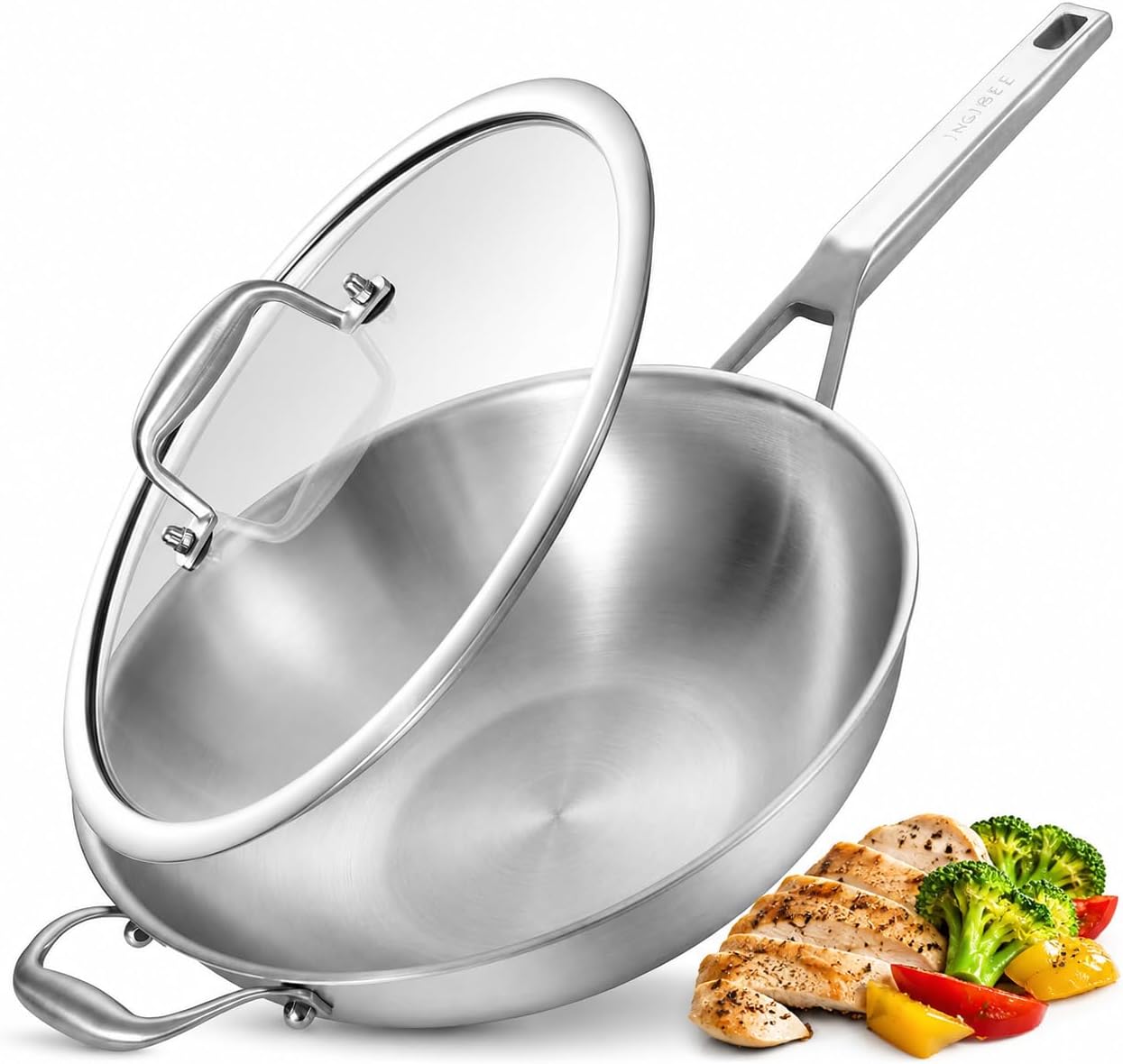
Best Stainless Steel Wok with Lid Options for Everyday Cooking
Finding the right cookware for high-heat stir-frying and deep-skillet cooking involves looking closely at core metal materials, capacity sizes, and ergonomic handle designs. A quality stainless steel wok with lid offers durable performance across various household stovetops, handling everyday family meals efficiently without relying on synthetic non-stick coatings that degrade over time during frequent use.
Different dimensions and thermal constructions suit diverse cooking volumes and complex recipe requirements. Reviewing features like multi-ply cladding, maximum oven temperature limits, and included glass or steel lids helps match a wok to specific kitchen setups, storage constraints, and regular meal preparation habits. Careful evaluation ensures long-term utility across various dishes.
As an Amazon Associate, StacyLaughs earns from qualifying purchases.
Buying guide
Evaluating Thermal Construction and Core Materials
Choosing a stainless steel wok requires understanding how heat transfers from your burner to the cooking surface. Multi-ply constructions, featuring an aluminum core sandwiched between high-grade steel layers, promote rapid and uniform heat distribution across the base and curved walls. This thermal layering prevents localized hot spots that can scorch delicate ingredients during rapid stir-frying or high-heat searing sessions.
Solid steel exteriors pair with these conductive inner cores to deliver stable cooking performance on both traditional gas burners and modern induction cooktops. Evaluating the metal thickness ensures the pan resists warping over years of frequent use. Buyers should check the layering specifications to confirm the cookware matches their daily recipe demands and stove type.
Capacity and Wok Dimensions for Household Meals
Wok capacities vary significantly, influencing how many portions you can prepare in a single cooking session. Smaller options around three to four quarts suit single-person meals or compact side dishes, while larger models exceeding five quarts comfortably accommodate large family-sized portions. Deeper vertical walls keep ingredients securely contained when tossing vegetables, noodles, or adding broth.
Selecting the right diameter and depth depends heavily on your typical batch size and available kitchen storage space. Wider dimensions provide more surface area for initial meat searing, whereas tall, sloped walls prevent oil splashes during deep frying or heavy stir-frying. Matching the stated capacity to your household size ensures efficient cooking without overcrowding the cooking surface.
Handle Configurations and Cooktop Compatibility
Handle design directly affects maneuverability and how easily cookware transitions from stovetop burners to the interior of an oven. Long single handles provide leverage for tossing ingredients, while dual-handle setups or additional helper grips offer extra stability when lifting heavy, food-filled pans. Detachable handle mechanisms further simplify oven placement and cabinet storage for kitchens with limited space.
Stovetop compatibility is another vital factor to verify before purchasing any stainless steel wok. Most modern designs support gas, electric, and induction cooktops through a flat exterior base design. Checking the stated maximum temperature limits ensures the handle materials withstand high-heat oven baking or broiling steps without experiencing structural damage during meal preparation.
Lid Options and Moisture Retention Features
Lids play a functional role in trapping heat, steam, and moisture during simmering, steaming, or braising cooking stages. Tempered glass lids let you monitor cooking progress visually without lifting the cover, maintaining consistent internal temperature and pressure. Stainless steel lids offer rugged durability and higher temperature tolerances for rigorous oven environments where glass components might not be suitable.
Evaluating the temperature ratings of included lids prevents accidental warping or thermal shock during high-heat cooking processes. Some glass covers feature specific temperature limits lower than the metal pan body itself. Reviewing these manufacturer specifications ensures safe operation whether you are simmering sauces on a low burner or finishing a complex dish inside a hot oven.
Surface Finishes and Cleanup Considerations
Uncoated stainless steel cooking surfaces provide a durable area entirely free from synthetic non-stick chemical layers. Brushed or highly polished interiors resist reactive interactions with acidic ingredients, preserving authentic food flavors over years of use. Rivet-free interior surfaces eliminate internal crevices where food particles typically accumulate, making routine washing much simpler after heavy meal preparation sessions.
Maintenance requirements vary depending on dishwasher safety ratings and specific surface treatments applied by the manufacturer. Many stainless steel woks withstand automated dishwasher cycles, while others benefit from simple hand washing or preliminary heating techniques to assist with food release. Understanding these care guidelines helps maintain the brilliant metal finish and functional longevity of your cookware.
Evaluating Edge Design and Pouring Control
The rim shape of a wok influences how cleanly you can transfer liquids, sauces, and cooked dishes into serving plates or bowls. Encapsulated or flared rims support drip-free pouring, significantly reducing liquid mess on kitchen counters. High, rounded walls also keep cooking splatters contained when working with hot oils or tossing bulky vegetable mixtures over high burners.
Assessing the exterior base and side wall angles helps determine how well the pan handles specific cooking techniques like deep frying or rapid stir-frying. A flat exterior base ensures stable thermal contact with modern glass top stoves or induction burners. Examining these structural design details ensures the selected cookware matches your preferred cooking methods and kitchen setup.
Frequently asked questions
Can I use metal utensils on stainless steel woks?
Uncoated stainless steel cooking surfaces are generally designed to withstand metal utensils without scratching the metal body. Unlike coated non-stick pans that require wooden or silicone tools to protect delicate layers, durable steel interiors handle spatulas and ladles directly. However, users should still exercise reasonable care to avoid deep gouges over years of heavy daily cooking. Following manufacturer guidance on preheating and oil application further ensures smooth food release, minimizing any need for harsh scraping during meal cleanup.
Are stainless steel woks compatible with induction cooktops?
Many stainless steel woks feature induction-compatible bases constructed with magnetic outer layers or multi-ply cladding. When shopping, verifying the specifications helps confirm whether a flat exterior base works on smooth surface induction stoves alongside traditional gas or electric coil burners. The tri-ply thermal construction typically combines steel and aluminum layers, allowing the pan to conduct magnetic energy efficiently while spreading heat evenly across the entire cooking surface for consistent meal preparation results.
How do I prevent food from sticking to an uncoated stainless steel wok?
Achieving effortless food release on an uncoated stainless steel surface relies on proper preheating techniques rather than chemical coatings. Manufacturers typically recommend preheating the pan on medium heat for a couple of minutes until water droplets dance across the metal surface, then adding cooking oil before placing ingredients into the wok. This thermal preparation creates a temporary barrier that helps keep meats and vegetables from adhering to the brushed or polished interior during high-heat stir-frying.
Can I put a stainless steel wok into the oven?
Most stainless steel woks are oven safe, allowing you to transition dishes directly from the stovetop for broiling, baking, or finishing meals at elevated temperatures. Temperature tolerances vary by model, with some pans withstanding heat up to five hundred or six hundred degrees Fahrenheit, and select heavy-duty options reaching up to nine hundred degrees. If the wok includes a glass lid, you must check its specific temperature rating, as glass components often feature lower heat limits than the metal pan body.
How should I clean and maintain a stainless steel wok?
Routine cleaning is straightforward because many stainless steel woks are labeled as dishwasher safe for everyday convenience. For stubborn residues or baked-on foods, washing by hand with warm soapy water and a non-abrasive sponge preserves the exterior and interior finish. Following manufacturer instructions regarding proper seasoning, cooling hot lids before washing, and avoiding thermal shock ensures the cookware retains its professional appearance and structural integrity over years of regular kitchen use.