Appliances · Buying Guide
Best Staub Enameled Cast Iron Braiser For Everyday Meals
Choosing the right cookware for braising and browning requires understanding how materials perform in busy home kitchens. Enameled cast iron provides steady heat retention and even heat distribution, making it a reliable choice for long-simmering recipes, searing meats, and roasted dishes alike across induction, gas, and electric stovetops.
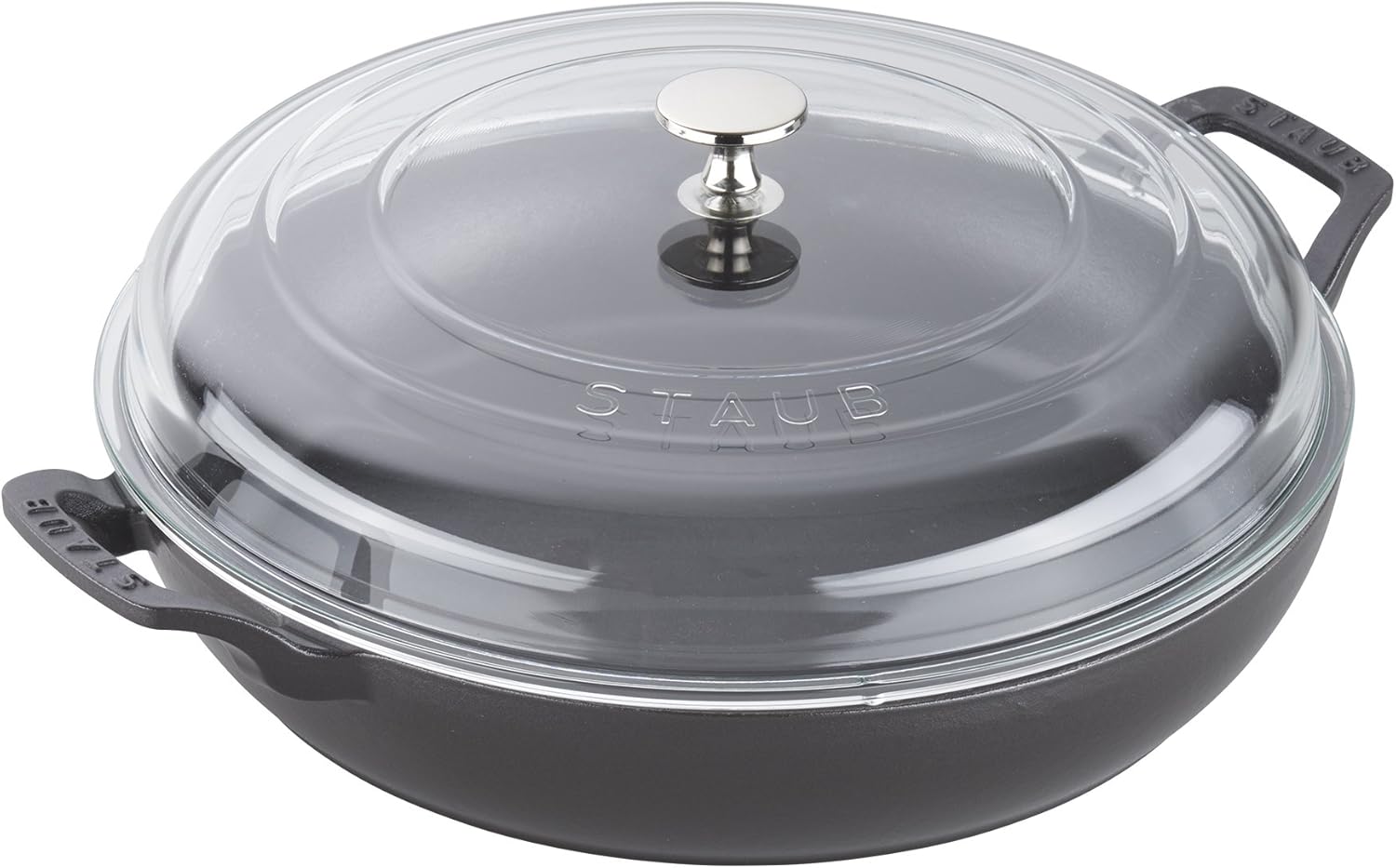
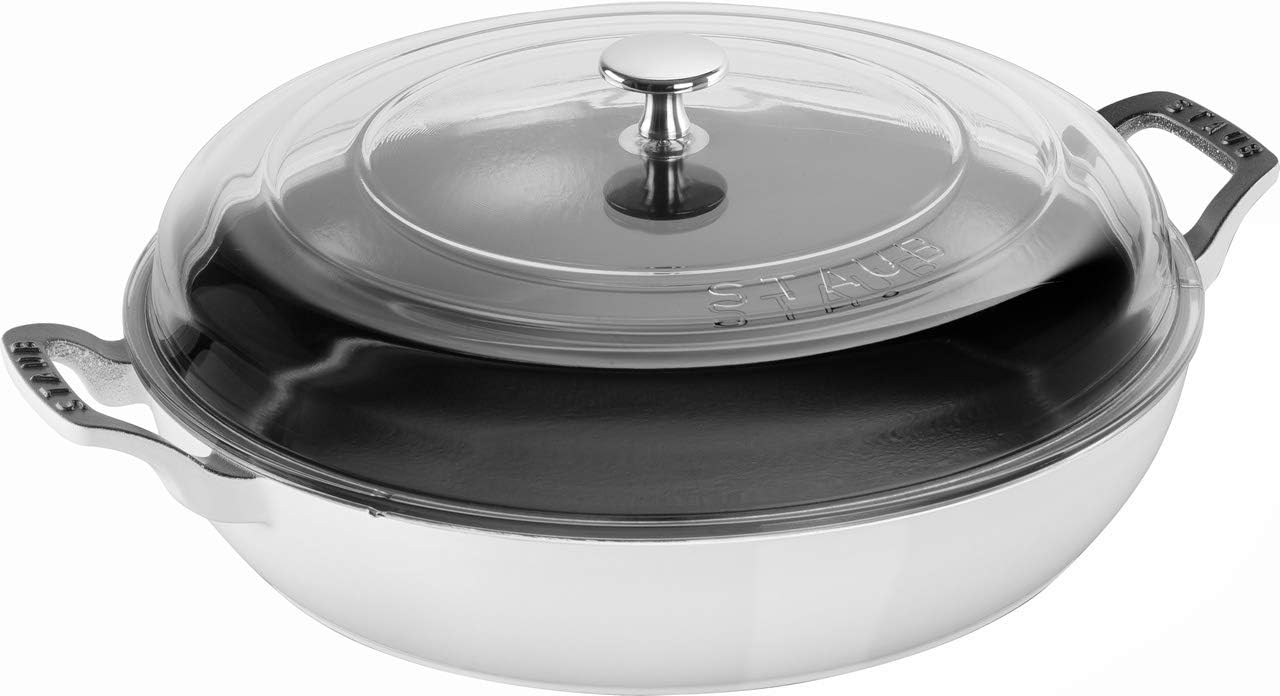
This product overview examines several French-made enameled cast iron braisers and sauté pans from Staub. Each option brings specific design attributes, including glass or cast-iron lids, distinct capacities, and specialized interior textures designed to support everyday cooking tasks without requiring traditional seasoning routines, while offering straightforward dishwasher-safe or hand-wash cleanup routines after meals.
As an Amazon Associate, StacyLaughs earns from qualifying purchases.
Buying guide
Material Composition and Heat Retention
Cast iron remains a staple in home kitchens because of its remarkable ability to absorb, retain, and evenly distribute heat across the entire cooking surface. When you place an enameled cast iron braiser on a burner, the heavy metal walls absorb thermal energy and hold it steadily. This prevents hot spots that can easily scorch delicate ingredients during long, slow cooking sessions.
Choosing a quality cast-iron piece means your cookware can transition effortlessly from a high-heat stovetop sear to a low, slow oven braise. The thick material maintains consistent interior temperatures even when you add cooler ingredients, ensuring reliable thermal performance for stews, large roasts, and braised vegetables without requiring constant burner adjustments.
Lid Design and Moisture Management
The lid of a braiser plays a critical role in how moisture circulates throughout the cooking process. Domed lids offer extra vertical clearance, allowing you to fit oversized cuts of meat, whole poultry, or tall vegetable arrangements comfortably without crowding the interior space or scraping the top surface.
Some models feature glass lids for easy visual monitoring without releasing heat, while others incorporate specialized interior structures like drop points that continuously baste food with condensation. Selecting between a transparent glass cover and a solid cast-iron lid depends entirely on whether you prefer watching your meal cook or maximizing traditional steam recirculation mechanics during long braising cycles.
Interior Enamel Textures and Browning
Enameling eliminates the need for traditional seasoning routines associated with raw cast iron, making daily maintenance much simpler for busy home cooks. Many quality braisers feature a textured black matte enamel interior designed specifically to enhance browning performance when searing proteins or sautéing aromatics before adding braising liquids to the pan.
This specialized matte surface creates microscopic contact points that grip food slightly, promoting a rich, even crust on meats and root vegetables. Unlike glossy interior enamel finishes, matte textures are built to handle high heat levels without degrading, offering a durable cooking environment that stands up to frequent use over many years across various meal types.
Capacity and Household Size Considerations
Matching cookware capacity to your household size ensures you can prepare enough food without overcrowding the cooking base or dealing with an unnecessarily heavy pot. Braisers ranging from 3.5 to 3.7 liters typically serve small families or groups of three to four people comfortably for standard weeknight dinners and weekend comfort food recipes.
A compact footprint fits easily inside standard kitchen cabinets and on crowded stovetops, but it may require batch cooking if you frequently host larger dinner parties. Evaluate your typical portion requirements, portion sizes, and storage availability carefully before selecting a specific volume to ensure the pan integrates smoothly into your daily kitchen routines.
Stovetop Compatibility and Oven Limits
Modern enameled cast iron cookware is engineered to work seamlessly across a wide array of residential heat sources, including traditional gas burners, electric radiant coils, smooth ceramic glass cooktops, and modern magnetic induction ranges. The smooth enamel bottom protects delicate glass cooktop surfaces from scratching during routine movement while preparing daily family meals.
Temperature limits vary depending on whether the braiser includes a glass lid or a cast-iron lid paired with specific heat-resistant knobs. Reviewing the maximum temperature rating helps ensure safe transitions into hot ovens for baking artisan bread, roasting root vegetables, or finishing slow-cooked braised dishes at high temperatures without damaging any structural components or hardware.
Maintenance and Cleaning Practices
Proper maintenance keeps enameled cast iron looking polished and performing reliably over many years of regular home kitchen use. Unlike traditional raw cast iron, enameled interior and exterior surfaces do not require seasoning with oil, simplifying post-cooking cleanup routines significantly for busy home cooks who want straightforward maintenance after dinner.
Many enameled pieces are officially designated as dishwasher safe by manufacturers, though washing them gently by hand with warm soapy water can help preserve the exterior colored finish and prevent minor cosmetic wear from harsh automatic detergent cycles. Following manufacturer care guidelines precisely ensures your cookware maintains its structural integrity and visual appeal over long periods.
Frequently asked questions
Do Staub enameled cast iron braisers require seasoning before use?
No, Staub enameled cast iron braisers do not require traditional seasoning with oil. The interior and exterior surfaces are coated with enamel during manufacturing, which creates a protective layer that is ready for cooking right out of the box. This enamel coating prevents rust and makes cleanup much easier compared to traditional raw cast iron cookware. You can start searing, browning, and braising your favorite recipes immediately without performing any initial seasoning steps on your stovetop or oven.
Can I use metal utensils inside a Staub enameled cast iron braiser?
While cast iron is exceptionally durable, using metal utensils on enameled surfaces can potentially scratch or chip the enamel coating over time. It is generally recommended to use wooden, silicone, or heat-resistant plastic utensils to protect the smooth interior finish, especially on the textured black matte enamel surfaces. Avoiding metal tools helps maintain the polished appearance of both bright exterior colors and interior cooking zones, ensuring your cookware stays in excellent condition for years.
Are Staub braisers safe to use on induction cooktops?
Yes, Staub enameled cast iron braisers feature smooth enamel bottoms that work effectively on all types of stovetops, including gas, electric radiant coils, ceramic glass, and induction cooktops. The iron core inside the cookware interacts naturally with induction magnetic fields to provide rapid and even heating. When using cast iron on glass or induction surfaces, lifting the pan rather than sliding it across the burner helps protect the cooktop from scratches.
Can these braisers be placed inside a hot oven?
Yes, Staub braisers are designed for high-temperature oven use, though the exact maximum temperature rating can vary depending on the lid type. Models equipped with glass lids or specific knobs are typically oven safe up to five hundred degrees Fahrenheit or specified Celsius equivalents. Always check the specific temperature rating for your exact model before transferring the braiser from the stovetop into a preheated oven for roasting or baking.
Can I put a Staub enameled cast iron braiser in the dishwasher?
Many Staub enameled cast iron pieces are officially listed as dishwasher safe by the manufacturer. However, washing the cookware by hand using warm water and mild dish soap is often recommended to preserve the vibrant exterior enamel and prevent dullness caused by harsh dishwasher detergents over time. Hand washing also allows you to easily remove any stubborn food residues without risking minor cosmetic wear from automatic cleaning cycles.