Appliances · Buying Guide
Best Steamer Pots And Pans For Versatile Daily Cooking
Selecting the ideal cookware for boiling, simmering, and steaming means evaluating material construction, base thickness, and multi-tier insert configurations. Modern stainless steel options featuring encapsulated or multi-ply bases offer dependable thermal performance across gas, electric, ceramic, and induction cooktops. These robust designs help maintain consistent internal temperatures for delicate vegetables, grains, and simmering broths during everyday meal preparation.
Whether you require a compact insert for steaming single-batch vegetables or a comprehensive multi-piece cookware collection for preparing large family meals, matching your routine to the correct pot capacity ensures efficient kitchen execution. Exploring these distinct configurations allows home cooks to streamline daily cooking tasks without sacrificing counter space or versatility.
As an Amazon Associate, StacyLaughs earns from qualifying purchases.
Buying guide
Material Construction and Base Design
Evaluating the material construction of steamer pots ensures long-term durability and consistent cooking performance across daily kitchen routines. Stainless steel models paired with encapsulated or multi-ply aluminum cores provide rapid heat absorption while preventing annoying hot spots during boiling. These robust metal layers resist corrosion and everyday wear, maintaining a reliable cooking surface over years of heavy use.
Choosing between single-layer and bonded multi-layer vessels directly impacts thermal stability and structural longevity. Thick composite bases stay grounded on burner grates and resist warping when exposed to high cooking temperatures. Investing in quality metal construction protects your cookware investment and guarantees even heat transfer for delicate vegetables, grains, and simmering stocks.
Capacity and Household Sizing
Selecting the correct pot capacity depends entirely on your household size and typical meal preparation habits. Compact models holding three quarts work wonderfully for couples or solo cooks preparing modest vegetable sides. Moving up to four or five-quart vessels accommodates larger family portions, multi-ingredient meals, and batch cooking without requiring multiple separate pots.
Matching internal volume to your routine prevents the frustration of overflowing ingredients or cooking multiple consecutive batches. Larger pots offer incredible flexibility for boiling soups and steaming seafood simultaneously. However, balancing capacity against your available storage space ensures your chosen cookware fits comfortably inside standard kitchen cupboards and onto crowded multi-burner stovetops.
Single Versus Multi-Tier Configurations
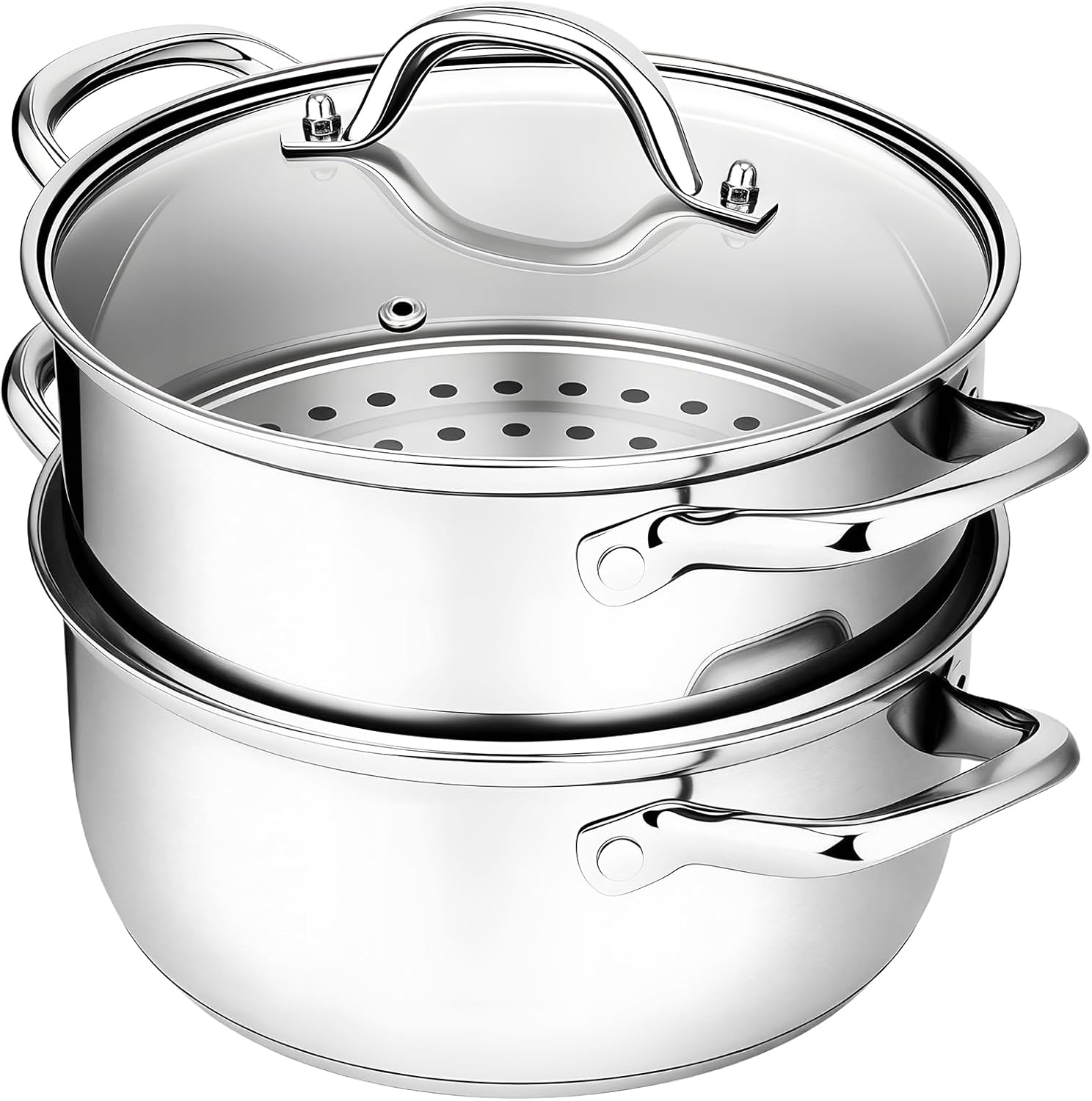
Deciding between a standard single pot and a multi-tier steaming setup changes how you approach everyday meal preparation. Multi-tier designs feature a dedicated upper insert basket, allowing you to steam vegetables or dumplings while liquids simmer below in the base. This stacked arrangement maximizes kitchen efficiency and saves valuable burner space during busy cooking sessions.
Removing the upper insert easily transforms the setup into a traditional stockpot for boiling pasta or making hearty soups. While single-pot options offer simplicity and straightforward cleaning routines, multi-tier units provide unmatched versatility for simultaneous cooking tasks. Consider whether your standard recipes benefit from vertical separation or if a simpler single-tier vessel better matches your style.
Stovetop Compatibility and Heat Distribution
Ensuring stovetop compatibility is a vital step before purchasing any new steaming cookware for your home kitchen. Modern stainless steel pots frequently feature magnetic encapsulated bases designed to function seamlessly across gas, electric, ceramic, and induction cooktops. Checking these compatibility details guarantees that your cookware will heat efficiently regardless of your specific stove technology.
Efficient heat distribution prevents localized scorching and ensures uniform cooking results across the entire base surface. Pots equipped with aluminum cores transfer thermal energy rapidly, reducing overall cooking times and saving energy. Prioritizing these technical baseline features ensures highly reliable daily performance whether you are gently simmering a delicate sauce or executing a rapid boil.
Lid Types and Visual Monitoring
The lid of a steamer pot plays a crucial role in trapping essential moisture and maintaining steady internal temperatures. Tempered glass covers are especially popular because they allow home cooks to check meal progress at a glance without lifting the cover. This visual monitoring prevents unnecessary heat loss and keeps steaming processes moving forward smoothly.
Many glass lids also incorporate a built-in steam vent to release excess pressure and prevent rattling during vigorous boiling. A tight-fitting rim ensures that moisture condenses and flows back into the pot rather than escaping onto your stovetop. Evaluating lid construction helps you select cookware that keeps your kitchen comfortable and your food flavorful.
Handle Security and Ergonomic Design
Securely attached handles are absolutely essential for safely transporting heavy, liquid-filled pots from the stovetop to the sink or serving area. Riveted stainless steel handles provide robust structural stability, ensuring that lifting heavy loads remains secure over years of frequent use. Thoughtful ergonomic design elements help prevent hand fatigue during routine kitchen tasks.
Many pots feature specially engineered handles designed to stay cool on the stovetop, reducing the risk of accidental burns during active cooking. However, users should always verify manufacturer guidelines regarding oven use, as metal handles frequently become hot during baking. Prioritizing comfortable, well-fixed grips enhances both everyday kitchen safety and overall cooking confidence.
Frequently asked questions
Can I use a stainless steel steamer pot on an induction cooktop?
Many modern stainless steel steamer pots are fully compatible with induction cooktops, provided they feature a specialized magnetic stainless steel base layer. Manufacturers typically engineer these pots with multi-ply or encapsulated bases containing magnetic metals to ensure proper contact and efficient thermal transfer on induction surfaces. It is always wise to review the specific product specifications and base descriptions to confirm cooktop compatibility before attempting to cook on any induction range.
Are stainless steel steamer pots dishwasher safe?
A vast majority of stainless steel steamer pots and their accompanying components are designed to be completely dishwasher safe, offering effortless cleanup after meal preparation. The smooth metal surfaces resist staining and food adhesion during normal cooking tasks. However, checking the manufacturer cleaning guidelines is always recommended to preserve the exterior finish and ensure that any glass lids or specialized inserts maintain their structural integrity over long-term use.
How do I prevent food from sticking to my stainless steel steamer pot?
Preventing food from sticking in stainless steel cookware largely depends on proper preheating and heat management techniques. Allowing the empty pot to reach the correct temperature before adding oils or food items creates a natural non-stick barrier on the metal surface. Additionally, ensuring that ingredients are not excessively wet when searing or boiling helps minimize residue buildup, making routine cleaning much simpler after your meal is finished.
Can I use a multi-tier steamer pot for regular boiling and simmering?
Multi-tier steamer pots offer exceptional versatility because the upper insert basket can be easily removed whenever you need a traditional stockpot. This allows you to use the base pot independently for boiling pasta, simmering soups, or preparing large batches of sauces. By simply taking out the steamer insert, your multi-tier cookware transitions instantly into a standard kitchen pot, maximizing its utility for everyday meal preparation tasks.
What is the advantage of a tri-ply bottom construction in a steamer pot?
A tri-ply bottom construction typically combines layers of stainless steel and an aluminum core to significantly improve cooking performance. The aluminum layer absorbs thermal energy rapidly and spreads heat evenly across the entire base of the pot, effectively eliminating hot spots that can burn food. Meanwhile, the outer stainless steel layers provide durability, corrosion resistance, and compatibility with various cooktops, resulting in a balanced and energy-efficient cooking experience.