Appliances · Buying Guide
Best Stir Fry Pan Choices for Authentic Home Cooking Results
Finding the best stir fry pan involves evaluating materials like carbon steel, stainless steel, and ceramic coatings to match your specific kitchen cooktop. Traditional carbon steel options offer rapid heat distribution and develop natural nonstick properties over time through consistent seasoning routines. These versatile pans support high-heat searing and traditional cooking methods effectively across various burners.
Modern alternatives introduce hybrid stainless steel surfaces or ceramic layers for simpler cleanup and everyday cooking convenience. Whether you prefer a flat bottom for electric ranges or deep curved walls to prevent messy splattering, selecting the right cookware construction transforms your daily meal preparation experience without unnecessary complications.
As an Amazon Associate, StacyLaughs earns from qualifying purchases.
Buying guide
Choosing the Right Material Construction
Material selection forms the foundation of any successful stir-frying experience in home kitchens today. Carbon steel remains the traditional favorite among enthusiastic cooks due to its impressive heat responsiveness and exceptional durability. It warms up rapidly and distributes thermal energy evenly across the entire cooking surface to handle intense high-heat cooking sessions without warping or losing structural integrity over time.
Stainless steel and aluminum alternatives offer distinct advantages like corrosion resistance, metal utensil safety, or lightweight daily handling. Evaluating your personal cooking style helps determine whether you need a traditional reactive metal or a modern coated surface that simplifies cleanup tasks significantly after every meal preparation session without complicated maintenance routines.
Understanding Surface Coatings and Seasoning
Surface technology dictates how easily food releases from your cookware during high-heat agitation and stirring tasks. Traditional carbon steel requires initial and ongoing seasoning with cooking oil to build a natural nonstick patina that improves gradually over extended periods. This chemical-free approach develops a reliable food release surface through consistent cooking habits and proper post-wash care routines.
Modern ceramic or hybrid stainless steel coatings provide immediate non-stick performance right out of the box without requiring manual oil seasoning layers. However, these specialized options often demand careful temperature management to preserve their protective barrier against wear and flaking during intense daily use across various household stovetops.
Stovetop Compatibility and Heat Sources
Matching your cookware to your specific kitchen heat source ensures efficient thermal transfer and prevents accidental equipment damage during operation. Modern flat bottom woks accommodate electric coils, ceramic glass cooktops, and smooth surface induction burners seamlessly. They maintain steady physical contact with heating elements for reliable and consistent cooking performance across various daily meals.
Traditional gas ranges and outdoor open fire setups work exceptionally well with compatible wok designs, utilizing direct flame contact effectively. Always review manufacturer technical guidelines regarding maximum temperature limits, especially on powerful induction cooktops, to avoid thermal warping or equipment damage during rapid preheating phases and high-heat searing tasks.
Capacity and Size Considerations
Choosing the correct pan capacity prevents ingredient overcrowding and ensures even heat distribution during rapid stirring and tossing tasks. A compact eleven-inch wok serves smaller households or couples efficiently, while thirteen-inch and larger models easily accommodate generous meal portions for three to five people or larger family gatherings without spilling food contents over the rim.
Larger diameters also provide higher vertical walls that effectively contain splattering hot oil and liquid broths during vigorous culinary mixing tasks. Consider your typical meal batch sizes and available kitchen cabinet storage space before committing to an extra-large wok that might exceed your everyday cooking requirements and storage limits.
Maintenance and Cleaning Practices
Proper cleaning routines extend the functional lifespan of your stir fry pan and maintain its reliable cooking performance over years of regular home use. Traditional carbon steel options typically require careful hand washing with warm water, immediate towel drying, and a light application of cooking oil to prevent rust development over extended periods of time.
Coated stainless steel or ceramic models may offer dishwasher-safe convenience or simplified soap and sponge wipe-down cleanup depending on exact manufacturing specifications. Always follow the specific user manual instructions provided by the manufacturer to protect specialized surface coatings and maintain long-term product durability during busy daily kitchen cleaning routines.
Handle Design and Storage Practicality
Ergonomics and handle design play a vital role in how comfortably you maneuver a heavy stir fry pan during active cooking sessions and complex meal preparation tasks. Solid wooden or bakelite handles stay cool during stovetop use, providing a secure and comfortable grip when tossing ingredients across high heat sources safely and efficiently every single time.
Detachable handles or compact hanging loops significantly enhance storage practicality in crowded kitchen cabinets and pantry shelves. Carefully evaluate whether your chosen pan fits your available storage layout, especially if you select extra-large diameters or bundled sets featuring matching glass lids and accompanying kitchen cooking accessories.
Frequently asked questions
How do I season a carbon steel stir fry pan?
Seasoning a carbon steel stir fry pan involves washing it thoroughly with warm water, drying it completely on a burner, and applying a very thin layer of cooking oil across the entire surface. Heat the pan until the oil begins to smoke slightly, then let it cool and wipe away excess residue. Repeating this process builds a natural nonstick patina over time. Regular oiling after subsequent cleanings preserves this protective layer.
Can I use metal utensils on nonstick stir fry pans?
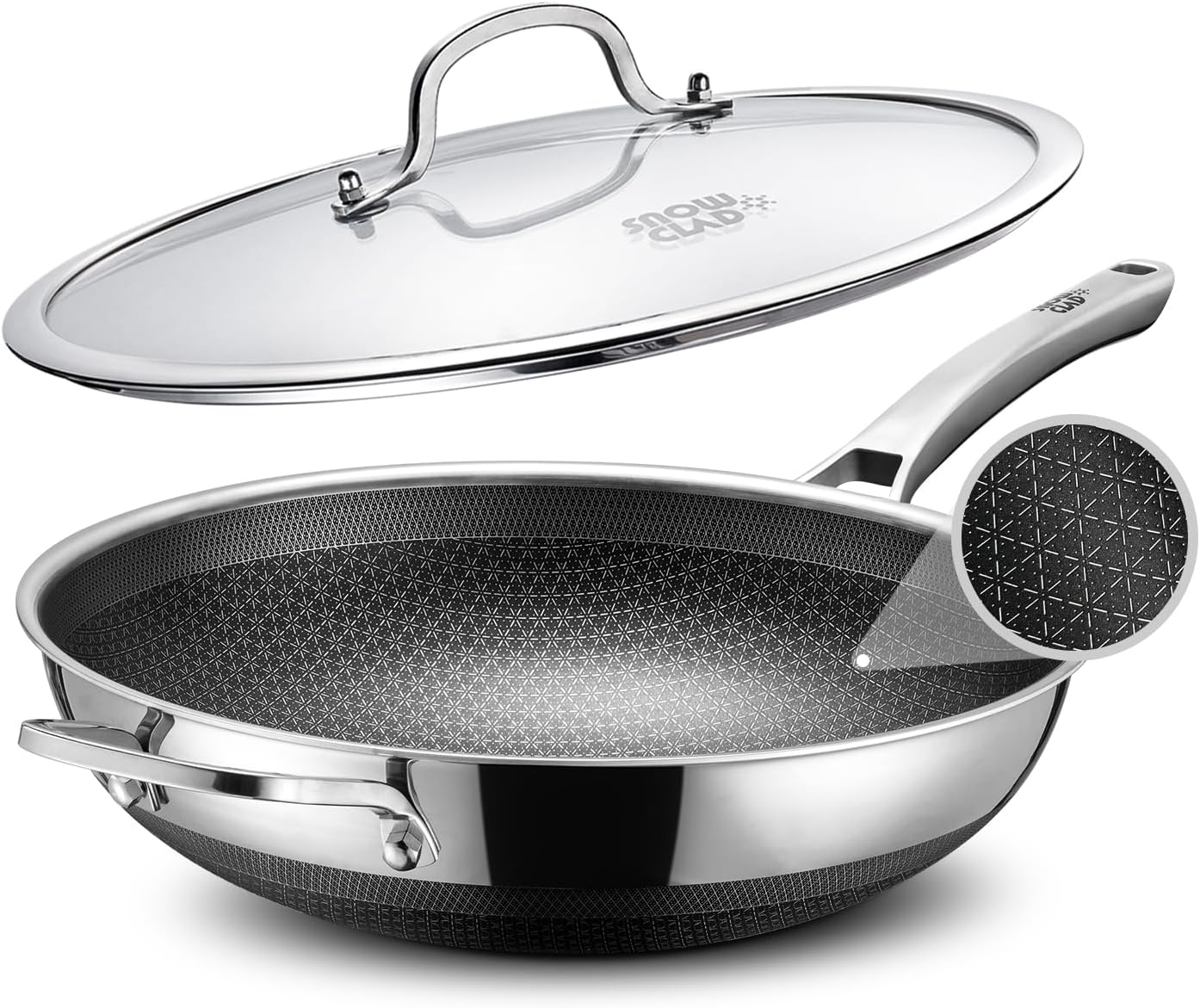
Using metal utensils depends heavily on the specific surface coating of your stir fry pan. Advanced hybrid stainless steel surfaces with snowclad designs are specifically engineered to withstand metal utensils without peeling or flaking. However, traditional ceramic or delicate nonstick coatings typically require silicone, wooden, or plastic spatulas to prevent surface scratching and premature wear. Always check the manufacturer guidelines before introducing metal tools to your cookware.
Are flat bottom woks compatible with induction cooktops?
Flat bottom woks designed with magnetic stainless steel bases, carbon steel materials, or compatible induction layers work seamlessly on smooth surface induction cooktops. The flat base ensures direct and steady physical contact with the induction burner element for efficient thermal energy transfer. However, you must avoid heating an empty pan on high power settings to prevent thermal warping or damage to both the cookware and your cooktop surface.
Should I wash my stir fry pan in the dishwasher?
Whether you can wash your stir fry pan in the dishwasher depends entirely on its material construction and manufacturer instructions. Stainless steel models featuring dishwasher-safe specifications handle automated washing without issues. In contrast, carbon steel and ceramic woks typically require careful hand washing with warm water and prompt drying to prevent rust accumulation or damage to specialized nonstick coatings. Always consult the user manual first.
What size stir fry pan is best for family cooking?
A thirteen-inch or 13.5-inch stir fry pan generally provides the ideal capacity for serving meal portions to three to five people, making it a versatile choice for family gatherings. These larger sizes offer ample room for ingredient tossing and higher vertical walls to contain splatters. If you cook smaller meals or have limited kitchen storage, a compact eleven-inch wok offers a lighter, easily manageable alternative for everyday cooking tasks.