Appliances · Buying Guide
Best Stovetop Grill Pan Options for Indoor Seared Steaks and Vegetables
Bringing outdoor flavors indoors relies heavily on selecting the right equipment for your kitchen range. A quality stovetop grill pan transforms ordinary weeknight cooking by delivering distinctive grill marks and proper fat drainage without requiring an outdoor setup. Home cooks frequently explore these specialized skillets to achieve authentic seared textures on meats and vegetables regardless of outdoor weather conditions.
Navigating the options requires understanding how different materials, coatings, and designs impact daily meal preparation. From traditional cast iron requiring seasoning to modern nonstick aluminum surfaces offering effortless food release, each construction style serves specific cooking preferences. Reviewing the attributes of leading models helps identify which design aligns with your stovetop setup and cleaning routines for lasting satisfaction.
As an Amazon Associate, StacyLaughs earns from qualifying purchases.
Buying guide
Understanding Stovetop Material Options
Choosing the right material forms the foundation of any successful stovetop grilling experience. Cast iron offers unmatched heat retention and high-temperature searing capabilities, making it a favorite for traditional steakhouse results. However, cast iron requires regular seasoning and careful hand maintenance to prevent rust and maintain its cooking performance over time.
Aluminum alternatives, including hard anodized models, provide lighter weights and rapid heat distribution across the cooking surface. Many aluminum pans feature specialized nonstick coatings that simplify food release and cleanup. Evaluating your willingness to maintain traditional seasoned metals versus using modern coated surfaces helps narrow down the ideal pan construction for your kitchen style.
Evaluating Surface Coatings and Nonstick Performance
Surface coatings significantly influence how easily food releases and how simple post-cooking cleanup remains. Nonstick layers crafted without PFOA and PFOS allow you to cook with minimal oil while preventing delicate ingredients from sticking to the raised ridges. These surfaces often wipe clean quickly with a paper towel or rinse easily under water.
While nonstick coatings offer undeniable convenience, they require mindful handling to avoid premature wear. Using silicone, nylon, or wooden utensils protects the coating from scratches. Reviewing whether a pan uses reinforced granite, Swiss ILAG, or multi-layer PTFE coatings ensures you select a finish that matches your utensil preferences and maintenance habits.
Cooktop Compatibility and Heat Distribution
Ensuring your chosen grill pan matches your kitchen range is a critical step in the purchasing decision. Many modern aluminum and cast iron pans support gas, electric coil, glass ceramic, and induction cooktops through specialized magnetic bases. Always verify whether a specific model accommodates induction technology if your kitchen uses a magnetic glass cooktop.
Uniform heat distribution prevents frustrating hot spots that can lead to unevenly cooked steaks or vegetables. Thick forged bases and magnetic stainless steel layers enhance thermal conductivity, spreading heat evenly across the entire grilling area. Matching the base specification to your stove type guarantees reliable cooking results every time you prepare a meal.
Managing Fat Draining and Grill Mark Creation
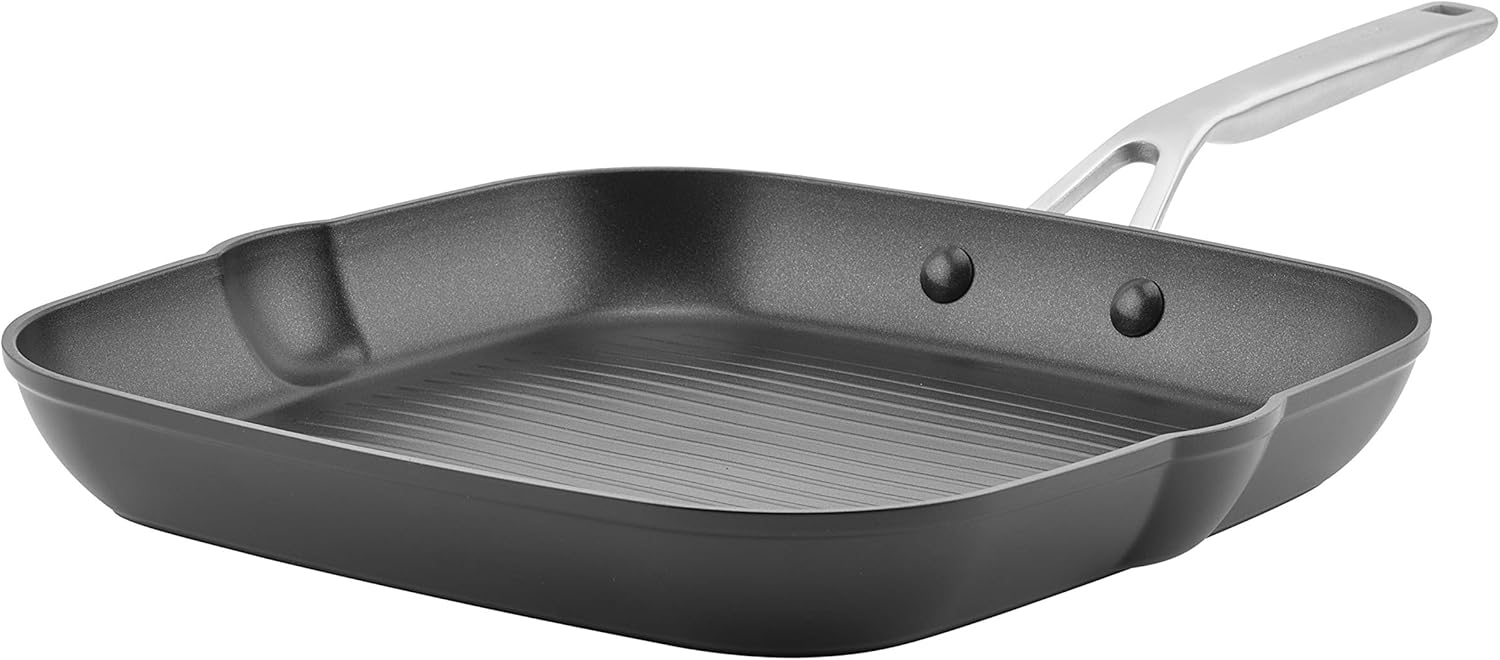
The primary appeal of a stovetop grill pan lies in its ability to replicate outdoor grilling characteristics indoors. Raised interior ribs elevate food above the base, creating attractive sear marks while allowing excess fat and cooking liquids to drain into surrounding grooves. This design contributes to less greasy meal preparation.
To maximize this feature, look for pans equipped with built-in pour spouts on the sides. These tilted channels let you drain collected fats and liquids smoothly without spilling over the edge of the pan. Evaluating the depth of the grease grooves and the presence of pour spouts ensures efficient liquid management during cooking.
Handle Design and Ergonomic Comfort
Comfortable handling is essential when maneuvering a heavy or hot grill pan on a busy stovetop. Cast iron handles offer sturdy, permanent attachment but absorb heat rapidly, necessitating protective mitts during use. Bakelite and stainless steel handles provide alternative thermal and ergonomic benefits depending on your cooking style.
Some handles are engineered to stay cool on the stovetop, while others are riveted securely for heavy-duty oven transitions up high temperatures like 500 degrees Fahrenheit. Assessing your preference for handle materials and maximum oven-safe ratings helps ensure safe and comfortable transportation of food from burner to table.
Size Capacities and Storage Considerations
Grill pans come in various dimensions, typically ranging from compact 9.5-inch surfaces up to spacious 11-inch squares and higher capacity builds. A compact pan fits easily on smaller burners and stores conveniently in tight cabinet spaces, making it ideal for single portions or small households. Larger surfaces accommodate generous family meals.
Larger footprints and multi-quart capacities require more storage room and add extra weight when lifting the pan. Balancing your typical meal portion sizes with your available cabinet and stovetop space ensures you choose a model that feels practical to store and handle on a regular basis.
Frequently asked questions
Can I use a stovetop grill pan on an induction cooktop?
Many modern stovetop grill pans are compatible with smooth surface induction cooktops, provided they feature a magnetic stainless steel or cast iron base. However, compatibility varies by manufacturer model, as certain hard anodized or specialized pans specifically exclude induction use. Always check the manufacturer specifications for compatible devices before purchasing to ensure proper operation on your specific kitchen range.
How do raised ribs on a grill pan improve cooking?
Raised ribs inside a grill pan serve two primary functions during indoor cooking. First, they contact the food directly to create classic steakhouse sear marks and presentation lines. Second, the depressed grooves between the ribs channel excess grease and cooking liquids away from your food, helping reduce smoke and preventing ingredients from boiling in their own rendered fats.
Are nonstick grill pans safe to clean in the dishwasher?
Cleaning guidelines depend entirely on the specific product construction and manufacturer instructions. While many aluminum nonstick grill pans are labeled as dishwasher safe for convenience, traditional cast iron cookware always requires careful hand washing and immediate drying to prevent rust. Reviewing the care instructions for your specific model ensures you maintain the protective coating and structural integrity over time.
What is the advantage of dual pour spouts on a grill pan?
Dual pour spouts located on the sides of a grill pan provide a convenient way to drain excess fats, oils, and cooking liquids. These tilted channels allow you to tip the pan and empty collected fluids cleanly into a container or sink without splashing over the rim. This feature simplifies cleanup and promotes efficient liquid management during meal preparation.
Do cast iron grill pans require special seasoning maintenance?
Traditional cast iron grill pans are crafted with iron and oil finishes that benefit from regular seasoning to maintain their natural non-toxic cooking surface. Unlike modern synthetic nonstick coatings, cast iron requires hand washing, thorough drying, and occasional light oil applications after cleaning to prevent oxidation and build up a resilient cooking surface over years of use.