Appliances · Buying Guide
Best T-Fal Hard Anodized Cookware Sets for Everyday Kitchens
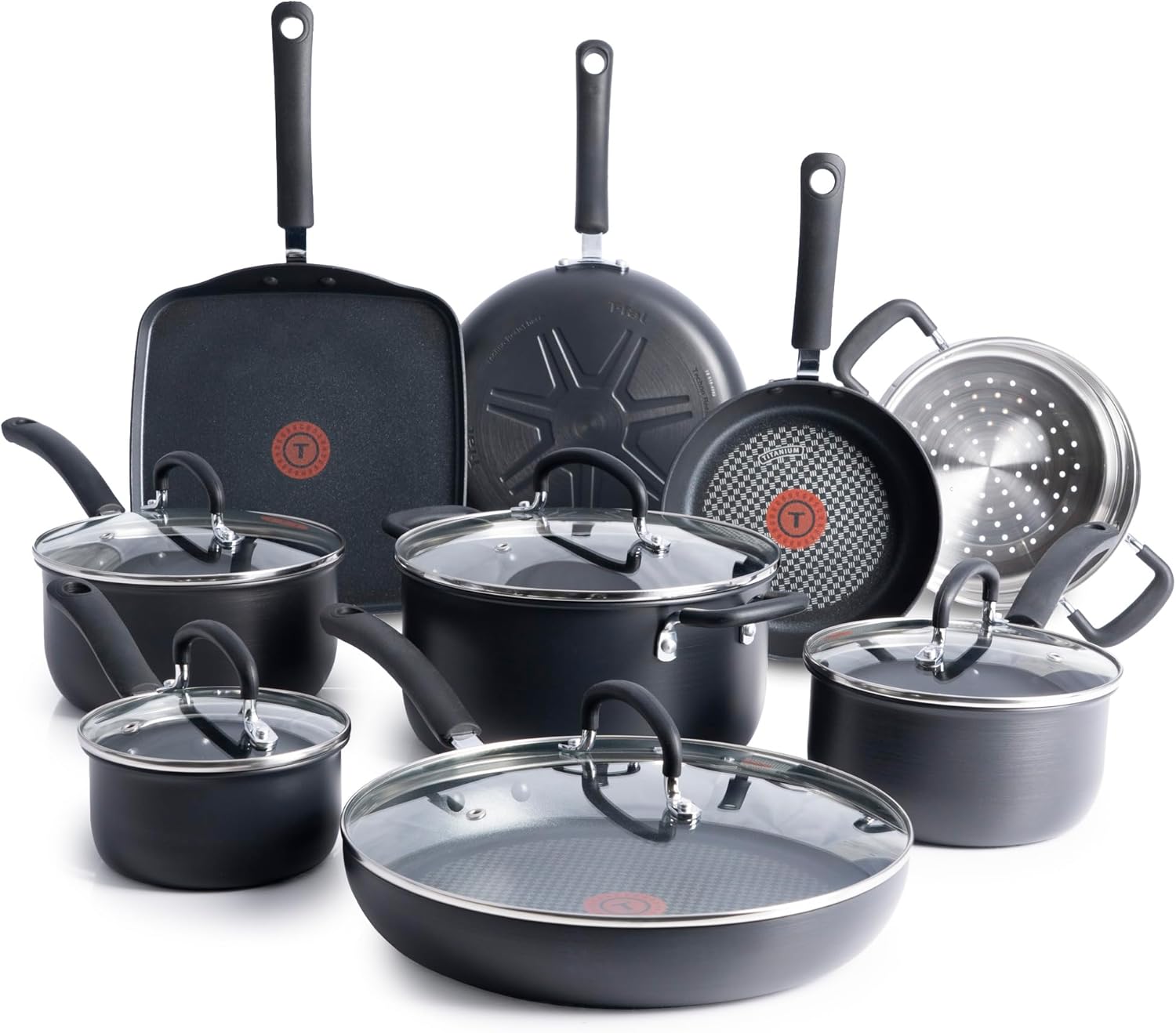
Finding reliable cookware requires balancing daily meal preparation needs with durable materials that withstand high heat. T-fal hard anodized cookware collections offer robust aluminum construction designed to resist wear while providing even heat distribution across compatible stovetops. These sets feature nonstick coatings that help food release smoothly, simplifying both cooking routines and cleanup tasks after family meals.
Buyers can choose from comprehensive multi-piece sets, specialized frypan bundles, or individual jumbo cookers depending on their specific cooking habits. Features like Thermo-Spot heat indicators, comfortable riveted silicone handles, and oven-safe designs expand the versatility of these kitchen tools. Reviewing the available configurations helps match the right combination of pots and pans to everyday culinary requirements.
As an Amazon Associate, StacyLaughs earns from qualifying purchases.
Buying guide
Understanding Hard Anodized Aluminum
Hard anodized aluminum forms the foundation of durable kitchen cookware. This material undergoes an electrochemical process that hardens the metal, creating an exterior surface that resists corrosion and scratching during regular use. Unlike standard aluminum, hard anodized versions provide robust structural integrity without adding excessive weight, making daily lifting manageable. Home cooks benefit from even heat distribution that minimizes hot spots, ensuring food cooks uniformly across the pan base.
When evaluating cookware collections, consider how this rugged exterior handles frequent cleaning and high-temperature cooking tasks. While these items withstand regular stove use, verifying your specific kitchen range compatibility remains essential since hard anodized surfaces typically exclude magnetic induction stovetops. Matching the material properties to your routine guarantees long-term satisfaction and reliable meal preparation outcomes.
Evaluating Nonstick Coating Types
Nonstick coatings dictate how easily food releases from pans and how straightforward cleanup becomes afterward. Traditional titanium-infused surfaces offer enhanced durability compared to standard nonstick options, helping ingredients slide smoothly across the cooking area. Alternatively, ceramic nonstick variations provide distinct surface properties and scratch resistance, often pairing well with protective nylon or silicone utensils to maintain their finish over time.
Selecting the right coating involves balancing cooking preferences with recommended maintenance routines. Titanium surfaces often tolerate automated dishwashers, while ceramic alternatives frequently recommend gentle hand washing to preserve their nonstick qualities. Assess your willingness to follow specific cleaning guidelines before choosing a coating type for your daily kitchen projects.
Choosing the Right Set Configuration
Cookware bundles range from compact three-piece skillet packs to extensive seventeen-piece kitchen assortments. Large sets supply specialized vessels like dutch ovens, steamers, and multiple saucepans, covering almost every culinary requirement. Smaller configurations focus strictly on foundational frying pans, making them ideal for cooks who already own stockpots or want to minimize storage clutter in compact kitchen cabinets.
Reviewing your typical meal preparation habits clarifies which pieces you will actually use regularly. Buying a massive collection provides unmatched flexibility, but unused pans take up valuable storage space. Assess your cooking repertoire to determine whether a comprehensive set or a targeted pan bundle best fits your kitchen layout.
Heat Indicators and Temperature Limits
Advanced heat indicator technology helps take the guesswork out of preheating pans on the stove. These visual markers change appearance once the cooking surface achieves optimal temperature, encouraging consistent searing results. However, understanding maximum temperature thresholds is equally crucial for safe operation. Pans generally withstand oven heat up to 400 degrees Fahrenheit, while matching glass lids often feature lower heat limits around 350 degrees.
Respecting these thermal boundaries prevents warping and protects handle components during baking tasks. Always check manufacturer specifications before transferring covered pans into high-heat ovens. Aligning your cooking techniques with these established limits ensures your cookware maintains structural integrity over years of regular kitchen use.
Handle Comfort and Lid Visibility
Handle design significantly impacts comfort and safety during busy cooking sessions. Riveted silicone handles provide a secure, cushioned grip that reduces hand fatigue when moving heavy pans filled with food. Additionally, helper handles on larger pots or jumbo cookers offer extra leverage for safe transport. Vented tempered glass lids further enhance the cooking experience by trapping heat and moisture while allowing cooks to monitor progress.
Inspecting these design elements ensures you can maneuver cookware comfortably around hot burners. Transparent glass covers eliminate the need to lift lids constantly, preserving internal cooking temperatures. Prioritizing ergonomic handles and functional lids transforms everyday meal preparation into a more controlled and pleasant endeavor.
Stovetop Compatibility and Maintenance
Stovetop compatibility dictates where you can use your new cookware. Most hard anodized aluminum sets function seamlessly on gas, electric coil, and ceramic glass cooktops, but they generally exclude magnetic induction ranges. Confirming your specific stove type prevents compatibility issues before purchase. Maintenance requirements also vary, with many titanium collections supporting dishwasher cleaning while ceramic options often require manual washing.
Following manufacturer care instructions preserves nonstick coatings and extends the lifespan of your investment. Avoid harsh metal scouring pads that can scratch delicate surfaces prematurely. Balancing cleaning convenience with stovetop requirements ensures your chosen cookware integrates smoothly into your household maintenance routine.
Frequently asked questions
Are hard anodized cookware sets safe to use in the oven?
Yes, these collections generally withstand oven heat up to 400 degrees Fahrenheit for the metal pans themselves. However, you must pay close attention to the matching glass lids, which typically feature a lower maximum temperature limit around 350 degrees Fahrenheit. Always verify the specific thermal threshold for your exact product configuration before placing covered pans inside a hot oven to prevent damaging the glass or handle materials during your baking routines.
Do these pots and pans work on induction stovetops?
No, these hard anodized aluminum cookware collections are not compatible with magnetic induction cooktops. They are specifically engineered to function on standard residential heating sources including gas burners, electric coils, and smooth ceramic glass cooktops. If your kitchen features an induction range, you will need to look for alternative cookware materials explicitly designed with magnetic stainless steel bases to ensure proper heating functionality, safe daily meal preparation, and reliable cooking performance.
How do I clean my hard anodized nonstick cookware?
Cleaning methods depend on the specific coating variant of your chosen set. Many titanium nonstick collections are rated as dishwasher safe, allowing for convenient automated cleanup after meals. In contrast, ceramic nonstick sets typically recommend gentle hand washing with mild dish soap and non-abrasive sponges to preserve their protective surfaces. Always avoid harsh metal scouring pads or abrasive cleaners that can scratch the nonstick coating and diminish its food release capabilities over time.
What is the purpose of the Thermo-Spot heat indicator?
The Thermo-Spot heat indicator is a specialized visual feature integrated into the center of compatible frying pans and skillets. This unique indicator pattern turns solid red when the pan has reached the ideal preheating temperature, signaling the exact moment you can safely begin adding ingredients. This tool helps take the guesswork out of stovetop cooking, encouraging consistent preheating results for searing meats, frying eggs, or sautéing vegetables without overheating the empty pan surface.
What utensils should I use with ceramic versus titanium nonstick surfaces?
When using ceramic nonstick cookware sets, manufacturers typically recommend using wooden, plastic, or silicone utensils to protect the delicate ceramic coating from premature scratching. While titanium nonstick surfaces offer higher durability against everyday wear, utilizing non-scratch utensils remains a good practice across all nonstick cookware to extend the lifespan of the finish. Avoid sharp metal knives, forks, or metal spatulas directly inside any coated pan to maintain smooth food release performance during daily cooking tasks.