Appliances · Buying Guide
Best The Rock Grill Pan Choices for Everyday Stovetop Cooking
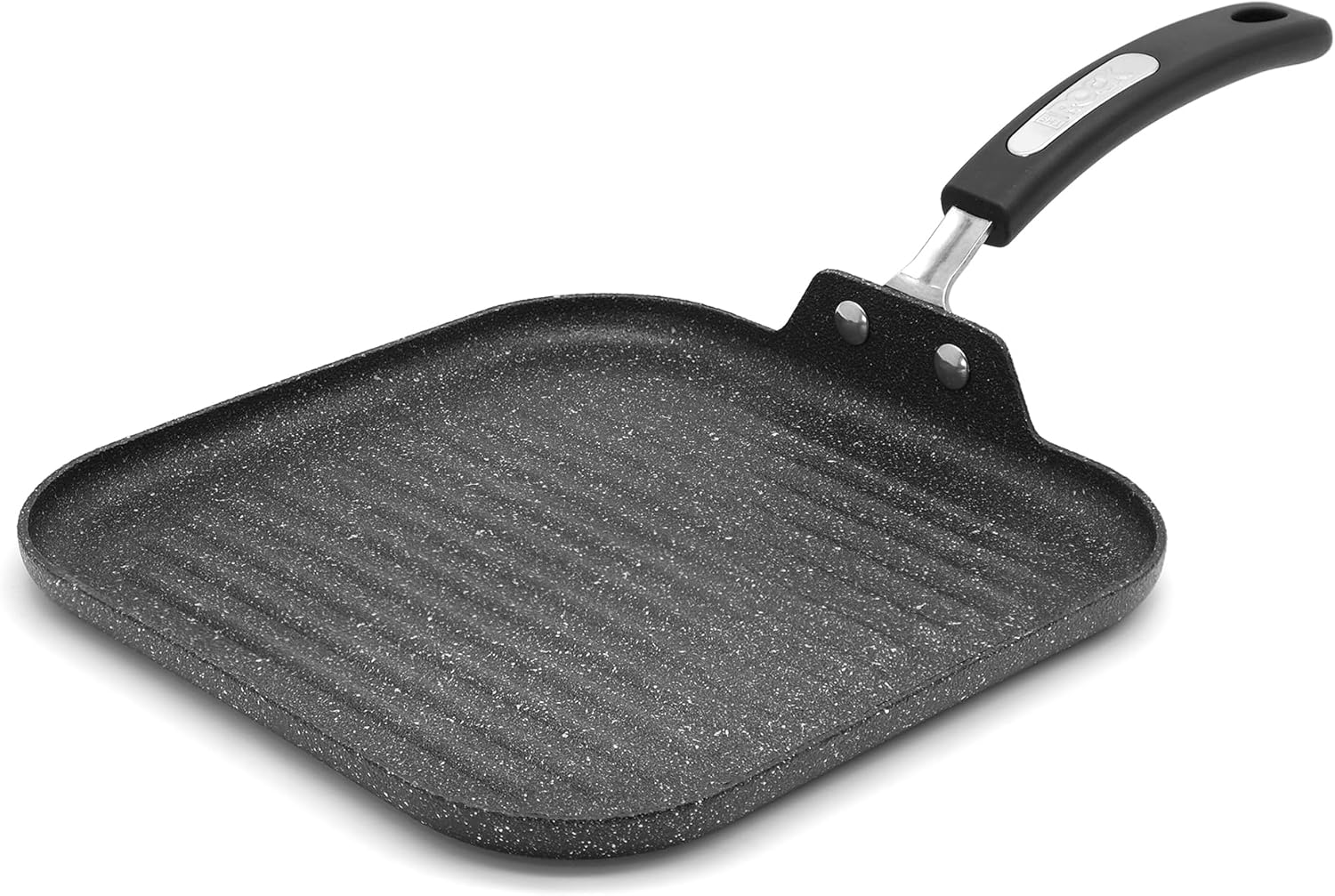
Finding the right cookware for indoor grilling and griddle cooking involves looking closely at surface materials, heat distribution, and stovetop compatibility. The rock grill pan selection offers various options crafted from durable forged or cast aluminum, featuring specialized surface treatments designed to enhance food release and everyday durability across multiple cooking tasks like searing meats and toasting sandwiches.
Whether you need a compact square pan for single-burner use or a large reversible model spanning two burners, understanding your kitchen setup and preferred recipes helps narrow down the choices. These aluminum pans provide reliable heat distribution and diverse configurations tailored to everyday breakfast favorites, seared meats, and grilled vegetables without relying on complex maintenance routines.
As an Amazon Associate, StacyLaughs earns from qualifying purchases.
Buying guide
Choosing Surface Materials and Coatings
Selecting the right material forms the foundation of your cookware purchase. Aluminum features prominently in these options, offering lightweight handling and fast, even heat distribution across the cooking base. Many models incorporate specialized surface treatments like Rock.Tec enhancements or ceramic coatings to improve food release without requiring excessive oil. These non-stick layers help prevent delicate ingredients from sticking during daily meal preparation, making flipping and turning straightforward.
When comparing options, consider how the coating interacts with your typical cooking habits. Ceramic surfaces provide a PFAS-free alternative for those prioritizing specific material compositions, while treated aluminum layers offer enhanced scratch resistance against daily abrasion. Reviewing these structural details ensures your chosen pan withstands regular friction from turners and spatulas while maintaining consistent release performance over months of frequent kitchen use.
Evaluating Stovetop Compatibility
Stovetop compatibility dictates whether a pan will integrate smoothly into your existing kitchen setup. Traditional aluminum grill pans often support gas, electric, ceramic, and halogen cooktops, providing broad versatility across various kitchen designs. However, certain specialty models restrict compatibility to gas burners only or explicitly lack support for magnetic induction ranges. Verifying your specific cooktop type before purchasing prevents operational mismatches and ensures the base makes proper contact.
Matching your burner configuration to the pan design is equally important for even heating. Single-burner round or square pans rest easily on individual elements, whereas large rectangular units require a two-burner bridge setup to distribute heat effectively. Checking these physical requirements guarantees that the pan sits flat and stable during cooking, avoiding hot spots or wobbling that could disrupt your meal preparation routine.
Understanding Size and Burner Layout
Assessing pan dimensions and weight helps determine how easily the cookware will fit on your stove and into your storage cabinets. Compact models measuring around ten inches suit smaller households and single burners, offering manageable lifting weights and straightforward storage. In contrast, expansive rectangular units spanning nearly twenty inches provide generous surface area for cooking multiple items at once but demand dedicated storage space.
The physical footprint also influences how you manage batches of food. A wider griddle surface accommodates multiple pancakes or strips of bacon simultaneously, reducing overall cooking time for family breakfasts. Weighing these physical dimensions against your available kitchen storage and countertop space ensures the cookware remains practical for everyday use rather than becoming cumbersome to manage.
Managing Temperature Limits and Oven Use
Thermal limits dictate how versatile a pan can be when transitioning from stovetop searing to oven finishing. Many aluminum grill pans support oven use up to 350 degrees Fahrenheit, accommodating standard baking and warming tasks. Certain heavy-duty models handle significantly higher temperatures, reaching up to 752 degrees Fahrenheit for demanding culinary applications. Reviewing these maximum thresholds ensures you do not exceed the manufacturer ratings during high-heat cooking.
Pay attention to handle materials when utilizing oven-safe capabilities. Bakelite handles offer comfortable, secure grips on the stovetop but often impose strict thermal ceilings to prevent degradation. Ensuring that your cooking temperature aligns with both the pan body and handle specifications prevents accidental damage and extends the functional lifespan of your cookware through repeated baking cycles.
Cleaning and Maintenance Practices
Proper maintenance preserves the non-stick properties and structural integrity of your aluminum cookware over time. Most listed models feature dishwasher-safe construction, allowing for convenient cleanup after preparing greasy meats or sticky breakfast foods. However, allowing pans to cool completely before washing prevents thermal shock, protecting the aluminum base and specialized surface coatings from warping or premature wear during routine maintenance cycles.
Adhering to manufacturer care guidelines also involves using appropriate cleaning tools that avoid abrasive scouring pads. Even though hardened surface treatments offer enhanced scratch resistance, gentle sponges and mild dish soap help maintain the non-stick finish. Incorporating these simple habits into your cleanup routine ensures reliable food release performance persists across months of regular cooking and washing.
Evaluating Design Features and Accessories
Design details can significantly influence everyday cooking convenience and safety. Raised ridges on grill pans elevate meats and vegetables, creating distinct sear marks while allowing excess grease to drain away from the food. Meanwhile, flat griddle surfaces offer uniform contact for pancakes, eggs, and sandwiches. Assessing whether you need a ribbed profile, a flat surface, or a reversible combination helps match the pan layout to your preferred recipes.
Additional design elements such as integrated grease traps and hanging holes add practical value to your kitchen routine. A built-in grease trap captures drippings during high-heat meat searing, and a hanging hole allows for vertical storage when cabinet space is tight. Reviewing these functional additions ensures your cookware choice provides maximum utility and convenience during daily meal preparation tasks.
Frequently asked questions
Can these grill pans be used on induction stovetops?
Stovetop compatibility varies significantly across different aluminum grill pan models in this lineup. While many options support gas, electric, ceramic, and halogen cooktops, specific variants explicitly state that they are not compatible with induction ranges. For instance, certain ceramic square pans lack magnetic induction support, meaning they will not function on magnetic cooktops. Always verify the compatible devices listed for each specific model before purchasing to ensure it matches your kitchen setup.
What is the maximum oven temperature these pans can handle?
Maximum oven temperature limits depend heavily on the specific construction and handle materials of each pan in the lineup. Several models support oven use up to 350 degrees Fahrenheit, which accommodates standard baking and warming tasks. In contrast, heavy-duty reversible cast aluminum pans can withstand much higher thermal limits, reaching up to 752 degrees Fahrenheit for intensive baking and searing applications. Reviewing the manufacturer specifications ensures you select a pan that matches your required temperature range.
Are these pans safe to wash in the dishwasher?
Most of the aluminum grill pans and griddles featured in this selection are officially designated as dishwasher safe for convenient cleanup after cooking greasy or sticky meals. However, manufacturer instructions often recommend allowing the pan to cool completely before washing to prevent potential thermal shock. Following proper care guidelines helps protect the specialized surface coatings and aluminum bases from premature wear, ensuring that the non-stick release performance and structural integrity remain consistent over time.
What benefits do raised ridges provide on a grill pan?
Raised ridges serve a dual practical purpose during indoor stovetop cooking sessions. First, they elevate meats, vegetables, and sandwiches off the cooking floor, creating appetizing sear marks that mimic outdoor grilling results. Second, the channels between these raised ridges help direct excess grease and drippings away from your food as it cooks. This functional design makes ridged pans an effective choice for preparing burgers, steaks, and sausages while keeping excess oils separate from the cooking ingredients.
How do reversible grill and griddle pans function?
Reversible grill and griddle pans feature a dual-sided cooking surface designed to expand your everyday culinary versatility within a single piece of cookware. One side provides a deep-ribbed grill surface ideal for searing steaks, chicken, and vegetables while channeling away grease. Flipping the pan over reveals a smooth flat griddle side tailored for breakfast favorites such as pancakes, eggs, bacon, and grilled sandwiches. These units typically span two burners to distribute heat across the large rectangular surface.