Appliances · Buying Guide
Best Top Rated Nonstick Cookware for Easy Kitchen Cooking
Finding reliable kitchen equipment often starts with looking at top rated nonstick cookware options designed for everyday meal preparation. Upgrading your pots and pans can simplify daily cooking routines, whether you are boiling pasta, frying breakfast items, or simmering sauces for family dinners. Choosing the right collection ensures you have the exact vessels needed for varied recipes.
Different sets offer unique material combinations, such as hard-anodized aluminum or tri-ply stainless steel, paired with advanced coatings for smooth food release and simple cleanup. Reviewing the specific pieces included in each collection helps match the right cookware configuration to your daily cooking habits, storage space, and stovetop compatibility requirements.
As an Amazon Associate, StacyLaughs earns from qualifying purchases.
Buying guide
Material Construction and Durability
Choosing the correct material forms the foundation of any reliable cookware investment. Hard-anodized aluminum offers exceptional structural strength, often exceeding standard stainless steel in surface hardness while maintaining efficient heat distribution. Tri-ply stainless steel incorporates layered metal sheets for rapid thermal response across diverse cooking surfaces, making it exceptionally popular for responsive temperature control during delicate sauce preparation.
Understanding these distinct material differences helps buyers select options that safely withstand high oven temperatures or daily heavy-duty meal preparation. Evaluating how a pot or pan is constructed ensures long-term structural performance without warping under regular thermal shifts on active kitchen cooktops, giving you dependable results for years of frequent culinary use.
Stovetop Compatibility Requirements
Stovetop compatibility dictates which cookware options will function effectively in your specific home kitchen environment. Modern induction cooktops require magnetic base materials, such as stainless steel or specially bonded aluminum disks, to generate cooking heat through electromagnetic fields. Traditional gas, ceramic smooth top, and electric coil cooktops accept a much wider variety of aluminum and stainless steel constructions without requiring specific magnetic properties.
Checking your specific cooktop type before purchasing prevents performance issues and ensures optimal thermal transfer during daily cooking sessions. Selecting versatile sets that bridge multiple stove types provides valuable flexibility if you plan to update kitchen appliances or move to a new home later on, protecting your initial investment.
Nonstick Coating Technologies
Nonstick coatings greatly simplify food release and reduce the need for excessive cooking oils during frying, browning, and simmering tasks. Modern collections often feature advanced titanium-reinforced surfaces, diamond-textured hybrid layers, or specialized ceramic compositions designed entirely without intentionally added PFAS chemicals. Each coating technology offers distinct benefits regarding scratch resistance, metal utensil safety, and overall surface longevity across busy kitchens.
Reviewing how these nonstick layers are structured helps you choose options that match your preferred cleaning habits and daily utensil preferences. Proper care, such as following manufacturer maintenance guidelines and using recommended silicone tools instead of sharp metal objects, preserves the nonstick performance over years of regular family meal preparation.
Set Piece Count and Configuration
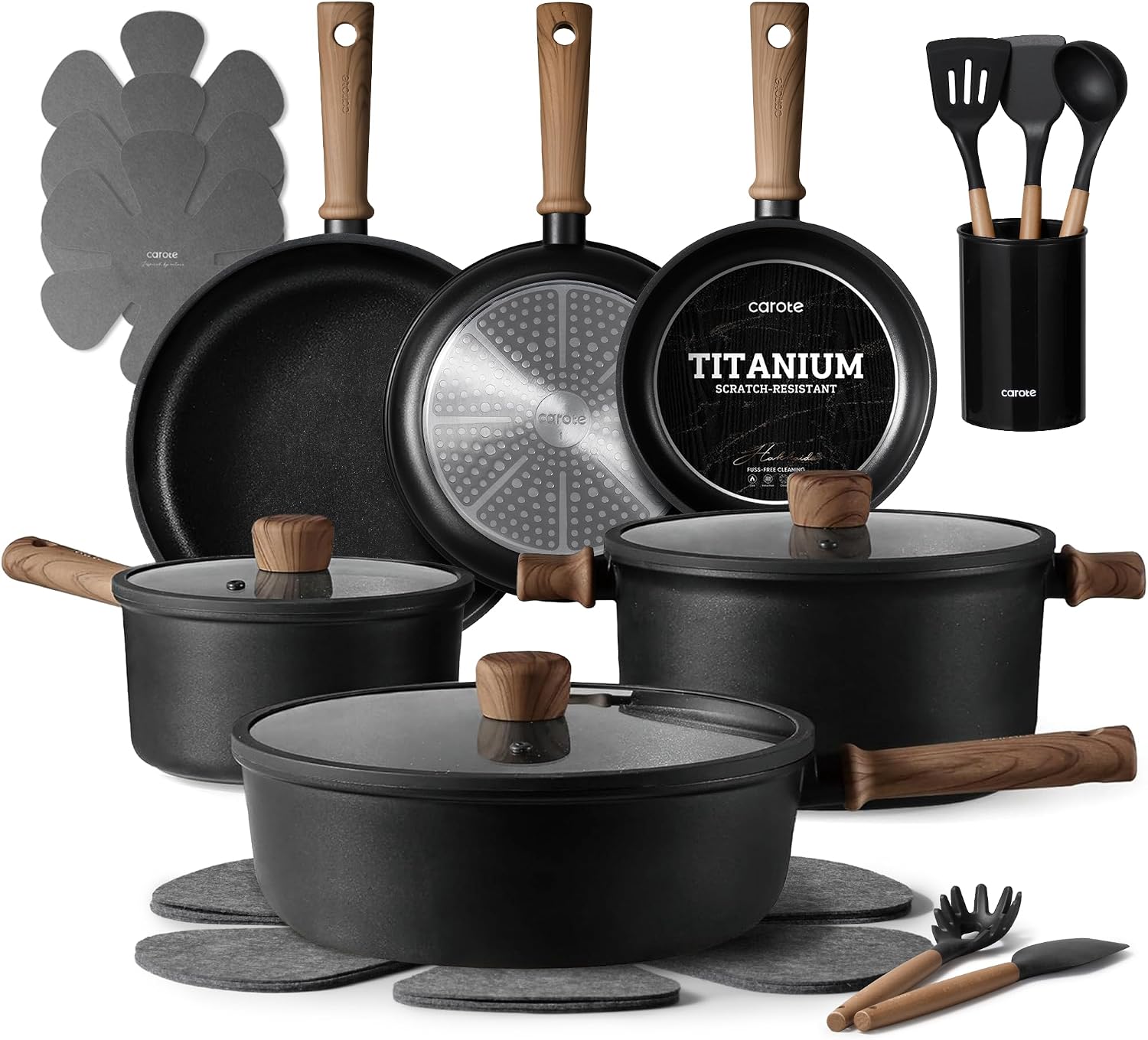
Cookware set configurations vary significantly, ranging from compact starter kits to extensive multi-piece collections equipped with specialized pans and accessories. Smaller sets usually include fundamental fry pans and saucepans, making them ideal for individuals or couples with limited kitchen storage space. Larger multi-piece bundles incorporate deep stockpots, griddles, steamers, pan protectors, and matching utensils for complex multi-course recipes.
Analyzing your typical cooking routines ensures you select a bundle that provides useful vessels without cluttering your available kitchen cabinets. Assessing the exact mix of pots and pans helps you avoid paying for specialized pieces you rarely use while securing all essential daily sizes needed for varied meal preparation.
Cleanup and Maintenance Guidelines
Maintenance requirements influence how much time you spend washing up after preparing everyday family meals. Many modern nonstick cookware collections feature convenient dishwasher-safe designs that allow both pots and matching glass lids to go straight into automated dishwashers for effortless cleanup. Other specialized sets explicitly recommend gentle hand-washing with neutral dish soap to protect base finishes and prevent dark residue accumulation on exterior surfaces.
Reviewing manufacturer care instructions before purchase ensures your cleaning routine matches your daily lifestyle preferences and time constraints. Adhering closely to these maintenance recommendations keeps your cookware looking clean and functioning smoothly over years of consistent kitchen use without unexpected surface degradation or finish wear.
Oven Safety and Handle Design
Oven safety limits determine whether you can start a recipe on the stovetop and finish baking it directly inside an oven or broiler cavity. Many hard-anodized and stainless steel sets withstand high temperatures up to 400 or 850 degrees Fahrenheit, though accompanying glass lids often feature lower heat thresholds. Checking these specific limits prevents thermal damage to lids and handles during advanced high-heat cooking techniques.
Ergonomic handle designs featuring riveted silicone grips or cast stainless steel provide a secure, comfortable hold when lifting heavy, food-filled cooking vessels. Evaluating handle construction ensures safe handling during daily kitchen tasks and seamless transitions between active stovetops and hot oven interiors.
Frequently asked questions
Can I use metal utensils on nonstick cookware?
Utensil compatibility depends entirely on the specific manufacturing technology of your chosen cookware set. Certain advanced diamond-reinforced or tri-ply ceramic nonstick surfaces are engineered to withstand metal utensils without compromising food release performance. However, many standard nonstick coatings recommend using silicone, wood, or plastic tools to prevent scratching and extend the lifespan of the coating. Always review the manufacturer guidelines provided with your specific cookware collection before introducing metal spatulas, spoons, or whisks into your cooking routine.
Are nonstick pots and pans safe to put in the dishwasher?
Dishwasher safety varies across different nonstick cookware sets based on their exterior finishes and material construction. Several hard-anodized and stainless steel collections feature fully dishwasher-safe designs for both pots and matching glass lids, allowing convenient automated cleanup. Conversely, other die-cast aluminum sets explicitly recommend gentle hand-washing with neutral dish soap to protect the base finish and prevent unwanted residue buildup. Checking the manufacturer care instructions ensures you maintain the appearance and performance of your specific set over time.
Do all nonstick cookware sets work on induction cooktops?
Not all nonstick cookware collections are compatible with induction stovetops, as induction heating requires magnetic base materials. While sets crafted with tri-ply stainless steel, specialized magnetic stainless bases, or compatible hard-anodized aluminum function seamlessly on induction cooktops, standard aluminum pots without magnetic disks will not work. Buyers using induction ranges must verify stovetop compatibility details before purchasing to ensure proper heating performance and avoid heating errors on their glass cooktop surfaces.
What is the benefit of hard-anodized aluminum cookware?
Hard-anodized aluminum cookware offers exceptional structural strength and durability, making it significantly harder than standard stainless steel while retaining lightweight thermal properties. This specialized electrochemical process creates a tough exterior and interior finish that resists corrosion, scratching, and everyday wear. Hard-anodized pots and pans distribute heat rapidly and evenly across cooking surfaces, helping eliminate hot spots for consistent browning and simmering results during your daily meal preparation tasks.
How should I clean cookware that requires hand-washing?
Cookware requiring hand-washing should be cleaned using warm water, a soft sponge or dishcloth, and a neutral dish soap. Avoid abrasive scouring pads, steel wool, or harsh chemical cleaners that can scratch or degrade the nonstick coating and exterior finish. For stubborn food residue, allowing the pan to soak in warm soapy water before gently wiping helps loosen debris without applying excessive physical force. Always dry the cookware thoroughly before storing it away in your kitchen cabinets.