Appliances · Buying Guide
Best Top Rated Roasting Pans for Holiday Feasts and Everyday Meals
Finding reliable kitchen equipment for preparing large poultry, holiday roasts, and everyday family meals depends heavily on matching pan dimensions, materials, and accompanying hardware to your cooking routine. Top rated roasting pans come in various configurations, featuring different metals, porcelain enamel finishes, and inclusion sets designed to manage drippings and heat distribution efficiently.
Whether you need an unshielded stainless steel build for high heat or a covered enamel option to lock in moisture, understanding how each design supports your oven space and recipe style ensures reliable results. Reviewing specific structural attributes helps clarify which model suits your home kitchen without relying on unverified claims or inflated marketing language.
As an Amazon Associate, StacyLaughs earns from qualifying purchases.
Buying guide
Material Selection and Heat Distribution
Choosing the right material for your roasting pan influences how heat transfers to your food and how long the equipment lasts. Stainless steel offers durable, non-reactive cooking surfaces that withstand high oven temperatures without altering natural flavors. Models featuring aluminum encapsulated bases or heavy-gauge steel cores provide faster, more uniform thermal distribution across the base.
Nonstick surfaces simplify cleanup by preventing food from sticking, though they require careful utensil handling to preserve the specialized coating over years of regular use. Porcelain enamel finishes offer smooth, non-porous performance across diverse heat sources like stovetops and grills. Evaluating your preferred cooking methods ensures you select a metal composition that aligns with your daily habits.
Sizing and Oven Compatibility
Matching pan dimensions to your oven interior is essential for successful roasting sessions without spatial friction. Standard 16-inch pans fit comfortably within smaller residential ovens, while extra-large 21-inch models accommodate massive holiday birds up to twenty-five pounds. Measuring your oven cavity, interior depth, and rack spacing beforehand prevents frustrating clearance issues during major meal preparations.
Height dimensions also matter significantly, especially when using covered roasters equipped with tall domed lids designed to trap moisture and steam. Taller vertical profiles require sufficient clearance between active oven racks. Checking both exterior length, width, and height guarantees the pan slides smoothly inside without binding against heating elements or side walls.
Rack Design and Food Elevation
Elevating meats above the bottom of the roasting pan allows hot air to circulate freely around the entire cut of meat. This design promotes even browning on all sides while keeping poultry out of accumulated natural juices and fats. V-shaped racks cradle heavy roasts securely, preventing large items from tipping over during oven transport.
Flat racks offer versatile platforms that support vegetables underneath the main roast or serve double duty for cooling baked goods outside the oven. Removable rack accessories also simplify pan cleaning by keeping grease channels accessible. Evaluating the included rack configurations ensures your food cooks efficiently without resting directly in excess liquid pools.
Handle Construction and Ergonomics
Secure handle design is crucial when moving heavy, fluid-filled roasting pans in and out of hot ovens safely. Riveted stainless steel or alloy handles provide structural strength capable of supporting heavy holiday turkeys. Wide, raised stationary handles offer distinct clearance advantages, allowing you to grip the pan securely while wearing bulky protective oven mitts.
Metal handles absorb thermal energy inside the oven and become extremely hot during extended cooking cycles. Anticipating this requires always using insulated protection when lifting the cookware. Examining handle placement and attachment methods ensures comfortable, reliable control over heavy loads from countertop to oven rack every time.
Lids and Covered Roasting Versatility
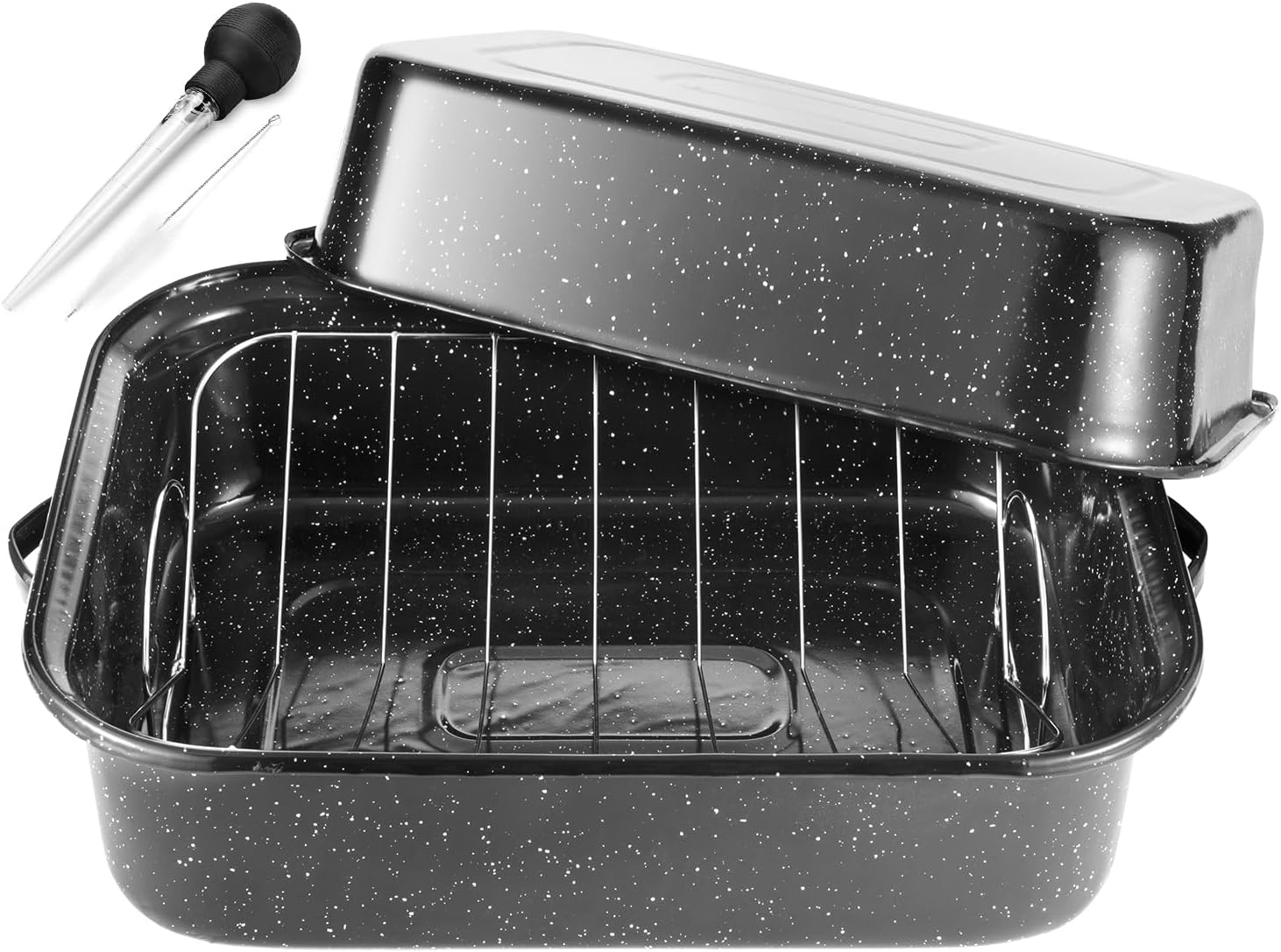
Covered roasting pans introduce specialized functionality by trapping steam and moisture inside the vessel during braising or slow-roasting tasks. This enclosed environment mimics traditional Dutch oven performance, keeping meats tender while encouraging crispy skin on poultry. Some specialized lids double as open roasting pots when separated, expanding your overall kitchen cooking capabilities significantly.
Enamel-coated carbon steel and alloy steel lidded sets withstand high temperatures across diverse heat sources, including stovetops and campfires. However, the added weight and vertical bulk require careful handling and ample storage space in your kitchen cabinets. Assessing whether you need moisture-locking lids helps determine if an enclosed roaster fits your regular cooking style.
Cleaning and Maintenance Protocols
Maintaining your roasting pan properly preserves its cooking performance and exterior finish over years of holiday gatherings. Many stainless steel and enamel models are dishwasher safe, though hand-washing unpainted metal surfaces prevents accidental marring or chipping from harsh dishwasher detergent cycles. Always review manufacturer care guidelines regarding dishwasher loading and recommended cleaning solutions carefully.
Nonstick surfaces require gentle washing with soft sponges to protect the delicate coating from abrasive scratching during post-cooking cleanup. Avoiding metal utensils on these surfaces ensures long-lasting food release properties. Following established maintenance routines keeps your roasting equipment in prime condition for every upcoming family dinner and seasonal celebration.
Frequently asked questions
Can I use a metal roasting pan on an induction stovetop?
Whether a roasting pan works on an induction stovetop depends entirely on its specific material composition and base construction. For instance, models featuring induction-compatible stainless steel bases can transition directly from stovetop burners to the oven. However, many carbon steel, porcelain enamel, or specialized nonstick roasters explicitly lack this capability and are restricted exclusively to conventional ovens, grills, or open campfires. Always check the manufacturer specifications before attempting to use any roasting pan on an induction cooktop surface.
Why is a roasting rack included with most pans?
Roasting racks serve the vital purpose of elevating heavy poultry and meats above the bottom surface of the pan. This elevation allows hot air to circulate freely underneath the cut, ensuring uniform browning on all sides. Furthermore, raising the meat prevents it from sitting directly in accumulated fats and natural juices, which also makes collecting drippings for gravies much easier. Whether configured in a V-shape or as a flat platform, racks improve overall cooking results significantly.
How do I clean a roasting pan without damaging the finish?
Cleaning methods depend directly on the specific materials used in your roasting pan construction. Stainless steel models are typically dishwasher safe, though hand-washing is often recommended to protect polished exterior finishes from marring during heavy wash cycles. Nonstick and porcelain enamel surfaces require gentle cleaning with warm soapy water and soft sponges, avoiding abrasive pads or metal utensils that could scratch the specialized coating. Always follow manufacturer guidelines for best results.
What size roasting pan do I need for a large holiday turkey?
The correct roasting pan size depends directly on the weight of your turkey and the interior dimensions of your oven. Compact 16-inch pans easily handle medium roasts and fit into smaller ovens, while 18-inch models accommodate turkeys up to twenty pounds with domed lids. For massive 25-pound holiday turkeys, extra-large 21-inch rectangular pans provide the necessary interior space. Always measure your oven cavity and rack spacing to ensure proper fit.
Are covered roasting pans better than open pans?
Covered roasting pans and open pans serve different culinary goals depending on the recipe you are preparing. Covered roasters feature domed lids that trap steam and moisture inside, functioning similarly to Dutch ovens to keep meats tender and juicy. Open pans paired with racks allow maximum heat circulation and superior browning for poultry skin. Choosing between them depends on whether your priority is moisture-locking braising or achieving an open-roasted crispy exterior finish.