Appliances · Buying Guide
Best Uncoated Stainless Steel Cookware for Every Kitchen
Upgrading your kitchen with uncoated stainless steel cookware brings durable performance and versatile cooking surfaces to your daily meal preparation routine. Without artificial nonstick coatings to wear away, scratch, or peel over time, these robust metal pots and pans handle high heat, vibrant acidic sauces, and metal utensils with absolute ease.
Choosing the ideal set depends heavily on your specific cooking style, available stove type, and household storage space requirements. Whether you need a compact starter collection for quick everyday breakfasts or a comprehensive multi-piece culinary arsenal for hosting large family gatherings, understanding core construction differences helps you select reliable cookware for seamless stovetop-to-oven transitions.
As an Amazon Associate, StacyLaughs earns from qualifying purchases.
Buying guide
Evaluating Metal Construction and Ply Layers
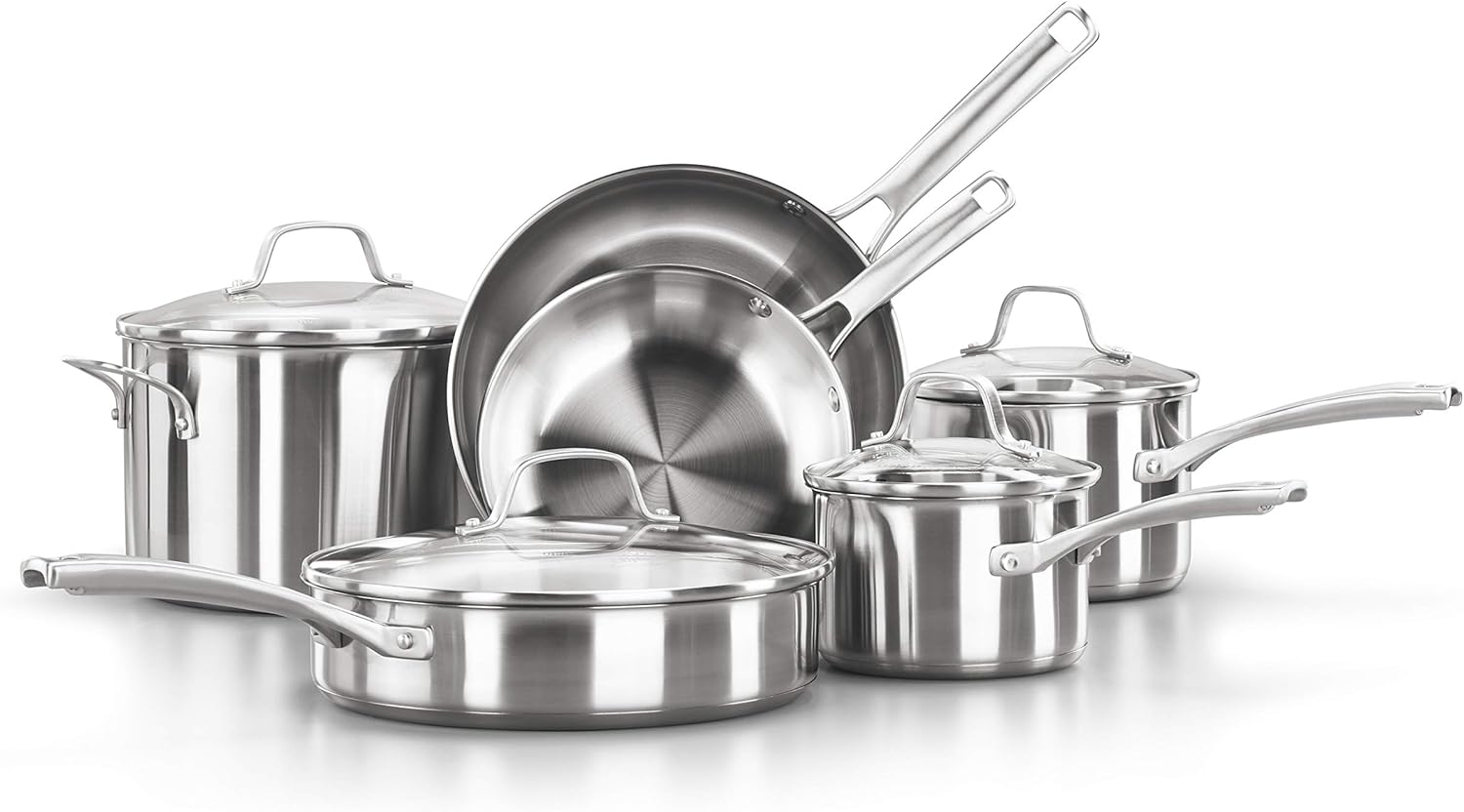
Understanding how stainless steel cookware is constructed helps you select a set that matches your cooking intensity and heat distribution needs. Single-ply pans with bonded bases heat quickly at the center, but full multi-ply options extend aluminum or copper layers up the sidewalls. This all-around layering prevents hot spots and maintains steady temperatures during rigorous browning and searing tasks.
When shopping, check whether a collection uses a simple impact-bonded disk or a fully clad multi-layered build. Fully clad sets offer superior thermal consistency across the entire cooking vessel, though they typically carry a heavier weight. Weighing your preference for lightweight handling against uniform heating performance ensures you invest in metal cookware that complements your daily kitchen habits.
Matching Cookware Compatibility with Stovetops
Ensuring your new stainless steel pots and pans match your kitchen range is a crucial step before making a final purchasing decision. Most modern uncoated stainless steel collections feature magnetic exterior bases that work seamlessly across gas, electric coil, and glass-ceramic cooktops. If you cook with induction, verifying magnetic responsiveness is essential because induction burners require direct magnetic contact to generate heat.
Additionally, consider how the base interacts with smooth glass stovetops to prevent accidental scratching or uneven heat transfer over time. Smooth, seamless base designs glide safely across glass surfaces without trapping abrasive debris beneath the pan. Reviewing manufacturer specifications regarding your specific cooktop type guarantees reliable everyday performance without risking damage to your kitchen range or your cookware investment.
Assessing Handle Design and Ergonomic Comfort
Handle construction significantly influences how comfortably you maneuver heavy pots filled with boiling water or dense soups across the kitchen. Look for securely riveted stainless steel handles that provide a permanent, wobble-free connection over years of heavy daily use. Many sets incorporate hollow-core designs or ergonomic contours specifically engineered to slow heat transfer and maintain a cooler grip during long stovetop simmering sessions.
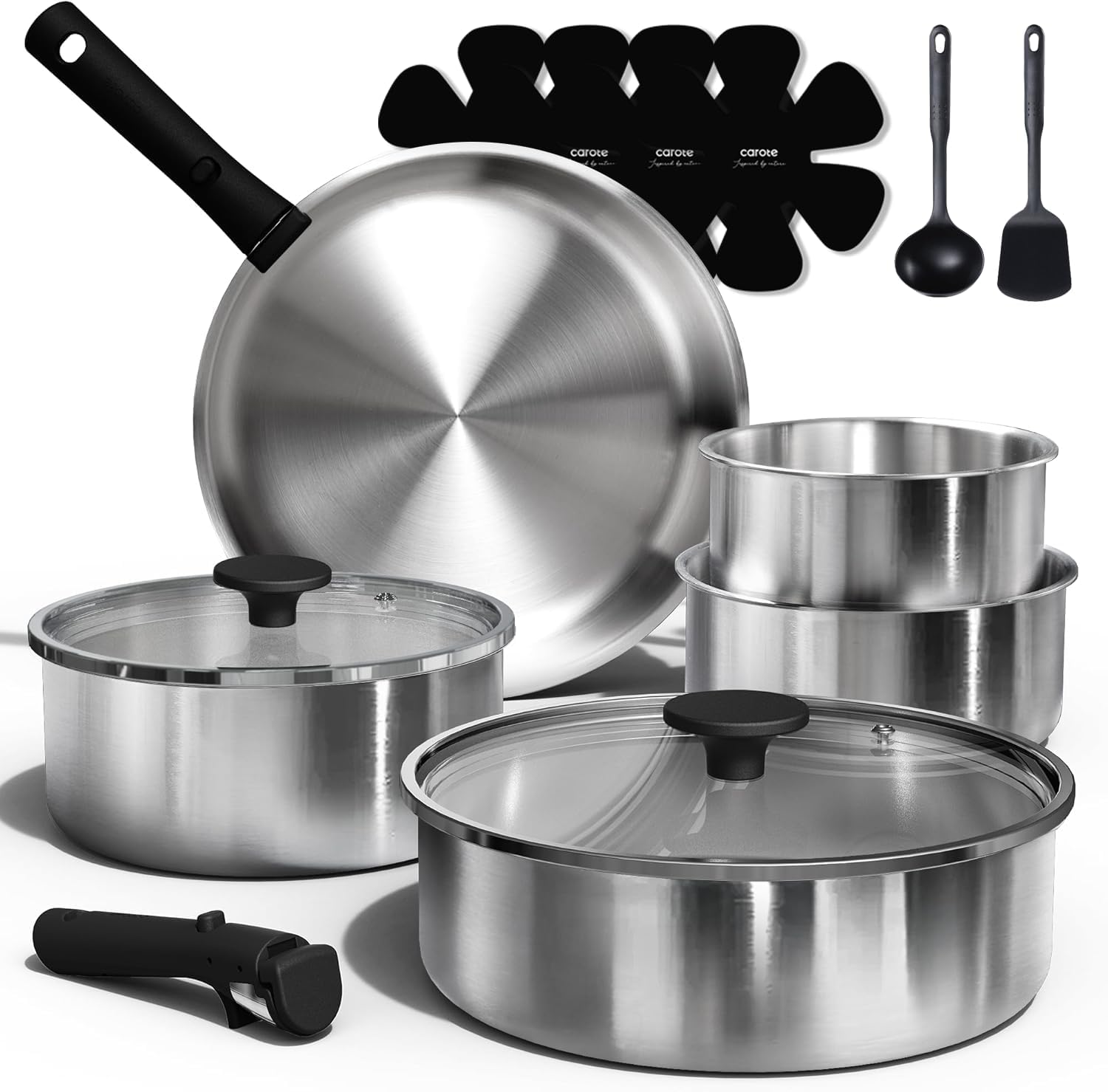
For kitchens with limited storage capacity, specialized detachable handle systems offer an alternative approach by letting you snap handles off for compact stacking. While removable hardware saves valuable cabinet space, traditional fixed handles provide instant, grab-and-go reliability without requiring extra mechanical steps. Evaluating your storage constraints alongside your preference for fixed or removable handles helps narrow down the most suitable cookware set.
Understanding Lid Materials and Oven Safety Ratings
Lids and oven-safe temperature thresholds dictate how versatile your cookware will be when shifting recipes from the stovetop to the baking oven. Tempered glass covers let you monitor cooking progress without lifting the lid and releasing valuable heat and moisture. However, matching lid materials must align with your baking habits, as glass covers typically feature lower maximum heat resistance than all-metal lids.
Stainless steel lids often withstand much higher oven temperatures, sometimes reaching up to eight hundred degrees Fahrenheit for intensive broiling and roasting tasks. Reviewing the maximum temperature limits for both the pots and their corresponding covers prevents accidental warping or material degradation. Selecting high-temperature-rated components ensures your cookware easily handles advanced baking techniques and high-heat oven recipes.
Cleaning Maintenance and Surface Care Requirements
Unlike nonstick alternatives with delicate chemical layers, uncoated stainless steel cookware tolerates aggressive cleaning tools, metal utensils, and routine dishwasher cycles. However, proper maintenance practices help preserve the polished exterior finish and prevent stubborn water spots or rainbow discoloration from mineral residues. Hand-washing with mild soap and specialized stainless steel cleaners keeps surfaces looking pristine over years of heavy culinary use.
Understanding manufacturer care guidelines ensures you avoid harsh abrasive pads that might mar mirror-finish exteriors while successfully removing burnt-on food particles. Preheating pans properly before adding cooking oil also minimizes food adhesion naturally, reducing the effort required during post-cooking cleanup routines. Balancing dishwasher convenience with occasional hand-washing maintenance protects your investment and maintains optimal cooking performance across all pots and pans.
Determining Piece Count and Household Size Needs
Choosing the correct piece count ensures you have appropriately sized vessels for your routine meals without accumulating unused clutter in your kitchen. Smaller households or individuals often find compact five to seven-piece sets sufficient for boiling pasta, frying eggs, and simmering quick sauces. Conversely, larger families and enthusiastic hosts benefit from comprehensive ten to seventeen-piece collections that provide dedicated stockpots, multiple skillets, and helpful specialty inserts.
Assess your typical cooking habits, menu variety, and available storage space before selecting a specific collection size to avoid overcrowding your kitchen. A well-chosen assortment provides the exact frying pans and saucepans you need for daily recipes without wasting valuable cabinet real estate on redundant or oversized vessels. Carefully matching set contents to your actual cooking routine guarantees long-term satisfaction and efficient meal preparation.
Frequently asked questions
Do uncoated stainless steel pans require seasoning before cooking?
Uncoated stainless steel cookware does not require traditional seasoning like cast iron or carbon steel because it relies on smooth metal surfaces rather than polymerized oils. Instead of seasoning, achieving a nonstick cooking effect depends entirely on proper preheating techniques. You should heat your empty pan over moderate heat for a couple of minutes, add a small amount of cooking oil, and let the oil shimmer before introducing your food. Letting proteins sear briefly allows them to release naturally from the surface when turning.
Can I use metal utensils on stainless steel cookware?
Yes, one of the primary benefits of choosing uncoated stainless steel cookware is its resilience against metal utensils. Because these pots and pans lack delicate artificial nonstick coatings that can easily scratch, peel, or flake off into food, you can safely use metal spatulas, whisks, spoons, and tongs during meal preparation. This durability allows you to scrape up browned food bits confidently when deglazing pans with wine or broth to create flavorful pan sauces without worrying about damaging the cooking surface.
Are stainless steel cookware sets dishwasher safe?
Most stainless steel cookware sets are officially designated as dishwasher safe by manufacturers, allowing for convenient cleanup after family meals. However, many brands recommend hand-washing to preserve exterior mirror finishes and prevent potential cosmetic scuffs caused by shifting dishwasher racks or harsh detergents. If you choose to use a dishwasher, ensure proper loading to minimize bumping between pans. For stubborn burnt-on food residues, soaking the cookware in warm soapy water or using specialized stainless steel cleaners restores its original shine.
How do I prevent food from sticking to stainless steel pans?
Preventing food from sticking on uncoated stainless steel surfaces requires mastering temperature control and proper preheating habits. Always start by preheating your clean pan over medium heat rather than high heat, which can cause uneven scorching. Test the pan temperature by sprinkling a few drops of water onto the surface; when the droplets bead and slide around, the pan is ready. Add your cooking oil, let it heat until shimmering, and place dry food into the pan without forcing it.
Will stainless steel cookware work on induction cooktops?
Many uncoated stainless steel cookware collections are fully compatible with induction cooktops, provided they feature a magnetic exterior base layer. Induction cooktops rely on magnetic fields to generate heat directly within the cookware base, meaning standard non-magnetic metals will not trigger the burner. Manufacturers typically specify induction compatibility in their product details. If you plan to cook on an induction range, verify that the specific pots and pans include a magnetic stainless steel or encapsulated induction-ready bottom layer before purchasing.