Appliances · Buying Guide

Best Vintage Copper Frying Pan Choices for Traditional Kitchens

Choosing cookware that brings classic style and reliable heat distribution to your kitchen involves looking closely at materials like pure copper and modern ceramic-titanium finishes. Traditional copper pans offer exceptional thermal conductivity, making them a favorite for cooks who value precise temperature control. Whether you prefer hand-hammered artisan pieces or lightweight aluminum-core skillets with a copper-tone aesthetic, understanding how each model performs on different stovetops helps narrow down your options.

Exploring options ranging from compact 8-inch skillets to roomy 12-inch pans reveals distinct differences in handling, weight, and cleaning requirements. Some models feature tin-lined interiors and detachable wooden handles, while others rely on titanium-ceramic nonstick surfaces safe for high-heat oven use. Reviewing the specific physical traits of each design ensures you select cookware that fits your everyday meal prep style without unnecessary guesswork.

As an Amazon Associate, StacyLaughs earns from qualifying purchases.

P-TAL 8.25-Inch Pure Copper Frying Pan with Tin-Lined Interior
#1 Best Overall

P-TAL 8.25-Inch Pure Copper Frying Pan with Tin-Lined Interior

Crafted from heavy-gauge pure copper with a tin-lined interior, this 8.5-inch frying pan provides rapid, even heat distribution for single-serving meals and delicate foods like eggs. An insulated brass handle offers a secure grip during stovetop use, while the hand-hammered finish allows the pan to transition directly to the dining table. It includes a copper cleaning solution and supports hand washing or dishwasher cleaning.

Best for Single-serving egg and vegetable prep

100% pure copper bodyNaturally non-stick tin interiorInsulated brass handleFast even heat distributionOven to table design
View on Amazon →

What stands out

  • Heavy-gauge copper construction heats quickly and evenly to support precise cooking control for delicate foods.
  • Tin-lined interior delivers naturally non-stick performance without synthetic PTFE or PFOA coatings.
  • Insulated brass handle provides a comfortable grip while transitioning from the stovetop to the table.

What to consider

  • The compact 8.5-inch diameter limits batch sizing when preparing multi-person family meals or large cuts of meat.
  • Hand washing is recommended over dishwasher use to preserve the polished exterior shine and finish over time.
Key specifications
Material Type
Copper
Capacity
1 liters
Product Care Instructions
Wash with mild soap and a soft sponge and Avoid abrasive cleaners or steel wool.
Recommended Uses For Product
Frying
Handle Material
Insulated Brass Handle
Coating Description
Non Toxic Malayasian Tin

The practical verdict

This compact copper frying pan suits individuals cooking single portions or small batches of vegetables and eggs who value quick heat response. Avoid this model if you frequently cook large family meals that require a wider cooking surface. The main trade-off involves balancing the responsive thermal conductivity of pure copper with the requirement for manual cleaning and maintenance to preserve its handcrafted finish.

#2
P-TAL 10-Inch Pure Copper Frying Pan with Brass Lid
Covered Everyday Braising Skillet

P-TAL 10-Inch Pure Copper Frying Pan with Brass Lid

Best for Moisture-locking braised dishes

Featuring 99.7 percent pure copper construction with a Malaysian tin-coated interior, this 10-inch pan includes a matching brass lid with a jade-accented knob to retain moisture. An insulated brass handle supports comfortable everyday handling during braising, frying, and sautéing tasks. Built by skilled artisans, the pan arrives in a gift box and integrates traditional craftsmanship into everyday kitchen routines.

What stands out

  • Includes a matching brass lid with a jade-accented knob that helps lock in moisture and flavor during cooking.
  • Crafted from 99.7 percent pure copper with a non-toxic tin interior for traditional non-stick performance.
  • Insulated brass handle ensures a secure and comfortable grip while moving between kitchen tasks.

What to consider

  • The substantial pure copper and brass lid construction adds weight that may feel heavy during prolonged single-handed tossing.
  • Requires regular maintenance and cleaning care to prevent oxidation on the exterior copper surfaces.
Key specifications
Material Type
Pure Copper
Capacity
1800 ml
Product Care Instructions
Oven Safe
Recommended Uses For Product
Braising, Frying, Grilling, Sautéing, Searing
Handle Material
Insulated Brass Handle
Coating Description
Non Toxic Malayasian Tin

The practical verdict

This 10-inch covered copper pan works best for home cooks seeking a traditional lidded skillet for braising and general frying. Avoid it if you prefer lightweight cookware that requires minimal lifting effort. The primary trade-off centers on gaining a moisture-locking lid and pure copper build versus managing the heavier weight and routine exterior upkeep of the metal.

#3
LD HuYY 11.2-Inch Handmade Pure Copper Frying Pan
Professional Wooden-Handle Skillet

LD HuYY 11.2-Inch Handmade Pure Copper Frying Pan

Best for Stovetop searing and sautéing

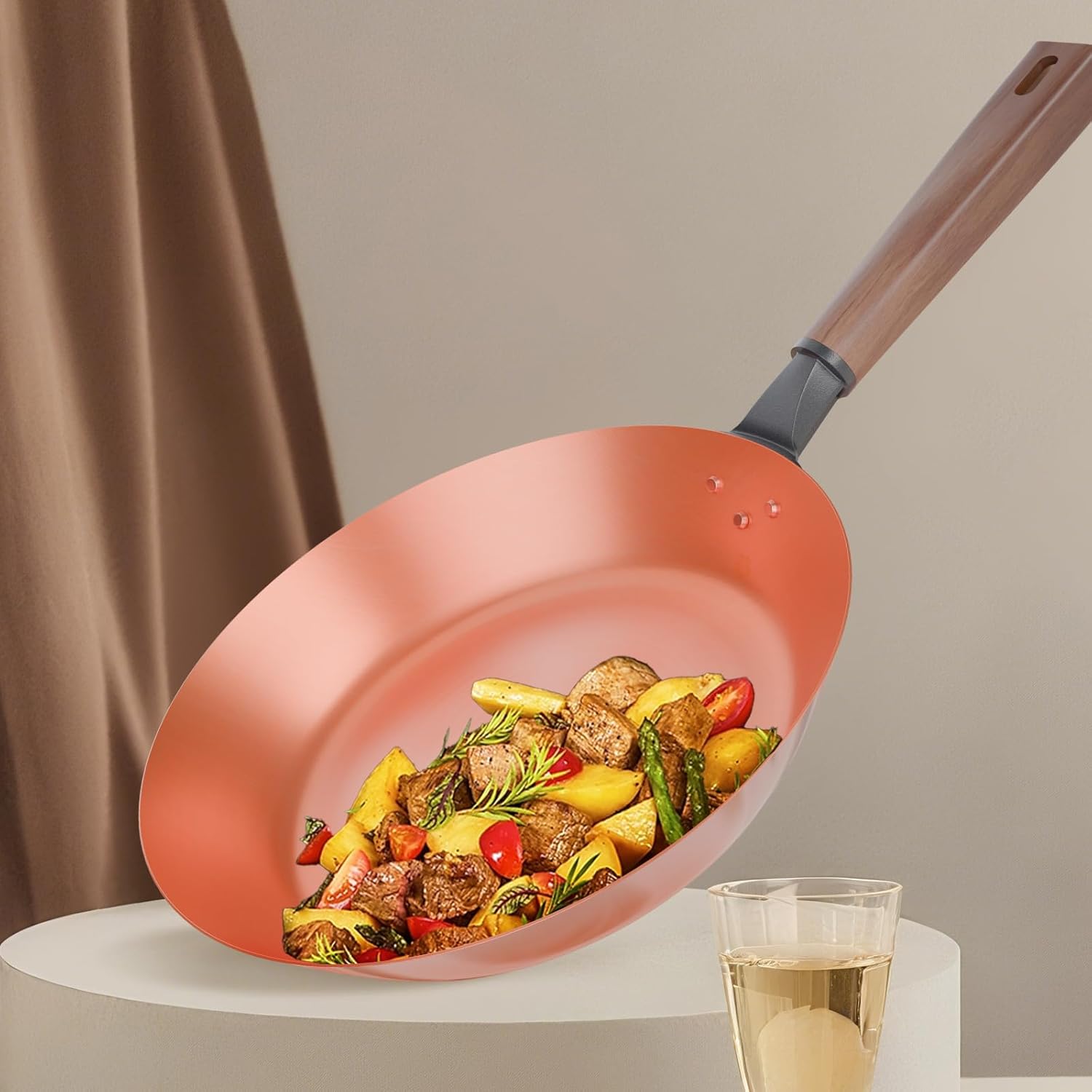
Built for professional cooking tasks, this 11.2-inch handmade pure copper frying pan features an uncoated interior and a detachable wooden handle for easy storage and maneuverability. It operates on gas and electric ceramic cooktops, delivering superior heat conduction for searing and sautéing. The package includes a cleaning scrubber to help maintain the exterior gold-like finish over extended periods of use.

What stands out

  • Exceptional heat conduction allows for rapid and even heating across the entire cooking surface.
  • Detachable wooden handle provides a comfortable grip and simplifies storage in compact kitchen spaces.
  • Handmade craftsmanship features a golden finish that doubles as an attractive serving piece.

What to consider

  • The pan is not compatible with induction cooktops, limiting its use in kitchens with magnetic glass ranges.
  • The uncoated interior surface requires careful manual washing and oil conditioning to prevent oxidation.
Key specifications
Material Type
Copper, wood
Capacity
3 quarts
Item Dimensions D x W x H
18"D x 10.6"W x 5.5"H
Finish Types
Uncoated
Handle Material
Wood
Pot Purpose
frying

The practical verdict

This 11.2-inch handmade pan fits cooks using gas or electric ceramic cooktops who want strong thermal conduction and a wooden handle. Avoid this skillet if your kitchen relies exclusively on induction cooking technology. The main trade-off is receiving rapid, even copper heating paired with a detachable wooden handle against lacking induction compatibility and needing manual oil conditioning.

#4
Gotham Steel 12-Inch Copper Nonstick Frying Pan Skillet
Lightweight Nonstick Copper Skillet

Gotham Steel 12-Inch Copper Nonstick Frying Pan Skillet

Best for Low-oil daily skillet cooking

Designed with a lightweight aluminum body and a triple-layer ceramic-and-titanium copper surface, this 12-inch skillet provides effortless food release with minimal oil. The stay-cool stainless steel handle aids maneuverability, and the pan handles oven temperatures up to 500 degrees Fahrenheit. It works on gas, electric, and glass-ceramic stovetops while offering quick cleanup via dishwasher safety or simple wiping.

What stands out

  • Triple-layer ceramic and titanium copper surface enables food to release easily with little oil.
  • Lightweight aluminum body paired with a stay-cool stainless steel handle makes flipping and lifting comfortable.
  • Oven-safe design handles temperatures up to 500 degrees Fahrenheit for finishing baked dishes.

What to consider

  • The aluminum-core construction lacks compatibility with induction cooktops, preventing use on magnetic stovetops.
  • The lighter body may not retain heat as long as thick, heavy-gauge solid copper pans.
Key specifications
Material Type
Ceramic
Coating Description
Titanium + Ceramic
Capacity
21 cubic inches
Product Care Instructions
Dishwasher Safe
Maximum Temperature
500 °F
Handle Material
Stainless Steel, Stay Cool

The practical verdict

This ceramic nonstick skillet suits home cooks looking for easy food release, lightweight handling, and oven-to-table convenience. Avoid this product if you specifically require induction stovetop compatibility or traditional solid copper material. The trade-off involves enjoying a lightweight, easy-to-clean ceramic nonstick surface instead of heavy, solid copper thermal mass.

#5
Gotham Steel Hammered 12-Inch Titanium Ceramic Nonstick Frying Pan
Induction-Ready Hammered Skillet

Gotham Steel Hammered 12-Inch Titanium Ceramic Nonstick Frying Pan

Best for Induction and high-heat stovetop cooking

Featuring a forged aluminum core with a hammered copper-tone exterior, this 12-inch pan combines classic styling with broad stovetop compatibility, including induction ranges. A triple-coated ceramic and titanium surface lets food slide off smoothly, while the stainless steel handle includes a steam vent. It supports high-heat oven tasks up to 500 degrees Fahrenheit and cleans easily by hand or dishwasher.

What stands out

  • Broad stovetop compatibility includes induction cooktops alongside gas, electric, and glass-ceramic ranges.
  • Hammered copper-tone exterior offers a classic aesthetic paired with a durable forged aluminum core.
  • Triple-coated ceramic and titanium nonstick surface enables low-oil cooking and rapid cleanup.

What to consider

  • The hammered copper-tone finish is an exterior coating over aluminum rather than solid copper construction.
  • The large 12-inch diameter requires substantial cabinet or storage space compared to smaller skillets.
Key specifications
Material Type
Ceramic
Coating Description
Ceramic Nonstick
Capacity
1.5 liters
Product Care Instructions
Dishwasher Safe
Maximum Temperature
500 °F
Compatible Devices
Gas, Oven, Smooth Surface Induction

The practical verdict

This 12-inch skillet best serves cooks who need induction compatibility and a large cooking surface paired with nonstick convenience. Avoid this model if you want heavy, solid copper construction throughout the pan body. The primary trade-off is gaining induction support and an easy-release ceramic coating in exchange for an aluminum body finished with a copper-tone exterior.

Buying guide

Material Composition and Construction

Understanding the core material of a copper pan helps determine its overall weight, heat retention, and long-term price point. Solid copper models provide unmatched thermal conductivity, spreading heat uniformly across the base and up the sides to eliminate hot spots during cooking. This rapid heat response allows cooks to adjust temperatures instantly when preparing delicate ingredients like eggs or sauces.

Alternatively, aluminum-core skillets with a copper-tone finish offer lighter handling and easier daily cleaning while mimicking the classic aesthetic of traditional cookware. Choosing between solid metal and coated alternatives depends entirely on your personal preference for active maintenance versus lightweight convenience in daily meal preparation. Reviewing these construction details ensures your new cookware matches your kitchen habits.

Interior Coatings and Food Release

Interior linings dictate how food interacts with the cooking surface and influence your everyday cleaning routine. Traditional copper pans often feature tin linings or remain uncoated, offering natural release properties without synthetic polymers. These metal interiors require careful handling and gentle washing to preserve their protective layer over years of regular use in the kitchen.

Modern copper-look skillets frequently employ ceramic and titanium-infused nonstick coatings that let food slide off easily with minimal oil or butter. Consider whether you prefer traditional metallic interiors or modern ceramic nonstick layers based on your cooking style and cleaning preferences. Each coating style presents distinct advantages for everyday food release and maintenance tasks.

Stovetop Compatibility and Heat Sources

Verifying stovetop compatibility is an essential first step before purchasing any frying pan for your kitchen setup. While many copper and aluminum-core pans work seamlessly on traditional gas, electric, and glass-ceramic cooktops, traditional solid copper and certain coated pans often lack induction support. Confirming your range type prevents compatibility issues during daily cooking routines.

If your kitchen features an induction range, you must specifically check for a magnetic base layer or compatible exterior cladding designed for magnetic fields. Selecting a pan built for your specific heat source prevents frustrating performance issues and ensures safe daily cooking operations across breakfast and dinner meal tasks without unexpected limitations.

Handle Design and Ergonomics

Handle construction directly affects how safely and comfortably you can maneuver a frying pan filled with food. Insulated brass, stainless steel, and detachable wooden handles offer different tactile experiences and heat-resistance properties during active cooking tasks. Evaluating how the handle attaches to the body gives clear insight into overall durability and long-term use.

A secure, stay-cool grip reduces hand fatigue when lifting heavy pans or transferring them directly into a hot oven. Evaluating the handle shape and material helps ensure you maintain steady control while flipping ingredients, tossing vegetables, or serving finished meals at the dining table. Choosing the right grip style improves daily kitchen confidence significantly.

Size, Capacity, and Cooking Volume

Selecting the correct pan diameter and internal capacity ensures your cookware accommodates your typical meal sizes without overcrowding the cooking surface. Smaller 8-inch to 10-inch pans excel at single-serving eggs, quick vegetables, and simple breakfast items. These compact dimensions also fit easily into smaller storage cabinets and tight kitchen spaces for convenient access.

Larger 11-inch to 12-inch skillets provide ample surface area for multi-person dinners, searing meats, and simmering one-pan family meals. Matching the pan dimensions to your household size guarantees efficient cooking results every time you prepare dinner. Considering storage space alongside cooking volume prevents unnecessary clutter in your kitchen cupboards and pantry shelves.

Maintenance and Cleaning Care

Proper maintenance preserves the finish and structural integrity of copper and ceramic-coated frying pans over years of regular home use. Pure copper cookware often requires hand washing with mild soap, soft sponges, and occasional polishing or oil conditioning to prevent natural oxidation on exposed metal surfaces. Taking time for these steps protects your investment.

Ceramic nonstick skillets frequently support dishwasher cleaning, though manual washing helps extend the functional life of the nonstick coating. Following manufacturer care guidelines ensures your cookware stays in top condition and performs reliably across countless meals without premature wear or surface damage. Reviewing these requirements before buying avoids unexpected cleaning surprises.

Frequently asked questions

Are pure copper frying pans compatible with induction cooktops?

Traditional solid copper frying pans and certain uncoated copper models lack the magnetic properties required to work on induction cooktops. If your kitchen features an induction range, you must verify whether the specific pan includes a compatible magnetic base layer or induction-safe cladding. Many solid copper and aluminum-core copper-tone pans explicitly state they are not suitable for induction use, relying instead on gas, electric, or glass-ceramic cooktops. Always check manufacturer specifications before purchasing cookware for an induction setup to ensure proper heating performance and avoid compatibility issues.

How do I clean and prevent oxidation on pure copper cookware?

Cleaning pure copper cookware typically involves washing the pan by hand using warm water, mild soap, and a soft sponge to protect the finish. Avoid abrasive cleaners, steel wool, or harsh scrubbing pads that can scratch the metal surface. To prevent natural oxidation and maintain the polished appearance of exposed copper, some manufacturers recommend applying a very thin layer of vegetable oil after thoroughly drying the pan. Using specialized cleaning solutions included with certain models also helps remove tarnishing and keeps your copper cookware looking vibrant over time.

What is the difference between solid copper pans and ceramic copper-look skillets?

Solid copper pans feature heavy-gauge metal construction offering exceptional thermal conductivity for precise temperature control during cooking, often paired with traditional tin linings. In contrast, ceramic copper-look skillets typically use a lightweight aluminum core coated with a titanium and ceramic nonstick layer designed for effortless food release with minimal oil. While solid copper provides superior heat response and a heritage artisan aesthetic, ceramic copper-tone pans focus on lightweight handling, dishwasher safety, and easy daily cleanup without requiring specialized polishing routines or manual oil conditioning.

Can copper frying pans be used safely inside the oven?

Many copper frying pans and copper-look skillets offer oven-safe performance, allowing you to transition seamlessly from stovetop searing to oven baking or finishing. Specific temperature limits vary by model, with certain ceramic-coated aluminum skillets rated safe up to five hundred degrees Fahrenheit, while artisan copper pans feature insulated handles designed for oven environments. Always consult the manufacturer guidelines for your exact pan model before placing it in the oven to ensure the handle materials and coatings can withstand high baking temperatures without sustaining damage or degrading.

Do copper frying pans require special cooking oils or techniques?

Copper frying pans do not require special cooking oils, but their rapid and even heat conductivity means you can often cook at lower temperature settings than you might use with cast iron or stainless steel. Because solid copper heats up extremely fast and eliminates hot spots, monitoring your stovetop heat prevents scorching delicate ingredients like eggs, fish, or sauces. When using traditional uncoated or tin-lined copper pans, cooking with a small amount of butter or oil ensures good food release, whereas ceramic-coated copper-look skillets allow for very low-oil or oil-free cooking styles.

Final thoughts

Selecting the right copper frying pan depends heavily on balancing traditional artisan craftsmanship and thermal performance with your everyday cooking habits and stovetop type. Whether you choose a solid copper pan with exceptional thermal conductivity or a lightweight ceramic nonstick skillet, carefully matching the pan size, interior coating, and features to your typical meals ensures long-term kitchen satisfaction.

Reviewing material specifications, handle comfort, and maintenance requirements helps you invest in versatile cookware that performs reliably across breakfast prep, dinner searing, and casual entertaining without unexpected compatibility surprises.