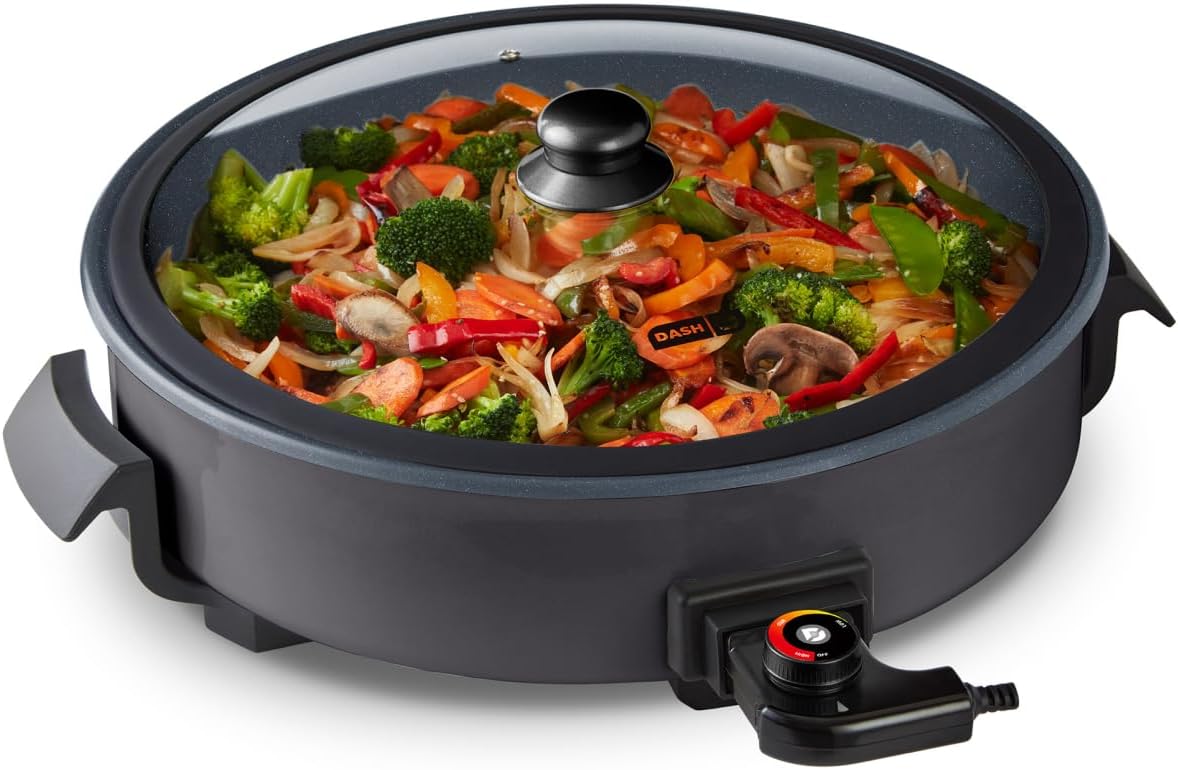
Appliances · Buying Guide
Best Vintage-Style Electric Fry Pans for Everyday Family Meals
Electric fry pans bring versatile tabletop cooking directly to your kitchen counter, offering reliable adjustable temperature control for everything from morning pancakes to evening stir-fries and hearty family dinners. Selecting the right model depends heavily on your available storage space, household size, and desired cooking capacity for preparing various multi-ingredient recipes throughout the week.
Modern electric skillets incorporate advanced nonstick ceramic coatings and removable heating probes, making post-cooking clean-up straightforward while delivering consistent heat across the entire aluminum cooking surface. This overview examines five distinct countertop appliances designed to streamline your daily meal preparation routines without unnecessarily crowding your kitchen cabinets or demanding constant stovetop attention during busy evenings.
As an Amazon Associate, StacyLaughs earns from qualifying purchases.
Buying guide
Cooking Surface Capacity and Dimensions
Selecting the proper cooking surface capacity is essential when choosing an electric fry pan for your household. Smaller 12-inch square models accommodate meals for up to six people, making them suitable for couples or moderate-sized families. Extra-large models offering 14 to 16-inch dimensions provide deeper sidewalls and significantly more volume. These larger pans easily handle bulky ingredients, batch cooking, and family gatherings without crowding.
Evaluating your typical meal types helps determine whether a standard square pan or an extra-deep skillet fits your needs best. Keep in mind that larger surface areas require more counter and storage space. Measuring your available kitchen storage before purchasing ensures the appliance fits comfortably inside your cabinets or pantry when not in active daily use.
Nonstick Coating Materials and Maintenance
Modern electric fry pans typically feature ceramic or stone-finish nonstick coatings designed for effortless food release and reduced oil usage. Ceramic and PFAS-free surfaces offer safer and stronger cooking areas that resist scratching during everyday meal preparation. Preserving these nonstick properties requires using appropriate wooden, silicone, nylon, or plastic utensils rather than abrasive metal tools that could damage the coating over time.
Cleaning requirements vary depending on whether the skillet body is fully immersible or requires hand-washing. Models with removable temperature probes often allow safe sink immersion or dishwasher cleaning for both the pan and the glass lid. Reviewing manufacturer maintenance instructions helps maintain the coating's longevity while ensuring fast, hassle-free clean-up routines after preparing messy or cheesy dishes.
Heating Elements and Temperature Precision
Consistent heat distribution is critical for achieving evenly cooked meals in an electric fry pan. Fully embedded heating elements spread warmth evenly across the entire pan floor, preventing annoying hot spots and scorched food. Precision temperature control probes allow you to dial in exact heat settings ranging from low simmers to high sears, usually spanning between 200 and 450 degrees Fahrenheit.
Wattage ratings typically range from 1200 to 1500 watts, influencing how rapidly the appliance reaches your desired cooking temperature. Higher wattage outputs support faster preheating and maintain stable temperatures during high-volume batch cooking. Understanding your cooking style helps determine if a standard 1200-watt skillet suffices or if a more powerful 1500-watt heating system is necessary for your recipes.
Lid Design and Moisture Control
Tempered glass lids are standard features that allow you to monitor your cooking progress without lifting the cover and releasing heat. Vented lid designs help regulate internal pressure and reduce moisture buildup, ensuring your stews, rice dishes, and sautées maintain proper texture. Transparent glass construction also gives you clear visibility of simmering liquids and frying foods throughout the cooking cycle.
Some specialized electric skillets incorporate innovative lid designs that lock securely in place for easy transport or inverted vertical storage. If you plan to travel with your skillet for potlucks or family gatherings, locking lid mechanisms prevent messy spills. Evaluating how the lid stores or clamps can greatly improve convenience and reduce clutter in busy household kitchens.
Handle Ergonomics and Countertop Safety
Safe handling is an important consideration when operating a heated countertop appliance filled with food or liquids. Cool-touch side handles remain comfortable to the touch during use, allowing you to lift, carry, and serve meals directly from the counter. Ergonomic grip designs make moving heavy, filled skillets much more manageable, reducing accidental slips and enhancing overall kitchen safety during busy meal prep times.
Stable base construction and non-slip feet prevent the skillet from shifting while you stir dense ingredients or flip heavy items. Ensuring the appliance sits securely on your countertop protects your kitchen surfaces from heat damage. Reviewing handle placement and stability features helps you select a model that prioritizes user comfort and reliable everyday operation for your household.
Storage Options and Kitchen Footprint
Managing kitchen storage space is essential when adding a countertop electric fry pan to your culinary toolkit. Standard rectangular or square skillets require dedicated cabinet or pantry space, while specialized models feature space-saving innovations like inverted lids for vertical storage. Evaluating your available cabinet dimensions before buying prevents storage frustrations and keeps your countertops clean and organized.
Removable temperature control probes also contribute to compact storage by disconnecting cleanly from the skillet body. Cord wraps and nesting components further simplify tucking the appliance away when not in use. Balancing your desire for a large cooking capacity with practical storage constraints ensures your electric skillet remains a convenient, frequently used addition to your kitchen setup.
Frequently asked questions
Can I put my electric fry pan in the dishwasher?
Many modern electric fry pans feature dishwasher-safe components, provided you completely detach the temperature control probe beforehand. Skillets with fully immersible cast aluminum bodies and dishwasher-safe glass lids allow for fast, hassle-free cleanup in your sink or dishwasher. However, you must always consult the specific manufacturer instructions included with your model to confirm whether the main cooking body is fully submersible or requires careful hand-washing to protect the nonstick coating and electrical connections.
What is the benefit of a ceramic nonstick coating?
Ceramic nonstick coatings provide a durable, chemical-free cooking surface that allows food to release effortlessly with minimal oil or butter. This smooth surface makes both cooking and subsequent cleanup significantly faster, preventing stubborn food residues from sticking to the pan floor. Additionally, quality ceramic coatings resist scratching better than traditional nonstick options, though manufacturers still recommend using wooden, silicone, or nylon utensils to maintain the longevity of the protective cooking layer over years of regular use.
How do I prevent hot spots in an electric skillet?
Preventing hot spots depends largely on the internal heating element design of your electric skillet. Models featuring fully embedded M-shaped or circular heating elements distribute thermal energy evenly across the entire base of the pan rather than concentrating heat in a single spot. Allowing your skillet to preheat properly according to manufacturer guidelines also helps stabilize the temperature evenly across the ceramic cooking surface before you add ingredients for frying, searing, or simmering.
Can I use metal utensils on my electric skillet?
Using metal utensils on nonstick ceramic or stone-finish electric skillet surfaces is generally discouraged because metal can scratch, chip, or degrade the protective coating over time. To preserve the nonstick performance and extend the lifespan of your appliance, you should exclusively use wooden, silicone, nylon, or plastic cooking tools. Adhering to these utensil guidelines ensures effortless food release and prevents premature wear on the delicate ceramic cooking surface during everyday meal preparation tasks.
How do I store an electric skillet with limited cabinet space?
Storing an electric skillet in limited kitchen spaces requires evaluating specific design features like removable temperature probes and space-saving storage configurations. Some modern models incorporate innovative inverted lid designs that lock securely, allowing you to store the appliance vertically on its side to free up valuable cabinet shelf space. Additionally, detaching the power cord and probe, utilizing integrated cord wraps, and measuring your cabinet clearance beforehand ensures your skillet stores neatly away.