Appliances · Buying Guide
Best Wok For Deep Frying: Heavy Duty Carbon Steel Pans Reviewed
Finding the right wok for deep frying means looking closely at material composition, heat responsiveness, and overall depth. Carbon steel has become a preferred choice for home cooks who want the high-heat capabilities of traditional cast iron combined with a much lighter, more manageable frame for daily kitchen cooking tasks.
These specialized pans heat up quickly and distribute thermal energy evenly across the cooking surface, making them ideal for everything from quick vegetable stir-fries to rolling boils and deep oil immersion. Evaluating these options helps match your specific stovetop type and cooking style with a durable, highly responsive wok that performs reliably over time.
As an Amazon Associate, StacyLaughs earns from qualifying purchases.
Buying guide
Material Composition and Heat Responsiveness
Carbon steel is the standard material choice for woks designed for deep frying and high-heat cooking. It combines the thermal endurance of traditional cast iron with a significantly lighter frame, allowing cooks to lift and maneuver the pan easily. This metal absorbs thermal energy rapidly and adjusts to temperature changes almost instantly, which prevents burning when frying delicate ingredients.
Unlike standard aluminum non-stick pans that can degrade under intense heat, quality carbon steel handles extreme stovetop temperatures safely. However, raw or pre-seasoned carbon steel requires consistent upkeep, including hand washing and regular oil seasoning. This maintenance builds a natural patina that improves non-stick performance over time without relying on synthetic chemical coatings like PTFE or PFOA.
Flat Bottom Versus Round Bottom Design
Selecting the right bottom shape depends heavily on your kitchen stovetop type. Flat-bottom carbon steel woks are engineered to sit securely on modern electric, ceramic, glass, and induction cooktops, maximizing direct thermal contact for efficient heating. This stability is especially crucial when deep frying, as it prevents the pan from tipping during heavy oil usage or when stirring ingredients vigorously.
Traditional round-bottom woks require specific burner rings or open flame setups to remain stable, making them less practical for standard flat glass or induction kitchen ranges. If you cook primarily on smooth surfaces, a flat-bottom wok ensures reliable performance and safety. Keep in mind that flat bases distribute heat across a defined circle rather than wrapping up the high sidewalls uniformly.
Sizing and Depth for Deep Frying
Capacity and depth are critical factors when using a wok for deep frying. Woks ranging from 12.6 inches to 13.5 inches in diameter provide ample surface area for family-sized meals while accommodating enough cooking oil to submerge items safely. Adequate sidewall depth, typically around four inches or more, prevents hot oil from bubbling over the rim during vigorous boiling or frying sessions.
Choosing an appropriately sized wok ensures you can cook in batches without overcrowding, which helps maintain stable oil temperatures. While extra-large pans offer impressive volume for gatherings, they also increase the overall weight of the cookware and demand more storage space in your kitchen cabinets. Balance your typical meal sizes against your physical lifting comfort and available storage room before buying.
Handling and Ergonomic Support
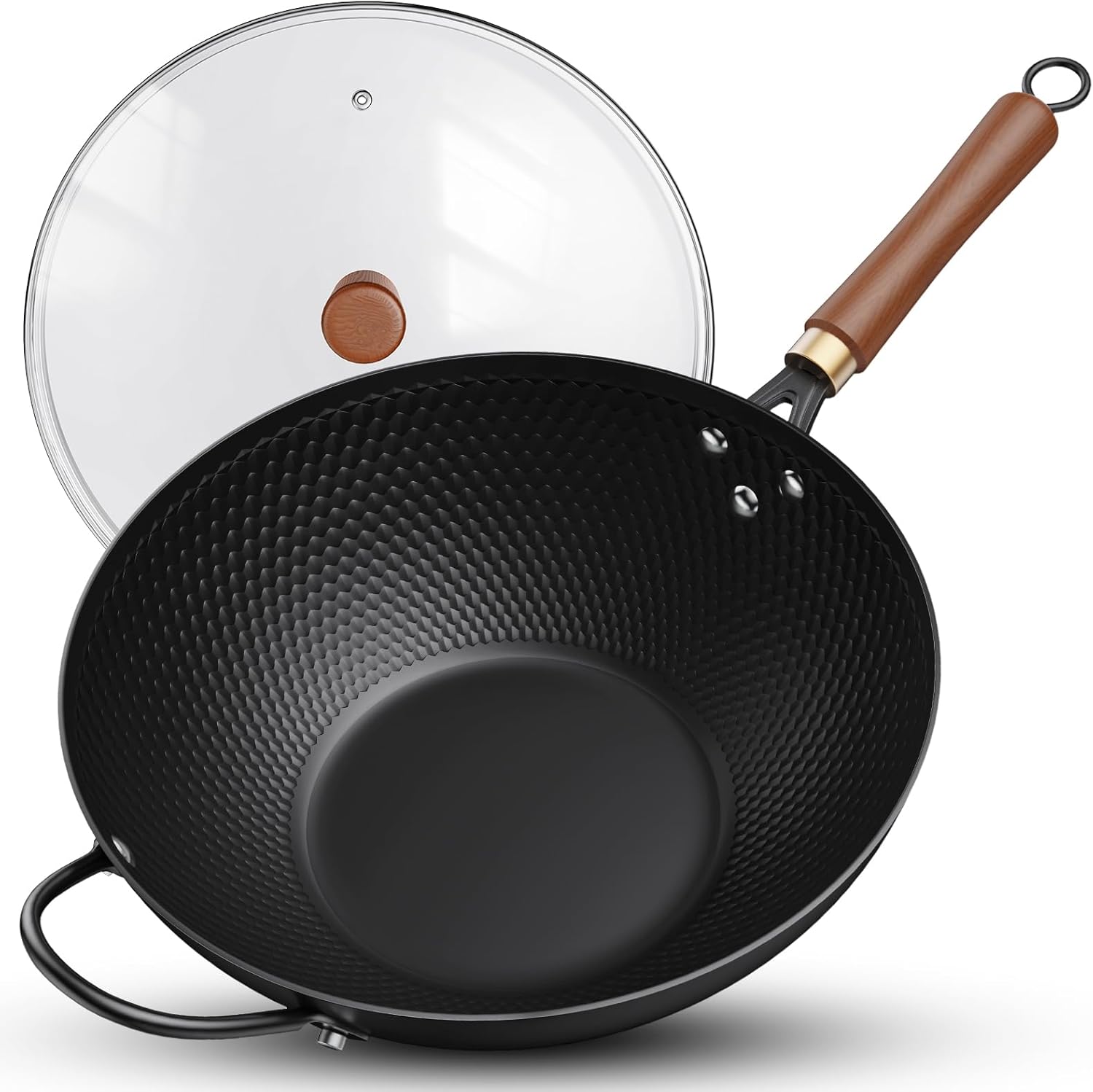
The handle configuration of a carbon steel wok greatly influences daily cooking comfort and kitchen safety. Many models feature a traditional wooden main handle that stays cool to the touch during high-heat stove sessions, preventing accidental burns. Some extra-large woks incorporate an additional metal helper handle opposite the main grip, providing essential support when lifting a heavy pan filled with oil or food.
If you plan on transferring your wok directly into the kitchen oven for baking or braising, check whether the handles are detachable or crafted from oven-safe materials. Removable handles also simplify cabinet storage in compact kitchens. Always evaluate your grip strength and how you intend to move the pan when deciding between single-handle and dual-handle wok configurations for your home.
Lids and Included Accessories
Woks often come bundled with practical accessories such as glass lids, silicone spatulas, or cleaning brushes that enhance their everyday utility. A clear tempered glass lid allows you to monitor simmering broths and deep-frying processes visually without lifting the cover and losing valuable heat. This visibility helps prevent overcooking and lets you watch food texture changes in real time.
Included utensils like silicone or wooden spatulas are specifically designed to protect the developing seasoning layer from unsightly scratches. While buying a wok with bundled accessories offers immediate value, ensure the core pan quality matches your cooking expectations. If a favorite wok lacks a lid, you can easily purchase a universal cover separately to support steaming and braising tasks.
Maintenance and Seasoning Requirements
Unlike modern synthetic non-stick pans that go straight into the dishwasher, carbon steel woks demand specific hand-wash care routines. After each use, you should wash the pan with warm water, dry it thoroughly on a warm burner, and apply a thin layer of cooking oil. This ongoing seasoning ritual prevents rust formation and continuously enhances the natural non-stick patina of the steel surface.
Ignoring proper drying and oiling procedures can quickly result in surface corrosion, which ruins the cooking performance. Manufacturers clearly state that carbon steel cookware is not dishwasher safe. Committing to this simple maintenance routine ensures your wok remains durable, rust-resistant, and chemically safe for decades of high-heat stir-frying, searing, and deep-frying adventures in your home kitchen.
Frequently asked questions
Can carbon steel woks be used effectively for deep frying?
Yes, carbon steel woks are exceptionally well suited for deep frying because the heavy-duty metal withstands high cooking temperatures safely and heats up rapidly. Their deep sloping walls hold sufficient oil volume to submerge chicken, vegetables, or dumplings while containing splatters better than shallow skillets. However, because carbon steel pans heat up so quickly, you must monitor oil temperatures carefully to prevent overheating or scorching. Always ensure your chosen wok features a stable flat bottom if you cook on modern electric or induction ranges.
Do carbon steel woks require seasoning before first use?
Most modern carbon steel woks arrive factory pre-seasoned at high temperatures, offering an initial protective layer right out of the box. Despite this factory treatment, true carbon steel requires ongoing oil seasoning over time to build and maintain an optimal natural non-stick patina. After washing and drying your pan, rubbing a tiny amount of cooking oil across the surface keeps rust at bay and improves food release. This simple maintenance habit ensures your wok performs better with every single cooking session.
Can I put a carbon steel wok in the dishwasher?
No, carbon steel woks should never be cleaned in a dishwasher. Harsh dishwasher detergents and prolonged exposure to standing water strip away the essential seasoning layer and rapidly cause destructive rust across the metal surface. Manufacturers strictly advise hand washing these pans using warm water and a soft sponge. After washing, you must dry the wok thoroughly on a warm stove burner and apply a thin coat of oil to preserve its corrosion resistance and cooking performance.
Will a flat-bottom carbon steel wok work on an induction cooktop?
Yes, flat-bottom carbon steel woks are fully compatible with induction cooktops, provided the flat base makes direct, stable contact with the burner zone. Because induction ranges transfer heat magnetically, the heavy-duty carbon steel base responds instantly to temperature adjustments. When using a wok on induction, it is critical never to heat an empty pan or exceed maximum temperature limits specified by the manufacturer, as rapid thermal changes without adequate food or oil can warp or damage the cookware.
Why does my carbon steel wok have a rough surface texture?
A rough or granular surface texture on modern carbon steel woks is often the result of advanced nitriding or factory pre-seasoning technologies. This specialized treatment creates a durable, microscopically textured layer that helps trap oil, preventing food from sticking and stopping rust formation without synthetic chemical coatings. As you cook with the wok over time and apply regular oil maintenance, this initial texture gradually smooths out into a glossy, highly effective natural non-stick patina.